If your kiln controller says it is running but the elements are not heating, or the kiln suddenly stops heating when the lid moves, the problem may be much simpler than a failed controller.
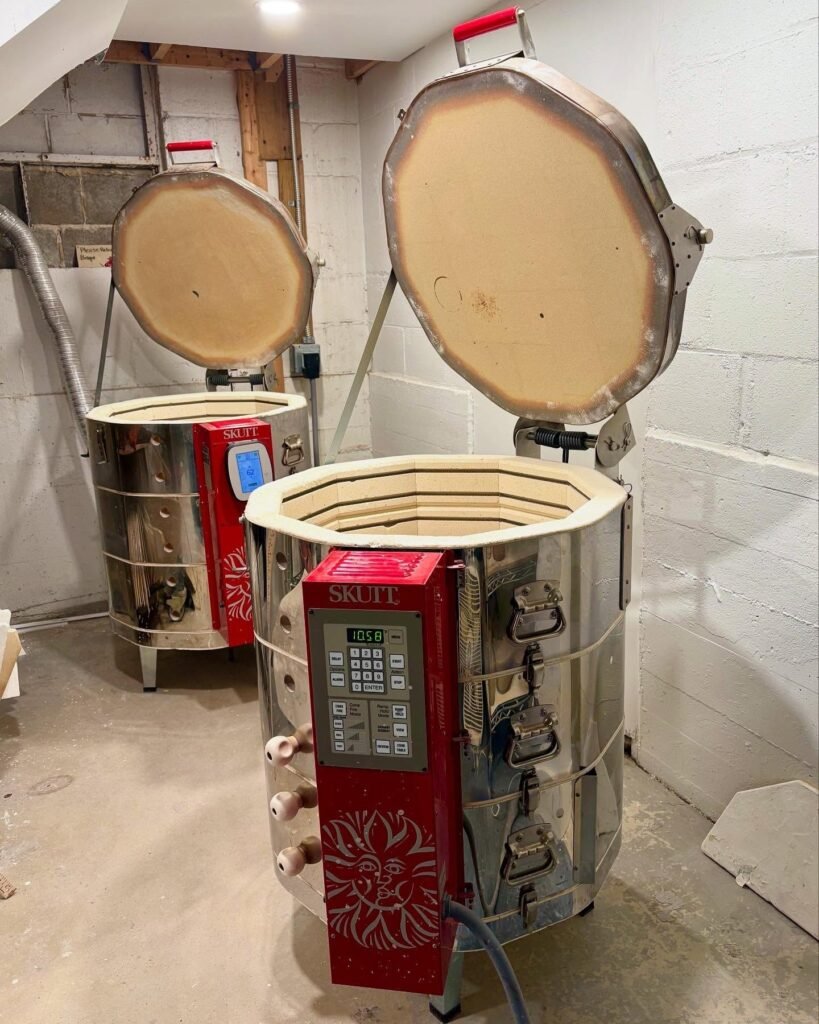
It could be the kiln lid safety switch.
A kiln lid safety switch is designed to interrupt power to the heating elements when the lid is opened. On some kilns, the same basic system is used with a door rather than a top-opening lid.
That makes it an important safety component.
It can also become a troubleshooting headache when the switch is misaligned, worn, damaged, or incorrectly adjusted.
Paragon describes its safety switch as a device that turns off power to the heating elements when the kiln lid or door is opened. Skutt documentation describes a lid interlock system that disconnects power to the elements when the lid is opened.
The controller can therefore appear to be operating normally while the elements receive no power.
Understanding that distinction can save you from replacing the wrong component.
What Is a Kiln Lid Safety Switch?
A kiln lid safety switch is an electrical safety mechanism that detects whether the kiln lid or door is in the proper operating position.
When the lid is closed correctly, the switch permits the heating circuit to operate.
When the lid is opened, the switch interrupts power to the heating elements.
The exact design varies.
Some kilns use a mechanical interlock.
Others use a tilt switch or another style of safety switch.
Front-loading kilns may use a door-operated switch.
The terminology also varies by manufacturer.
You may see terms such as:
- Lid safety switch
- Lid interlock
- Door safety switch
- Lid shut-off
- Safety interlock
- Tilt switch
- Door switch
They perform a similar basic function, but the physical design and adjustment procedure can be different.
Do not assume that a switch from one kiln model can simply be transferred to another.
Why Does a Kiln Need a Safety Switch?
The heating elements inside an electric kiln can reach extremely high temperatures.
Allowing the elements to continue receiving power while a top-loading lid is open creates an obvious hazard.
The safety switch is designed to interrupt the heating circuit when the lid is opened.
Skutt’s documentation describes its lid interlock system as disconnecting power to the heating elements when the lid is opened.
Paragon similarly describes its lid and door safety switches as turning off element power when the lid or door is opened.
The important point is that the switch is part of the kiln’s safety system.
It is not simply another control button.
How a Kiln Lid Safety Switch Works
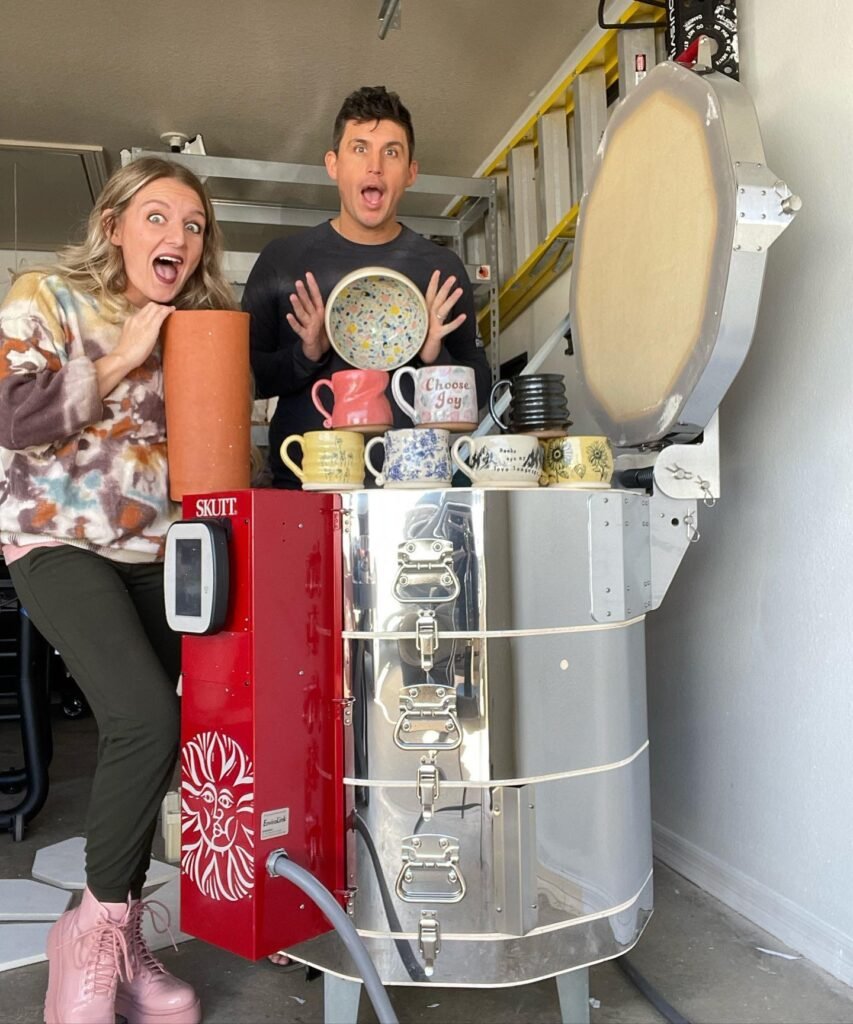
The exact mechanism depends on the kiln.
On a top-loading kiln, the switch may be positioned so that lowering the lid activates it.
Opening the lid releases the switch.
That electrical change interrupts power to the heating elements.
On a front-loading kiln, opening the door can operate a rotary or similar mechanical switch.
The controller may continue displaying information even after the safety switch has interrupted the element circuit.
This explains a confusing symptom:
The controller says the kiln is firing, but the temperature is not increasing.
The controller and the heating circuit are not necessarily in the same state.
The controller may still be powered and running the program while the safety switch has prevented the elements from heating.
Kiln Lid Safety Switch vs. Kiln Controller
These components perform different jobs.
The controller manages the firing program.
It reads temperature information and determines when the heating system should operate.
The safety switch provides an additional physical condition that must be satisfied before the heating elements can operate.
This distinction becomes particularly important when diagnosing a kiln that is not heating.
A controller display does not prove that the heating elements are receiving power.
Similarly, a controller error does not automatically mean the controller itself has failed.
The Kiln Depot’s guide to pottery kiln controllers explains the controller’s role in greater detail.
What Happens When the Lid Is Open?
On a kiln equipped with an appropriate safety interlock, opening the lid interrupts power to the heating elements.
The controller may remain powered.
That means the display may continue operating even though the elements are no longer heating.
This is intentional.
The purpose is to prevent the elements from continuing to operate while the kiln is open.
The exact behavior of the controller depends on the kiln and control system.
Some controllers may display an indication that the lid is open.
Others may eventually generate an error because the kiln is not heating at the rate expected by the firing program.
That is why understanding kiln error codes is useful when troubleshooting a safety-switch problem.
The Kiln Depot’s kiln error codes guide covers this broader diagnostic process.
Symptoms of a Bad or Misadjusted Kiln Lid Safety Switch
A faulty or misadjusted switch can create several different symptoms.
The controller runs but the kiln does not heat
This is one of the most important clues.
The controller may display a normal firing program, but the temperature does not rise as expected.
If the switch is not correctly engaged, the elements may not receive power.
The kiln starts and then stops heating
A switch that is marginally engaged may work under one condition and disconnect under another.
Movement, vibration, lid position, or thermal expansion can change the switch position.
The kiln stops partway through a firing
This can happen if the lid or door shifts enough to disengage the switch.
Paragon specifically documents situations where thermal expansion of the lid or door can cause a safety switch to interrupt the heating circuit during a firing.
The controller displays a lid-related message
Some controllers can identify a lid or safety-switch condition.
The exact message depends on the controller.
The kiln works only when the lid is positioned a certain way
This is a strong indication that the switch or its mechanical alignment deserves investigation.
A properly functioning kiln should not require you to find a “sweet spot” where the lid happens to activate the switch.
Why a Kiln May Stop Heating Even Though the Lid Is Closed
A closed lid does not necessarily mean the switch is engaged correctly.
The switch may be:
- Misaligned
- Worn
- Damaged
- Loose
- Bent
- Out of adjustment
- Affected by lid movement
- Affected by thermal expansion
- Connected incorrectly
The physical lid can therefore appear closed while the electrical safety circuit remains open.
This is particularly relevant on older kilns.
Decades of heating and cooling can affect mechanical components and mounting hardware.
A kiln that worked correctly for years may eventually develop a switch-alignment problem.
Thermal Expansion Can Affect the Switch
Kilns experience substantial temperature changes during firing.
The lid, hinges, hardware, body, and other components expand as they heat.
Paragon specifically identifies thermal expansion as one possible reason a door or lid safety switch can shut off the elements during a firing.
This produces an especially frustrating symptom.
The kiln may start normally.
The controller appears to work.
The elements heat.
Then, later in the firing, the kiln stops gaining temperature.
The lid has not been intentionally opened.
The safety switch may nevertheless have moved enough to interrupt the heating circuit.
If this happens repeatedly at elevated temperatures, the switch adjustment and mechanical alignment should be investigated.
How to Check the Lid Position
Start with the kiln completely cool.
Do not begin by opening the control box.
Look at the physical relationship between the lid and the switch mechanism.
The lid should close in its normal operating position.
The switch should be engaged according to the manufacturer’s design.
Look for obvious issues such as:
- A loose switch mounting point
- A damaged actuator
- A lid that sits unevenly
- A hinge that has excessive movement
- Hardware that has loosened
- Visible corrosion
- Physical interference
- A lid that no longer closes the way it originally did
Do not bend components or make adjustments simply because something looks slightly different.
Use the manufacturer’s instructions for the exact kiln model.
Can You Adjust a Kiln Lid Safety Switch?
Some can be adjusted.
The procedure depends heavily on the switch design.
Paragon publishes adjustment instructions for several types of lid and door safety switches, including tilt switches and rotary door switches.
Its documentation explains that small mounting adjustments can change the point at which the switch interrupts power.
That is important because a tiny mechanical change can affect kiln operation.
If your kiln has an adjustable safety switch, follow the manufacturer’s service procedure.
Do not use a generic internet adjustment procedure unless it specifically applies to your kiln.
Why You Should Not Guess at the Adjustment
A safety switch is not a component where “close enough” is a good standard.
If it is adjusted too aggressively, the kiln may stop heating while the lid remains physically closed.
If it is adjusted incorrectly in the opposite direction, the switch may fail to interrupt the heating circuit when the lid is opened as intended.
The result can be unreliable operation or compromised safety.
This is why manufacturer-specific instructions matter.
The same general type of switch can be installed differently on different kiln models.
Should You Bypass a Kiln Lid Safety Switch?
No.
Do not permanently bypass the safety switch simply because it is preventing the kiln from heating.
The switch exists for a reason.
If the kiln refuses to heat because the safety circuit is open, diagnose the switch and correct the underlying problem.
Bypassing the interlock removes a safety function instead of fixing the fault.
Skutt explicitly warns against modifying its kilns without consulting the manufacturer.
The company’s safety guidance also instructs owners to use appropriate replacement components and to unplug the kiln before performing maintenance.
If a switch has failed, replace or repair it according to the manufacturer’s instructions.
Do not defeat it just to finish a firing.
What If the Kiln Says “LID”?
Some controllers can display a lid-related message when the safety switch is open.
Paragon’s Sentry documentation, for example, identifies a [LID] display associated with a safety switch condition.
The documentation also notes that an improperly adjusted safety switch can cause the message even when the lid is closed.
That gives you an important diagnostic clue.
If you see a lid-related error while the lid is physically closed, investigate the safety-switch circuit and mechanical adjustment rather than assuming the controller is defective.
However, exact messages differ between controller models.
Always check the manual for the specific controller installed on your kiln.
A Lid Error Does Not Always Mean the Switch Is Broken
This distinction matters.
A lid-related error can result from several things.
The switch itself may be fine.
The mechanical actuator may not be reaching it correctly.
A mounting component may have shifted.
A wire or connection may have a problem.
The controller may be detecting an open safety circuit.
The correct diagnosis therefore requires more than reading the display.
Think of the error as information about the circuit.
Then work backward.
Kiln Lid Safety Switch and the Heating Elements
The safety switch is closely connected to the heating circuit.
If the switch is open, the elements should not receive power.
That means a switch problem can look like an element problem.
A kiln that does not heat may have:
- Failed heating elements
- A failed relay
- A thermocouple problem
- An electrical supply problem
- An open safety-switch circuit
- A controller problem
This is why replacing elements without diagnosis can waste money.
The Kiln Depot’s kiln element guide explains the symptoms associated with worn or failed elements.
Likewise, its kiln relay guide covers relay-related heating problems.
The goal is to distinguish these faults instead of treating every “kiln won’t heat” problem as an element failure.
What If the Controller Is Running but the Elements Are Not?
This is one of the most useful troubleshooting clues.
Suppose you start a firing.
The controller displays the firing program.
The run indicator is active.
But the kiln temperature barely changes.
Do not immediately assume the controller has failed.
Check the possible causes systematically.
First, verify that the lid or door is fully closed and that the safety mechanism is properly engaged.
Then consider the electrical supply and other components.
Paragon specifically lists a safety-switch condition among the causes of a controller that is running while the elements do not heat.
If the safety switch is confirmed to be functioning correctly, continue through the manufacturer’s troubleshooting procedure.
What If the Kiln Stops Halfway Through a Firing?
Start by looking at the firing record.
Note:
- Current temperature
- Time into the firing
- Controller message
- Whether the temperature was still rising
- Whether the kiln previously fired normally
- Whether the problem occurs at similar temperatures
A switch affected by thermal expansion may cause a repeatable failure at a particular stage of the firing.
If the kiln consistently stops heating after it becomes very hot, that pattern is useful evidence.
Do not simply restart the kiln repeatedly without understanding why it stopped.
Depending on the firing temperature and the state of the ware, restarting can produce different heatwork from the original schedule.
Does a Lid Safety Switch Wear Out?
Yes.
Like other mechanical components, a safety switch can wear.
It may also become damaged or contaminated.
Mounting hardware can loosen.
The lid can change position over time.
Repeated thermal cycling can affect mechanical alignment.
Older kilns deserve particular attention because their switches may have been through many thousands of heating and cooling cycles.
That does not mean an old switch is automatically bad.
It means its condition should be evaluated rather than assumed.
Kiln Lid Safety Switch Problems on Used Kilns
If you are buying a used kiln, test the safety system.
Ask the seller whether the kiln has ever stopped heating unexpectedly.
Ask whether the lid switch has been replaced or adjusted.
Look for evidence of previous repairs.
Check whether the lid closes squarely.
Inspect the hinge and mounting hardware.
If the kiln is equipped with a controller, observe whether the controller and heating system behave normally during operation.
A used kiln can still be an excellent purchase.
But the control and safety systems are part of the machine.
Do not inspect only the firebrick and elements.
The Kiln Depot’s used pottery kiln buying guide provides a broader checklist for evaluating older equipment.
Kiln Lid Safety Switch Problems on Refurbished Kilns
Refurbishment should also include attention to safety components.
If a kiln has been refurbished, find out what work was actually performed.
Ask whether:
- The safety switch was inspected
- The switch was replaced
- The switch was adjusted
- Wiring was inspected
- Relays were inspected
- Elements were tested
- The controller was tested
- The kiln was test fired
“Refurbished” is not a technical specification.
The useful question is what was actually done to the equipment.
Safety Switch vs. Lid Repair
A lid can have a mechanical problem without the safety switch being defective.
For example, a damaged hinge can alter how the lid sits.
A warped or damaged lid can affect switch engagement.
Loose hardware can change alignment.
That means a safety-switch problem can sometimes originate in the kiln’s mechanical structure.
The Kiln Depot’s kiln lid repair guide covers physical lid problems separately.
When troubleshooting, consider both the switch and the structure operating it.
What You Can Safely Inspect Yourself
With the kiln completely cool and power disconnected according to the manufacturer’s instructions, you can generally begin with visual inspection.
Look for obvious mechanical problems.
Check the lid’s movement.
Inspect the switch housing for visible damage.
Look at mounting hardware.
Look for corrosion or signs of overheating.
Check whether the lid physically reaches the intended closed position.
However, internal electrical troubleshooting is different.
Kilns contain hazardous electrical voltages.
Skutt specifically advises owners to unplug the kiln before repairs or maintenance and recommends qualified electrical installation work.
If the diagnosis requires working inside the control box or testing energized circuits, use an appropriately qualified technician or electrician.
What You Should Not Do
Do not:
- Bypass the safety switch
- Work on an energized kiln
- Touch exposed electrical components
- Randomly bend the switch mechanism
- Replace the switch with an unknown component
- Continue firing through repeated safety-switch failures
- Assume every lid switch uses the same adjustment
- Treat a controller message as proof that the controller is defective
The fastest repair is not necessarily the one that gets the kiln running again immediately.
It is the one that fixes the underlying problem without removing a safety feature.
A Practical Troubleshooting Sequence
When a kiln will not heat and you suspect the safety switch, use a structured process.
Step 1: Let the kiln cool
Do not troubleshoot around a hot kiln unless you are following a specific professional service procedure.
Step 2: Record the controller message
Write down the exact message.
Take a photograph if possible.
Step 3: Check the lid or door
Make sure it is physically closed and sitting in its normal position.
Step 4: Inspect the switch mechanically
Look for obvious damage, looseness, or misalignment.
Step 5: Check the manufacturer’s documentation
Find the exact procedure for your model.
Step 6: Determine whether the problem is repeatable
Does it happen every time?
Only when the kiln gets hot?
Only after moving the kiln?
Only after a lid repair?
Patterns matter.
Step 7: Investigate other components
If the safety switch is functioning correctly, move on to the relay, elements, thermocouple, controller, and electrical supply.
Step 8: Stop if electrical service is required
Do not turn a troubleshooting problem into an electrical injury.
Get qualified help when necessary.
Can a Kiln Lid Safety Switch Cause an Error Code?
Yes.
If the controller expects the kiln to heat but the safety switch has interrupted the heating circuit, the controller may eventually detect that the kiln is not heating as expected.
The exact error depends on the controller.
Some systems have specific lid-related messages.
Others may produce a general heating or firing error.
That is why the Kiln Depot’s kiln error codes article should be used alongside the manufacturer’s controller documentation.
Does Every Pottery Kiln Have a Lid Safety Switch?
No.
Kiln designs vary.
Some kilns use lid or door safety switches.
Older equipment may use different mechanical arrangements.
Some models may have different safety systems entirely.
Never assume that a kiln has a particular safety feature simply because another kiln does.
Check the manufacturer’s documentation and inspect the specific model.
This matters particularly when buying used equipment.
Should You Test the Switch During a Firing?
Do not improvise a live test.
Some manufacturer service procedures describe specific ways to diagnose safety switches, but these procedures can involve operating the kiln under controlled conditions.
That is not the same thing as experimenting with a hot kiln at home.
If testing requires access to electrical components or live circuits, use the manufacturer’s service procedure and appropriate professional expertise.
Safety switches exist to protect you.
Treat them accordingly.
Final Thoughts
A kiln lid safety switch is a small component with a very important job.
It helps prevent the heating elements from operating when the kiln lid or door is open.
When the switch is misaligned, worn, damaged, or affected by thermal expansion, the symptoms can be confusing.
The controller may still be running.
The display may look normal.
The kiln may simply stop gaining temperature.
That does not automatically mean the controller has failed.
Start with the physical lid or door.
Then inspect the safety-switch mechanism according to the manufacturer’s instructions.
If the switch is faulty, repair or replace it with the correct component.
Do not bypass it.
And if the problem requires electrical work inside the kiln’s control system, disconnect the power properly and use qualified help when necessary.
For anyone buying a used or refurbished kiln, the lesson is equally important.
Do not inspect only the brick and elements.
Test the control system.
Check the lid or door.
Understand the safety interlock.
Ask about previous repairs.
A kiln is a complete system, and a small safety component can determine whether the rest of that system operates correctly.
