A kiln peephole is a small opening in the wall of an electric kiln that lets you look into the firing chamber and, depending on the kiln and ventilation setup, helps manage gases and moisture during firing.
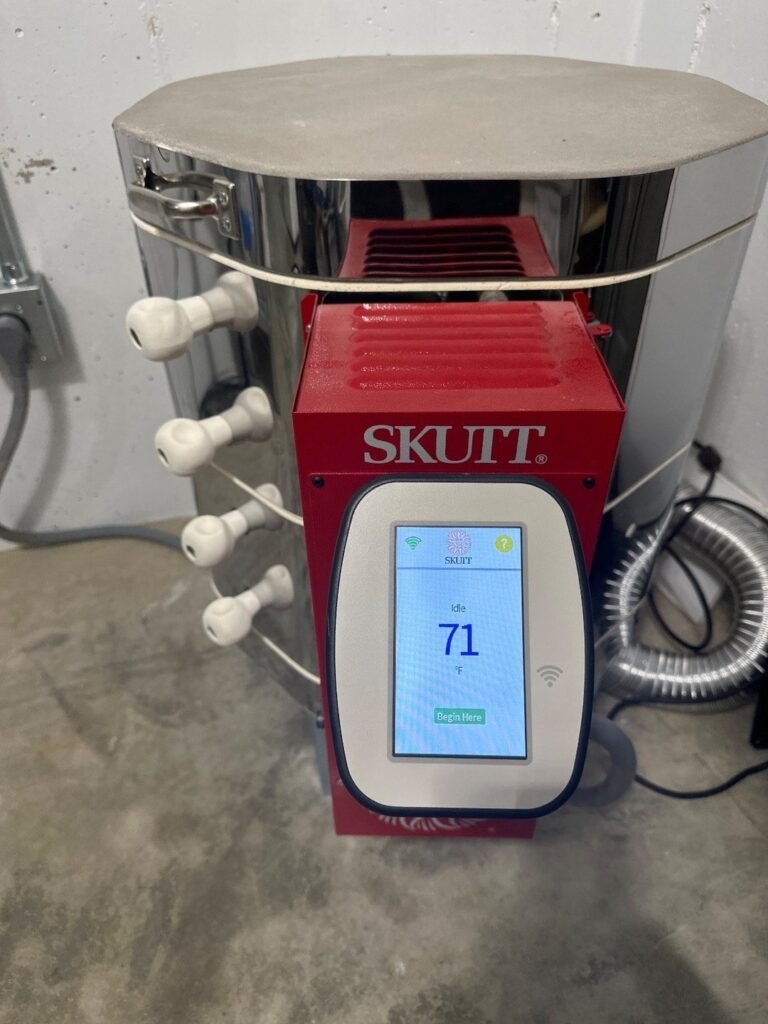
It is a small feature, but it has several jobs.
You can use a kiln peephole to observe witness cones, check the firing chamber, and monitor what is happening inside without opening the entire lid.
The peephole can also be part of the kiln’s ventilation strategy.
That last point is where many potters get confused.
Some kilns are designed to operate with one or more peepholes open during firing when no downdraft ventilation system is installed. Other kilns equipped with a purpose-built downdraft vent can be operated with the peepholes plugged according to the manufacturer’s instructions.
So there is no universal rule that says every kiln peephole should always be open or always be plugged.
The correct setup depends on the kiln, the firing process, and the ventilation system.
Skutt’s operating documentation, for example, instructs owners without a downdraft ventilation system to leave the appropriate peephole open for venting, while its EnviroVent system allows the firing chamber to be vented through the dedicated ventilation system.
Skutt Ceramic Kilns: Using the Product
Understanding that distinction can prevent a very common kiln-loading mistake.
What Is a Kiln Peephole?
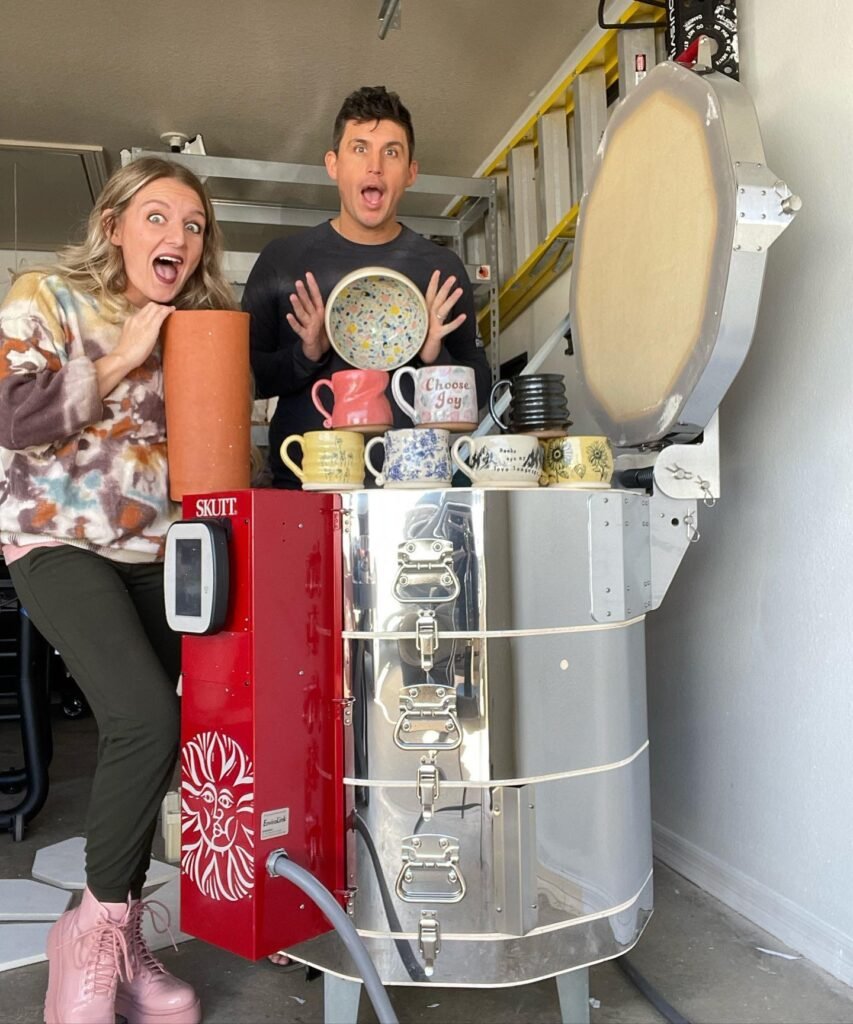
A kiln peephole is an opening through the kiln wall that provides access to the firing chamber.
The opening is usually positioned on the side of the kiln.
A refractory plug fits into the opening when the peephole does not need to remain open.
The design is simple.
The function is not.
A kiln peephole can provide:
- Visual access to the firing chamber
- A way to observe witness cones
- A controlled opening for moisture and gases in some kiln configurations
- Access for certain measuring devices or pyrometers when specifically designed for that purpose
Skutt defines the peephole as an opening in the kiln wall that allows visual inspection of the chamber during firing.
The manufacturer also describes peephole plugs as refractory components used to close those openings.
This makes the kiln peephole part of the kiln’s operating system rather than simply a viewing window.
Why Do Pottery Kilns Have Peepholes?
The most obvious reason is observation.
A potter can look through the opening without lifting the lid.
That is particularly useful when checking witness cones.
Witness cones are small pyrometric devices that bend at specific levels of heat work.
They provide information about what the ware actually experienced during the firing.
A controller might report a target temperature.
A kiln peephole gives you a way to visually inspect what is happening inside.
Skutt specifically describes its peepholes as useful for viewing pyrometric witness cones during firing.
Skutt Ceramic Kilns: Peep Plugs
This makes the peephole particularly useful when troubleshooting firing results.
If the controller says the kiln reached the target but the witness cones show something different, the cones provide another piece of evidence.
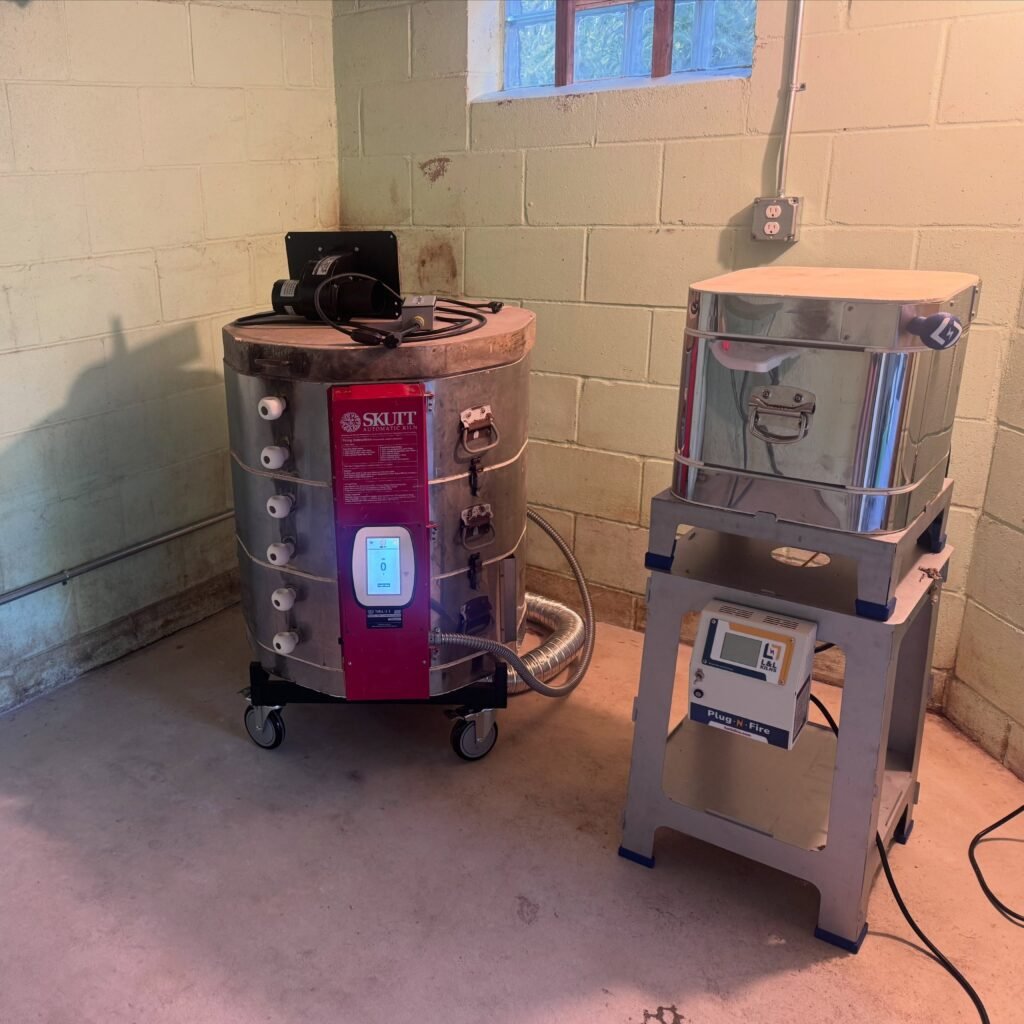
Kiln Peephole and Ventilation
The second major function is ventilation.
This is where the kiln peephole becomes more than a viewing port.
During firing, moisture and volatile materials are released from ceramic ware.
Organic materials and other compounds can also produce vapors.
The kiln needs an appropriate way to manage those materials.
Older or traditionally operated electric kilns may rely partly on openings in the kiln to allow vapors to escape.
A dedicated downdraft ventilation system works differently.
Instead of relying primarily on open peepholes, it draws air and gases through the kiln and exhausts them through the ventilation system.
Skutt’s documentation explains that EnviroVent systems allow the kiln to operate with the peepholes plugged while the ventilation system handles the exhaust path.
That distinction is important.
Do not copy the firing procedure from one kiln onto another without checking its ventilation configuration.
Should a Kiln Peephole Be Open During Firing?
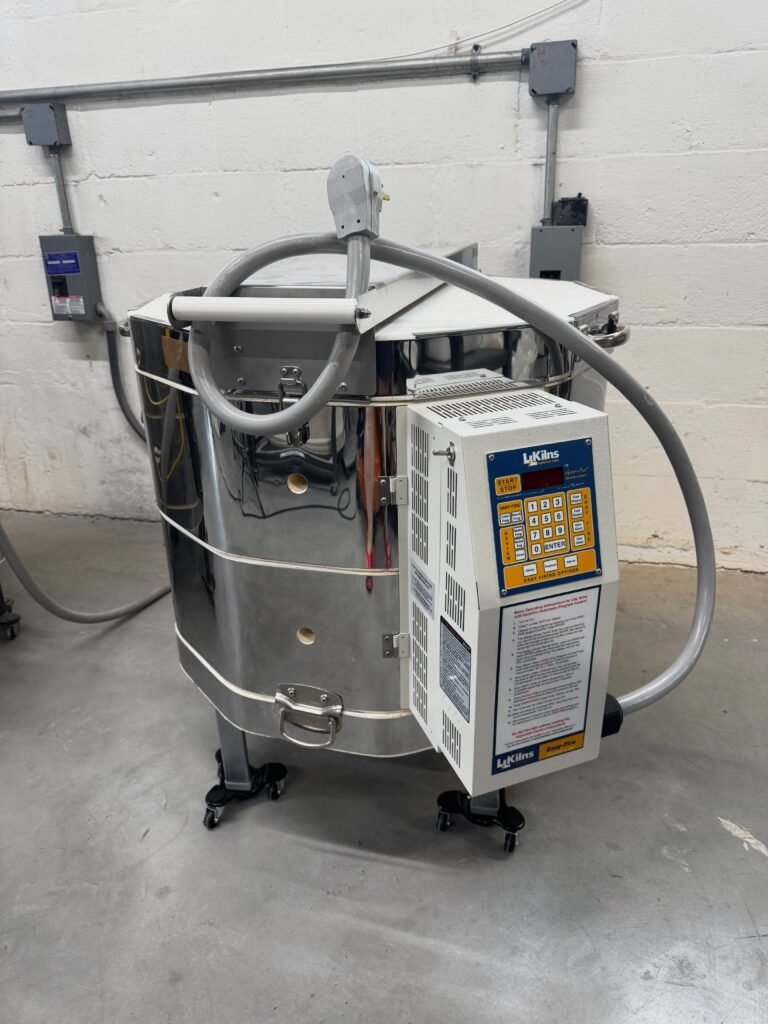
Sometimes.
The correct answer depends on the kiln and ventilation system.
Skutt’s older operating manuals instruct users without a fan-driven downdraft ventilation system to leave the top peephole open so vapors can exit the kiln.
With an EnviroVent system, the manufacturer states that the peepholes can remain plugged because the ventilation system provides the intended exhaust path.
Skutt KilnMaster Operating Manual
This means the question should not be:
“Should I always leave my kiln peephole open?”
The better question is:
“What does my kiln manufacturer’s ventilation procedure require for my specific kiln?”
That is the rule to follow.
When Should You Remove a Kiln Peephole Plug?
If your kiln is designed to use an open peephole during part or all of the firing, remove the appropriate plug according to the manufacturer’s instructions.
Do not randomly remove plugs simply because you think the kiln needs more air.
The location matters.
The timing matters.
The ventilation system matters.
And the firing stage matters.
Skutt’s older operating instructions describe leaving the top peephole open when no downdraft ventilation system is installed.
Other kiln models may use different procedures.
Always check the manual for the specific kiln.
Can You Fire With All the Peepholes Plugged?
It depends.
A kiln with an appropriate downdraft ventilation system may be designed to fire with the peepholes plugged.
A kiln without such a system may require one or more openings to remain open during firing.
Skutt’s EnviroVent documentation is a good example of this distinction.
The ventilation system draws air down through the kiln and exhausts it from below, changing the way the kiln is vented.
Do not assume that plugging every hole automatically improves firing.
The holes and ventilation system were designed to work together.
Kiln Peephole and Witness Cones
This is probably the most useful reason to have a kiln peephole.
Witness cones give you information about heat work.
You can place them on kiln shelves and view them through the peephole during firing.
This lets you observe how the cones are progressing without opening the kiln.
Opening the lid unnecessarily during a high-temperature firing can introduce a significant amount of heat loss.
A peephole gives you a much smaller access point.
When viewing cones, use appropriate eye protection.
Never place your face directly against the opening.
The inside of a kiln can contain intense radiant heat even when you cannot see an obvious problem.
How to Look Through a Kiln Peephole Safely
Looking into a hot kiln requires caution.
The opening is small.
That does not mean it is harmless.
You may encounter intense infrared radiation, hot gases, or a sudden release of heat.
Use appropriate eye protection designed for high-temperature kiln observation.
Keep your face and body away from the opening.
Do not stare into a hot kiln casually.
Do not place an unprotected eye directly against the opening.
And do not assume that a quick look is automatically safe because the peephole is small.
Skutt’s educational material on peephole use specifically emphasizes eye protection when observing the firing chamber and cones.
The purpose of the peephole is controlled observation, not unrestricted access to the hot chamber.
What Is a Kiln Peephole Plug Made Of?
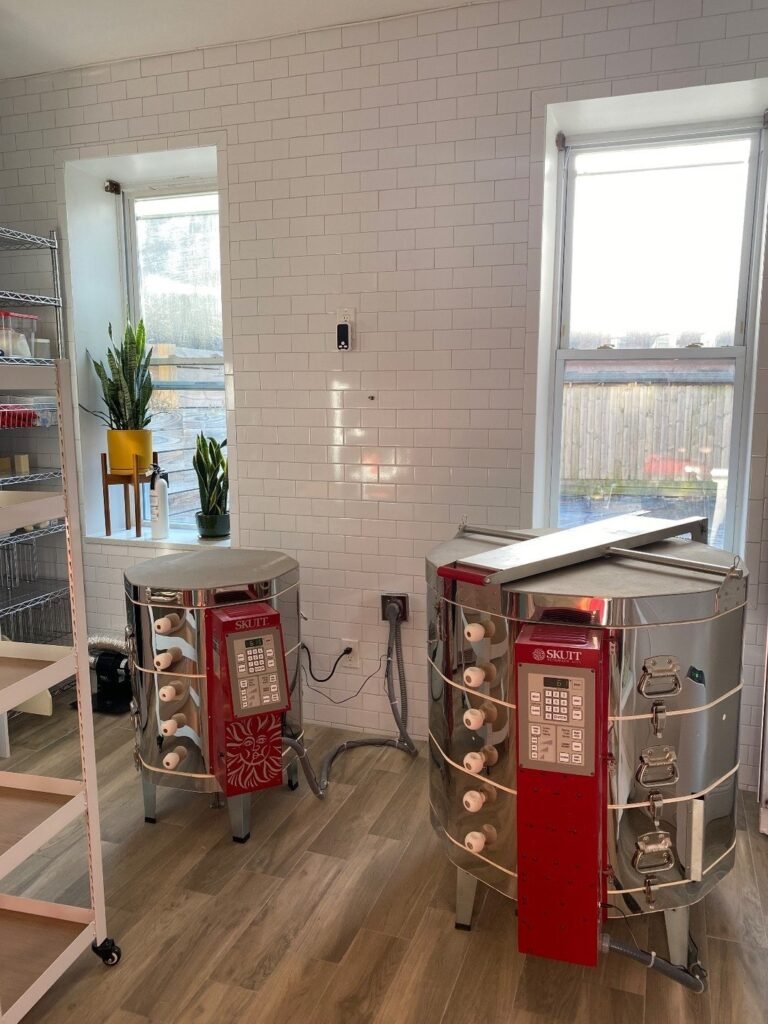
Peephole plugs are refractory components designed to tolerate kiln temperatures.
They are commonly made from refractory ceramic materials.
Skutt supplies porcelain peephole plugs with its applicable kilns.
Other manufacturers use their own designs.
Paragon currently sells several types of peephole plugs, including straight and tapered designs as well as plugs drilled for thermocouples or pyrometers.
The exact shape matters.
A plug that fits one kiln may not fit another correctly.
That is why replacement plugs should be matched to the kiln opening.
Can You Make Your Own Kiln Peephole Plug?
It is possible to make a ceramic plug for some applications, and Skutt has even published educational material about making decorative functional peephole plugs.
But there is an important distinction between a ceramic art project and a manufacturer-approved replacement component.
A homemade plug needs to fit correctly and tolerate the intended firing temperature.
It also should not interfere with ventilation.
Skutt’s own educational material describes making functional peephole plugs from fired clay and provides dimensions for the particular peephole configuration discussed in that material.
That does not mean those dimensions apply to every kiln.
If you are making a replacement for an actual kiln, measure the opening and check the manufacturer’s specifications.
Why Does the Kiln Peephole Plug Keep Falling Out?
A plug that repeatedly falls out can indicate a fit problem.
Possible causes include:
- Wrong plug size
- Incorrect plug shape
- Damaged peephole brick
- Worn opening
- Improper installation
- Vibration or movement
- A homemade plug with incorrect dimensions
Do not solve the problem by forcing a plug into the opening.
You want a secure fit without damaging the surrounding refractory material.
Paragon sells different peephole plug shapes and sizes for this reason.
A straight plug and a tapered plug are not necessarily interchangeable.
Can You Replace a Damaged Kiln Peephole?
Usually, the plug is the replaceable component.
The refractory brick surrounding the opening is another matter.
If the brick itself is chipped or damaged, inspect it carefully.
A small chip may not matter.
A large broken section can affect the fit of the plug or the integrity of the kiln wall.
This is where the issue overlaps with general firebrick maintenance.
The Kiln Depot’s kiln brick repair guide covers cracks, chips, holes, and other types of insulating firebrick damage.
Do not enlarge a peephole simply because the existing plug no longer fits.
Determine why the fit changed first.
Kiln Peephole Plugs With Thermocouple Holes
Some specialized plugs contain a small hole designed to accommodate a thermocouple or pyrometer.
Paragon currently offers peephole plugs with drilled openings for different measuring devices.
For example, its PL1 plug has a 1/2-inch thermocouple opening, while another plug is designed with a smaller 1/8-inch opening for a pyrometer.
Paragon Thermocouple Peephole Plug
Paragon Pyrometer Peephole Plug
This can be useful when a kiln needs a measurement device inserted through an existing peephole rather than requiring a new hole to be drilled into the kiln.
But do not assume that any thermocouple can be passed through any plug.
Measure the probe.
Confirm the plug dimensions.
Follow the measuring device manufacturer’s instructions.
Kiln Peephole vs Thermocouple
These two components serve different purposes.
The thermocouple is the temperature sensor used by the controller.
The peephole is an opening in the kiln wall.
A peephole can provide visual access.
A thermocouple provides an electrical temperature signal to the control system.
The two can work together when a specialized peephole plug is designed to accommodate a separate measuring device.
But you should not confuse the peephole with the kiln’s primary temperature sensor.
The Kiln Depot’s kiln thermocouple guide covers the actual thermocouple, including failure symptoms, positioning, replacement, and the difference between common thermocouple types.
Kiln Peephole and Kiln Ventilation Systems
If your kiln has a dedicated ventilation system, the peephole procedure may change.
A downdraft vent is designed to create a controlled airflow path through the kiln.
Instead of relying on the peephole as the main exhaust opening, the ventilation system pulls air and vapors downward and out through the exhaust system.
That can allow the peepholes to remain plugged.
But the exact procedure depends on the kiln and vent.
Skutt’s EnviroVent system is specifically designed to work with its compatible kilns and allows peepholes to remain plugged during firing.
This can improve control over the exhaust path and reduce reliance on uncontrolled openings.
The Kiln Depot’s kiln ventilation guide explains the broader difference between dedicated kiln ventilation and ordinary room exhaust.
Do Peepholes Replace Kiln Ventilation?
No.
A peephole is not a substitute for a properly designed kiln ventilation system.
An open hole in the kiln may allow some gases and vapors to escape.
That does not make it equivalent to source-controlled ventilation.
A dedicated ventilation system is designed to capture and exhaust kiln emissions in a more controlled manner.
This distinction matters particularly in enclosed home studios.
A kiln located inside a room still needs appropriate ventilation regardless of whether it has peepholes.
Do not use open peepholes as an excuse to ignore studio ventilation.
Kiln Peephole and Moisture During Early Firing
Ceramic ware contains moisture.
Some of that moisture must leave the piece during heating.
The kiln’s early firing stages therefore need to accommodate moisture release.
Skutt’s educational material explains that the peephole allows moisture driven off by heat to escape.
This is particularly relevant during the early portion of firing.
However, ventilation requirements vary depending on the kiln and firing procedure.
A dedicated vent can provide another route for moisture and vapors.
The important point is to follow the firing and ventilation procedure for your equipment rather than inventing a new one.
Why Should You Not Leave the Lid Open Instead?
Some older firing procedures use a cracked or propped lid during early stages.
That does not mean the lid should always be open.
The kiln manufacturer may provide a specific lid-propping or peephole procedure.
A peephole provides a much smaller controlled opening.
A dedicated ventilation system provides another option.
Opening the entire lid changes the firing environment significantly and can increase heat loss.
Do not substitute one method for another without checking the kiln instructions.
Kiln Peephole Problems on an Older Kiln
Older kilns deserve extra inspection around the peepholes.
Check:
- Plug condition
- Opening shape
- Surrounding firebrick
- Cracks
- Missing refractory material
- Glaze buildup
- Plug fit
- Signs of overheating
- Ventilation configuration
If the kiln has been operated for many years, the plugs may have been lost or replaced with incorrect parts.
That does not necessarily make the kiln unusable.
It does mean you should identify the correct replacement before firing.
A used kiln should be evaluated as a complete system rather than just a controller and a box of firebrick.
The Kiln Depot’s used pottery kiln inspection guide covers the broader inspection process.
Common Kiln Peephole Mistakes
Mistake 1: Assuming Every Peephole Should Be Open
Ventilation configuration determines the correct procedure.
Mistake 2: Plugging Every Hole Without Checking the Manual
A kiln without a dedicated ventilation system may require an open peephole during firing.
Mistake 3: Using the Wrong Plug
Different plugs can have different diameters, shapes, and functions.
Mistake 4: Looking Into a Hot Kiln Without Eye Protection
Radiant heat can injure your eyes.
Use appropriate protection.
Mistake 5: Using a Peephole as a Substitute for Ventilation
A small opening is not equivalent to a dedicated kiln ventilation system.
Mistake 6: Drilling a New Hole Without a Reason
If you need access for a pyrometer or thermocouple, check whether a compatible drilled plug is available first.
Mistake 7: Forcing a Plug Into a Damaged Opening
Find out why the plug no longer fits.
Mistake 8: Ignoring Witness Cones
One of the biggest benefits of the peephole is being able to observe cones during firing.
Use it.
How to Maintain a Kiln Peephole
Peephole maintenance is simple.
Inspect the opening periodically.
Check the plug.
Remove loose debris around the opening.
Make sure the plug is not damaged.
Do not allow glaze or other material to permanently obstruct the opening.
If the refractory surrounding the peephole is damaged, evaluate the brick before continuing to use the kiln.
Keep spare plugs available.
Paragon explicitly recommends keeping a spare peephole plug on hand for applicable kilns.
That is inexpensive insurance against losing one during loading or maintenance.
Kiln Peephole Inspection Checklist
Before firing, check:
☐ Correct peephole plugs are available
☐ Plugs fit correctly
☐ No plug is cracked or badly damaged
☐ Surrounding firebrick is intact
☐ Ventilation system is operating correctly
☐ Peephole configuration matches the manufacturer’s instructions
☐ Witness cones can be observed if needed
☐ No object is obstructing the opening
☐ Appropriate eye protection is available
☐ Any specialized thermocouple or pyrometer plug matches the probe
This takes less than a minute and can prevent a surprisingly annoying problem during firing.
FAQ: Kiln Peephole
What is a kiln peephole used for?
A kiln peephole provides visual access to the firing chamber and can allow observation of witness cones. Depending on the kiln and ventilation configuration, it can also be part of the kiln’s venting strategy.
Should a kiln peephole be open during firing?
Not always.
Follow the manufacturer’s instructions for your kiln and ventilation system. Some kilns require an open peephole when no downdraft vent is installed, while compatible downdraft systems may allow the peepholes to remain plugged.
Can I look through the peephole during firing?
Yes, when appropriate, but use proper high-temperature eye protection and keep your face away from the opening.
Can I fire with all peepholes plugged?
Some kilns can, particularly when equipped with a compatible downdraft ventilation system.
Do not assume this applies to every kiln.
Do peepholes help remove kiln fumes?
They can provide an opening through which vapors escape, but they are not equivalent to a dedicated kiln ventilation system.
Can I use a homemade peephole plug?
A properly designed refractory plug may work for some applications, but it must fit correctly and tolerate the firing temperature.
For a replacement, a manufacturer-specified plug is the safer choice.
Can I put a thermocouple through a peephole?
Some specialized plugs are designed for this purpose.
Use the correct plug and verify the diameter of the measuring device.
How often should I replace a peephole plug?
There is no universal replacement interval.
Replace it when it is cracked, damaged, no longer fits properly, or otherwise cannot perform its intended function.
Final Takeaway
The kiln peephole is a small feature with several important jobs.
It gives you access to the firing chamber without opening the lid.
It lets you observe witness cones.
It can provide a controlled opening for moisture and vapors.
And, depending on the kiln’s ventilation system, it can form part of the overall firing ventilation strategy.
The most important rule is simple:
Do not treat every kiln peephole the same.
A kiln operating without a dedicated downdraft ventilation system may have different peephole requirements from one connected to an EnviroVent or another purpose-built ventilation system.
Check the manual for your exact kiln.
Use the correct refractory plugs.
Keep spares available.
Use proper eye protection when viewing a hot chamber.
And remember that a peephole is not a replacement for proper studio ventilation.
Once you understand how the opening, plug, witness cones, thermocouple, and ventilation system work together, this little hole in the side of the kiln stops being an afterthought and becomes a useful part of your firing setup.
