A rolling kiln stand can make a pottery studio easier to use, especially when your kiln sits in a garage, basement, classroom, or small workspace. Instead of leaving the kiln permanently fixed in one position, a rolling kiln stand gives you more flexibility when cleaning, reorganizing, or accessing the space around the kiln.
However, not every kiln stand fits every kiln.
The stand needs to support the kiln correctly, provide enough stability, and give you the clearance and working height your studio requires. Therefore, buying the cheapest stand you can find is not always the smart move.
Before you buy a rolling kiln stand, check these seven things.
1. Check Your Kiln Model First
The first step is simple.
Find the exact model of your kiln.
Do not shop for a stand based only on the kiln’s outside appearance. Different kilns have different footprints, shapes, mounting requirements, and weight distributions.
For example, a stand designed for one Skutt kiln may not be the correct choice for another model. Likewise, a stand made for a Paragon kiln should not automatically be assumed to fit a different brand.
Before ordering, check the manufacturer’s compatibility information.
Also, look at your kiln’s dimensions and footprint. If you already own the kiln, measure it rather than relying on memory.
Getting this right at the beginning can prevent an expensive return or an unsafe setup later.
2. Decide Whether You Actually Need a Rolling Kiln Stand
Not every pottery studio needs wheels underneath its kiln.
If your kiln has a permanent location and you never need to move it, a stationary stand may be enough.
On the other hand, a rolling kiln stand becomes useful when your studio needs flexibility.
You may want to move the kiln so you can clean underneath it. Perhaps your kiln lives in a garage that also needs to accommodate a vehicle. Maybe you occasionally rearrange a classroom or shared studio.
In those situations, mobility can be genuinely useful.
Still, remember that a rolling stand does not mean you should casually move a hot kiln. The kiln should be handled according to the manufacturer’s safety instructions, and electrical connections, vents, and required clearances must remain appropriate.
The wheels are there to make studio organization easier, not to encourage unnecessary movement.
3. Look Closely at the Casters
The casters are one of the most important parts of a rolling kiln stand.
A kiln is heavy equipment. Once you add shelves, posts, and other kiln furniture, the total load can become substantial.
Therefore, the casters need to support the intended weight and remain stable while the kiln is stationary.
Locking casters are particularly useful.
When the kiln is in its operating position, you want the stand to stay exactly where you placed it. A locking mechanism reduces unwanted movement while you load and unload the kiln.
Also consider the floor in your studio.
A smooth concrete garage floor is very different from an uneven basement floor or a floor with thresholds and transitions. Small casters may work perfectly on one surface but become frustrating on another.
Think about how the stand will actually move before you buy it.
4. Check the Height
A kiln stand does more than lift the kiln off the floor.
It changes the working height of the kiln.
That matters because loading and unloading a top loading kiln can involve repeated bending and reaching. Raising the kiln to a comfortable height can make everyday use easier.
However, taller is not automatically better.
A stand that raises the kiln too high can make loading the upper portion uncomfortable. It can also affect the overall stability of the setup.
Instead, consider your own height, the kiln’s chamber height, and how you normally load your shelves.
If you are buying a stand for a new kiln, consider the complete working height before placing the order.
5. Make Sure the Stand Provides Proper Clearance
Clearance matters around a pottery kiln.
Your kiln needs to be installed according to the manufacturer’s requirements. That includes the space around the kiln and the surface underneath it.
A stand can help provide the correct elevation from the floor. However, it does not replace the manufacturer’s installation requirements.
You should also think about what sits underneath the kiln.
Some stands provide an open area or lower shelf. Others are designed simply to raise and support the kiln.
That difference can matter in a small studio.
For example, an open lower area may provide useful storage or space for drying work. However, anything placed around or underneath a kiln must remain compatible with safe kiln operation.
Do not treat the area beneath the kiln as general storage just because there is empty space.
6. Consider Stability Before Mobility
A rolling kiln stand has to do two jobs.
It needs to move when you want it to move.
It also needs to stay firmly in place when you do not.
That makes stability especially important.
A strong frame helps distribute the kiln’s weight across the stand. Locking casters help prevent unwanted movement. Proper sizing keeps the kiln supported rather than perched awkwardly on an undersized base.
This is why a heavy duty rolling stand can make more sense than adapting a generic furniture dolly.
A kiln is not ordinary furniture.
It reaches extremely high temperatures, weighs a lot, and contains electrical components and fragile refractory materials. The stand should be designed for the equipment rather than improvised around it.
7. Check What Comes With the Stand
Finally, look at the actual package.
Some stands are basic support frames.
Others include additional features that can make them more useful in a working pottery studio.
For example, some rolling kiln stands include locking casters. Others may include brackets, shelves, or mounting provisions for related kiln equipment.
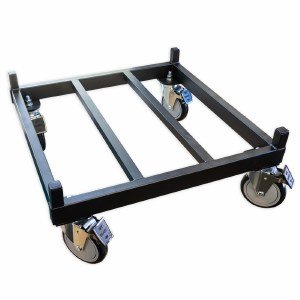
One example is the Rolling Kiln Stand 18W x 12H, which is designed as a replacement stand for certain Paragon 7 and 8 sided top loading ceramic kilns. It includes locking casters, a mounting bracket for an Orton Kiln Vent, and a lower drying rack. The stand measures 18 inches square by 12 inches high.
That kind of additional functionality can be valuable if it matches your kiln and studio setup.
However, do not pay for features you will never use.
The right stand is the one that fits your kiln and solves an actual studio problem.
Rolling Kiln Stand vs Stationary Kiln Stand
The choice usually comes down to how permanent your kiln location is.
A stationary stand makes sense when your kiln stays in one dedicated position.
A rolling kiln stand makes more sense when your workspace changes regularly.
For a garage studio, mobility can be particularly useful. You may need to move the kiln to access other equipment or reclaim floor space.
For a classroom, mobility can help with studio organization.
For a production studio with a dedicated kiln room, however, mobility may matter much less.
Therefore, start with your workflow rather than the stand itself.
Do You Need a Rolling Stand for a New Kiln?
Not necessarily.
Some kilns already include a standard stand. In that case, buying another stand may be unnecessary unless you specifically want a rolling version or a different configuration.
Skutt, for example, states that its kilns arrive with a kiln stand included.
That means you should check what comes with your particular kiln before adding another stand to your equipment budget.
If your kiln already has a suitable stationary stand, you may only need an upgrade if mobility, height, or another specific feature would improve your setup.
What Size Rolling Kiln Stand Should You Buy?
The safest approach is to match the stand to the kiln model rather than guessing from the kiln’s nominal size.
Check the kiln’s footprint.
Then check the stand’s listed compatibility.
Finally, confirm the manufacturer’s specifications before ordering.
This matters because kiln dimensions can vary even among models that appear similar.
You should also consider the total load.
The stand needs to support the kiln itself plus the normal operating configuration of the equipment. Do not assume that a stand rated for a smaller kiln will safely support a larger model simply because the base looks similar.
Are Rolling Kiln Stands Worth It?
For the right studio, yes.
The value is not really about making the kiln perform better.
A stand does not make the kiln fire hotter or improve temperature control.
Instead, it improves the way the kiln fits into your workspace.
You gain easier access underneath the kiln. You may gain a more comfortable loading height. You may also gain the ability to reorganize your studio without permanently committing valuable floor space to one position.
Those benefits become more noticeable when the kiln is located in a multipurpose room.
For a permanent kiln room, the extra cost may provide less practical benefit.
Before You Buy a Rolling Kiln Stand
Run through this checklist:
Confirm your exact kiln model.
Measure the kiln footprint.
Check the manufacturer’s compatibility information.
Verify the stand’s weight capacity.
Check the caster design and locking mechanism.
Consider the final loading height.
Confirm that the setup maintains required clearances.
Check whether the stand includes any additional features you actually need.
Finally, make sure the stand fits the way you use your studio.
That last point is easy to overlook.
Final Thoughts
A rolling kiln stand is a small piece of pottery equipment, but it can have a surprisingly large effect on how comfortably your studio works.
The important thing is not simply finding a stand with wheels.
You need a stand that fits your kiln, supports its weight, provides a stable base, and works with the layout of your studio.
If you regularly need to move your kiln, clean around it, reorganize your workspace, or reclaim garage floor space, a rolling kiln stand can be a practical upgrade.
Before buying, check compatibility first. Then look at casters, height, stability, clearance, and included features.
Once those details match your kiln and your workflow, the stand becomes more than an accessory. It becomes part of a better organized pottery studio.
