A used pottery kiln can be a great way to get serious firing capacity without paying full new-equipment pricing. It can also become an expensive repair project if you buy one without checking the parts that matter.
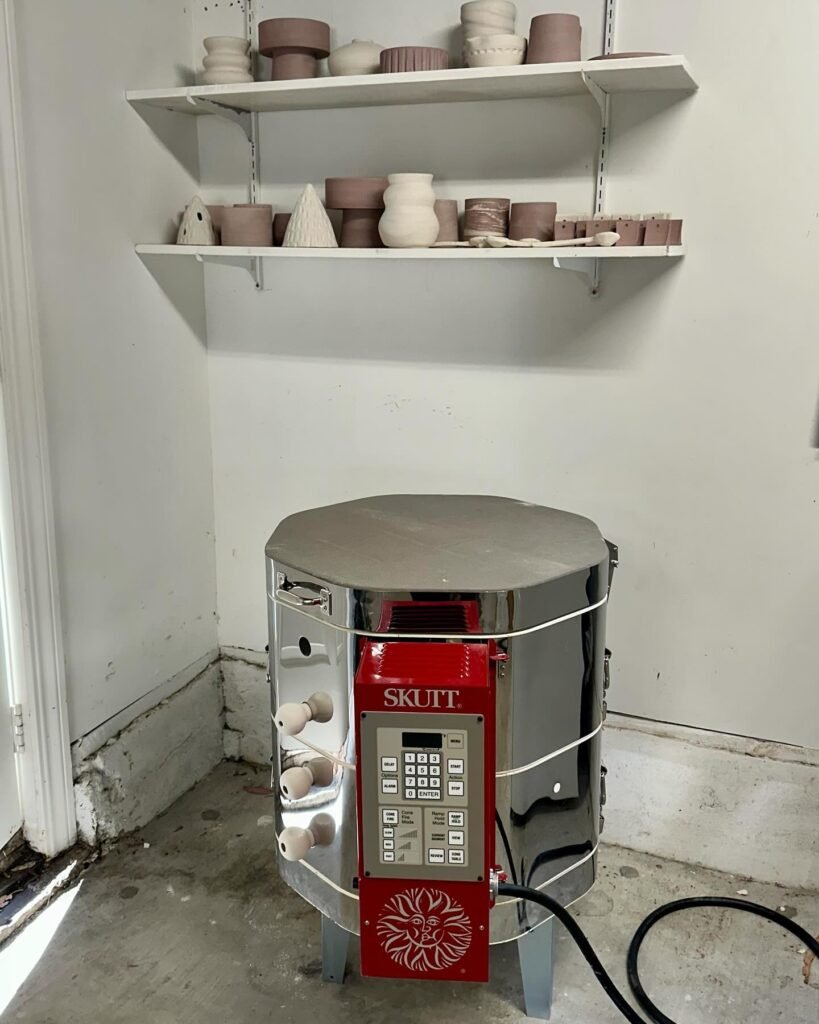
That makes the inspection more important than the age alone.
Before buying a used pottery kiln, look beyond the outside of the cabinet. Check the firebrick, heating elements, electrical specifications, controller, lid, and firing history. A kiln that looks clean can still have worn components.
Here are seven checks that can help you separate a genuine bargain from a machine that needs more money than you expected.
1. Inspect the Firebrick on a Used Pottery Kiln
Start with the brick.
Some small cracks are normal. Kiln brick expands and contracts repeatedly during firing, so minor surface cracking does not automatically mean the kiln is finished.
The bigger concern is structural damage.
Look for deep cracks that run through the brick, broken sections around element grooves, crumbling areas, and places where the element channel can no longer hold the heating element securely.
Skutt’s own kiln maintenance documentation makes the same distinction. Shallow hairline cracks can be normal, while brick should be replaced when cracks go completely through the brick or when a broken groove can no longer support the element.
That makes brick condition one of the most important things to inspect before paying for a used kiln.
For additional background on kiln inspection and maintenance, see Skutt’s official kiln maintenance documentation:
https://skutt.com/images/10.26-Kiln-Maintenance-Log.pdf
2. Check the Heating Elements
The heating elements tell you a lot about how much life remains in an older kiln.
Look for elements that have become thin, stretched, sagging, or badly oxidized.
Healthy elements should sit securely in their grooves. Excessive sagging or obvious damage deserves attention because worn elements can prevent a kiln from reaching its intended temperature efficiently.
Ask the seller when the elements were last replaced.
If they do not know, assume you may eventually need to replace them.
That does not automatically make the kiln a bad purchase. It simply changes what the kiln is worth.
A used pottery kiln with tired elements should not command the same price as an otherwise comparable unit with recently replaced elements.
The Kiln Depot has already covered the subject in more detail in:
3. Verify the Voltage and Amperage
This is one of the checks you should never skip.
Find the kiln’s data plate and record the voltage, amperage, phase, and model number.
Do not assume the electrical requirements based on the size of the kiln.
Two kilns that look similar can have very different electrical requirements.
For example, the Skutt KM-1027 is available in configurations using 208V or 240V power, with different amperage requirements.
Skutt’s official KM-1027 specifications show the electrical differences between configurations:
Your studio’s electrical service must match the kiln.
If you are buying an older kiln for a home studio, have a qualified electrician confirm that your electrical system can safely support it before installation.
The cheapest kiln in the room is not a bargain if installing it requires an unexpected electrical upgrade that costs thousands.
4. Test the Controller
A digital controller can be one of the most valuable parts of a modern electric pottery kiln.
It can also be one of the most expensive components to replace.
Turn the controller on and check whether the display works correctly.
Look for missing segments, error messages, damaged buttons, unreliable switches, or other obvious problems.
If possible, ask to see the kiln run through a firing cycle.
You want to know whether the controller communicates correctly with the kiln and whether the kiln actually reaches the programmed temperature.
Do not rely solely on the seller saying that everything works.
A test firing gives you much more useful information.
5. Look at the Lid, Bands and Hardware
Move around the kiln and inspect the exterior hardware.
Check the lid for warping or serious damage.
Look at the metal bands around the kiln sections.
Inspect hinges, handles, peep plugs, stand hardware, and other components for corrosion or obvious damage.
A little cosmetic wear is normal on used pottery equipment.
The concern is damage that affects operation or safety.
A kiln can have a scratched exterior and still be an excellent machine.
A kiln with a damaged lid, failing hardware, or compromised structure is a different story.
Separate cosmetic wear from functional problems when negotiating the price.
6. Ask About the Firing History
The kiln’s history matters.
Ask how often it was used, what temperatures it normally reached, how many firings it completed, and why the owner is selling it.
A kiln used occasionally for a hobby can have a very different wear profile from one that fired multiple loads every week in a production studio.
Ask whether the owner has replaced:
- Heating elements
- Thermocouples
- Relays
- Controllers
- Brick sections
- Wiring
- Lid components
Also ask whether the kiln has ever experienced a major electrical fault or overheating problem.
You do not need a perfect history.
You need enough information to understand what you are buying.
7. Check the Kiln With Witness Cones
A controller can tell you what temperature it thinks the kiln reached.
A pyrometric cone gives you another way to evaluate the actual heatwork.
That distinction matters because ceramic firing depends on the combined effect of temperature and time, not simply the number displayed on a controller.
The Edward Orton Jr. Ceramic Foundation explains that pyrometric cones measure heatwork and can help verify the consistency of ceramic firings.
Their explanation is worth reading if you are unfamiliar with witness cones:
When evaluating an older kiln, cones can provide useful evidence about how evenly and consistently the kiln is firing.
They are not a replacement for a proper inspection, but they are a valuable additional check.
Used Pottery Kiln vs Refurbished Pottery Kiln
There is an important difference between buying something simply because it is used and buying equipment that has been properly refurbished.
A used pottery kiln may be sold exactly as it sits.
That means the buyer takes on more responsibility for inspecting the machine and budgeting for repairs.
A refurbished pottery kiln should have undergone a more deliberate process.
That can include inspection, replacement of worn components, electrical checks, test firing, and other work depending on the seller.
The price difference can therefore make sense when the refurbishment removes uncertainty.
If your priority is the lowest possible purchase price, a used kiln can be attractive.
If your priority is reducing repair risk while still paying less than new equipment, refurbished equipment deserves serious consideration.
When Is a Used Pottery Kiln Actually a Good Deal?
Price alone does not determine value.
Consider the total cost.
Suppose you find an older kiln at a very low price.
Then you discover that it needs new elements, a thermocouple, electrical work, and brick repairs.
Suddenly, the cheap kiln is not so cheap.
Another kiln might cost more initially but include healthy elements, good brick, a working controller, and a documented test firing.
That second kiln may provide much better value.
This is why experienced buyers look at condition rather than simply searching for the lowest listing price.
Ceramic Arts Network makes a similar point in its guidance on buying electric kilns, noting that older kilns can sometimes become a false economy when they require expensive overhauling.
What Should You Pay for a Used Pottery Kiln?
There is no single used-kiln price that works across every model.
Size matters.
Brand matters.
Maximum temperature matters.
Voltage matters.
Controller type matters.
Condition matters.
The cost and availability of replacement parts matter too.
A small test kiln and a large seven-cubic-foot studio kiln should never be valued using the same formula.
The same applies to a kiln with a modern digital controller versus an older model that needs significant electrical or mechanical work.
Instead of asking only:
“How cheap is this kiln?”
Ask:
“What will this kiln cost me after I own it?”
That is the number that actually matters.
When Should You Walk Away?
Some problems should make you extremely cautious.
Walk away or negotiate aggressively if you find:
- Severe structural brick damage
- Burned or damaged wiring
- A controller that will not operate
- Major lid or body distortion
- Missing critical components
- Unknown electrical specifications
- Evidence of serious overheating
- A seller unwilling to demonstrate that the kiln operates
- A price that leaves no room for likely repairs
You do not have to buy a problematic kiln simply because the price looks attractive.
There will always be another piece of used pottery equipment.
Is Refurbished Equipment Worth Considering?
For buyers who want savings without taking on the full uncertainty of private-party used equipment, refurbished equipment can be a useful middle ground.
The Kiln Depot carries both new equipment and refurbished equipment, with refurbished units inspected and tested before shipping.
You can browse the current equipment selection here:
The important thing is to understand exactly what “refurbished” means before buying.
Ask what was inspected.
Ask what was replaced.
Ask whether the equipment was test fired.
Ask what warranty is included.
Those answers tell you far more than the word refurbished by itself.
Final Thoughts
Buying a used pottery kiln can be one of the smartest ways to reduce the cost of building a ceramic studio.
It can also become a frustrating purchase if you focus entirely on the sticker price.
Inspect the brick.
Check the elements.
Verify the electrical requirements.
Test the controller.
Examine the hardware.
Ask about the firing history.
Then use witness cones and a proper test firing whenever possible.
A good used kiln should save you money without creating a second project that costs more than the equipment itself.
If you want the savings of used equipment but prefer less uncertainty, compare properly inspected refurbished equipment against new models before making your decision.
The goal is not simply to buy the cheapest pottery kiln.
The goal is to buy the best kiln you can afford for the work you actually plan to do.

Pingback: Kiln Brick Repair: How to Fix Cracks, Chips and Firebrick Damage