Kiln elements typically last 1 to 5 years, or roughly 100 to 200 firings, before needing replacement. The exact lifespan depends heavily on firing temperature and frequency. A real documented example on a Skutt 818 shows elements lasting close to 1,000 firings. A full replacement on that model ran around $750, including labor. Higher-fire, more frequent use shortens that lifespan a lot.
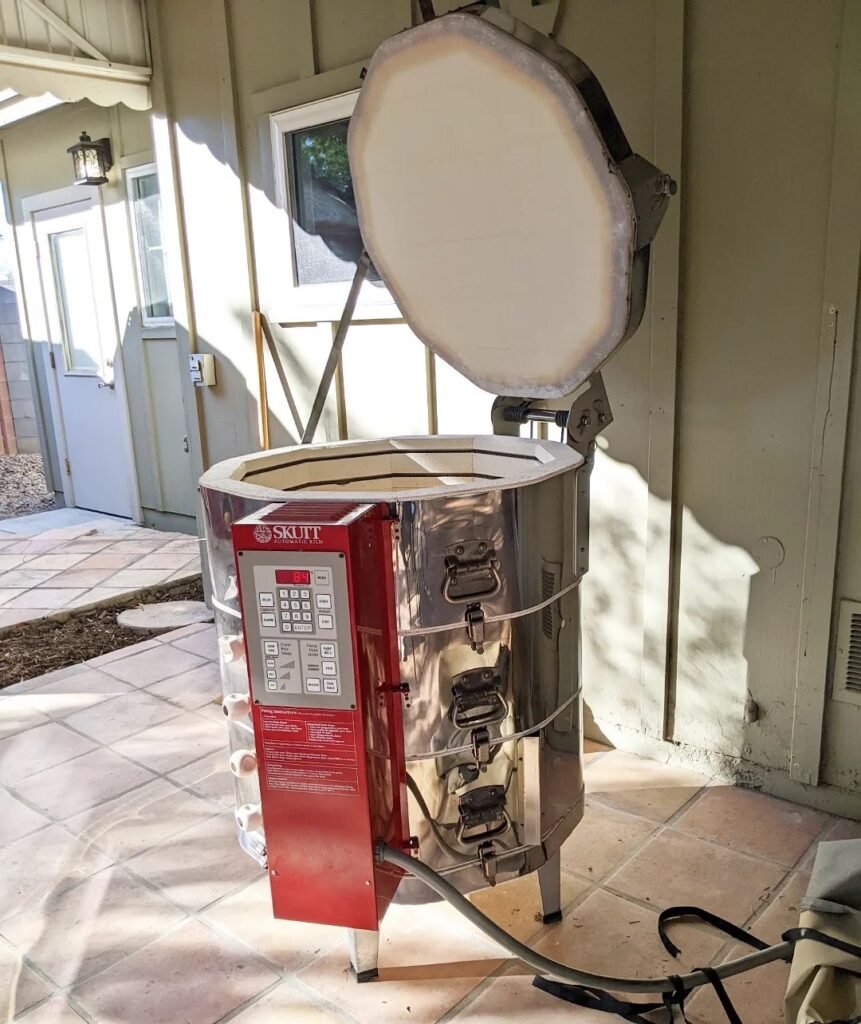
This guide covers what actually wears elements out. It also covers real cost examples and how to extend their life.
Why Kiln Elements Wear Out at All
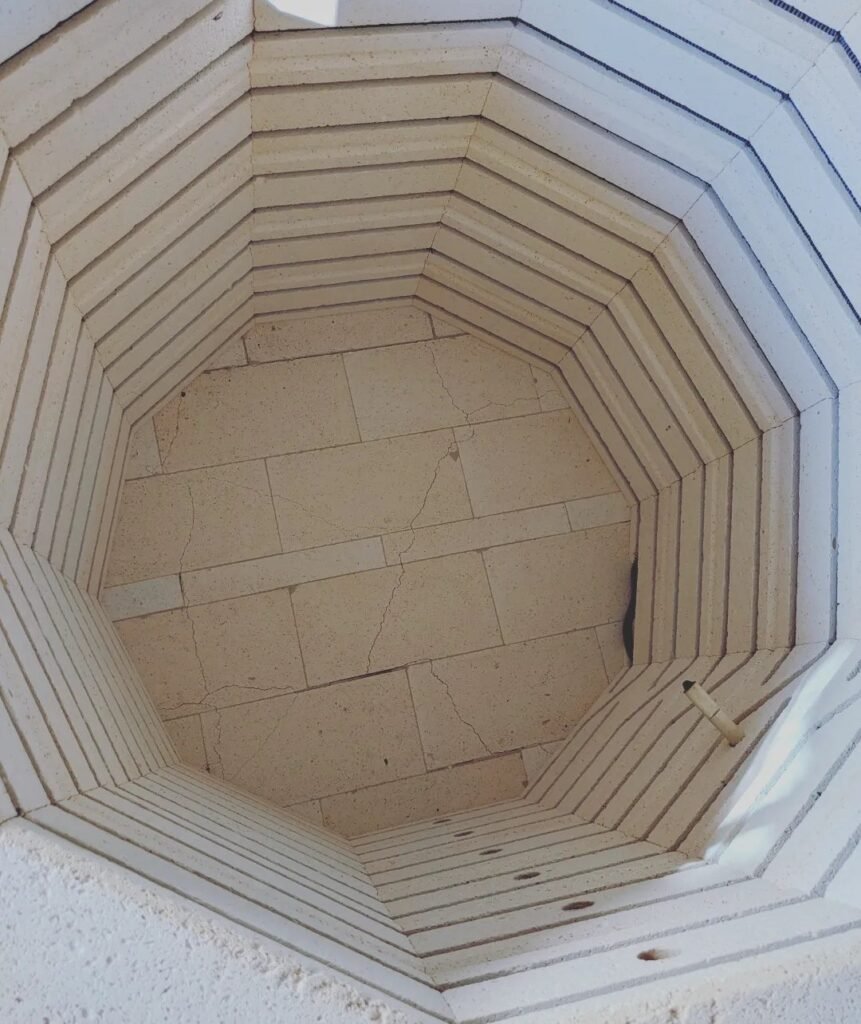
Kiln elements are made from a wire alloy, most commonly Kanthal A-1, that oxidizes as it heats. The hotter the element gets, the faster that oxidation happens. Elements start oxidizing meaningfully around 1832°F. That’s right in the range where bisque and earthenware firing typically happens.
Time spent at high temperature compounds the problem. A slow-cooling cone 6 glaze firing puts more heat stress on elements than a quick bisque cycle. This holds true even if both firings reach a similar peak temperature.
A Real Documented Example
One detailed real-world case covers replacing elements on a Skutt 818. It’s a smaller, well-powered kiln. Its elements lasted close to 1,000 firings under a roughly even mix of bisque and cone 6 glaze work.
The 818 has four elements and two relays. Parts run $95 per element and $65 per relay. Add about four hours of labor at $250, and the full job ran close to $750 total. Broken down per firing, that works out to roughly 75 cents per firing. That’s a genuinely small number once spread across nearly a thousand uses.
Larger Kilns Wear Elements Faster
An 8 cubic foot kiln with five elements and three relays can cost around $1,100 to fully replace. Its elements typically last only around 200 firings, a real difference from the smaller 818’s nearly 1,000-firing lifespan.
This isn’t a flaw in larger kilns. It reflects a simple reality. Bigger chambers and heavier firing schedules put more stress on elements over the same calendar time.
What Actually Shortens Element Life
Higher firing temperatures shorten element life more than almost any other factor. Studios firing regularly to cone 10 replace elements far more often than those staying at cone 6 or lower.
Firing frequency matters just as much as temperature. A kiln fired weekly builds up wear far faster in calendar time than one fired once a month. Each individual firing puts roughly the same stress on the elements either way.
How to Extend Element Life
Skutt’s own guidance recommends firing at the proper temperature and duration for your work. Avoid extra time spent at peak heat. Avoid overloading the kiln too. A packed chamber can force elements to work harder to reach target temperature.
Routinely inspecting connections and tightening anything loose also helps. A poor connection can create a hot spot. That hot spot then speeds up wear in one specific area, rather than spreading it evenly.
Relays and Thermocouples Wear Out Too
Mechanical relays typically last 12 to 24 months, or about 200,000 cycles. They run $100 to $200 to replace. Solid-state relays cost more upfront. They can outlast the kiln itself, though, a real option if you want to cut this specific cost long term.
Thermocouples wear even faster. They often need replacement every 30 to 50 firings at higher temperatures, for around $25 to $80 each. These are the components most likely to need attention between full element replacements.
Budgeting This Into Your Real Costs
Most professional studios budget roughly $200 to $400 every 100 to 150 firings for element replacement. Building this into your per-piece pricing, rather than treating it as a surprise expense, keeps your studio’s real costs accurate.
Signs Your Elements Actually Need Replacing
Watch for elements that no longer glow bright orange during a firing. A dim or dark section usually means that part has stopped working well. Uneven cones after a firing point the same way. If one cone bends less than the others near it, the nearby element is likely worn.
Loops that sag or sit close together are another clear sign. Fresh elements sit tight and even in their grooves. Over time, heat causes them to stretch and droop, sometimes touching each other. Left too long, this can create a real hot spot or even a short in the kiln.
How This Applies to Smaller Kilns Too
A compact kiln like the Skutt KM-614-3 follows the same real principles. Fewer elements generally mean a lower total replacement cost. Lighter, less frequent use still stretches that lifespan further, the same as it does on any kiln size.
Buying a kiln sized to your actual firing volume keeps element wear proportional to real use. Don’t buy something larger than you actually need.
Skutt KM-1027
A 7 cubic foot kiln built with Skutt’s proven element design. Real parts stay available when replacement time eventually comes.
Ready to Plan for the Long Term?
Browse our complete kiln collection to find a model with real long-term maintenance support.
