3-inch brick vs 2.5-inch brick comes down to real insulation and energy savings, not just marketing language. Skutt’s own guidance confirms 3-inch brick delivers roughly 15% better energy efficiency on average. On some models, it even raises the kiln’s max cone rating. This isn’t a cosmetic upgrade. It changes real performance.
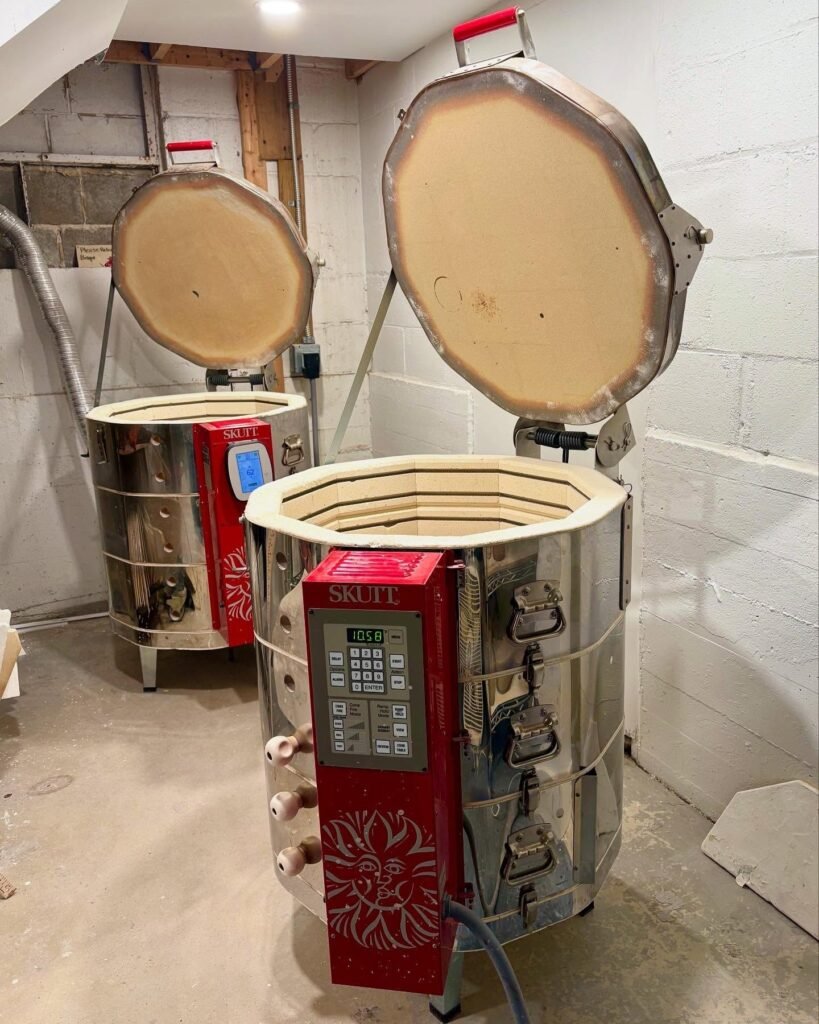
This guide covers what the thicker brick actually does, and when it’s worth paying more for.
Why Brick Thickness Matters at All
Skutt builds kilns with two brick thicknesses, 2.5 inches and 3 inches. Some models, including all 1227 and 1627 kilns, come standard with 3-inch brick. Their chamber size, power draw, and element design need the added insulation to perform well.
Other models offer 3-inch brick as an optional upgrade rather than a standard feature. This gives buyers a real choice between the lower-cost standard build and the added insulation of the thicker option.
The Real Energy Savings
With more insulation, a kiln doesn’t have to work as hard to reach peak temperature. The elements run happier under less strain, and the power meter spins a little less throughout the firing.
Skutt itself notes that exact savings vary by individual firing habits, but 15% is a reasonable average estimate. Over years of regular firing, that adds up to real, meaningful savings on your electric bill.
Sometimes It Changes Your Cone Rating Entirely
This is the detail most buyers miss. Take the KM1027 208V version as an example. Upgrading to 3-inch brick actually raises the kiln’s max firing temperature from cone 6 to cone 10.
On the KM1027 240V model, though, the higher voltage already supports cone 10, regardless of brick thickness. Whether the upgrade changes your actual firing range depends entirely on your specific kiln’s voltage and power configuration.
Element Life Benefits Too
Better insulation doesn’t just save energy. It can extend element life as well. Elements under less strain to reach temperature see less wear over time.
This connects directly to the real replacement costs and lifespan differences covered in our kiln element guide. Reduced strain from better insulation is one of the real, practical ways to stretch that lifespan further.
What Actually Makes Thicker Brick a Better Insulator
Kiln brick works as insulation because of its structure, not just its thickness alone. Soft firebrick, the type used in most electric kiln walls, is light and porous by design. That porosity traps tiny air pockets, and air is a poor conductor of heat.
More brick simply means more of that insulating structure between the heat inside your kiln and the outside world. Industry sources on kiln construction note that 3-inch brick can provide roughly 20% more insulation than the standard 2.5-inch option.
How Element Life Connects to Insulation
Better insulation doesn’t just save energy directly. It also reduces the workload on your elements. They don’t have to push as hard to reach and hold peak temperature. This connects directly to real element wear and replacement costs. See the KM-614-3 and other Skutt models for different brick options.
Is the Extra Cost Worth It?
Say you’re firing regularly and plan to keep the kiln for years. The 3-inch brick often pays for itself through energy savings and longer element life. The upfront cost is real, but so is the long-term return.
Say your model’s cone rating already meets your needs at the standard 2.5-inch thickness, and you only fire occasionally. The upgrade matters less in that case. Weigh your actual firing frequency and long-term plans before deciding.
Quick Reference: 3-Inch vs 2.5-Inch Brick
| Factor | 2.5-Inch Brick | 3-Inch Brick |
|---|---|---|
| Insulation | Standard | Roughly 20% more |
| Energy Savings | Baseline | ~15% average |
| Element Life | Standard wear | Reduced strain, often longer life |
| Cone Rating Impact | Model-dependent | Can raise max cone on some models |
Real Buyer Experience
Potters comparing brick options for mixed bisque and glaze work often lean toward the thicker brick. The insulation and efficiency benefits appeal to them. This holds true even when their firing temperature doesn’t strictly require it.
Skutt KM-1027
Check the specific model’s brick thickness and available upgrades before buying. This detail affects both efficiency and, on some versions, max cone rating.
Ready to Compare Your Options?
Browse our complete kiln collection to compare brick thickness and cone ratings across every model.
