Yes, you fire both bisque and glaze in the same kiln. Most home and studio kilns handle both firing types, just at different temperatures and on different schedules. The real question isn’t whether one kiln can do both. It’s whether you should fire bisque and glaze pieces together in the same load. That’s a separate and more tricky question.
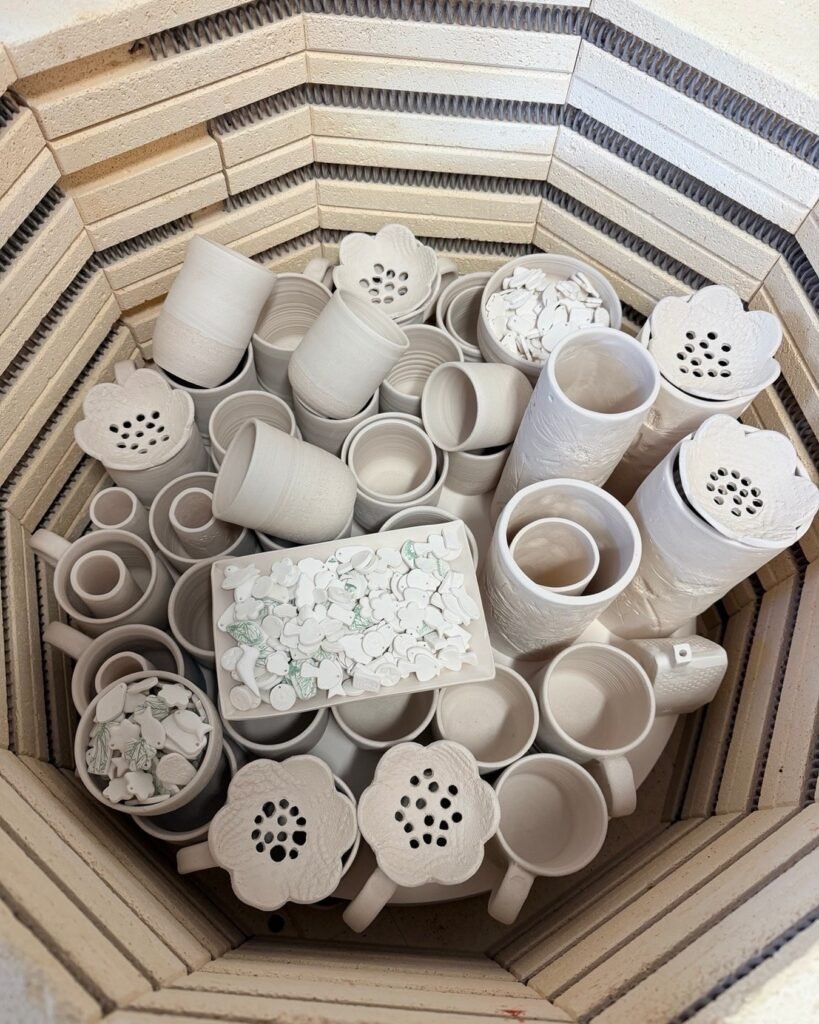
This guide covers how each firing type actually works, and the real risks of combining them in one load.
Why the Same Kiln Handles Both Firings
A bisque firing converts raw, bone-dry clay into a hard, porous ceramic. Most clay bodies bisque fire to around cone 06 to cone 04. This holds true no matter what cone they’ll eventually reach during glaze firing.
A glaze firing comes second and runs hotter. Typical targets are cone 06 for low-fire work, cone 6 for mid-fire stoneware, or cone 10 for high-fire pieces. The same electric kiln handles this higher temperature just fine. It’s simply running its program to a different peak.
Why Bisque Firing Happens First
Bisqueware’s porous surface is exactly what makes it good at absorbing glaze evenly. Raw, unfired clay absorbs glaze too aggressively and unevenly, making a clean application difficult to control.
Bisqueware is also far more durable to handle than raw clay. It won’t dissolve if you need to wipe off a glazing mistake. It’s also much less likely to chip or crack during the glazing process itself.
The Real Risk of Mixing Loads
Firing greenware, meaning bone-dry but not yet bisque-fired clay, alongside already-glazed pieces in one load is common. It carries real risk, though. Bisqueware can occasionally explode during firing if it heats up faster than trapped moisture can escape.
Say that happens in a load that also contains glazed pieces. The exploding debris lands directly on soft, molten glaze surfaces. Since the glaze is liquid at that temperature, dust and shards stick to it permanently, ruining the piece.
How to Mix Loads More Safely, If You Choose To
Some potters do combine bisque and glaze firings successfully by taking real precautions. Using low-fire clay and glaze that mature at the same cone keeps both processes compatible on one schedule.
Placing bisqueware on a lower shelf than glazed pieces adds a layer of protection. Debris from any explosion falls away from finished glaze work rather than onto it. Candling the kiln also helps. This means running it at a very low temperature for several hours before the real firing begins. That lets any residual moisture escape slowly and safely.
Single Firing: Skipping Bisque Entirely
Some experienced potters skip bisque firing altogether, applying glaze directly to bone-dry greenware and firing just once. This is called single firing, or raw glazing.
This approach requires real skill and a carefully formulated clay body and glaze. Raw clay behaves very differently under glaze than porous bisqueware does. It’s a legitimate technique, but not one most beginners should start with.
Cleaning Between Firing Types
Glaze drips and runs can land on kiln shelves during a glaze firing. That residue can transfer to future bisque loads if shelves aren’t properly cleaned or kiln-washed between firings. Keeping dedicated shelves for glaze work, separate from shelves used only for bisque, helps prevent this cross-contamination.
Vacuum out the kiln interior periodically too, since dust and small debris accumulate over repeated firings of either type. A clean kiln interior reduces the risk of stray particles landing on glazed surfaces during firing.
A Smaller Kiln Works the Same Way
Everything covered here applies just as much to a compact kiln. That includes the Skutt KM-614-3, just as it does to a larger production model. Kiln size changes capacity and cost, not the underlying firing chemistry or the real risks of mixing loads.
What This Means for Your Own Studio
For most home potters, firing bisque and glaze separately in their own dedicated loads remains the simplest, most reliable approach. It avoids the explosion risk entirely and lets each firing type run its ideal schedule without compromise.
Say you’re firing a smaller kiln and struggling to fill separate loads efficiently. Waiting to accumulate a full bisque load before firing is usually worth the patience. Don’t mix it with glaze ware just to fill the kiln faster.
Quick Reference: Bisque vs Glaze Firing
AspectBisque FiringGlaze Firing Typical TemperatureCone 06 to 04Cone 06, 6, or 10 PurposeHardens clay, keeps it porousMelts glaze into a glassy coating Firing SpeedSlower, more forgivingFaster, less forgiving Same Kiln?Yes, both run on the same kiln
Skutt KM-1027
A 7 cubic foot kiln capable of both bisque and glaze firing programs. Skutt’s ConeFire presets come built in for both.
Ready to Plan Your Firing Schedule?
Browse our complete kiln collection to find a model with the programming flexibility for both firing types.
