A used pottery kiln can be one of the smartest ways to equip a ceramic studio without spending the full price of new equipment. Quality kilns can remain useful for many years, and buying secondhand can put professional equipment within reach for home potters, schools, teachers, and production studios.
But there is a catch.
A low purchase price does not always mean a low-cost kiln.
Heating elements, bricks, relays, controllers, wiring, and electrical components can all affect the real value of a used pottery kiln. The goal is to find equipment that gives you meaningful savings without inheriting someone else’s expensive repair project.
1. Used Skutt Kiln
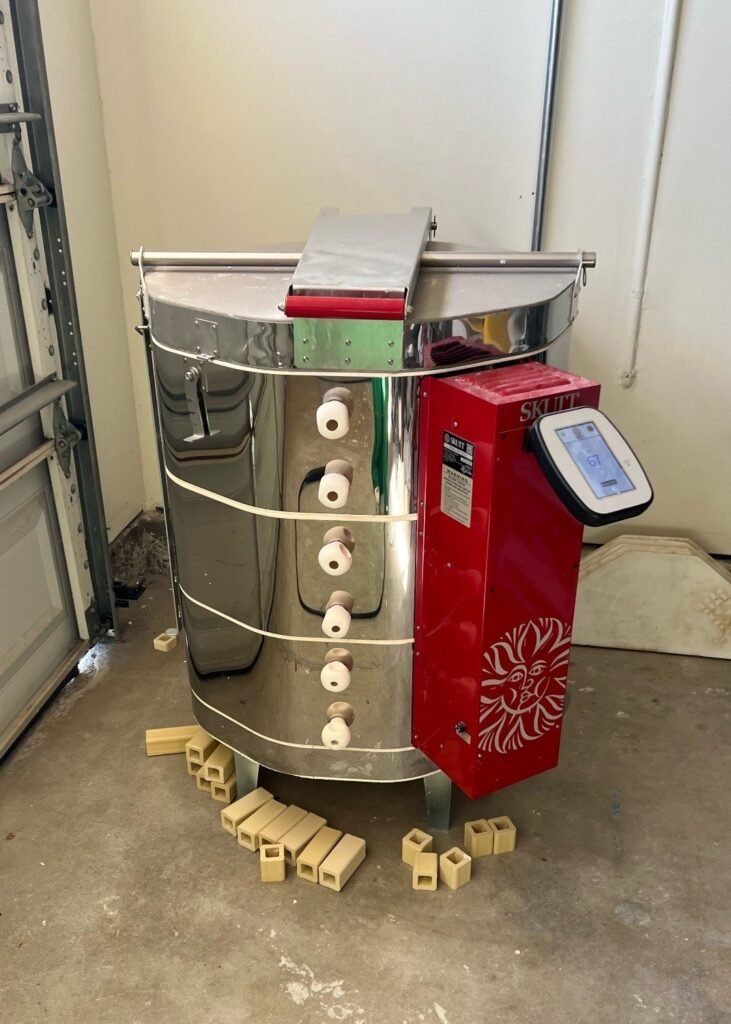
Skutt kilns are among the most recognizable electric kilns in pottery studios.
That makes used Skutt kilns particularly interesting for buyers who want established equipment and easier access to specifications, manuals, and replacement components.
Popular models include the KM-818, KM-1027, KMT-1027, and larger production models.
The KM-818 can make sense for a smaller studio.
The KM-1027 offers substantially more chamber capacity for regular pottery production.
The KMT-1027 adds features such as thicker insulation and touchscreen control.
When buying a used Skutt kiln, identify the exact model before discussing price.
The model determines chamber size, electrical requirements, firing temperature, and the components you may eventually need to replace.
Browse current Skutt kiln options here:
2. Used Skutt KM-818
A used Skutt KM-818 can be an excellent choice for a smaller pottery studio.
Its relatively compact size makes it easier to accommodate than larger production kilns.
It can work well for:
- Mugs
- Bowls
- Small sculptures
- Tiles
- Test firings
- Home-studio production
The biggest advantage of buying this model used is the potential savings.
However, compare the used price with the cost of a new kiln in similar condition and specification.
If the used machine requires new elements, repairs, and expensive freight, the savings can disappear quickly.
3. Used Skutt KM-1027
The used Skutt KM-1027 is worth considering when you need more firing capacity.
The 1027 is a popular size for serious home studios, teaching environments, and smaller production operations.
A clean used example can provide substantially more capacity than a compact kiln while avoiding the full cost of purchasing new.
Inspect the elements carefully.
Check the lid.
Look at the firebrick.
Test the controller.
Inspect the wiring.
Then verify the electrical requirements.
A used KM-1027 can be a strong value when the machine has been properly maintained.
It can also become an expensive purchase if the major components are nearing replacement.
4. Used Paragon Pottery Kiln
Paragon is another established name worth considering when shopping for used pottery kilns.
Older Paragon kilns can sometimes offer excellent value because buyers may focus heavily on newer models and overlook well-maintained older equipment.
Condition matters more than age alone.
A carefully maintained older kiln can be more attractive than a newer kiln that has suffered years of heavy use.
When inspecting a used Paragon pottery kiln, identify the exact model and verify its electrical requirements before buying.
Check whether the controller and replacement components remain available.
Then compare the total cost against new and refurbished alternatives.
5. Inspect the Heating Elements
Heating elements are among the most important components in an electric pottery kiln.
Inspect them for:
- Deep grooves
- Crumbling
- Excessive thinning
- Cracks
- Severe oxidation
- Areas that appear substantially more worn than others
Some element wear is normal.
The question is how much useful life remains.
If the elements are near the end of their service life, include replacement costs in your offer.
Don’t make the mistake of comparing a used kiln with worn elements against a new kiln with fresh elements without accounting for the difference.
6. Check the Firebrick and Lid
The kiln chamber should receive just as much attention as the elements.
Look for broken, severely chipped, or heavily damaged firebrick.
Small cosmetic chips may not automatically disqualify a kiln.
Major damage is more serious.
Inspect the lid carefully as well.
Check whether it closes properly.
Look for cracks, warping, or damage around the hinge and support components.
The interior should show normal signs of use rather than severe neglect.
If the kiln has significant brick damage, determine the replacement cost before agreeing to a price.
7. Test the Controller
Modern pottery kilns depend heavily on their controllers.
If possible, test the kiln through an actual firing cycle.
Make sure the controller responds correctly.
Check that the display works.
Verify that programmed temperatures behave as expected.
Watch for error codes.
Ask whether the controller has ever been replaced or repaired.
Older manual kilns can still be useful, but buyers should understand what they are getting.
A kiln with an outdated controller may cost less upfront while offering fewer programming and monitoring features.
That may be perfectly acceptable for an experienced potter.
It may be less attractive for a beginner who wants straightforward programmable firing.
Used Kilns vs Refurbished Kilns
There is a major difference between buying a kiln “used” and buying a kiln that has been properly refurbished.
A used kiln may simply be equipment that a previous owner no longer wants.
Its condition could range from excellent to severely worn.
A refurbished kiln should involve additional inspection, servicing, testing, or replacement of worn components.
The exact process depends on the seller.
Always ask what refurbishment actually included.
Were the elements checked?
Was the controller tested?
Were damaged bricks replaced?
Was the wiring inspected?
Was the kiln test-fired?
Were worn components replaced?
If the seller cannot explain what was done, don’t assume that “refurbished” automatically means excellent condition.
How Much Should a Used Pottery Kiln Cost?
There is no single used pottery kiln price that applies to every machine.
Model matters.
Size matters.
Age matters.
Condition matters.
Electrical configuration matters.
Accessories matter.
Location matters.
Shipping can matter enormously.
A heavily used KM-1027 that needs new elements should not command the same price as a clean, lightly used example with a healthy controller.
Start by finding the price of a comparable new kiln.
Then estimate the remaining useful life of the used machine.
Subtract the cost of known repairs.
Add transportation.
Finally, compare the result with refurbished equipment.
That calculation gives you a much better idea of whether the secondhand kiln is genuinely a bargain.
Buying a Used Pottery Kiln Locally
Local pickup can make used kilns especially attractive.
You may avoid expensive freight.
You can inspect the kiln before paying.
You can ask the owner to demonstrate it.
You can also examine the exact condition rather than relying on photographs.
If possible, bring someone who understands electrical and ceramic equipment.
Ask the seller to fire the kiln.
A complete firing demonstration is far more useful than hearing that the kiln “worked last time.”
If the seller cannot demonstrate the machine, treat that uncertainty as part of the price.
Buying a Used Pottery Kiln Online
Online purchases require more caution.
Ask for detailed photographs of:
- Heating elements
- Interior bricks
- Lid
- Controller
- Wiring
- Rating plate
- Exterior
- Stand
- Accessories
Request the model and serial number.
Ask for a video showing the controller operating.
Ask whether the kiln has been test-fired recently.
Ask why the owner is selling.
Ask what repairs have been performed.
If the seller avoids basic questions, don’t rush the purchase simply because the price looks attractive.
There will always be another used kiln.
Used Pottery Kiln Electrical Requirements
Electrical compatibility can make or break a purchase.
Before buying, verify:
- Voltage
- Amperage
- Phase
- Plug configuration
- Breaker requirements
- Available circuit capacity
Do not assume your studio can run the kiln because another owner did.
Your electrical installation may be different.
For larger kilns, have a qualified electrician verify the installation requirements before purchase.
The cost of electrical work should also form part of your total budget.
A kiln that costs $1,000 less than another option may stop being cheaper if your studio needs major electrical modifications.
When a Used Pottery Kiln Makes Sense
A used pottery kiln can make excellent financial sense when:
- The kiln has been maintained
- The elements have useful life remaining
- The controller works properly
- The bricks are in reasonable condition
- The electrical configuration suits your studio
- Replacement parts remain available
- The purchase price leaves enough room for normal maintenance
- You can inspect or test the equipment
These conditions reduce the risk of turning a bargain into a repair bill.
When to Buy Refurbished Instead
Refurbished equipment can make more sense when you want savings but don’t want to take on as much uncertainty.
This is especially true for buyers who don’t have experience diagnosing kiln problems.
A refurbished kiln may cost more than an as-is used kiln.
That additional cost can be worthwhile if the equipment has been inspected, repaired, and tested properly.
Ask for documentation.
Ask what was replaced.
Ask whether the kiln was test-fired.
Ask whether the seller provides any warranty or return protection.
The more expensive the kiln, the more important these questions become.
Find Used Pottery Kilns for Sale
When you’re ready to compare options, start with the exact model you need rather than simply searching for the cheapest kiln.
Consider the work you fire.
Consider the number of pieces you produce.
Consider your available electrical service.
Consider your studio space.
Then compare used, refurbished, and new equipment.
The Kiln Depot offers pottery equipment for buyers who want to compare professional ceramic equipment and kiln options:
If you are considering a used kiln specifically, use the inspection process above before committing to a purchase.
Final Thoughts
A used pottery kiln can save you a significant amount of money.
But the smartest buyers don’t purchase based on price alone.
They inspect the elements.
They examine the bricks.
They test the controller.
They verify the electrical requirements.
They investigate the machine’s history.
They calculate shipping and repair costs.
Then they compare the final number with new and refurbished kilns.
A well-maintained used Skutt or Paragon can be an excellent addition to a pottery studio.
A neglected kiln can quickly become a money pit.
If you find a machine in good condition at a price that leaves room for normal maintenance, used equipment can be one of the best ways to get serious pottery equipment without paying full retail.
Browse available pottery kilns and compare your options before making the purchase.

Pingback: Best Pottery Kiln for Cone 6: 2026 Buying Guide
Pingback: Best Electric Pottery Kiln in 2026: What to Buy
Pingback: : Pottery Kiln Size: How to Choose the Right Size in 2026