Kiln brick repair is often much simpler than replacing an entire kiln wall. Small cracks, chips, holes, and gouges in insulating firebrick can often be patched, while badly damaged bricks may need to be replaced. The important part is knowing the difference before you fire again.
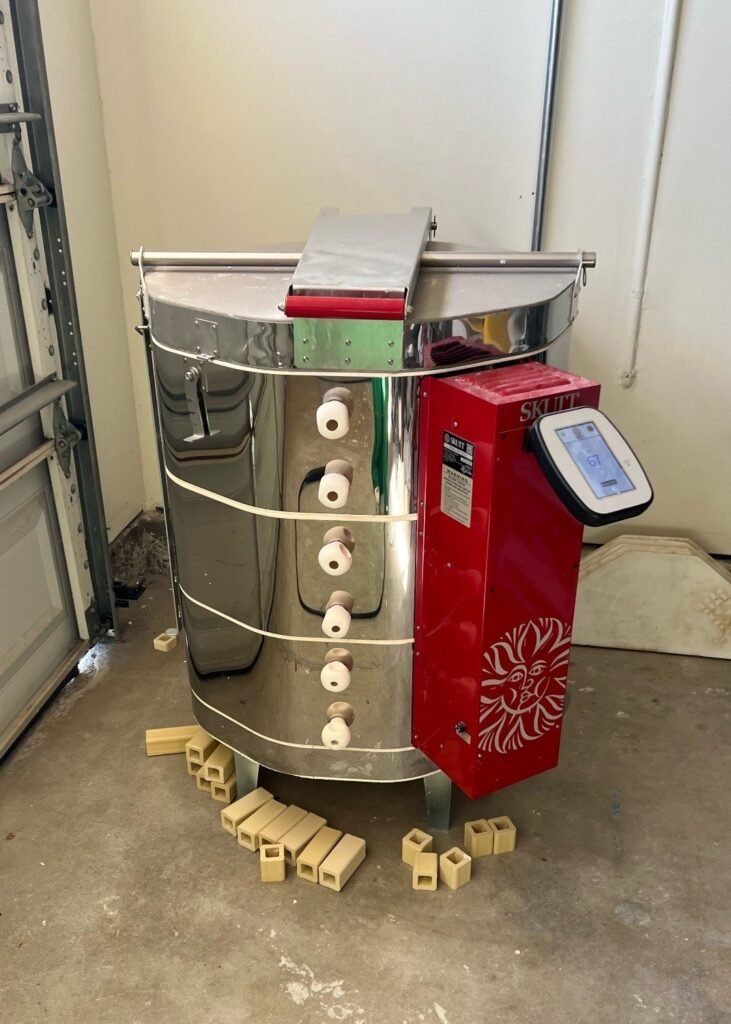
A kiln is not supposed to look perfect forever. Repeated heating and cooling can cause firebrick to crack or spall, and loading accidents can chip the brick around the element grooves. A minor surface crack is not automatically a reason to panic. A deep break, loose brick, exposed element, or damaged area that interferes with the heating element is a different situation.
This guide explains kiln brick repair, when a patch is appropriate, when a brick should be replaced, what materials are used, how to protect the elements during the work, and what to check before putting the kiln back into service.
Kiln Brick Repair: What Firebrick Actually Does
Electric ceramic kilns commonly use lightweight insulating firebrick to contain heat while limiting heat loss through the kiln walls. The brick is also machined with grooves that hold the heating elements.
That means damaged firebrick is not just cosmetic.
A small chip away from an element groove may have little practical effect. Damage around an element groove can be more serious because the element must remain correctly supported and isolated from surrounding components.
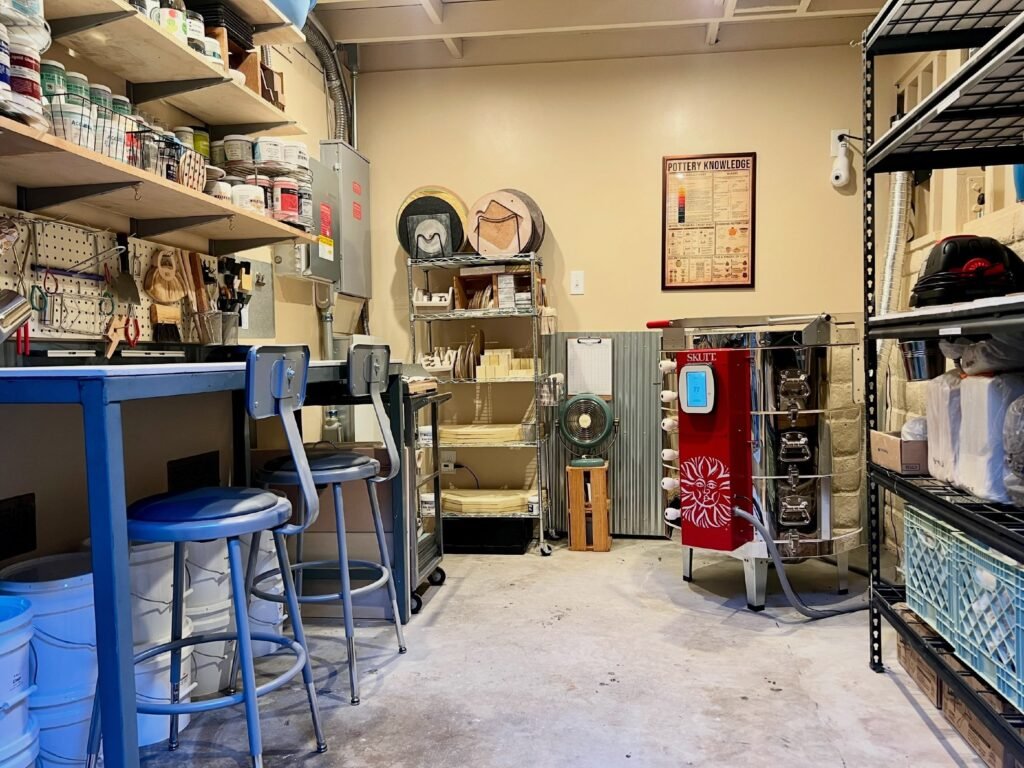
Manufacturers also design different kilns around specific brick dimensions, densities, shapes, joints, and element arrangements. That is why kiln brick repair should be based on the exact kiln model and manufacturer’s instructions whenever possible.
L&L notes that firebrick is fragile and subject to breakage, spalling, and thermal shock, but also says it can be repaired with the proper materials and techniques. Its current repair instructions are specifically written for L&L kilns, so owners of other brands should not assume every repair material or procedure transfers directly to their kiln. citeturn0search18
Paragon likewise provides repair guidance in its kiln manuals and recommends patching damaged brick with repair cement in many situations rather than immediately replacing the entire brick. citeturn1search24
What Counts as Normal Firebrick Damage?
Not every crack means your kiln needs immediate structural work.
Small surface cracks can develop as firebrick experiences repeated thermal cycling. A used kiln may show evidence of years of firing while still having serviceable insulation.
Look at the damage in context.
A narrow surface crack that does not go through the brick, does not loosen the brick, and does not interfere with an element is very different from a section that has broken away.

Common types of damage include:
- Hairline or shallow surface cracks
- Small chips from loading shelves or posts
- Gouges caused by tools or kiln furniture
- Holes from accidental impact
- Spalling or crumbling areas
- Cracks around element grooves
- Sections of brick that have become loose
- A brick that is broken through its full thickness
The first four are often candidates for straightforward patching. More severe damage requires closer inspection.
When Kiln Brick Repair Is Usually Enough
Patch repair makes sense when the brick is generally intact and the damaged area is localized.
Examples include a small hole, a shallow gouge, or a limited area of missing firebrick.
The objective is not to make the wall look cosmetically perfect. The objective is to restore the damaged area without interfering with the kiln’s insulation, elements, thermocouples, or other components.
L&L’s current brick repair instructions describe patching materials made for insulating firebrick and include guidance for filling damaged areas. Its instructions also distinguish between patching damage and replacing a brick when the damage is too extensive. citeturn0search18
Paragon manuals similarly describe repairing small damaged areas by trimming out severely crumbled material, fitting a new piece of brick, and using repair cement where appropriate. citeturn1search24
The exact repair method depends on the kiln construction and the location of the damage.
Before starting kiln brick repair, identify the manufacturer and model and locate the relevant service instructions.
When You Should Replace the Firebrick
There is a point where patching stops being sensible.
Consider replacement when:
- The brick is broken through most or all of its thickness
- A large section is missing
- The brick is loose or moving
- The element groove has been badly destroyed
- The element can no longer sit correctly in the groove
- The damage extends through a major joint
- The brick has deteriorated into loose material
- A manufacturer specifically calls for brick replacement
- The repair would leave the element unsupported
A replacement brick is not necessarily a major kiln rebuild.
Many manufacturers sell individual replacement bricks or model-specific brick assemblies. Paragon, for example, lists replacement insulating firebrick by kiln model and instructs buyers to provide the kiln model number when ordering. citeturn1search7
That is important because a visually similar brick may not be the correct shape or groove configuration.
Good kiln brick repair sometimes means recognizing that the correct repair is actually replacement.
Kiln Brick Repair Materials
The correct repair material depends on the type and size of damage.
Common materials include high-temperature kiln cement, brick repair compounds, insulating firebrick pieces, brick dust mixtures, and ceramic fiber repair adhesives for fiber insulation rather than insulating firebrick.
Do not automatically substitute ordinary construction mortar, household adhesive, or random refractory material.
For example, Orton currently sells kiln cement specifically as a patching compound for cracks and holes in firebrick and kiln shelves, with a stated service temperature of up to 3000°F. That does not mean every kiln or every repair should use that product. It illustrates the type of material intended for this application. citeturn1search3
L&L’s repair system uses specific materials for patching insulating firebrick and provides instructions for applying them. citeturn0search18
Paragon also sells repair cement and kaolin grog, which it describes as powdered insulating firebrick that can be mixed with repair cement for damaged areas. citeturn1search1
Always follow the repair material manufacturer’s temperature limits and the kiln manufacturer’s instructions.
Kiln Brick Repair Around Heating Elements
This is where you need to slow down.
Heating elements are brittle, especially after repeated firing. They can be damaged if you pull them, bend them aggressively, or scrape them with tools.
If a damaged section is close to an element groove, identify exactly what is happening before touching anything.
You may need to determine whether the element is still properly seated, whether the groove remains intact, and whether the brick can be repaired without disturbing the element.
L&L’s repair guidance specifically warns about handling elements during brick replacement. Its front-loading repair instructions describe lifting an element carefully out of the groove enough to protect it while removing a damaged brick, without pulling the element out of the groove unnecessarily. citeturn0search11
For another brand, use that manufacturer’s service documentation instead of copying a procedure blindly.
If an element is damaged, do not treat kiln brick repair as a substitute for element replacement.
The two problems should be evaluated separately.
How to Do Basic Kiln Brick Repair
For a small localized repair, the general process is straightforward, but the manufacturer’s procedure should take priority.
1. Unplug the Kiln
Never work inside an energized kiln.
Disconnect the kiln from its electrical supply and make sure it cannot accidentally be energized while you work.
If the kiln is hardwired, follow appropriate electrical safety procedures and have a qualified person disconnect it if required.
2. Let the Kiln Cool Completely
Do not attempt repairs on hot or warm firebrick.
The kiln should be fully cool before you begin.
3. Inspect the Damage
Look at the entire damaged area.
Determine whether you are dealing with a surface crack, chip, hole, gouge, loose material, or broken brick.
Check the nearby element groove and inspect the element itself.
Also look for damage to thermocouple components, wiring, or the kiln’s metal shell.
4. Remove Loose Material
Loose, crumbly material should not simply be buried under repair compound.
The damaged area may need to be cleaned and squared up enough to receive the repair material.
For deeper repairs, manufacturers may specify cutting out the damaged area and fitting a piece of matching insulating firebrick.
Do not enlarge the repair unnecessarily.
You want to remove compromised material while preserving sound brick.
5. Prepare the Repair Material
Mix or prepare the repair material exactly as its instructions specify.
Do not improvise ratios because a different refractory product uses a different recipe.
Some products are premixed. Others require mixing components.
Use gloves and eye protection when handling cement, brick dust, patch compounds, or other refractory materials.
L&L specifically recommends protective glasses and gloves when working with its brick repair materials. citeturn0search18
6. Fill or Fit the Damaged Area
For a small hole or gouge, work the repair material firmly into the damaged area.
For a larger section, the repair may require a piece of matching insulating firebrick.
The repair should not protrude into the firing chamber more than necessary.
It also should not obstruct an element groove.
7. Keep the Element Groove Clear
This is critical.
Repair compound should not fill an element groove or trap the heating element in an unintended position.
If the damaged area is near an element, follow the exact service procedure for your kiln.
8. Allow the Repair to Dry
Do not rush this step.
Repair materials need to dry according to their manufacturer’s instructions.
Some repairs may require an extended drying period.
9. Fire Slowly After Repair
A repaired area can contain moisture.
The first firing after a repair should follow the repair material and kiln manufacturer’s recommended procedure.
L&L’s current front-loading repair guidance, for example, describes allowing cement to dry overnight and then using a slow bisque firing to complete the repair. citeturn0search11
That is manufacturer-specific guidance, not a universal firing schedule for every kiln.
10. Inspect After the First Firing
Once the kiln has cooled completely, inspect the repaired area.
Look for new cracking, crumbling, separation, or movement.
Also confirm that the heating element remains properly positioned.
How to Repair a Small Firebrick Crack
A small crack is different from a missing section of brick.
If the brick remains structurally sound and the crack is shallow, the manufacturer may allow a high-temperature repair cement or patching compound.
The general idea is to clean the crack, work the repair material into it, smooth the surface, and allow it to dry completely before firing.
Do not automatically fill every visible crack.
Some cracks are part of normal thermal cycling and do not require intervention.
The more useful question is:
Does the crack compromise the insulation, element support, structural integrity of the brick, or safe operation of the kiln?
If the answer is no, cosmetic repair may not be necessary.
If the answer is yes, repair or replacement deserves attention before the next firing.
Proper kiln brick repair is about function, not making old firebrick look new.
What About a Hole in the Kiln Wall?
Small holes and gouges are often repairable.
L&L’s current brick repair guidance specifically covers holes, chips, and gouges in insulating firebrick. citeturn0search17turn0search18
The important consideration is depth and location.
A small hole in a noncritical area may be filled with an appropriate repair compound.
A large hole that extends deeply into the wall, damages an element groove, or compromises the brick around a heating element may require a more substantial repair.
Do not use a random filler simply because it survives high temperature.
The material must also be compatible with insulating firebrick and suitable for the intended repair thickness and location.
Kiln Brick Repair vs Replacing a Brick
This is one of the most important decisions for kiln owners.
Patching is generally appropriate for localized damage.
Replacement makes more sense when the brick itself is no longer structurally reliable.
Think of it this way:
| Damage | Typical approach |
|---|---|
| Hairline surface crack | Often monitor |
| Small chip | Patch if necessary |
| Small hole | Patch |
| Deep gouge | Patch or partial replacement |
| Large missing section | Consider replacement |
| Loose brick | Replace |
| Destroyed element groove | Usually more substantial repair or replacement |
| Brick crumbling throughout | Replace |
| Element damaged with brick | Evaluate both components |
This is a decision framework, not a substitute for the service instructions for your specific kiln.
Can You Repair a Kiln Floor?
Yes, localized damage to an insulating firebrick floor can sometimes be repaired.
But the floor deserves extra attention because kiln furniture, shelves, posts, and the load all interact with it.
If the bottom brick is badly damaged, uneven, or unstable, do not simply cover the problem with kiln wash.
Kiln wash protects surfaces from glaze contamination. It is not a structural replacement for missing firebrick.
Paragon’s guidance for damaged brick includes repairing damaged areas with appropriate repair materials. For severe damage, replacement may be the better solution. citeturn1search1turn1search24
If the floor has a major break or deformation, identify the kiln model and consult the manufacturer’s service documentation before firing.
Can You Repair Firebrick With Kiln Wash?
Do not confuse kiln wash with brick repair material.
Kiln wash is primarily used to protect kiln shelves or other surfaces from glaze and glass contamination.
It is not a universal structural adhesive.
Some manufacturer documentation mentions kiln wash or similar material for specific small applications, but you should not assume that means kiln wash is an appropriate substitute for dedicated firebrick repair compound in every situation.
If you need to restore missing firebrick, use a product specifically intended for the repair and follow the manufacturer’s instructions.
Kiln Brick Repair on a Used Kiln
Used kilns deserve a more careful inspection because you do not always know the firing history.
Before buying a used kiln, inspect:
- Firebrick
- Element grooves
- Heating elements
- Thermocouples
- Controller
- Relays
- Wiring and terminals
- Lid
- Kiln floor
- Metal case
- Stand
- Vent system
- Kiln furniture
A few repaired areas do not automatically make a used kiln a bad purchase.
In fact, a documented repair can be preferable to a kiln that looks untouched but has hidden deterioration.
The key is understanding what was repaired, why it was repaired, and whether the underlying problem was corrected.
The Kiln Depot’s used kiln inspection guide covers firebrick alongside elements, controls, electrical components, and the lid.
That broader inspection matters because firebrick is only one part of the kiln.
What to Look for When Buying Replacement Firebrick
Do not order a brick based only on thickness.
You may need:
- Kiln manufacturer
- Exact model number
- Serial number
- Brick thickness
- Brick shape
- Element groove pattern
- Door or lid position
- Voltage and kiln configuration where relevant
Some bricks are plain.
Others contain grooves for heating elements.
Some kilns use shaped corner or specialty bricks.
Paragon’s replacement brick listings illustrate why the kiln model matters. A replacement brick may be listed specifically for a certain kiln configuration. citeturn1search7
The safest approach is to use the manufacturer or an established kiln-parts supplier that can match the brick to the exact model.
Documenting the kiln model before starting kiln brick repair can save a surprising amount of time.
How Much Does Kiln Brick Repair Cost?
The cost depends heavily on the damage.
A small patch can be inexpensive if you already have the appropriate repair material and can perform the work yourself.
Full brick replacement adds the cost of the brick and any related materials.
Professional service adds labor and potentially travel or shipping.
There is also a larger cost to consider: downtime.
If a kiln is part of a production studio, waiting for a replacement brick, element, or other component may be more expensive than the material itself.
That is one reason keeping the kiln model and serial information available is useful.
It makes ordering parts much easier.
Current manufacturer and supplier pricing also changes, so do not use a generic online repair estimate as a substitute for a parts quote for your exact kiln.
Common Kiln Brick Repair Mistakes
The repair itself is often not the difficult part.
The mistakes usually happen before or after it.
Repairing Before Identifying the Kiln
Different manufacturers use different brick shapes and service procedures.
Find the model first.
Using Ordinary Cement
Household cement and construction products are not automatically suitable for kiln firebrick.
Use a product intended for the temperature and application.
Filling the Element Groove
This can interfere with element placement and potentially create a new problem.
Keep grooves clear.
Pulling on the Heating Element
Old elements can be brittle.
Do not bend or pull them unnecessarily.
Firing Before the Repair Is Dry
Moisture trapped in a repair can cause problems during heating.
Follow the repair product’s drying instructions.
Patching Severely Damaged Brick
A patch is not a substitute for structural replacement when the brick has lost its integrity.
Treating Every Crack as an Emergency
Minor thermal cracks are not automatically a failure.
Assess the size, depth, location, and effect on the kiln.
Ignoring Damage Near the Thermocouple
If a repair is close to a thermocouple or its mounting area, make sure the sensor remains correctly positioned and undamaged.
Ignoring the Cause of the Damage
If brick damage happened because shelves are being loaded carelessly, fixing the brick alone does not prevent another repair.
Change the loading technique too.
How to Prevent Firebrick Damage
Prevention is cheaper than repeated repair.
The easiest way to protect insulating firebrick is to avoid hitting it with kiln furniture.
When loading:
- Do not drag shelves against the kiln wall
- Keep posts stable
- Lift shelves instead of scraping them across brick
- Keep ware from touching the elements
- Avoid striking the thermocouple
- Do not force oversized pieces into the chamber
- Keep kiln wash on shelves rather than the kiln wall
- Clean glaze drips carefully after the kiln is completely cool
- Inspect the kiln before major firings
The goal is simple: treat the firing chamber as a fragile refractory surface rather than as a metal oven.
Does Firebrick Damage Affect Firing Performance?
It can.
A small chip may make no noticeable difference.
Significant missing insulation can increase heat loss and may make the kiln work harder to reach temperature.
Damage near element grooves can also affect element positioning.
And if the brick is deteriorating badly, the problem can progress.
That is why inspecting the condition of the chamber is part of routine kiln maintenance.
You do not need to rebuild a kiln every time you see a crack.
You do need to recognize when damage has moved from cosmetic wear into a component problem.
When to Stop and Call a Kiln Technician
DIY repair is not appropriate for every situation.
Get qualified service help when:
- You are unsure whether the brick is structurally sound
- The element is damaged or exposed
- Wiring or terminals are damaged
- The controller is behaving abnormally
- The kiln has suffered electrical damage
- The brick has collapsed around multiple elements
- You need to disassemble electrical components
- You cannot identify the correct replacement part
- The kiln has significant heat damage to the metal case
- The repair instructions for your kiln require specialized service
Firebrick repair is a refractory job.
Electrical kiln repair is a separate safety issue.
Do not let the simplicity of patching a brick encourage you to work on energized electrical components.
Professional kiln brick repair is worth considering when the damage crosses into electrical, structural, or model-specific service work.
Kiln Brick Repair Checklist
Before you fire a repaired kiln, check the following:
☐ Kiln is completely cool before repair
☐ Power is disconnected
☐ Damage has been fully inspected
☐ Loose material has been removed
☐ Correct repair material has been selected
☐ Element grooves remain clear
☐ Heating elements are undamaged
☐ Thermocouple is secure
☐ Repair has dried according to instructions
☐ First firing follows the recommended procedure
☐ Repaired area is inspected after cooling
If several boxes cannot be checked, do not rush the firing.
Final Verdict: Repair or Replace?
Kiln brick repair is a normal part of maintaining an electric kiln, especially as equipment accumulates years of firing cycles.
The key is not whether the brick has a crack.
The key is whether the damage affects the kiln’s insulation, element support, structural integrity, or safe operation.
Small chips, holes, and localized gouges can often be patched with an appropriate high-temperature repair material. More extensive damage, loose bricks, destroyed element grooves, and badly deteriorated firebrick may justify replacement.
If you own a kiln, keep the model number, serial number, service manual, and replacement-parts information somewhere easy to find.
If you are buying a used kiln, inspect the firebrick before you negotiate the price.
And if you are repairing a kiln, use the manufacturer’s instructions for that exact model whenever they are available.
A good repair should restore the kiln without creating a new problem around the elements, thermocouple, or insulation.
For buyers comparing used and refurbished equipment, the condition of the firebrick should be considered alongside the controller, elements, electrical system, lid, and overall firing history. That gives you a much more realistic picture of what the kiln is actually worth.
Proper kiln brick repair is not about hiding damage. It is about restoring the refractory system correctly and knowing when a patch is no longer enough.
