A pottery extruder can make some of the most repetitive parts of handbuilding much faster.
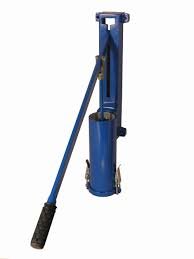
You can use one to make coils, handles, tubes, trim, hollow forms, and repeatable clay profiles.
However, not every pottery extruder is built for the same job.
A small hand extruder can be perfect for decorative work.
A larger wall-mounted extruder can make more sense for a busy studio.
The difference comes down to construction, barrel size, dies, mounting, and the type of clay work you actually do.
If you’re shopping for a pottery extruder, these are the things worth checking before you buy.
What Is a Pottery Extruder?
A pottery extruder is a tool that pushes clay through a shaped die to produce a consistent form.
Instead of manually rolling the same coil or strip repeatedly, you load clay into the barrel and force it through the opening.
The resulting clay profile depends on the die.
You can create round coils, square profiles, tubes, handles, decorative shapes, and many other forms.
That makes a pottery extruder useful for both practical studio work and creative experimentation.
1. Decide What You Want to Make
Before comparing pottery extruders, decide what you actually want to extrude.
For example, you might need one for:
Handles
Coils
Tubes
Decorative trim
Hollow forms
Architectural pieces
Sculptural components
Repeated shapes
A potter making handles needs a different setup from an artist producing large sculptural components.
Therefore, don’t choose the extruder first.
Choose the type of work first.
Then find the machine that can produce it.
2. Check the Pottery Extruder Barrel Size
Barrel size determines how much clay the extruder can hold at once.
A small barrel works well for light studio work.
A larger barrel becomes more useful when you’re producing repeated pieces or larger profiles.
Think about how much clay you normally work with.
If you only need a few handles for each batch of mugs, a compact extruder may be enough.
If you’re producing dozens of repeated components, the additional capacity of a larger model can save time.
The goal is not to buy the biggest barrel.
The goal is to buy enough capacity for your normal workload.
3. Look at the Die Selection
The die is one of the most important parts of a pottery extruder.
It determines the shape of the clay that comes out.
Some extruders include a basic selection of dies.
Others give you a much wider range.
Before buying, check:
How many dies are included?
What shapes are available?
Can you buy additional dies?
Can you make custom dies?
Are replacement dies available?
This matters because your needs can change.
You might start by making simple coils.
Later, you may want custom profiles for handles, architectural work, or sculptural pieces.
An extruder with an expandable die system can therefore provide more flexibility over time.
4. Compare Wall-Mounted and Handheld Extruders
A handheld pottery extruder is convenient when you need portability.
You can move it around the studio.
You can also store it easily when you’re finished.
That makes a smaller model useful for beginners, teachers, and potters with limited space.
A wall-mounted extruder provides a different experience.
It gives you a stable mounting point and can make it easier to apply consistent pressure.
For regular production, that stability can become important.
Think about where you’ll use the machine.
If you have a permanent studio workspace, mounting may make sense.
If you work in multiple locations, portability may matter more.
5. Check the Construction
A pottery extruder needs to handle substantial pressure.
That makes construction important.
Look at:
Barrel material
Plunger strength
Mounting hardware
Handle construction
Die plate
Fasteners
Overall frame
A lightweight tool may be perfectly adequate for small projects.
However, heavy-duty production work demands stronger construction.
Don’t judge durability by appearance alone.
Look at how the pressure is transferred through the machine.
The handle should feel secure.
The plunger should move smoothly.
The barrel should remain stable while you’re working.
6. Think About How Much Clay You Use
Your clay consumption should influence the type of extruder you buy.
A hobby potter making occasional decorative pieces may have little reason to purchase a large professional machine.
A production potter may use an extruder every day.
In that situation, faster loading, larger capacity, and stronger construction become much more valuable.
Ask yourself:
How often will I use it?
How much clay will I extrude?
How large are my typical profiles?
How many pieces do I make?
Will I need it for production?
These questions can prevent you from spending too much on equipment that doesn’t match your workflow.
7. Check Whether the Pottery Extruder Can Grow With You
The best equipment purchase isn’t always the cheapest one.
It can be the machine that remains useful as your work develops.
For example, you may initially use an extruder for simple coils.
Later, you may begin producing larger handles, decorative trim, or sculptural components.
If the machine supports additional dies and accessories, you may be able to expand its usefulness without replacing the entire unit.
That can make a more capable extruder a better long-term purchase.
Pottery Extruder for Beginners
Beginners often assume that an extruder is only for experienced ceramic artists.
That’s not necessarily true.
An extruder can actually simplify certain parts of learning pottery.
You can produce consistent coils.
You can make repeatable handles.
You can experiment with different profiles.
You can also focus more attention on assembling and altering the forms.
However, you don’t need the biggest model available.
Start with the type of work you’re genuinely interested in making.
If you’re primarily learning wheel throwing, an extruder may be an accessory rather than a priority.
If you’re already interested in handbuilding, it can become much more useful.
Pottery Extruder for Handbuilding
Handbuilding is one of the clearest use cases for an extruder.
Slab building, coil building, and sculptural work often require repeated clay components.
An extruder lets you reproduce those components more consistently.
For example, you can make several matching handles for a set of mugs.
You can create repeated decorative strips for a collection.
You can also produce consistent coils for larger forms.
That consistency can save time without forcing every piece to look identical.
You still control how the extruded clay gets assembled and altered.
Pottery Extruder for Sculptors
Sculptors can also get a lot from an extruder.
Instead of creating every clay component by hand, you can produce repeatable profiles and modify them afterward.
That can be particularly useful for:
Large sculptures
Architectural ceramics
Wall pieces
Geometric forms
Abstract structures
Repeated components
An extruder doesn’t replace sculptural skill.
It simply gives you another way to produce clay components efficiently.
Pottery Extruder vs Rolling Clay by Hand
Hand-rolling clay is inexpensive.
It also gives you direct control.
So why buy an extruder?
Speed is one reason.
Consistency is another.
If you need the same shape repeatedly, producing it manually can become tedious.
An extruder can reduce that repetition.
It can also make some forms easier to reproduce accurately.
For occasional projects, hand-rolling may be perfectly adequate.
For repeated production, the time savings can become much more significant.
Pottery Extruder vs Clay Gun
These terms sometimes get mixed together.
A small clay gun is usually designed for relatively light decorative or craft work.
A pottery extruder for studio use can be considerably more substantial.
The difference often comes down to construction, capacity, mounting, and the type of clay profile being produced.
If you’re making small decorative pieces, a basic clay gun may be enough.
If you’re working with larger amounts of pottery clay, look for a purpose-built studio extruder.
How Much Does a Pottery Extruder Cost?
Pottery extruder prices vary widely.
Small hand-operated tools can be relatively inexpensive.
Heavier studio extruders cost considerably more.
The price depends on:
Construction
Barrel size
Die selection
Mounting system
Included accessories
Brand
Replacement parts
The cheapest option isn’t necessarily the best value.
A poorly built extruder can become frustrating if the handle flexes, the plunger binds, or replacement dies are difficult to find.
Instead, compare the complete package.
Is a Pottery Extruder Worth It?
A pottery extruder becomes more valuable as repetition increases.
If you make one decorative coil every few months, you may not need one.
If you make dozens of identical components every week, the calculation changes.
The time saved can justify the equipment.
The consistency can improve production.
The additional dies can expand what you can make.
That makes an extruder particularly interesting for potters selling work, teaching classes, or producing collections with repeated forms.
What Should You Check Before Buying a Pottery Extruder?
Before ordering, check:
Barrel size
Construction
Die selection
Replacement dies
Mounting system
Handle design
Plunger movement
Included accessories
Overall dimensions
Shipping weight
Warranty
Replacement parts
Intended clay capacity
These details can tell you whether the machine is actually suited to your studio.
Buying a Pottery Extruder Online
Buying pottery equipment online gives you access to more models than you may find locally.
It also means you need to pay closer attention to specifications.
Don’t rely on the product photograph.
Read the dimensions.
Check the included dies.
Check the material.
Look at the warranty.
Check whether replacement parts are available.
Most importantly, compare the exact model rather than assuming two machines with similar photographs will perform the same way.
Pottery Extruder for a Home Studio
Home studios often have limited space.
That makes size particularly important.
Measure your workspace before ordering.
If you’re considering a wall-mounted model, check the wall structure and mounting requirements.
If you’re buying a portable model, think about where you’ll store it.
Also consider the space required to load clay and work with the extruded material.
The machine itself isn’t the only thing that needs room.
Pottery Extruder for a Classroom
Teachers have another consideration.
Equipment needs to withstand repeated use.
Students may load different clay bodies.
The machine may be used many times during a class.
That makes durable construction particularly valuable.
A classroom extruder should also be easy to understand and maintain.
If multiple students use it, simple operation becomes an advantage.
Schools should also establish clear procedures for loading, cleaning, and storing the equipment.
Pottery Extruder Maintenance
An extruder doesn’t require complicated maintenance, but cleaning matters.
Remove clay before it becomes completely dry.
Clean the barrel and plunger according to the manufacturer’s instructions.
Inspect the dies regularly.
Check mounting hardware.
Look for corrosion.
Don’t leave clay trapped inside the machine for extended periods.
Dried clay can make the next session much harder.
Regular cleaning also makes it easier to spot damaged components early.
Where to Buy a Pottery Extruder
The Kiln Depot currently carries a dedicated extruder category with multiple models for pottery and ceramic studios.
You can compare the available pottery extruders by size, construction, and intended use.
The category is particularly useful if you’re building a handbuilding-focused studio or adding equipment to an existing pottery workspace.
For broader equipment planning, compare the other studio categories as well.
A pottery wheel supports throwing.
A kiln handles firing.
A slab roller supports larger handbuilt forms.
A pugmill helps with clay reclaim and preparation.
The right combination depends on your workflow.
Should You Buy a Pottery Extruder Now?
Ask one final question.
What problem will the machine solve?
If you’re spending too much time making identical coils, an extruder may solve the problem.
If you’re producing large quantities of handles, it may save substantial time.
If you’re experimenting with sculptural forms, it can open up new possibilities.
If you rarely repeat clay profiles, you may be better off spending the equipment budget elsewhere.
Equipment should earn its place in your studio.
Final Thoughts
A pottery extruder is a relatively simple machine that can have a surprisingly large effect on a studio workflow.
The right model can make repeated clay forms faster and more consistent.
The wrong model can become another piece of equipment taking up space.
Start with your work.
Decide what you want to extrude.
Then compare barrel size, construction, dies, mounting, capacity, and replacement parts.
For occasional decorative work, a compact extruder may be enough.
For regular handbuilding or production, a stronger studio model may make more sense.
And if your work keeps evolving, choose a machine that gives you room to expand.
When you’re ready to shop, compare the current pottery extruders at The Kiln Depot and choose the model that matches the way you actually work.
