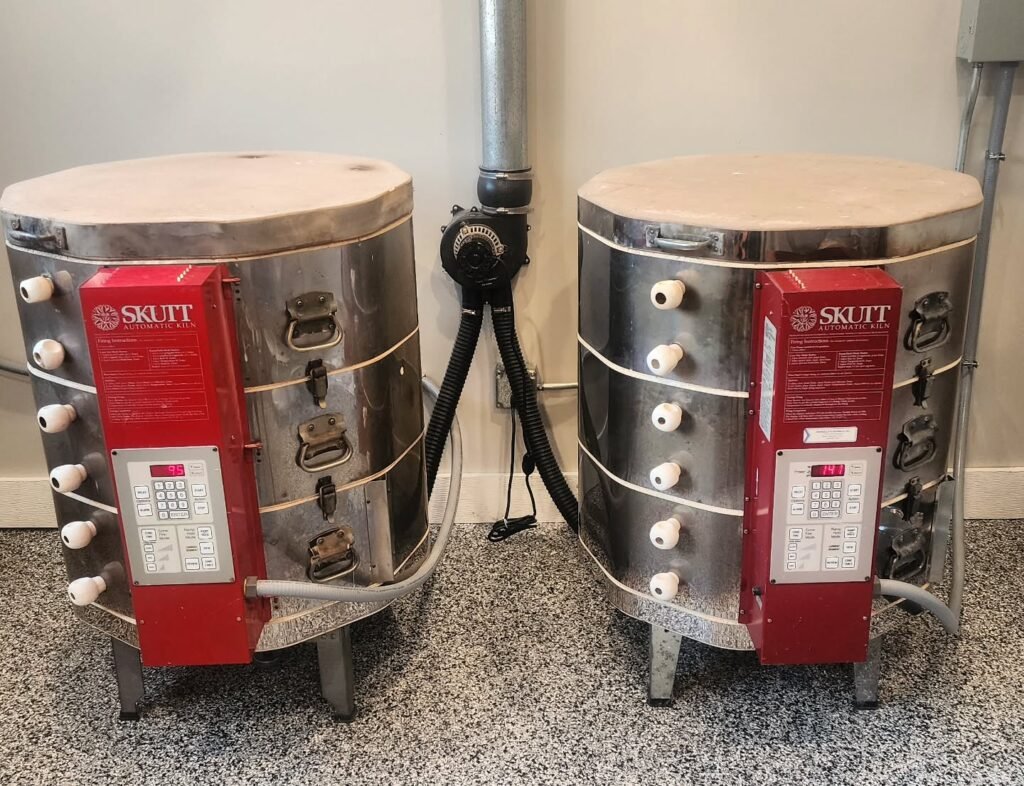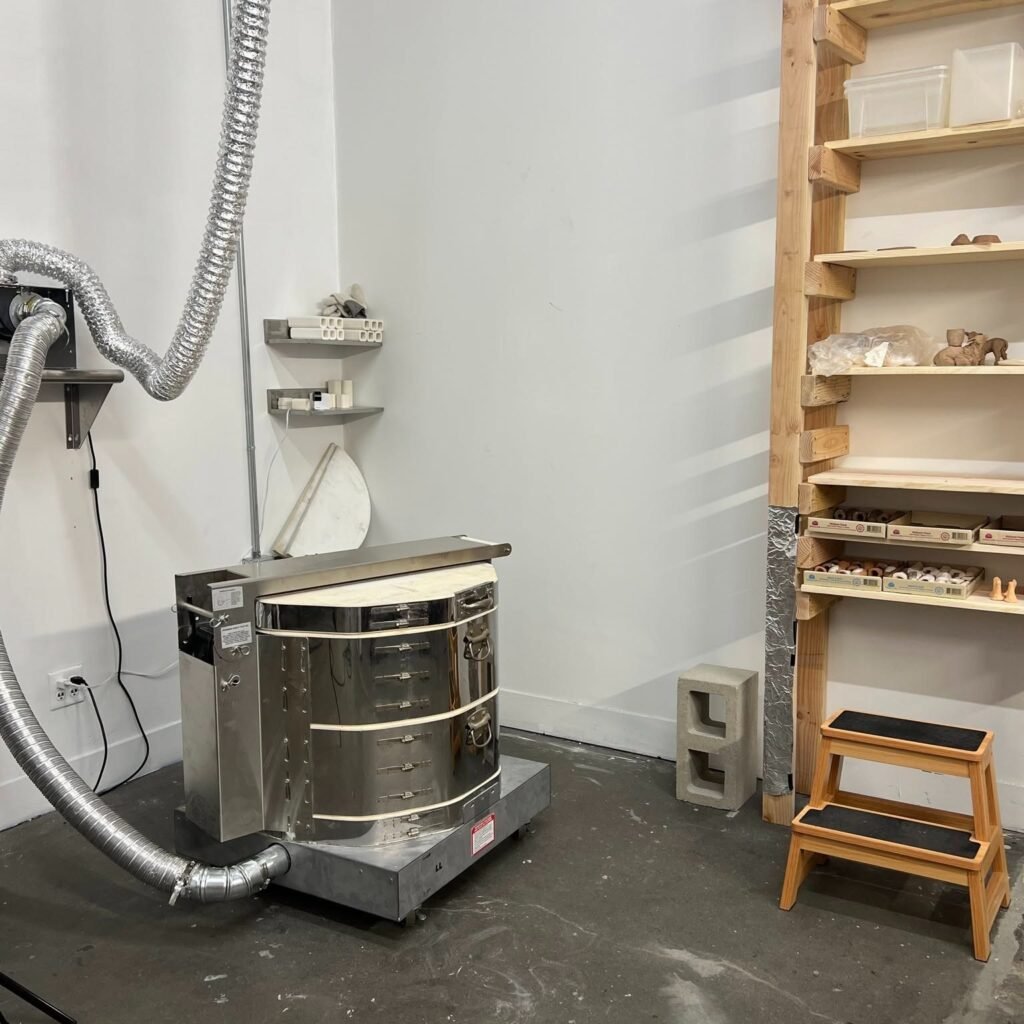
Kiln ventilation removes fumes and gases from your pottery studio while your kiln fires. Even electric kilns can release fumes as clay, glazes, organic materials, and other compounds heat up.
For a home potter, that creates an important question: Do you actually need a kiln vent?
The answer depends on your kiln, firing materials, studio location, and existing ventilation. However, simply opening a window does not automatically provide adequate control.
If you fire regularly in a garage, basement, spare room, or other enclosed space, you should take kiln ventilation seriously.
Why Does a Pottery Kiln Need Ventilation?
A kiln does more than heat clay.
During firing, moisture leaves the ware. Organic material burns away. Glazes release gases and volatile compounds. Some materials can also produce unpleasant odors or fumes.
Without adequate ventilation, those emissions can accumulate inside the studio.
That matters even when you use an electric kiln.
Electric heating elements create heat, but they do not eliminate the gases released by the ceramic materials themselves.
Good kiln ventilation moves those emissions out of the workspace instead of allowing them to remain in the room.
Do Electric Kilns Need a Vent?
In many home studios, adding a dedicated vent makes sense.
The kiln manufacturer, installation environment, firing materials, and local building requirements all matter. Therefore, you should not assume that every kiln installation needs exactly the same ventilation setup.
The Kiln Depot’s existing guidance recommends dedicated kiln ventilation for home studios because firing can release fumes into enclosed spaces. (The Kiln Depot)
A dedicated system also gives you more consistent control than relying entirely on natural airflow.
What About Opening a Window?
Opening a window can improve air exchange.
However, it does not necessarily capture emissions at the source.
Wind direction, room layout, temperature, and the location of the kiln all affect how air moves.
For example, a window on the opposite side of the room may allow some fresh air into the studio while doing little to remove fumes directly around the kiln.
Therefore, treat general room ventilation and kiln ventilation as two different things.
What Does a Kiln Vent Do?
A kiln vent uses a fan and ducting to move air and kiln emissions away from the firing area.
Different systems use different designs.
A downdraft system typically draws air downward through or around the kiln before exhausting it outdoors.
Other approaches can capture air above the kiln.
The goal remains the same: control the air around the kiln and move unwanted emissions outside.
The exact installation depends on the vent system and kiln model.
Always follow the manufacturer’s installation instructions.
What Is the Difference Between Downdraft and Updraft Ventilation?
Both systems can improve airflow, but they approach the problem differently.
| Ventilation type | Basic approach | Main advantage |
| Downdraft | Pulls air downward and exhausts it outside | Captures emissions near the kiln |
| Updraft | Pulls heated air upward | Can work with overhead exhaust |
| General room exhaust | Removes room air | Improves overall air exchange |
A dedicated kiln vent often provides more controlled source capture than simply exhausting room air.
For that reason, serious home studios should evaluate a dedicated system rather than relying only on a household exhaust fan.
Where Should You Install a Kiln Vent?
The kiln’s location matters.
A kiln placed in a small enclosed room presents a different ventilation challenge from one installed in a large dedicated studio with substantial mechanical airflow.
Before installing anything, consider:
The kiln location: Keep the kiln in a suitable area with appropriate clearances.
The exhaust route: The duct needs a practical path to the outdoors.
The room size: Smaller rooms can accumulate emissions more quickly.
Existing ventilation: Determine whether the room already has mechanical exhaust.
Electrical and structural requirements: Follow the kiln and vent manufacturer’s installation requirements.
If you’re unsure about the installation, consult a qualified professional rather than improvising a duct route.
Does Kiln Ventilation Improve Firing?
A properly designed ventilation system can do more than manage studio air.
Some kiln ventilation systems are designed to improve the firing environment by controlling airflow through the kiln.
However, do not assume that installing a vent will automatically improve every glaze or firing.
Your results depend on the kiln, clay, glaze, firing schedule, loading, and ventilation system.
Therefore, make one change at a time when troubleshooting firing results.
What About Gas Kilns?
Gas kilns require particularly careful ventilation planning.
Unlike electric kilns, gas kilns use combustion. That means the installation must account for combustion gases as well as emissions from the ceramic materials.
Carbon monoxide represents a serious hazard.
For that reason, gas kiln installations generally require more substantial ventilation and combustion-air planning than a typical electric kiln.
The Kiln Depot’s Bailey Studio Standard Gas Kiln, for example, uses a downdraft design and is intended for controlled gas firing. (The Kiln Depot)
Never treat a gas kiln like an electric kiln.
Follow the manufacturer’s installation requirements and applicable local codes.
Do You Need Ventilation for Bisque Firing?
Yes, you should consider ventilation during both bisque and glaze firing.
Bisque firing drives moisture and organic material out of the clay.
Glaze firing introduces another set of materials that can release emissions as they heat.
The firing schedule also matters.
The Kiln Depot notes that bisque firing commonly takes longer than a typical glaze firing because the kiln heats more gradually during the process. (The Kiln Depot)
Consequently, ventilation needs to function throughout the firing cycle rather than only during the hottest part.
How Do You Know If Your Studio Needs Better Ventilation?
Several situations should make you stop and evaluate your setup.
Your kiln deserves particular attention if you:
- Fire inside a garage
- Fire in a basement
- Work in a small enclosed room
- Fire frequently
- Use materials that produce noticeable odors
- Notice fumes while firing
- Smell strong odors outside the kiln area
- Have poor natural airflow
However, smell alone should not determine whether ventilation is adequate.
Some hazardous emissions do not provide a reliable warning through odor.
That is why proper ventilation design matters more than simply asking whether you can smell the kiln.
What Is a Good Home-Studio Ventilation Setup?
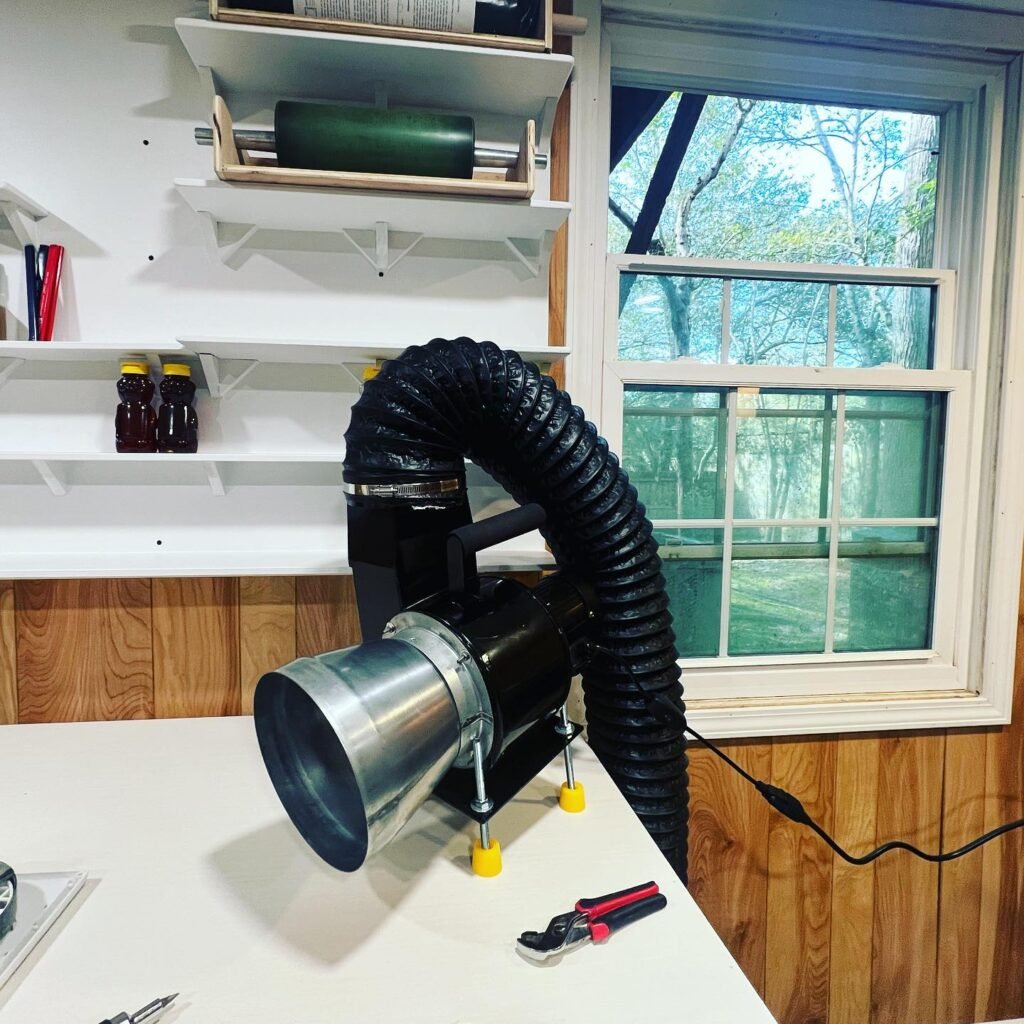
A sensible setup starts with the kiln.
First, install the kiln according to the manufacturer’s requirements.
Next, determine how the ventilation system will capture and exhaust emissions.
Then, route the exhaust safely to an appropriate outdoor location.
Finally, make sure the room has enough replacement air to support the exhaust system.
That last point matters.
If a fan removes air from a tightly sealed room, the system can struggle to move air effectively.
Therefore, think about air coming in as well as air going out.
Can You Use a Regular Exhaust Fan?
A general exhaust fan can improve room airflow.
However, it may not provide the same source control as a purpose-built kiln vent.
A bathroom fan mounted somewhere across the room, for example, does not necessarily capture emissions efficiently at the kiln.
A dedicated kiln ventilation system is designed specifically for this environment.
The Kiln Depot currently lists the EnviroVent system as a kiln-ventilation option. (The Kiln Depot)
Before purchasing, confirm compatibility with your specific kiln and installation.
What Should You Buy With a New Kiln?
Ventilation should be part of the initial studio budget.
New kiln buyers often remember the kiln itself and forget the equipment around it.
You may also need kiln furniture, electrical work, a stand, and ventilation.
The Kiln Depot’s recent kiln-furniture guide makes the same broader point: the kiln price does not necessarily represent the complete cost of getting a firing setup ready. (The Kiln Depot)
Therefore, calculate the complete installation cost before ordering your kiln.
That approach prevents an expensive surprise after the kiln arrives.
Frequently Asked Questions
Do electric pottery kilns need ventilation?
Electric kilns can release fumes during firing, so appropriate ventilation is important, particularly in enclosed home studios.
Can I ventilate a kiln by opening a window?
An open window can improve general airflow, but it does not necessarily capture emissions at the kiln. A dedicated ventilation system provides more controlled exhaust.
Where should a kiln vent exhaust?
A vent should exhaust to a suitable outdoor location according to the manufacturer’s installation requirements and applicable local rules.
Is kiln ventilation necessary for bisque firing?
Yes. Bisque firing releases moisture and organic material from clay, so you should provide appropriate ventilation during the entire firing cycle.
Do gas kilns need more ventilation?
Gas kilns require careful ventilation because combustion produces additional gases, including carbon monoxide. Follow the manufacturer’s installation requirements and local codes.
Can kiln ventilation improve glaze results?
Some ventilation systems can influence the firing environment, but you should not expect a vent to fix every glaze problem. Clay, glaze, loading, firing schedule, and kiln condition all affect results.
Final Takeaway
Kiln ventilation is part of setting up a pottery kiln, not an optional afterthought.
Electric kilns still release emissions during firing. Meanwhile, gas kilns introduce additional combustion hazards that require even more careful planning.
For a home studio, start by looking at the whole environment.
Consider the kiln location, room size, exhaust route, replacement air, firing frequency, and materials you use.
Then choose a ventilation system that matches the kiln and the space.
If you’re buying a kiln now, include ventilation in the budget from the beginning. The Kiln Depot carries kiln equipment and ventilation options, including the EnviroVent system, so you can plan the firing setup as a complete system rather than adding safety equipment later. (The Kiln Depot)