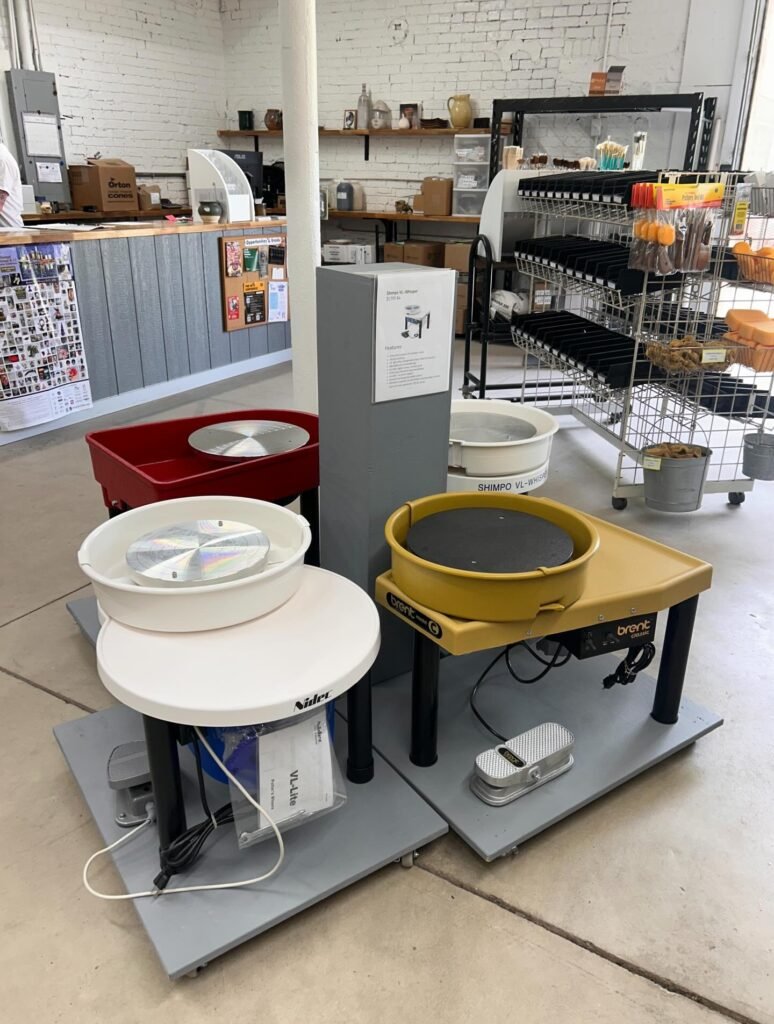
Choosing between Brent, Shimpo, and Speedball comes down to drive system, budget, and how much power you actually need. Brent wheels run on a proven belt-drive system with real production-level torque. Shimpo offers both belt-drive and direct-drive models, including some of the quietest wheels available. Speedball focuses on affordable, portable options for beginners and home potters.
This guide breaks down what actually separates these three brands. That way, you can pick the one that fits your real situation.
Brent: Belt-Drive Reliability and Torque
Brent has built pottery wheels for over 40 years. That experience shows in the belt-drive design used across their lineup. The Brent B, Brent C, and Brent CXC share the same core design. Motor power scales from a 1/2 HP up to a full 1 HP as you move up the lineup.
Every Brent wheel carries the same 10-year warranty. The modular motor and foot pedal connections make repairs genuinely simple compared to a sealed system. This matters most in schools and shared studios. A wheel there logs far more hours than it would in a single home.
Shimpo: Direct-Drive Quiet and Reliable Belt Options
Shimpo splits its lineup between belt-driven and direct-drive models. This gives you a real choice depending on what matters most to you. The Shimpo VL Whisper uses a magnetic direct-drive motor with no belt at all. It runs close to 48 decibels at full speed.
The tradeoff for that quiet operation is typically a higher price point than a comparable belt-driven wheel. Say noise genuinely matters in your space. Maybe it’s an apartment, a shared home, or working late at night. In those cases, that tradeoff is usually worth it.
Speedball: Affordable and Portable
Speedball focuses on a different segment entirely. Think low-cost, portable wheels built for beginners and home potters testing the craft. The Speedball Artista is the clearest example. It’s a compact tabletop wheel that costs a fraction of a full-size Brent or Shimpo.
This isn’t a lesser wheel so much as a different tool for a different job. It won’t match a Brent CXC’s centering capacity, but it was never built to. For testing pottery as a hobby or working in a small space, it’s a genuinely capable option.
Comparing the Three at a Glance
| Brand | Drive System | Best For |
|---|---|---|
| Brent | Belt-drive | Schools, studios, serious production work |
| Shimpo | Belt or direct-drive | Quiet home use, or dependable studio work |
| Speedball | Belt-drive, compact | Beginners, testing the hobby, small spaces |
Parts and Long-Term Support Matter Too
All three brands maintain real, established parts and service networks in the U.S. This matters more than it seems once a wheel needs a repair years down the road. It’s a genuine advantage over unfamiliar budget import brands with little to no support infrastructure.
Brent’s modular design is particularly easy to service. The motor and foot pedal use plug-in connections rather than a sealed housing. Shimpo’s direct-drive models trade some of that easy serviceability for the quiet operation their design delivers.
Should You Consider a Used Wheel From Any of These Brands?
A used Brent, Shimpo, or Speedball wheel can be a real value, provided you check it carefully first. Test the motor under load, and check the foot pedal for smooth response. Ask about the wheel’s age and usage history before buying too.
Brent’s long-standing reputation and 40 years in the market mean used units show up fairly often. Parts remain available even for older models. This makes buying used a more reasonable option with Brent than with less established brands.
What Actually Matters for Your Decision
Start with your space and noise tolerance. A shared wall or apartment setting pushes you toward Shimpo’s direct-drive options. A garage or dedicated studio with no noise concerns opens up Brent’s full lineup.
Next, think about your real production needs. A hobbyist making mugs and bowls doesn’t need a CXC’s 300-pound capacity. A school outfitting multiple stations benefits from Brent’s serviceable, long-warrantied design across several units.
Budget Matters Too, But Don’t Let It Be the Only Factor
Speedball’s lower price makes sense if you’re still deciding whether pottery is a long-term hobby. Spending less upfront reduces the risk of an expensive wheel sitting unused.
Once you know you’re sticking with the craft, the math often shifts. A Brent or Shimpo wheel that lasts for years beats replacing a budget wheel once you outgrow it.
Ready to Compare Real Options?
Browse our complete pottery wheel collection to compare Brent, Shimpo, and Speedball models side by side.
