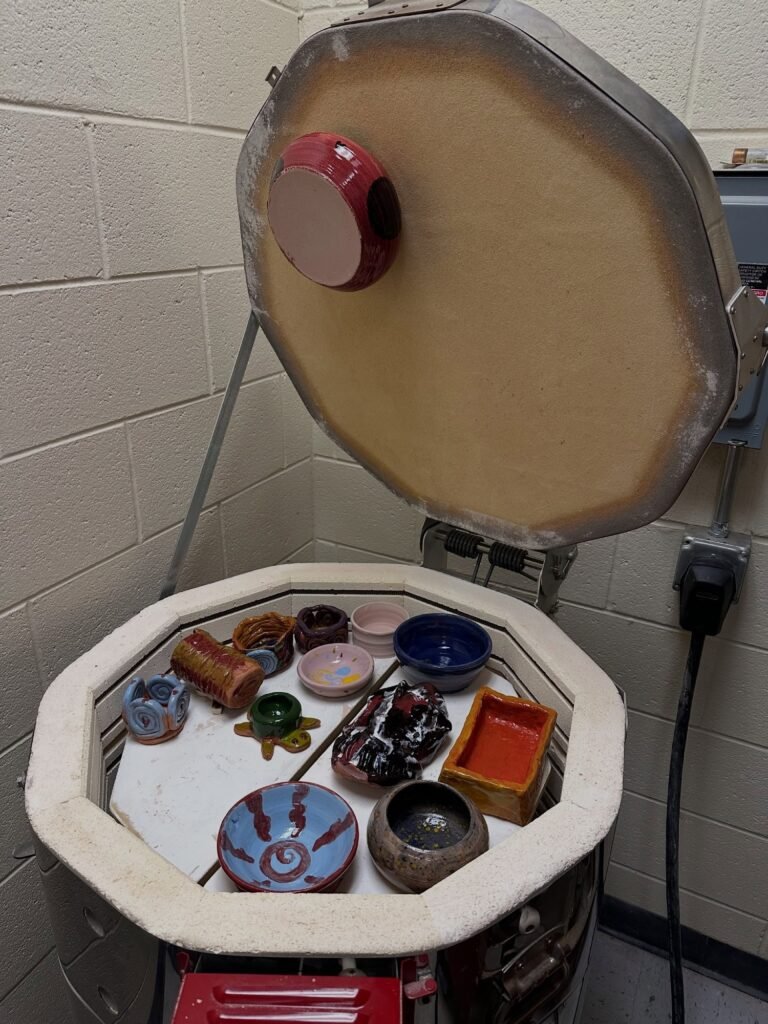
A full kiln firing cycle typically runs 15 to 24 hours total. That counts both the firing itself and the cool-down after. Bisque firings run longer overall, often close to 24 hours, since they’re fired slowly on purpose. Glaze firings move faster during the heating phase. Cooling still takes real time either way, no matter which type of firing you’re running.
This guide breaks down what actually happens during each phase, and when it’s genuinely safe to open your kiln.
The Firing Phase Itself
A typical cone 6 glaze firing takes around 7 to 8 hours to reach peak temperature. This varies by kiln size, load, and program speed. Bisque firings often run longer during this phase. Slow, gradual heating helps organic material and moisture leave the clay safely.
Skutt’s own guidance notes that a firing running close to 7.5 hours is normal for many programs. Say your kiln consistently takes 8.5 hours or longer for the same program. That’s worth mentioning to a technician, since it can signal a developing problem.
Why Cooling Takes So Long
As a rough rule, cooling takes about as long as the firing did. A kiln that took 12 hours to reach temperature will often take close to 12 more hours to cool. That’s a useful rule of thumb to plan around.
Kiln size, insulation, and how full the load is all affect actual cooling time. A larger, more heavily loaded, well-insulated kiln holds heat longer than a smaller, lightly loaded one.
When Is It Actually Safe to Open the Kiln?
Skutt’s own guidance is direct: wait until the kiln has cooled below 125°F before opening the lid. Opening too soon risks thermal shock, which can crack pottery or cause glaze crazing.
For glazed pieces meant for food use, this matters even more. Opening early enough for the glaze to craze can create tiny cracks. Bacteria can grow there, and that isn’t something you can fix after the fact.
What About Peeking Early?
Some potters prop the lid slightly or use a fire brick to widen a small gap as the kiln cools. They gradually increase the opening as temperature drops. This isn’t universally recommended. It speeds up cooling in a way that can still risk thermal shock if done too aggressively.
Say you want visual confirmation before fully opening the kiln. Checking through the peepholes is a safer way to see your work without disturbing the sealed chamber.
A Useful Diagnostic While You Wait
Once the kiln is cool and you remove your shelves, check your cones. They should be bent anywhere from 20 degrees to just hanging near the shelf.
If the cone next to the thermocouple is touching the shelf, that’s often a sign the thermocouple needs replacing. Say a cone doesn’t bend at all. That can point to a worn element or relay in that section of the kiln.
Realistic Total Time Estimates
A typical bisque firing, including cool-down, often takes close to 24 hours from start to unloading. Glaze firings tend to run a bit faster overall. Total cycles closer to 15 to 16 hours are common for many home kilns.
These numbers shift with kiln size, clay body, and the specific cone you’re firing to. A cone 10 firing takes meaningfully longer than a cone 6 firing on the same equipment. That’s true both to reach temperature and to cool back down safely.
Planning Your Studio Schedule Around These Times
Given the real total time involved, most potters start a firing at the end of a studio day or overnight. That way, the cooling period happens while they’re away rather than waiting around. A firing started in the evening is often cool enough to unload by the next afternoon.
Vent systems don’t speed up cooling directly. They do help manage air quality in your studio space during the firing itself, though. That matters for anyone working nearby while the kiln runs. Check out our vent system options if this is a concern for your space.
Smaller Kilns Cool Faster
Compact kilns like the Skutt KM-614-3 generally cool faster than a large production kiln. There’s simply less mass and less trapped heat to dissipate. This can make a smaller kiln more practical if you’re firing often. You won’t wait as long between loads.
Quick Reference: Typical Cycle Times
Firing TypeFiring TimeCooling TimeTotal Cycle Cone 6 Glaze7-8 hours7-8 hours~15-16 hours Bisque10-12 hours10-12 hours~24 hours Cone 10 Glaze10+ hours10+ hours20+ hours
These numbers are realistic averages, not guarantees. Your specific kiln, load size, and program settings will shift these times somewhat in either direction.
Skutt KM-1027
A 7 cubic foot kiln with Skutt’s proven ConeFire programming, giving you predictable firing times you can plan around.
Plan Your Firing Schedule Around Real Numbers
Browse our complete kiln collection to compare firing programs and plan your studio schedule accurately.
