The kiln finished firing hours ago. The controller says the temperature is dropping. You are curious about what happened inside.
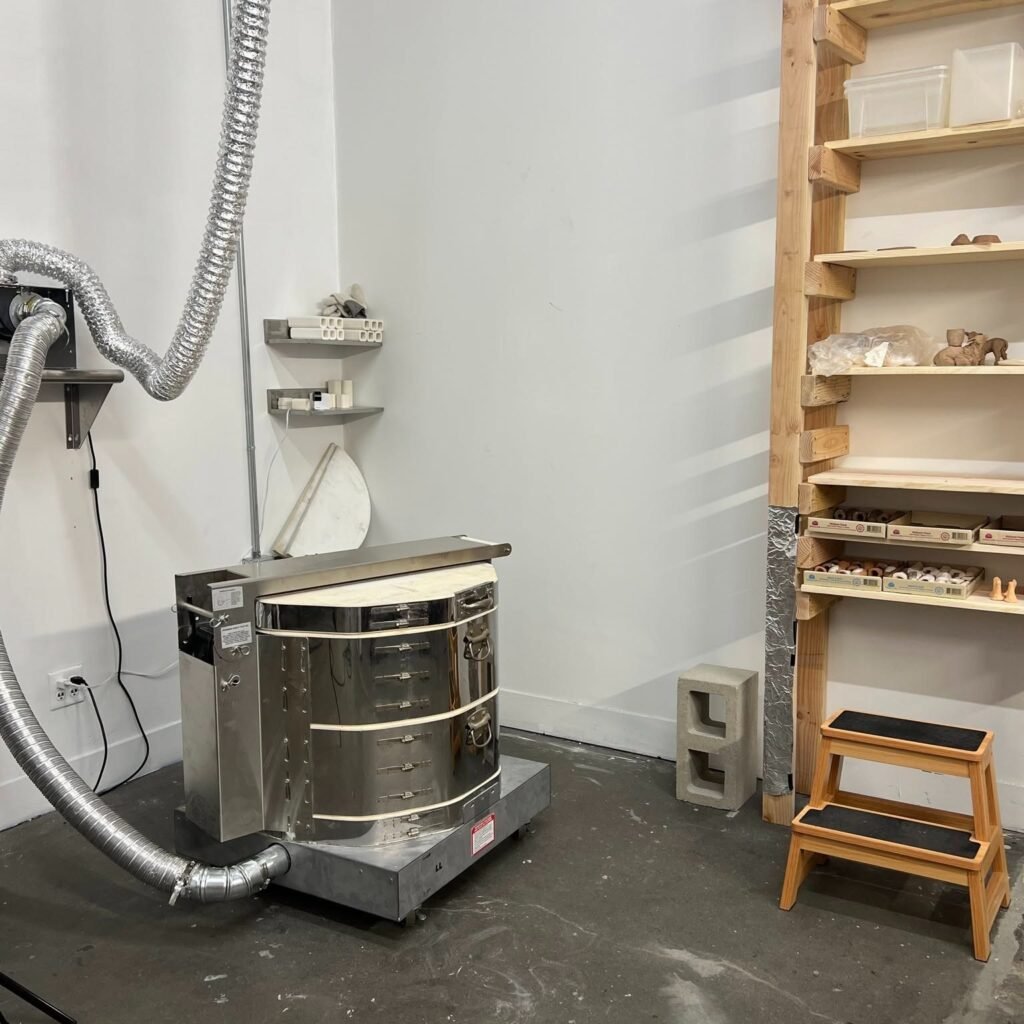
Should you open it?
Usually, no.
A proper kiln cooldown is part of the firing process, not wasted time after the firing is finished. Opening a pottery kiln while it is still very hot can expose the ware to rapid temperature changes that may cause cracking, glaze crazing, or other defects.
For ordinary ceramic firing, manufacturers generally recommend allowing the kiln to cool to room temperature before unloading. Skutt gives a specific practical threshold for its ceramic kilns: wait until the kiln has cooled below 125°F (about 52°C) before opening the lid. Paragon’s ceramic-kiln guidance is more conservative, recommending that the kiln cool to room temperature before unloading.
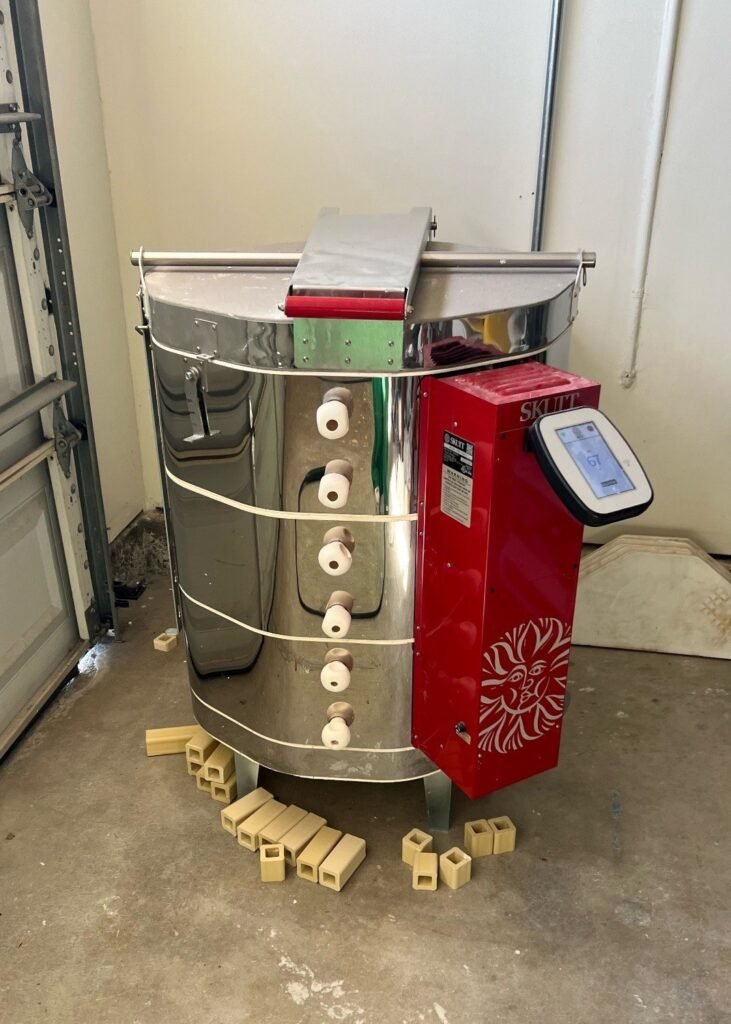
That means there is no universal rule such as “wait six hours.”
A kiln’s kiln cooldown depends on its size, insulation, firing temperature, load, room conditions, controller settings, and whether controlled cooling was programmed.
The important thing is not the clock.
It is the temperature and the condition of the ware.
What Is Kiln Cooldown?
Kiln cooldown is the period after a firing during which the kiln and its contents gradually lose heat.
The firing may technically be complete when the controller reaches its programmed endpoint, but the kiln itself is still extremely hot.
A typical electric pottery kiln may have reached temperatures above 2,000°F depending on the firing cone.
The controller then stops applying heat.
The kiln does not immediately become cool.
The firebrick, shelves, posts, kiln furniture, glaze, clay, and the surrounding metal structure all retain heat.
That stored heat gradually moves outward and is released into the surrounding environment.
This is why the cooling stage can take many hours.
The Kiln Depot’s guide to total kiln firing cycle time covers the relationship between firing time and cooling time in more detail.
Why Kiln Cooldown Matters
The cooling stage affects more than your ability to unload the kiln.
It affects the stresses experienced by the ceramic ware.
Ceramic materials expand when heated and contract as they cool.
Glazes and clay bodies also have different thermal expansion characteristics.
If cooling occurs too aggressively, those differences can create stresses within the finished piece.
The result may be:
- Cracked pottery
- Glaze crazing
- Shivering
- Thermal shock
- Cracked kiln shelves
- Broken glass or other heat-sensitive materials
- Sudden failure of already weakened ware
Not every crack is caused by cooling.
Clay body composition, glaze fit, wall thickness, moisture, firing schedule, kiln loading, thermal gradients, and other factors can all contribute.
But poor kiln cooldown is an avoidable variable.
How Long Does Kiln Cooldown Take?
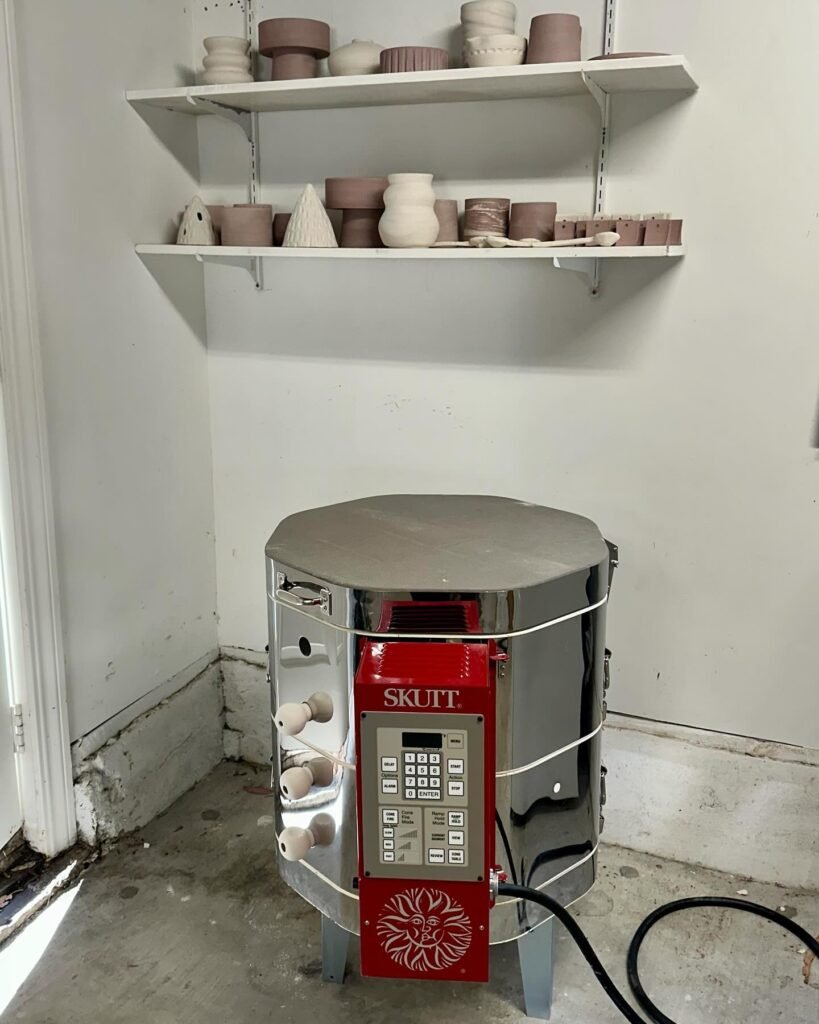
There is no single cooling time that applies to every kiln.
A small kiln with a light load may cool considerably faster than a large, heavily loaded kiln with thick insulation.
Variables include:
Kiln size
Larger kilns contain more refractory material and often retain more heat.
Insulation
Thicker or more efficient insulation can reduce heat loss during firing and also slow the cooling process.
Firing temperature
A kiln that has reached Cone 6 obviously has much more heat to release than one that completed a low-temperature firing.
Load size
A kiln packed with shelves and dense ceramic ware contains more thermal mass than an almost empty kiln.
Ambient temperature
A kiln in a cool garage may cool differently from one operating in a warm studio.
Ventilation
Air movement around the kiln can affect how heat is transferred from the kiln exterior.
Controlled cooling
Some digital controllers allow programmed cooling segments.
This is different from simply opening the kiln and letting room air rush inside.
A controlled cooling program deliberately manages the temperature decline according to a selected rate.
When Can You Open a Pottery Kiln?
For ordinary ceramic work, the safest general approach is simple:
Let the kiln cool to the manufacturer’s recommended temperature before opening it.
Skutt’s ceramic-kiln guidance says to wait until the kiln has cooled below 125°F before opening the lid.
Paragon’s ceramic-kiln guidance recommends waiting until the kiln reaches room temperature before unloading.
Those recommendations are more useful than arbitrary time estimates.
A kiln that has been off for eight hours is not necessarily safe to open.
A kiln that has been off for twelve hours is not necessarily safe either.
The controller temperature is what matters.
If your controller displays the current kiln temperature, use that information.
If you are working with an older kiln without a digital temperature display, follow the manufacturer’s operating instructions rather than guessing based on elapsed time.
Why Opening a Hot Kiln Can Damage Pottery
Imagine taking a ceramic piece that has been sitting inside a very hot kiln and suddenly exposing it to substantially cooler air.
The outside and inside of the piece do not necessarily change temperature at exactly the same rate.
That creates temperature gradients.
Temperature gradients create stress.
If the stress exceeds what the material can tolerate, the piece can crack.
Thick pieces are particularly vulnerable because their interiors can remain significantly hotter than their surfaces.
This is one reason thick sculptures, large tiles, heavy slabs, and other substantial pieces deserve more cautious cooling than small, thin pieces.
Opening the kiln early does not simply “let it cool faster.”
It changes how the heat leaves the kiln.
Does Opening the Kiln Too Early Cause Glaze Crazing?
It can contribute to crazing.
Skutt specifically warns that opening a glaze firing too soon can cause the glaze to craze.
Crazing appears as a network of fine cracks through the glaze surface.
Glaze crazing is fundamentally related to the thermal expansion relationship between glaze and clay body, so opening the kiln too early is not the only possible cause.
However, rapid or uneven cooling can increase the stresses acting on the finished ware.
For food-contact ceramics, crazing is especially undesirable because the cracked glaze surface is no longer the smooth continuous surface intended for use.
The best practice is therefore simple:
Do not use an early kiln opening as a shortcut for cooling a glaze firing.
What Temperature Is Safe to Open a Kiln?
For Skutt ceramic kilns, the manufacturer recommends waiting until the kiln is below 125°F (52°C) before opening the lid.
That is a useful reference point, but it should not be interpreted as a universal law for every kiln, material, or firing application.
Always follow the manufacturer’s instructions for your particular kiln.
Paragon’s guidance for ceramic kilns recommends cooling to room temperature before unloading.
For ordinary pottery, the more conservative approach is easy to follow:
Wait until the kiln is cool enough that the ware can be handled safely with bare hands.
If you are still thinking about gloves because the pieces are hot, they are not ready to unload.
Why Kilns Stay Hot for So Long
A common beginner assumption is that once the heating elements switch off, the kiln should cool quickly.
It does not.
The kiln itself is a thermal mass.
The insulating brick or fiber surrounding the firing chamber has absorbed enormous amounts of heat during the firing.
The shelves have absorbed heat.
The posts have absorbed heat.
The pottery has absorbed heat.
The metal kiln jacket also remains hot.
All of that stored energy has to leave the system.
This is why a kiln that took eight or ten hours to fire may require many additional hours before it is cool enough to unload.
The Kiln Depot’s existing kiln firing cycle guide is useful when planning around this.
If you are scheduling production firings, think of the entire cycle rather than just the time required to reach peak temperature.
Can You Speed Up Kiln Cooldown?
Technically, yes.
But for normal pottery firing, deliberately forcing the kiln to cool faster is usually not the goal.
The better question is:
Do you actually need faster cooling, and does the firing schedule require it?
There is a difference between controlled cooling and uncontrolled rapid cooling.
Controlled cooling
A digital controller may allow you to program a cooling segment.
The kiln deliberately reduces temperature according to a specified cooling rate.
Skutt controllers can provide controlled cooling functions on applicable models.
This is useful when a clay or glaze process specifically benefits from a controlled cooling schedule.
Forced cooling
Opening the lid, removing plugs, opening a door, or otherwise introducing large amounts of cooler air can accelerate heat loss.
That does not automatically make it a good idea.
Rapid cooling can increase thermal stress.
If a glaze manufacturer, clay manufacturer, kiln manufacturer, or established firing schedule calls for controlled cooling, follow that procedure instead of improvising.
Should You Open the Peepholes During Kiln Cooldown?
Do not assume that opening peepholes is an appropriate way to speed cooling.
Peepholes have specific functions during firing, including viewing witness cones and, depending on the kiln and ventilation arrangement, managing airflow.
Skutt’s guidance explains that peephole use is connected with venting and viewing cones.
The correct position of peephole plugs can depend on the kiln, ventilation system, and firing stage.
The Kiln Depot’s kiln peephole guide covers their proper use in more detail.
If your kiln has a downdraft ventilation system, follow the ventilation system’s instructions.
Do not create your own cooling procedure simply by removing plugs because the kiln seems to be taking too long.
Should the Kiln Vent Stay On During Cooldown?
That depends on the kiln, ventilation system, and manufacturer’s instructions.
A kiln vent can continue moving air through the kiln after the firing has completed, and some studio procedures intentionally keep ventilation operating during part of the cooling period.
The important distinction is between ventilation and rapid cooling.
A ventilation system is primarily there to manage kiln fumes and air movement.
It should not automatically be treated as a device for forcing the kiln to cool as rapidly as possible.
The Kiln Depot’s kiln ventilation guide covers ventilation requirements and operating considerations.
Follow the instructions supplied with the specific vent system.
What About Cracking the Lid?
This is one of the most common kiln-cooling shortcuts discussed among potters.
The idea is simple.
Crack the lid slightly.
Let hot air escape.
Bring cooler air into the kiln.
Cool the pottery faster.
The problem is that this changes the cooling conditions.
For routine ceramic firing, there is rarely a good reason to turn a normal kiln cooldown into an improvised rapid-cooling experiment.
If your firing process specifically requires controlled cooling, program it.
If your manufacturer specifically permits a particular cooling procedure, follow it.
Otherwise, patience is cheaper than replacing cracked work.
Kiln Cooldown and Thermal Shock
Thermal shock occurs when a material experiences a sufficiently rapid temperature change that internal stresses exceed its ability to withstand them.
Ceramics can be vulnerable because they are rigid and brittle.
A thick ceramic object is especially interesting because the exterior can change temperature faster than the interior.
That means the piece can have substantial temperature differences across its thickness.
This is why a large sculpture may require much more caution than a thin test tile.
The same principle explains why taking hot glass out of a kiln and exposing it to room-temperature air can be disastrous.
The exact thermal behavior depends on the material, shape, thickness, kiln schedule, and temperature.
There is no single “safe cooling rate” that applies to every ceramic object.
Does a Full Kiln Cool More Slowly?
Usually, yes.
A heavily loaded kiln contains more material capable of storing heat.
The shelves, posts, ware, and other kiln furniture all contribute to the thermal mass.
That does not mean every full kiln will cool at exactly the same rate.
The size and construction of the kiln matter too.
A thickly insulated kiln may retain heat substantially longer than a lightly insulated kiln.
This is one reason two potters can report completely different cooling times even after similar firings.
Neither necessarily has a malfunctioning kiln.
They may simply have different equipment and different loads.
Does a Larger Kiln Take Longer to Cool?
Generally, larger kilns can take longer to cool because they contain more refractory material and often have greater thermal mass.
But kiln size alone does not determine the cooling time.
Compare:
- A small kiln packed tightly with dense ware
- A large kiln containing a light load
- A heavily insulated production kiln
- An older kiln with less efficient insulation
Their cooling curves can be very different.
That is why “a kiln takes eight hours to cool” is not a useful universal specification.
Your own kiln’s firing records are more valuable.
How to Know Your Kiln Is Cooling Normally
Keep a firing log.
Record:
- Firing program
- Start time
- Completion time
- Peak temperature
- Temperature several hours after completion
- Time when the kiln reaches unloading temperature
- Unusual noises
- Errors
- Appearance of the ware
- Witness cone results
Over several firings, you will establish a baseline.
If your kiln normally drops from peak temperature to 500°F within a predictable period but suddenly takes dramatically longer, that may be worth investigating.
If it suddenly cools much faster than normal, that can also be informative.
A change in cooling behavior does not automatically mean something is wrong.
But unexplained changes are worth recording.
Is Popping or Clicking During Kiln Cooldown Normal?
Often, yes.
Paragon notes that faint popping noises can occur as firebrick and the metal jacket cool and contract.
Materials expand when heated and contract when cooled.
That movement can produce clicking, popping, or similar sounds.
A few occasional sounds during kiln cooldown do not automatically indicate a failure.
However, unusual loud cracking, visible structural damage, electrical smells, smoke, or other abnormal symptoms deserve investigation.
The important distinction is between normal thermal movement and evidence of a mechanical or electrical problem.
What If Pottery Cracks During Cooling?
Do not immediately blame the kiln.
First examine the firing and the piece.
Possible contributors include:
- Rapid cooling
- Uneven cooling
- Thick sections
- Internal stresses
- Clay body characteristics
- Glaze fit
- Poor drying before firing
- Uneven wall thickness
- Previous damage
- Firing schedule
- Kiln temperature gradients
Look at where the crack occurred.
A crack through a thick sculpture is a different diagnostic problem from glaze crazing across an otherwise intact cup.
Record the firing conditions.
If the same problem repeatedly occurs with the same clay and glaze combination, investigate the material compatibility.
If cracking begins only after you changed the cooling procedure, investigate the cooling procedure.
What If the Kiln Takes Much Longer to Cool Than Before?
A slower kiln cooldown is not necessarily a fault.
The load may have changed.
You may have fired a heavier batch.
The firing temperature may have been higher.
Ambient conditions may be different.
The kiln may have been placed in a different room.
However, if cooling behavior changes dramatically without an obvious explanation, inspect the kiln and compare the complete firing cycle with previous records.
Remember that cooling is only one part of kiln performance.
The total firing cycle also includes heating.
The Kiln Depot’s kiln error codes guide explains why abnormal firing behavior should be documented rather than ignored.
What If the Kiln Cools Too Quickly?
An unusually rapid cooldown can also deserve attention.
Check whether:
- The kiln lid is fully closed
- Peephole plugs are positioned correctly
- The ventilation system is operating differently
- The kiln has been moved
- A door or lid seal has changed
- The load was much smaller
- A programmed cooling segment was accidentally activated
If you recently changed the ventilation setup or kiln location, compare the new configuration with the manufacturer’s installation instructions.
A kiln should not be modified simply to achieve a particular cooling time.
Kiln Cooldown After a Bisque Firing
Bisque firing is sometimes treated as less important than glaze firing.
That is a mistake.
Bisque ware is still ceramic material undergoing thermal changes.
Large or thick pieces can still be vulnerable to thermal shock.
Allow the kiln to cool according to the manufacturer’s recommendations.
Do not assume that because the ware has not been glazed, it can be exposed to rapid temperature changes without consequences.
Kiln Cooldown After a Glaze Firing
Glaze firing deserves particular caution.
The glaze and clay body have to contract together as the piece cools.
Rapid or uneven cooling can increase stress within the glaze and body.
This can contribute to defects including crazing or cracking.
Skutt specifically recommends waiting until below 125°F before opening a ceramic kiln.
For the most conservative approach, allow the kiln to reach room temperature before unloading.
Kiln Cooldown for Thick Sculptures
Thick sculptures deserve extra patience.
The exterior and interior of a large ceramic object can cool at different rates.
The same applies to:
- Thick handles
- Large bases
- Heavy wall sections
- Sculptural attachments
- Large solid forms
- Thick tiles
If you routinely fire large work, consider the cooling requirements when developing your firing schedule.
Do not assume that the cooling behavior of a small mug applies to a 12-inch solid sculpture.
What About Opening the Kiln at 500°F?
Some potters ask whether opening the kiln around 500°F is acceptable because the temperature feels dramatically lower than the peak firing temperature.
For ordinary ceramic work, that is still far too hot to treat as a normal unloading temperature.
At 500°F, the kiln and ware remain capable of causing serious burns.
More importantly, the pottery is still undergoing substantial thermal contraction.
Opening at that temperature simply because the kiln feels “cooler” than before is not a sound unloading strategy.
Follow the manufacturer’s recommended temperature.
What About Opening at 200°F?
This is much closer to the temperatures discussed by some manufacturers, but it is still above Skutt’s stated 125°F threshold for opening its ceramic kilns.
Again, the manufacturer matters.
For a general pottery practice, there is little advantage to opening a kiln at 200°F when waiting longer substantially reduces thermal and handling risks.
If you are already waiting through an overnight cooling cycle, another hour or two is usually a much cheaper investment than replacing a cracked load.
A Practical Kiln Cooldown Routine
A simple routine works well for most pottery studios.
Step 1: Let the firing complete normally
Allow the controller or kiln sitter to complete the firing according to the programmed schedule.
Do not interfere with the kiln simply because you are eager to unload it.
Step 2: Record the firing
Write down the completion time, temperature, firing program, and any errors.
Step 3: Keep the kiln closed
Do not open the lid simply to check whether the pottery survived.
You cannot improve the result by looking early.
Step 4: Follow ventilation instructions
Keep the kiln ventilation system operating according to the manufacturer’s recommendations.
Step 5: Monitor the temperature
If your controller provides a temperature reading after firing, use it.
Step 6: Wait for the recommended unloading temperature
For Skutt ceramic kilns, the manufacturer recommends below 125°F.
Other manufacturers may specify room temperature.
Step 7: Open carefully
When the kiln is sufficiently cool, open the lid carefully.
Remember that shelves, posts, and ware can still retain heat.
Step 8: Inspect the firing
Look at the witness cones, glaze surfaces, clay bodies, shelves, and kiln interior.
Step 9: Record what you learned
A firing log turns every firing into useful data for the next one.
The Biggest Kiln Cooldown Mistakes
If you want to avoid cooling problems, avoid these common mistakes.
Opening the kiln because you are impatient
This is probably the most common.
The kiln is not going anywhere.
Let it cool.
Using elapsed time instead of temperature
“Eight hours should be enough” is not a reliable safety rule.
Assuming every kiln cools the same way
Kilns differ substantially.
Cracking the lid without understanding the consequences
Rapid cooling can create unnecessary thermal stress.
Ignoring thick work
Large pieces need more caution than thin pieces.
Treating crazing as proof of bad glaze chemistry
Cooling conditions can contribute to crazing, but glaze fit and material compatibility matter too.
Changing ventilation without understanding the system
Ventilation and cooling are related, but they are not interchangeable.
Opening the kiln repeatedly to check the pottery
Every opening changes the thermal environment.
If you want consistent results, stop interfering with the process.
Bottom Line: Be Patient With Kiln Cooldown
A pottery kiln is not finished simply because the controller has reached its target temperature.
The cooling stage is part of the firing.
A good kiln cooldown protects the work, reduces unnecessary thermal stress, and gives you a consistent process from one firing to the next.
For ordinary ceramic firing, the safest routine is straightforward:
Finish the firing. Keep the kiln closed. Follow the manufacturer’s cooling instructions. Wait for the recommended unloading temperature. Then open and unload.
Skutt recommends waiting until its ceramic kilns are below 125°F before opening. Paragon recommends allowing ceramic kilns to cool to room temperature before unloading.
If you frequently find yourself asking how long your kiln should take to cool, stop relying on generic estimates.
Start keeping a firing log.
Record the firing time, peak temperature, load, cooling behavior, and unloading temperature.
After several firings, you will know your kiln’s normal pattern.
And that is much more useful than an internet rule saying your kiln should be cool after a certain number of hours.
For ceramic firing, patience during kiln cooldown is not wasted time.
It is part of producing consistent work.
