Executive Summary
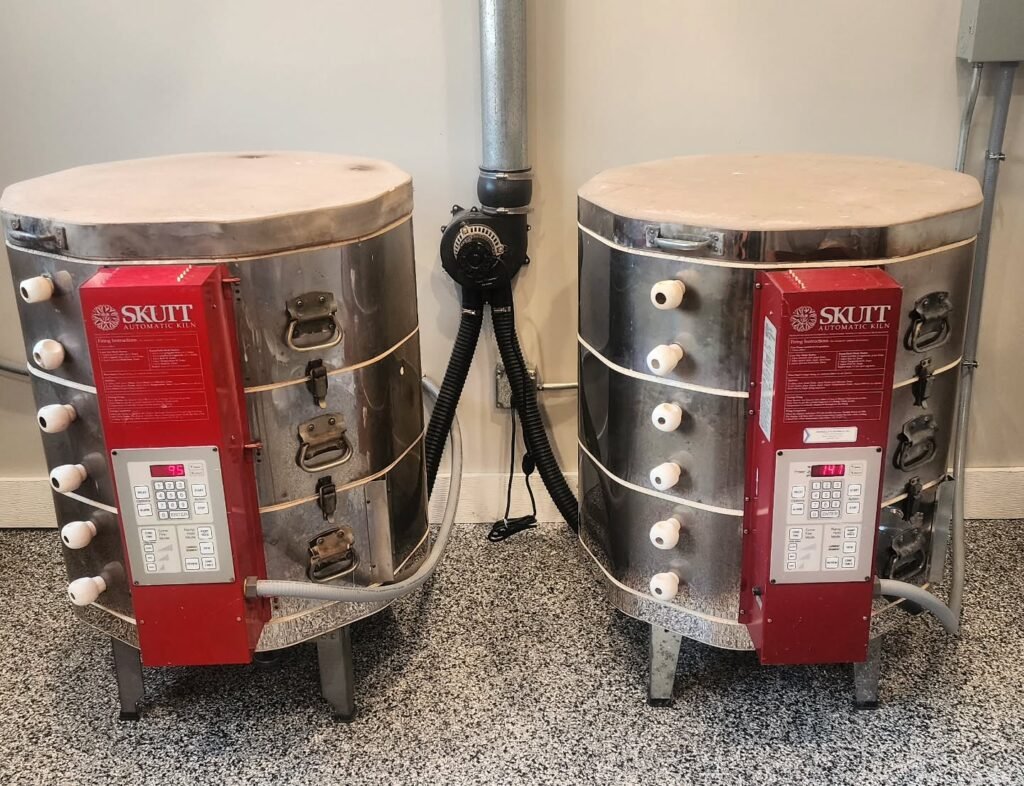
A kiln vent is not a decorative add-on. It is a system designed to move kiln fumes outdoors and support a more consistent firing environment. For many home studios, schools, community art centers, and production pottery spaces, it is one of the most important parts of a safe and practical kiln installation.
The right answer is not simply “buy a vent.” Kiln ventilation must suit the kiln model, firing materials, room, duct route, local code requirements, and manufacturer instructions. A properly selected downdraft vent can remove fumes before they enter the room, help maintain a more uniform kiln atmosphere, and make firing more comfortable. It does not replace safe kiln placement, electrical work by a qualified professional, or local ventilation and building-code requirements.
Quick Answer
Do you need a kiln vent? In most pottery studios, an outdoor-venting kiln ventilation system is a very wise investment and may be required by local codes, your landlord, school policies, insurer, or kiln manufacturer’s installation guidance. It is especially important when firing indoors, firing frequently, using glazes, decals, lusters, or other materials that create fumes, or operating in an attached garage, basement, classroom, or shared building.
The best starting point is to review the kiln manufacturer’s installation instructions, confirm local requirements, and plan the vent before the kiln arrives.
Key Takeaways
- A kiln vent removes fumes; it is not the same thing as opening a window or running a room fan.
- Downdraft kiln vents draw a small amount of air through the kiln and exhaust it outdoors.
- A correctly installed vent may improve firing consistency and reduce odors in the kiln room.
- The kiln, vent, duct length, bends, room, and exterior exhaust location must be planned together.
- Do not modify a kiln, drill holes, or install electrical equipment without following the exact manufacturer instructions.
- A ventilation system does not eliminate the need for proper kiln clearance, electrical installation, and studio safety practices.
- For a home studio, planning ventilation before delivery is far easier than retrofitting after the kiln is in place.
Table of Contents
- What a kiln vent actually does
- When a kiln vent is worth it
- Downdraft vs. overhead ventilation
- What a kiln vent does not do
- The nine factors to consider before buying
- Common kiln venting mistakes
- Installation planning
- Maintenance and ownership costs
- Frequently asked questions
- Final verdict
What Is a Kiln Vent?
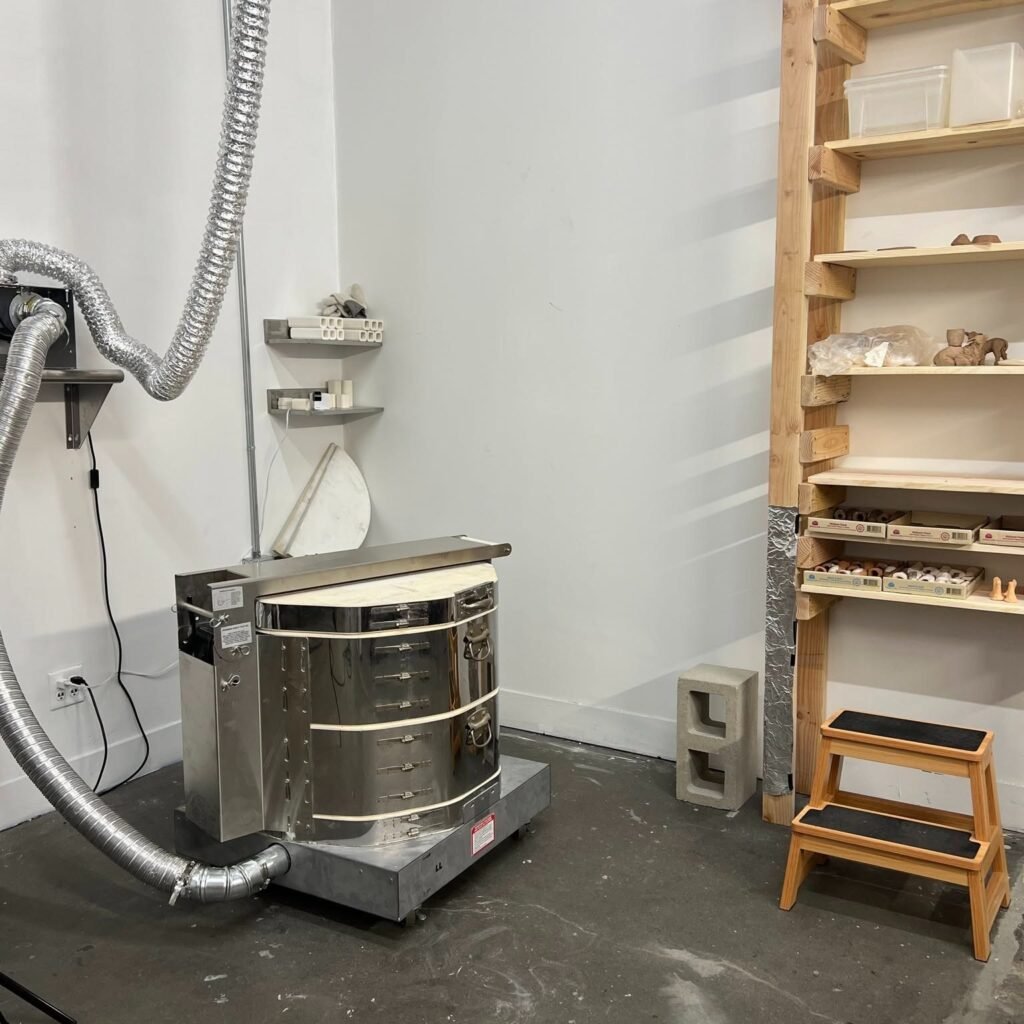
A kiln vent is a mechanical system that helps remove fumes produced during firing and directs them outside the building. In pottery, the most common dedicated option is a downdraft vent.
A downdraft vent uses a fan to create gentle negative pressure. It pulls a controlled amount of room air through specific openings in the kiln, then sends the exhaust through metal ducting to the outdoors. Because the system pulls air through the kiln rather than waiting for fumes to escape into the room, it can be more effective at controlling odors and fumes around the kiln.
[Hero Image — ALT: Electric pottery kiln with a professionally installed downdraft vent in a clean home ceramics studio]
This matters during bisque firings, glaze firings, and specialty firings. Clay bodies, glazes, binders, organic materials, decals, lusters, and other products can release odors or fumes as they heat. The exact materials and firing program matter, which is why a kiln’s manual and material safety documentation should guide every installation.
Skutt describes its EnviroVent 2 as a downdraft system that draws fumes from the kiln before they enter the room. The system is designed for specific compatible kiln configurations and installation methods. That last point is essential: a kiln vent is a matched system, not a generic fan attached to any convenient opening.
Why a Kiln Vent Matters in a Pottery Studio

A kiln firing changes the environment in more ways than many first-time buyers expect. It produces heat, and it can produce odors and fumes. That is why a kiln needs more planning than a pottery wheel or worktable.
A well-designed venting system can help with four practical goals:
- Move kiln fumes outside. This is the primary reason to install a dedicated vent.
- Improve the kiln-room experience. A properly operating system can reduce noticeable odor in the work area.
- Support a more consistent chamber atmosphere. Some manufacturers state that proper ventilation can help promote more uniform firing and consistent color response.
- Make routine firing easier. A dedicated system can allow the kiln to remain closed as directed by the manufacturer rather than relying on improvised room ventilation.
That does not mean every vent performs identically. Installation quality is part of the product. A poorly routed duct, an incorrect hole pattern, inadequate makeup air, an improper exhaust location, or incompatible equipment can compromise performance.
When Do You Need a Kiln Vent?
The more relevant question is not whether anyone can operate a kiln without a vent. It is whether your specific installation has an appropriate, documented way to manage heat and fumes.
A dedicated kiln vent should be a serious priority if any of the following apply:
- Your kiln is indoors.
- Your kiln is in an attached garage, basement, classroom, or shared studio.
- Your firing space has limited natural ventilation.
- You fire frequently or run long programs.
- You use glazes, underglazes, decals, lusters, overglazes, or specialty materials.
- Other people live, work, teach, or make art near the kiln room.
- You want a cleaner, more repeatable firing routine.
- Your local regulations, insurer, landlord, school district, or manufacturer requires it.
Before you choose a kiln, also review what pottery studio equipment you actually need. A kiln is not an isolated purchase. Its electrical service, floor location, ventilation, firing furniture, and workflow all affect whether the studio is ready to operate.
Downdraft Vent vs. Overhead Ventilation
The term “kiln ventilation” can describe different setups. Those differences matter.
| System | How it works | Best use | Main limitation |
|---|---|---|---|
| Downdraft kiln vent | Pulls a controlled amount of air through the kiln and exhausts it outdoors | Most electric pottery kilns with compatible vent systems | Must be installed to the kiln manufacturer’s specifications |
| Overhead canopy or hood | Captures rising heat and fumes above a kiln | Some commercial or custom installations | May not capture fumes before they enter the room |
| General room exhaust | Exchanges room air through an exhaust fan | Supplemental room ventilation | Does not replace a kiln-specific exhaust system |
| Open window and fan | Moves some room air | Temporary airflow only | Unpredictable and not a substitute for a designed system |
Why Downdraft Systems Are Popular
A dedicated downdraft system is designed to capture exhaust at the kiln. Skutt explains that its system draws a small amount of air through holes in the kiln and vents exhaust outside. The specific hole pattern, number of holes, fan arrangement, and duct route are part of the system design.
That is why “I have a fan in the room” is not the same as “I have a kiln vent.” A room fan may circulate air, but it can also distribute fumes rather than remove them at the source.
[Exploded Product Diagram — ALT: Diagram showing a downdraft kiln vent drawing air through a kiln chamber and exhausting it outdoors]
When an Overhead System Makes Sense
An overhead hood or larger mechanical system may be appropriate for a commercial facility, a large kiln room, a front-loading kiln, or a setup designed by a qualified ventilation professional. It can be effective when correctly engineered for the equipment, room volume, heat load, and exhaust route.
However, do not assume a range hood, bathroom fan, or ordinary shop exhaust fan is automatically suitable. Kiln exhaust is a specialized application. Material compatibility, ducting, clearance, fan rating, and local code requirements all matter.
What a Kiln Vent Does Not Do
A kiln vent is valuable, but it is not a universal solution. It does not:
- Make an unsafe room automatically safe.
- Replace required clearances around the kiln.
- Replace professional electrical installation.
- Permit you to ignore the kiln manufacturer’s instructions.
- Remove the need to fire only materials intended for your kiln and firing program.
- Eliminate heat from the room.
- Make it safe to leave a firing unattended if the manufacturer advises otherwise.
- Replace local building, fire, zoning, or occupational safety requirements.
- Turn an unsuitable basement, apartment, or closet into a kiln room.
The kiln must still be installed on a suitable surface, with the clearance and electrical service specified by its manufacturer. A qualified electrician should evaluate electrical requirements and install the appropriate circuit, receptacle, disconnect, or hardwired connection as required.
For example, electrical needs vary significantly among kiln models. A compact kiln may operate on a standard household circuit, while a larger studio kiln may require a dedicated 240-volt circuit or direct wiring. Never select a kiln based on chamber size alone. Review the model’s exact specifications before purchase.
The 9 Things to Consider Before Buying a Kiln Vent
1. Your Exact Kiln Model
Start with the kiln, not the vent. Write down the manufacturer, model, voltage, chamber size, shape, stand height, and any existing modifications.
Some vents fit several brands or sizes, but compatibility must be verified. A vent designed for a multi-sided top-loading electric kiln may not suit a small test kiln, a square kiln, a front-loader, or a large production kiln without a different installation plan.
The Skutt EnviroVent 2 documentation includes specific installation and compatibility guidance. Consult the current manual for your exact equipment rather than using a generic online diagram.
2. Whether the Kiln Can Be Factory Prepared
If you are buying a new kiln and know you want a vent, ask whether it can be factory drilled or prepared for the compatible system. That may simplify installation and help ensure that vent holes are located as the manufacturer intends.
Retrofitting is possible for some systems, but it requires careful adherence to instructions. Do not drill a kiln lid, floor, or body based on a video, a forum post, or another potter’s setup. Incorrect holes can affect kiln performance and may create an unsupported configuration.
3. Duct Route and Length
The shortest practical outdoor route is often the easiest route to install and maintain. Every long run and sharp bend adds resistance to airflow.
For example, Skutt’s current EnviroVent documentation provides ducting limits and recommendations. It notes that longer runs and multiple bends may require a larger transition duct. Treat those requirements as design limits, not suggestions.
Before ordering, map the proposed route:
- Where will the kiln stand?
- Which exterior wall, ceiling, or approved route will the duct use?
- How many bends are needed?
- Is there a clear path that avoids electrical wiring, plumbing, structural components, and unsafe exhaust locations?
- Where will the exhaust exit the building?
A professional installer can help assess the route if the project involves difficult access, a long duct run, roof penetration, masonry, or commercial construction.
4. Exterior Exhaust Location
The exhaust needs to terminate outdoors in an appropriate location. Avoid guessing. The proper location depends on local requirements, the building, nearby windows and doors, air intakes, neighboring property, and manufacturer instructions.
Do not discharge kiln exhaust into an attic, crawlspace, garage, or other enclosed area. Moving fumes from the kiln room into another enclosed part of the building is not ventilation.
5. Makeup Air
Exhausting air from a room means replacement air must enter the room. A very tight space can reduce vent performance or create unexpected airflow problems.
You do not necessarily need to leave a door wide open during firing, but the room must have a planned way to supply makeup air consistent with the vent and building requirements. This is one more reason to discuss the room itself—not just the kiln—with an installer or knowledgeable dealer.
6. Local Codes and Building Conditions
Local code, permitting, landlord approval, school policies, insurance requirements, and homeowner association rules can all affect a kiln installation. Requirements vary by city, state, building type, and occupancy.
Contact the appropriate local authority or a qualified professional before cutting walls, adding electrical circuits, or installing a vent. The fact that a system is commonly used in studios does not guarantee it meets every local requirement in your location.
7. Firing Materials and Programs
Consider what you fire now and what you plan to fire later. A studio firing ordinary clay and glaze still benefits from ventilation. A studio firing decals, lusters, metallic products, or specialty materials requires even closer attention to manufacturer safety information and venting needs.
Read product labels and Safety Data Sheets. Follow firing instructions from the material manufacturer. Never assume that an item is safe to fire simply because it fits in the kiln.
8. Kiln Room Heat
A kiln vent primarily addresses fumes and kiln atmosphere. It may not solve a hot-room problem on its own.
The room still needs a heat-management plan. The kiln’s heat output, room size, insulation, ceiling height, other equipment, and climate all influence comfort and safety. A separate room ventilation or cooling strategy may be needed, especially in a school or production studio.
9. Your Long-Term Studio Plans
Think beyond the first firing. Will you add a second kiln? Move to a larger kiln? Add a glaze area nearby? Teach classes? Fire more frequently?
A thoughtfully placed vent outlet and electrical service can make future expansion easier. A rushed installation can make every studio upgrade more complicated and expensive.
A Simple Decision Tree
Is your kiln indoors or in an attached garage?
Yes → Plan a dedicated outdoor-venting solution before installation.
No → Review the kiln manual, local rules, and room conditions; outdoor placement still requires safe installation and weather protection.
Will you fire glazes, decals, lusters, or specialty materials?
Yes → Treat a kiln-specific vent as a priority and follow all material documentation.
No → A dedicated vent remains strongly advisable for most indoor pottery operations.
Does the manufacturer offer a compatible vent system?
Yes → Begin with that system’s current manual and approved installation route.
No → Ask the manufacturer, dealer, or a qualified ventilation professional for compatible options.
Does the proposed duct route have a clear outdoor termination?
Yes → Confirm length, bends, materials, mounting, and local requirements.
No → Do not improvise; reconsider kiln placement or consult a professional.
Common Kiln Venting Mistakes
Assuming an Open Window Is Enough
An open window may make the room feel better, but it is not a controlled kiln exhaust system. Wind direction, weather, room layout, and fan placement can change airflow dramatically from one firing to the next.
Routing Exhaust Into a Garage, Attic, or Crawlspace
Exhaust must leave the building in an appropriate location. An enclosed secondary space is not an outdoor termination.
Using Plastic Ducting
Use the duct materials specified by the vent manufacturer. Kiln systems often call for metal ducting. Do not substitute flexible plastic dryer duct or other materials not approved for the system.
Ignoring Duct Length and Bends
A vent fan has a designed operating range. Excessive duct length or too many sharp turns can reduce airflow and compromise performance. Plan the route before you commit to a kiln location.
Modifying the Kiln Without the Manual
Vent holes are not interchangeable from one kiln to another. Manufacturer instructions may specify exact hole sizes, locations, and quantities. Incorrect modifications can affect performance and support.
Treating the Vent as an Afterthought
The least expensive time to plan ventilation is before the kiln is delivered. Retrofitting often means moving a heavy kiln, opening walls, extending electrical access, or rerouting ductwork.
Forgetting Kiln Furniture and Loading
Venting works alongside good kiln operation. Properly selected kiln furniture, correct kiln shelf spacing, and appropriate loading practices help support consistent firings.
Installation Planning Checklist
[Buying Checklist — ALT: Checklist for planning an electric pottery kiln vent installation]
Before ordering a kiln vent, confirm:
- Exact kiln brand and model
- Kiln voltage and electrical requirements
- Compatible vent model
- Whether factory preparation is available
- Kiln stand height and clearance requirements
- Kiln location in the room
- Outdoor exhaust route
- Duct length and number of bends
- Wall, ceiling, or roof penetration requirements
- Exterior exhaust location
- Makeup-air plan
- Local permit, code, landlord, and insurance requirements
- Qualified electrician or installer if needed
- Material safety information for clays, glazes, decals, and specialty firing products
Maintenance and Ownership Costs
A kiln vent is not maintenance-free, but routine care is straightforward when the system is correctly installed.
Follow the manufacturer’s maintenance schedule. Typical checks may include:
- Confirming the fan operates before each firing
- Inspecting duct connections and exterior termination
- Checking for crushed, damaged, or disconnected ducting
- Cleaning dust from accessible exterior components as instructed
- Keeping the kiln area clear of combustible materials
- Watching for unusual noise, weak airflow, vibration, or electrical problems
- Testing firing results with witness cones when changing kiln or vent setup
Skutt recommends monitoring firings with witness cones before and after installing a vent system. That is a sensible practice with any meaningful change to your kiln environment. It lets you evaluate whether the firing profile remains appropriate for your clay and glazes.
The cost of a vent includes more than the fan. Budget for the compatible kit, ducting, exterior termination, installation materials, any required electrical outlet, and professional labor where appropriate. These costs are easier to justify when compared with the disruption of a later retrofit or a firing space that is uncomfortable to use.
Accessories That Matter
A complete kiln setup often includes more than the kiln and vent.
- Compatible kiln stand
- Kiln furniture kit
- Additional shelves and posts
- Kiln wash
- Witness cones
- Vent system and ducting
- Approved exterior termination
- Controller accessories where applicable
- Shelving and safe loading tools
- Appropriate fire-safe studio surfaces
The right replacement kiln shelves and posts help you use the chamber efficiently. Do not overload the kiln or force shelves against the walls or elements. Ventilation and loading are separate concerns, but both affect firing results and long-term equipment care.
Frequently Asked Questions
1. Is a kiln vent required?
It may be required by local regulations, building conditions, school policy, a landlord, insurer, or manufacturer guidance. Even when not explicitly required, a dedicated outdoor-venting system is a wise choice for most indoor pottery kilns.
2. Can I use a regular exhaust fan for a kiln?
A general room fan is not a substitute for a kiln-specific vent. Use a system designed or approved for your kiln and installation.
3. Does a kiln vent remove all fumes?
No ventilation system should be treated as eliminating every risk. A properly installed kiln vent is designed to remove kiln exhaust, but safe installation, appropriate materials, and manufacturer guidance remain essential.
4. Does a kiln vent cool the kiln room?
It may remove some heat, but it is not a complete room-cooling system. Large kilns can still make a room hot.
5. Can I vent a kiln into a garage?
No. Exhaust should not terminate in an enclosed area. Plan an appropriate exterior termination.
6. Can I install a kiln vent myself?
Some manufacturer systems are designed for installation by owners who carefully follow the manual. If the project involves electrical work, structural changes, difficult duct routing, or uncertainty about code, use qualified professionals.
7. Does installing a vent require drilling holes in the kiln?
Some downdraft systems require specific holes in the kiln floor or lid. Follow only the exact instructions for your kiln and vent system.
8. Can I add a vent to an older kiln?
Often, yes, if a compatible system exists and the kiln is in suitable condition. Verify compatibility with the kiln manufacturer or an experienced dealer first.
9. How long can kiln vent ducting be?
It depends on the vent system, duct size, number of bends, and installation manual. Do not exceed manufacturer limits.
10. Can two kilns share one vent?
Some systems support specific multiple-kiln configurations, but this requires the correct components, duct sizing, and installation method. Never connect multiple kilns casually to one fan.
11. Should I vent during bisque firing?
Follow the kiln and vent manufacturer’s instructions. Dedicated kiln vents are commonly operated during firing because fumes can be produced during burnout and heating stages.
12. Do I still need to prop the lid with a downdraft vent?
Follow your kiln’s manual and firing program. Do not assume traditional lid-propping practices apply when using a dedicated vent system.
13. What is makeup air?
Makeup air is the replacement air that enters a room when exhaust air is removed. It is necessary for ventilation systems to work correctly.
14. Can a kiln vent improve firing results?
Manufacturers of downdraft systems state that correct ventilation can support a more consistent kiln atmosphere and, in some cases, more even results. Confirm with witness cones and test firings.
15. Is a vent needed for a small test kiln?
Small kilns may have different ventilation needs and compatibility limits. Review the exact kiln manual rather than assuming a larger-kiln vent system applies.
16. Can I use flexible dryer duct?
Use only the duct material approved in the current vent-system manual. Do not substitute materials based on convenience.
17. What should I do if I smell fumes during firing?
Do not ignore the issue. Follow the kiln manufacturer’s safety guidance, check the vent’s operation, and seek qualified help if the problem persists.
18. Does a kiln vent replace a kiln sitter or controller safety features?
No. Ventilation, firing controls, electrical protection, and safe operation are separate parts of a responsible kiln setup.
19. How often should I inspect my kiln vent?
Visually check the system before firings and perform the maintenance described in the manufacturer’s instructions. Inspect promptly after moving the kiln or changing ductwork.
20. What should I buy with a kiln vent?
Plan for the compatible vent kit, approved ducting and exterior termination, kiln furniture, kiln wash, witness cones, and any required professional installation.
Glossary
Downdraft vent: A kiln ventilation system that draws a small amount of air through the kiln and exhausts it outdoors.
Makeup air: Air that replaces the air removed from a room by an exhaust system.
Negative pressure: Pressure lower than the surrounding room, which causes air to move into the kiln or duct system.
Plenum: A chamber or fitting that collects and directs airflow in a venting system.
Witness cone: A pyrometric cone placed in the kiln to verify heatwork during firing.
Kiln furniture: Refractory shelves, posts, and supports used to load pottery inside a kiln.
Exhaust termination: The exterior point where the ventilation duct releases air outside the building.
Related Articles
Continue your kiln-planning research with how to choose the right kiln size, choosing your first pottery kiln, kiln shelf spacing, and kiln furniture: shelves, posts, and stilts.
Final Verdict
For most indoor pottery studios, a dedicated kiln vent is not an optional luxury. It is a practical investment in a more comfortable workspace, better-controlled kiln exhaust, and a more repeatable firing routine.
Choose a vent that is compatible with your exact kiln. Plan the kiln location, duct route, exterior outlet, electrical needs, and local requirements before delivery. Then follow the current manufacturer instructions precisely. A kiln and vent that are planned together will be easier to install, safer to operate, and far more enjoyable to use for years to come.
Plan Your Kiln Setup With The KILN DEPOT
A kiln purchase is a studio-system decision. Explore ceramic kilns, kiln furniture, shelves, posts, firing accessories, and vent-compatible equipment at The KILN DEPOT. The right setup begins with the work you make, the space you have, and a safe plan for every firing.
