If you have an older pottery kiln, there is a good chance you will eventually encounter a kiln sitter.
Unlike a modern digital controller, a kiln sitter does not display a continuously changing temperature or run a programmed firing schedule. It is a mechanical shutoff system that uses a pyrometric cone or bar to determine when the firing has reached a particular level of heatwork.
That makes the kiln sitter surprisingly simple, but simplicity does not mean you can operate one casually.
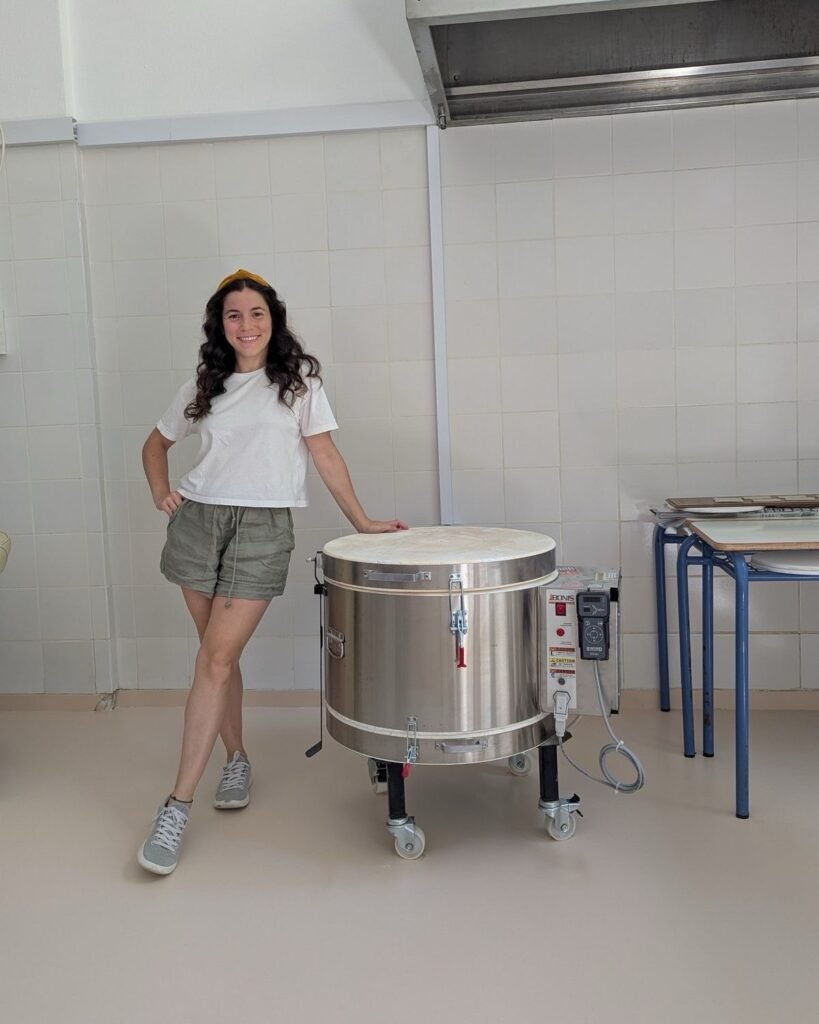
A properly adjusted kiln sitter can provide reliable firing control. A poorly adjusted, damaged, incorrectly loaded, or incorrectly operated sitter can contribute to underfiring or overfiring.
This matters particularly when buying a used pottery kiln. Older Skutt KilnSitter models are still supported with manuals and service information, and Skutt continues to provide KilnSitter operation and troubleshooting resources.
The important thing is understanding what the mechanism actually does.
What Is a Kiln Sitter?
A kiln sitter is a mechanical kiln control and shutoff mechanism used on many older electric pottery kilns.
Instead of relying on an electronic controller to determine when a firing is complete, the sitter uses a small pyrometric device called a sitter cone or cone-shaped bar.
As the kiln heats, the cone responds to heatwork. It gradually softens and bends.
When the cone reaches the position required by the mechanism, the sensing system releases the shutoff mechanism and the kiln switches off.
The basic sequence is:
Kiln heats → sitter cone receives heatwork → cone bends → sensing mechanism moves → shutoff mechanism activates → kiln stops heating.
Skutt describes its KilnSitter as a mechanical device that uses switches and pyrometric cones to control the firing.
That distinction is important.
A kiln sitter is not simply a temperature sensor.
It is a mechanical heatwork based shutoff system.
How Does a Kiln Sitter Work?
The operating principle behind a kiln sitter is easier to understand when you break the mechanism into its major components.
A typical system includes:
- A shutoff tube or sensing assembly
- A sensing rod
- Cone supports
- A pyrometric sitter cone or bar
- A mechanical latch
- A falling weight or related shutoff mechanism
- Electrical switching components
The sitter cone is positioned inside the kiln where it is exposed to the firing environment.
The sensing rod interacts mechanically with the cone.
At the beginning of the firing, the cone supports the sensing mechanism in its operating position.
As heatwork accumulates, the cone softens.
Eventually, the cone bends far enough to allow the sensing rod to move.
That movement releases the mechanical shutoff system.
The kiln then loses power to the heating circuit.
The process does not require the sitter to calculate temperature electronically.
That is one reason the system was historically useful on manually controlled kilns.
Kiln Sitter vs Digital Kiln Controller
A kiln sitter and a digital controller can both be used to control a kiln, but they operate very differently.
A digital controller continuously reads temperature through a thermocouple and adjusts power according to a programmed firing schedule.
A kiln sitter relies on mechanical movement caused by a pyrometric cone or bar.
That means a kiln sitter does not provide the same programming capabilities as a modern controller.
A digital controller can typically manage:
- Ramp rates
- Temperature targets
- Holds
- Multiple firing segments
- Preheat stages
- Cooling segments on compatible systems
- Automatic firing programs
A kiln sitter is much more basic.
The potter controls the heating rate manually using the kiln’s switches or controls, while the sitter provides an automatic shutoff point.
This does not automatically make the older system inferior.
It simply makes the two systems fundamentally different.
For someone who enjoys actively managing a firing, a manual kiln can be perfectly practical.
For someone who wants repeatable programmed firing schedules, a modern controller is usually more convenient.
Our guide to the Pottery Kiln Controller explains the other side of this comparison in more detail.
Why Does a Kiln Sitter Use a Cone?
The cone is the critical part of the kiln sitter system.
A pyrometric cone does not simply respond to one fixed temperature.
It responds to heatwork, which represents the combined effect of temperature and time.
That matters because ceramics do not experience firing as a simple temperature number.
A kiln reaching a particular displayed temperature does not necessarily mean the ware has received exactly the same amount of heatwork in every firing.
The heating rate matters.
The cone accounts for that relationship by gradually deforming as the firing progresses.
This is also why you should not treat the cone number as an exact temperature equivalent.
For more information about how cones work inside a kiln, see the Kiln Depot guide to witness cones for pottery kilns.
What Cone Goes in a Kiln Sitter?
The correct cone for a kiln sitter depends on the kiln, sitter system, firing target, and manufacturer’s instructions.
This is one area where guessing is a bad idea.
Older kilns can use different sitter systems and different cone or bar arrangements. The correct operating procedure should therefore come from the manual for the specific kiln and sitter.
Skutt maintains separate manuals for different generations of KilnSitter kilns because the equipment changed over the years.
If you are buying a used kiln, identify:
- Manufacturer
- Model number
- Serial number
- KilnSitter type
- Kiln voltage
- Firing rating
- Sitter tube assembly
- Existing cone or bar system
Then locate the correct manufacturer’s documentation.
Do not assume that a cone that worked in one old kiln is automatically correct for another.
What Is a Junior Cone?
Some kiln sitter systems use specially designed junior cones or bars.
Skutt documentation specifically distinguishes the junior cones used in KilnSitter systems from ordinary large witness cones used elsewhere in the kiln.
That distinction matters.
A sitter cone is part of the mechanical shutoff system.
A witness cone is an independent visual indicator placed inside the firing chamber to show the heatwork experienced at a particular location.
They are not interchangeable simply because both involve pyrometric materials.
If your kiln manual specifies a particular sitter cone, follow that instruction.
Do not substitute a random cone because the number appears similar.
How to Use a Kiln Sitter
The exact procedure varies by model, so the manufacturer’s manual should always take priority.
However, the basic operating concept is consistent.
Before firing, inspect the mechanism.
Make sure the sensing components are clean and able to move properly.
Install the correct sitter cone or bar according to the kiln’s instructions.
Reset the shutoff mechanism.
Set the kiln switches according to the firing rate you intend to use.
Start the firing.
During the firing, the kiln sitter monitors the cone mechanically.
As the cone bends, the mechanism eventually releases.
The kiln then shuts off.
The important point is that the sitter does not replace responsible firing practice.
You still need to understand:
- Your clay body
- Your glaze
- Your firing temperature
- Your heating rate
- Your kiln’s condition
- Your kiln’s electrical system
- Your witness cone results
The sitter is one part of the firing system.
It is not a substitute for understanding the firing.
Should You Still Use Witness Cones With a Kiln Sitter?
Yes.
This is one of the most useful habits you can develop when operating an older kiln.
A kiln sitter tells the kiln when its mechanical shutoff condition has been reached.
Witness cones placed around the firing chamber tell you what heatwork actually occurred at different locations in the kiln.
Those are two different pieces of information.
Suppose the sitter shuts off normally, but the witness cones show that the bottom of the kiln underfired.
The problem is not necessarily the sitter.
You may instead have a loading, element, voltage, airflow, or temperature uniformity problem.
Likewise, if witness cones show significant overfiring while the sitter should have shut the kiln off earlier, you have evidence that something needs investigation.
That is why witness cones remain useful even when the kiln has an automatic shutoff mechanism.
Can a Kiln Sitter Overfire?
Yes.
A kiln sitter is a mechanical device, not an infallible safety system.
Possible causes of overfiring can include:
- Incorrect sitter cone
- Incorrect cone installation
- Mechanical binding
- A damaged sensing rod
- Problems with the shutoff tube
- A mechanism that does not release correctly
- A falling weight that cannot move freely
- A stuck electrical switch
- Incorrect operating procedure
- Problems specific to the kiln’s electrical configuration
Skutt’s troubleshooting documentation includes separate guidance for KilnSitter kilns that overfire.
That is important because an overfire should not automatically be blamed on the cone itself.
The mechanism needs to be investigated systematically.
Why Does My Kiln Sitter Shut Off Too Early?
Early shutoff can have several causes.
The first question is whether the kiln actually shut off because of the sitter.
If it did, check the sitter cone and mechanical mechanism.
A cone that reaches its shutoff position earlier than expected may indicate that the firing conditions were different from what you assumed.
Other possibilities include:
- Incorrect cone selection
- Incorrect cone placement
- A damaged cone
- Incorrect heating rate
- Mechanical adjustment problems
- A sensing rod that is not moving correctly
- Problems with the sitter tube
- A limit timer shutting the kiln down
- Electrical or switch problems
Do not immediately change the cone to a hotter rating just because the kiln shut off early.
First determine why it shut off.
Otherwise you can hide the underlying problem and create an overfire risk.
Why Does My Kiln Sitter Not Shut Off?
A kiln sitter that does not shut off is more concerning than one that simply stops early.
If the sitter cone has matured but the kiln continues heating, stop treating the situation as a normal firing adjustment.
The mechanism may be binding.
The sensing rod may not be moving freely.
The falling weight may be obstructed.
The electrical switching mechanism may not be opening the circuit correctly.
There may also be a configuration specific to the kiln that requires additional components.
Skutt’s troubleshooting material specifically identifies mechanical and electrical causes that can prevent a KilnSitter from properly shutting down a kiln.
If a kiln continues firing after the intended shutoff point, do not simply leave it unattended and hope the mechanism eventually works.
Follow the manufacturer’s troubleshooting procedure.
If electrical components need to be opened or tested, use appropriate electrical safety procedures and qualified service when necessary.
Kiln Sitter Sensing Rod Problems
The sensing rod is one of the components that deserves attention when troubleshooting a kiln sitter.
The rod must be able to move as designed.
It should not be obstructed by debris, clay, damaged components, or a deformed assembly.
If the rod cannot move correctly, the cone may bend without triggering the expected shutoff action.
This is one reason a visual inspection is valuable before buying or operating an older kiln.
Look for:
- Debris
- Cracks
- Distortion
- Corrosion
- Damaged ceramic components
- Restricted movement
- Signs of overheating
- Improvised repairs
Do not modify the mechanism simply to make it move.
A sitter is a safety critical part of the firing control system.
If the mechanism is damaged, identify the correct replacement or service procedure.
Kiln Sitter Shutoff Tube
The shutoff tube is another important component.
It houses the sensing arrangement and passes through the kiln wall.
Over time, components exposed to repeated high temperature firings can wear or become damaged.
Skutt provides replacement instructions for different shutoff tube assemblies, including Type K and Type P systems.
That is useful information if you are evaluating a used kiln.
A missing, damaged, improvised, or questionable shutoff assembly should be treated as a repair issue rather than ignored.
Replacement availability is also worth considering before buying an older kiln.
A kiln may appear inexpensive until you discover that several specialized components need replacement.
Kiln Sitter Falling Weight
Some kiln sitter mechanisms use a falling weight as part of the shutoff action.
The weight must be able to move through its intended range.
This sounds obvious, but physical obstructions can interfere with the mechanism.
A chair, object, cable, furniture, or other obstruction outside the control box can potentially prevent the mechanism from completing its movement.
The mechanism also needs to be correctly reset before firing.
If the falling weight does not complete its movement when the sitter activates, the kiln may not shut down as intended.
Never defeat, bypass, tie up, or otherwise modify the mechanism to make the kiln easier to operate.
If it is not working correctly, repair the actual problem.
What About the Kiln Sitter Limit Timer?
Some older manual kilns include a limit timer in addition to the sitter.
The purpose is to provide another time based limitation on the firing.
The exact operation depends on the kiln configuration.
A timer can create confusion when diagnosing an unexpected shutdown because the kiln may have stopped for a different reason than the sitter cone.
If your kiln shuts down earlier than expected, determine whether:
- The sitter cone matured.
- The mechanical mechanism released.
- The limit timer expired.
- An electrical protection device interrupted power.
- Another component caused the shutdown.
Do not assume every unexpected shutdown is a cone problem.
Kiln Sitter Adjustment
Adjustment is one of the areas where you need to be particularly careful.
A kiln sitter should be adjusted according to the manufacturer’s instructions for the exact mechanism and kiln.
Do not use a generic adjustment procedure from another model unless the manufacturer confirms that it applies.
This is especially important with older kilns because the same general KilnSitter concept appeared across different generations and configurations.
If the sitter has been modified, rebuilt, or repaired, identify exactly what parts are installed before making adjustments.
If the mechanism is not operating correctly, replacement or professional service may be safer than trying to compensate through adjustment.
Kiln Sitter and Firing Speed
A common misconception is that a sitter somehow controls the entire firing rate.
It does not.
The potter still controls the heating process on a manual kiln.
The kiln sitter primarily determines the shutoff point based on the sitter cone or bar.
The switches, electrical system, kiln loading, elements, voltage, and operating procedure influence how quickly the kiln reaches that point.
That means two firings using the same sitter cone can behave differently if the firing rate or kiln conditions differ.
This is another reason witness cones are valuable.
They show what happened to the ware rather than relying exclusively on the mechanical shutoff.
Kiln Sitter and Heatwork
Heatwork is the key concept behind understanding a kiln sitter.
Ceramic firing is not simply:
Temperature = firing result.
Time and temperature interact.
A cone responds to this combination.
That is why cone numbers are more useful than treating one temperature number as an absolute firing endpoint.
The same principle applies to witness cones.
If you want to understand why your kiln fired differently from one firing to the next, look at the cones, firing schedule, loading, electrical conditions, and kiln condition together.
Do not diagnose everything from the controller display or sitter alone.
Kiln Sitter vs Witness Cone
These two are often confused.
A kiln sitter uses a cone as part of a mechanical control system.
A witness cone is placed inside the kiln to visually record heatwork.
The sitter has an operational function.
The witness cone has a diagnostic and verification function.
You can therefore use both during the same firing.
In fact, doing so gives you more information.
The sitter tells the kiln when to shut down.
The witness cones tell you what happened around the chamber.
If your kiln has multiple shelves, witness cones can also help identify differences between areas of the kiln.
Kiln Sitter vs Modern Digital Controller
The biggest difference is control philosophy.
A kiln sitter is mechanical.
A modern digital controller is electronic and programmable.
A sitter requires the operator to manage the switches and firing rate.
A digital controller can manage a programmed ramp and hold sequence.
A sitter uses the physical deformation of a cone to initiate shutoff.
A digital controller uses temperature information from a thermocouple and its programmed logic.
A sitter is therefore particularly relevant when you are buying an older kiln.
If you find a used kiln with a sitter, do not automatically assume the kiln is obsolete.
Instead ask whether the kiln’s:
- Firebrick is sound
- Elements are usable
- Wiring is safe
- Electrical configuration is suitable
- Sitter mechanism works correctly
- Replacement parts are available
- Firing capacity matches your work
- Overall cost makes sense
If those conditions are good, a manual kiln can still be a useful piece of studio equipment.
Buying a Used Kiln With a Kiln Sitter
This is where understanding the kiln sitter becomes commercially important.
A cheap used kiln can become expensive if its control system needs major work.
Before buying, inspect the complete system rather than focusing only on the exterior.
Check:
1. Identify the Exact Model
Find the model and serial information.
This determines which manual, electrical specifications, and replacement parts apply.
2. Inspect the Sitter Mechanism
Look for obvious damage, missing parts, corrosion, contamination, or improvised repairs.
3. Check the Shutoff Tube
Confirm that the tube and related components appear complete and appropriate for the kiln.
4. Check Mechanical Movement
The mechanism should operate as designed according to the manufacturer’s instructions.
Do not force components that appear stuck.
5. Ask About Firing History
Find out whether the kiln was used regularly, stored for years, modified, or repaired.
6. Check the Elements
Element condition has a major effect on whether an older kiln is worth buying.
7. Check the Electrical System
Confirm the kiln’s voltage and amperage requirements before connecting it to your building.
8. Look at the Firebrick
Major structural deterioration can change the economics of the purchase.
9. Check Replacement Parts
An older kiln is much easier to own when important replacement components remain available.
10. Compare the Total Cost
Purchase price is only the beginning.
Add likely repair costs, electrical work, replacement elements, shelves, posts, and other missing equipment.
Our used pottery kiln inspection guide goes deeper into this process.
Can You Upgrade a Kiln Sitter to a Digital Controller?
Sometimes, but compatibility matters.
A kiln sitter is part of a particular kiln’s electrical and mechanical system.
Replacing it with a digital controller is not simply a matter of removing the old control box and attaching a new display.
You need to consider:
- Kiln voltage
- Phase
- Amperage
- Element configuration
- Contactors or relays
- Thermocouple type
- Wiring
- Controller compatibility
- Safety interlocks
- Enclosure
- Installation requirements
The kiln itself must also be worth upgrading.
If the firebrick, elements, wiring, and mechanical structure are already heavily deteriorated, installing an expensive controller may not make financial sense.
On the other hand, a structurally sound older kiln with readily available replacement parts can sometimes be a candidate for modernization.
Any electrical modification should follow the controller manufacturer’s instructions and applicable electrical requirements.
Is a Kiln Sitter Still Worth Using?
For the right potter, yes.
A kiln sitter can still make sense when you have a functioning manual kiln, understand how to control the firing rate, and are comfortable monitoring your process.
It can also be useful in educational or studio environments where learning the physical behavior of a kiln is part of the process.
But it is less convenient if your workflow depends heavily on repeatable programmable firing schedules.
The important distinction is not:
Old = bad.
It is:
Manual control = different workflow.
If you understand that difference, an older KilnSitter kiln can be evaluated on its actual condition rather than its age.
Common Kiln Sitter Mistakes
Several mistakes repeatedly create problems with older manual kilns.
Using the Wrong Cone
The cone is part of the shutoff system.
Use the cone specified for your system.
Treating the Sitter as a Thermometer
It is not.
The mechanism responds to heatwork.
Ignoring Witness Cones
A sitter can shut off correctly while the kiln still has temperature uniformity or loading problems.
Forcing the Mechanism
If something does not move, investigate why.
Do not force it.
Blocking the Falling Weight
Make sure nothing interferes with the mechanism’s intended movement.
Ignoring Maintenance
Older mechanical equipment still needs inspection.
Assuming the Sitter Guarantees Safe Firing
It does not replace proper kiln operation, supervision, loading, electrical protection, or manufacturer instructions.
Installing a Larger Breaker
Never solve a kiln electrical problem by simply installing a larger breaker.
The electrical system must match the kiln’s actual requirements.
Our guide to pottery kiln electrical requirements explains why model specific electrical information matters.
Kiln Sitter Troubleshooting Checklist
If the kiln is behaving unexpectedly, work through the problem methodically.
If the kiln shuts off too early:
Check:
- Sitter cone
- Cone installation
- Firing rate
- Mechanical adjustment
- Sensing rod movement
- Shutoff tube
- Limit timer
- Electrical system
If the kiln does not shut off:
Check:
- Whether the sitter cone has matured
- Whether the sensing rod moved
- Whether the falling weight completed its movement
- Whether anything is obstructing the mechanism
- Whether the switch is releasing correctly
- Whether the kiln has the correct electrical shutoff arrangement
If the kiln consistently underfires:
Check:
- Witness cones
- Element condition
- Voltage
- Loading density
- Firing rate
- Sitter cone selection
- Mechanical condition
- Electrical connections
If the kiln consistently overfires:
Check:
- Sitter cone selection
- Cone placement
- Sensing mechanism
- Rod movement
- Falling weight
- Shutoff switch
- Timer
- Electrical configuration
For more systematic troubleshooting, see our guide to kiln error codes and troubleshooting.
Maintenance for a Kiln Sitter
A kiln sitter should be treated as part of the kiln’s maintenance system.
Before using an older kiln, visually inspect the mechanism.
Look for:
- Dust
- Clay fragments
- Corrosion
- Damaged ceramic parts
- Bent components
- Loose hardware
- Signs of overheating
- Restricted movement
Keep the area around the mechanism clean.
Do not introduce lubricants or modifications unless the manufacturer specifically calls for them.
The high temperature environment and mechanical design mean that improvised maintenance can create more problems than it solves.
When in doubt, consult the manual for the exact kiln and sitter assembly.
Why Documentation Matters With Older Kilns
One of the biggest advantages of buying an older kiln from a manufacturer with a strong documentation history is that you can identify what you actually have.
Skutt maintains a dedicated KilnSitter manual library covering different generations and models.
The company also maintains KilnSitter troubleshooting information and operation guidance.
This is extremely useful when buying a used kiln because two kilns that look similar from the outside may have different electrical systems, sitter components, or operating procedures.
Never assume that an online instruction for one model automatically applies to another.
Find the manual for your kiln.
Kiln Sitter Safety
A kiln sitter is part of a high temperature electrical appliance.
That means normal kiln safety rules still apply.
Never:
- Bypass the shutoff mechanism
- Defeat electrical safety devices
- Operate damaged wiring
- Use an incorrect electrical supply
- Leave a malfunctioning kiln operating unattended
- Modify the control system without understanding the electrical consequences
- Assume a mechanical shutoff eliminates all other kiln risks
If electrical testing or repair requires opening the control box, disconnect power and follow the manufacturer’s service procedure.
For work involving building wiring, circuits, breakers, or other electrical infrastructure, use a qualified electrician.
The sitter is only one component of the complete kiln system.
Frequently Asked Questions About Kiln Sitter Systems
What is a kiln sitter?
A kiln sitter is a mechanical kiln shutoff system that uses a pyrometric cone or bar to determine when a firing has received the required heatwork.
How does a kiln sitter work?
As the kiln heats, the sitter cone softens and bends. Its movement allows the sensing mechanism to activate the mechanical shutoff, which stops the kiln from continuing to heat.
Does a kiln sitter measure temperature?
Not in the same way a digital controller does. It responds to heatwork through the behavior of a pyrometric cone or bar.
Can a kiln sitter overfire?
Yes. Mechanical failure, incorrect cone selection, incorrect installation, restricted movement, electrical problems, or other faults can prevent proper shutoff.
Can a kiln sitter shut off early?
Yes. Incorrect cone selection, mechanical adjustment, timer settings, firing conditions, or other problems can cause premature shutdown.
Should I use witness cones with a kiln sitter?
Yes. Witness cones provide independent information about the heatwork experienced at different locations inside the kiln.
Are kiln sitters still used?
Yes. Older manual kilns equipped with KilnSitter systems remain in circulation, and manufacturers such as Skutt continue to provide operation, manual, and troubleshooting resources for supported models.
Is a kiln sitter better than a digital controller?
Neither is universally better. A kiln sitter provides simple mechanical shutoff and requires more manual control. A digital controller provides programmable firing control and more automation.
Can I replace a kiln sitter with a digital controller?
Potentially, depending on the kiln and electrical system. Compatibility must be established before any modification.
Is a kiln sitter kiln worth buying used?
It can be, provided the kiln is structurally and electrically sound, the sitter mechanism works correctly, replacement parts are available, and the total acquisition and repair cost makes sense.
Final Buying and Operating Checklist
Before operating a kiln sitter, confirm:
- You know the exact kiln model.
- You have the correct manual.
- You know which sitter system is installed.
- You have the correct sitter cone or bar.
- The sensing rod moves as designed.
- The shutoff mechanism is not obstructed.
- The falling weight, where applicable, can complete its movement.
- The kiln’s electrical supply matches its requirements.
- The elements are in usable condition.
- The firebrick is structurally sound.
- Witness cones are available for verification.
- You understand the firing target for your clay and glaze.
- You know how to respond if the kiln shuts off unexpectedly.
If you are buying an older kiln, add one more question:
What will this kiln actually cost me after purchase?
That question is often more important than the sticker price.
Final Thoughts
A kiln sitter is old technology, but it is not mysterious technology.
Its basic principle is straightforward: a pyrometric cone responds to heatwork, the cone bends, the sensing mechanism moves, and the kiln shuts off.
The challenge is making sure every part of that chain works correctly.
For someone operating an older manual kiln, the sitter should be understood as one component of a larger firing system. The kiln’s elements, electrical supply, switches, firebrick, loading, firing rate, witness cones, and maintenance all influence the final result.
For someone shopping for a used pottery kiln, the sitter deserves particular attention. A functioning mechanical control system can be perfectly serviceable. A damaged or improvised one can turn a cheap kiln into an expensive repair project.
The smartest approach is not to reject a kiln because it has a kiln sitter.
Instead, identify the exact system, read the manufacturer’s documentation, inspect the mechanism, verify the electrical condition, use witness cones, and evaluate the kiln as a complete piece of equipment.
That gives you a much better basis for deciding whether an older manual kiln is genuinely a bargain or simply an inexpensive problem.
