Pottery kiln electricity cost depends on your kiln’s power rating, firing schedule, local utility rate, load size, and maintenance condition. It is a real studio expense, but it is rarely the only cost that determines whether firing is profitable.
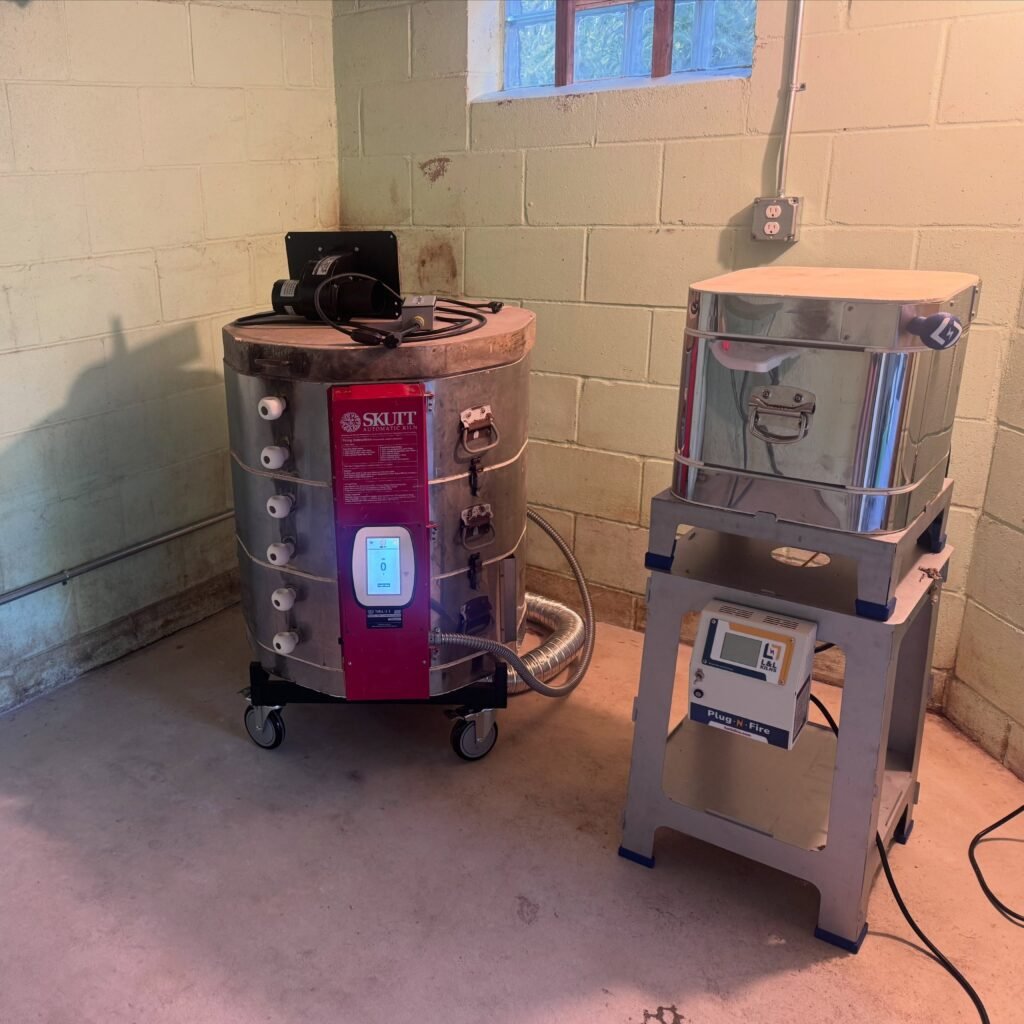
The smartest approach is to calculate a reliable estimate for every firing, track the result over time, and reduce waste without compromising clay maturity, glaze performance, or kiln safety.
[Hero Image — ALT: Pottery kiln electricity cost calculation with an electric kiln, calculator, utility bill, and witness cones]
Executive Summary
Your pottery kiln electricity cost is not a mystery, and it should not be estimated from kiln size alone. You need three numbers: the kiln’s kilowatt rating, the length of the firing, and your electricity price per kilowatt-hour.
The basic planning formula is:
Kilowatt rating × firing hours × utility rate per kWh = estimated pottery kiln electricity cost
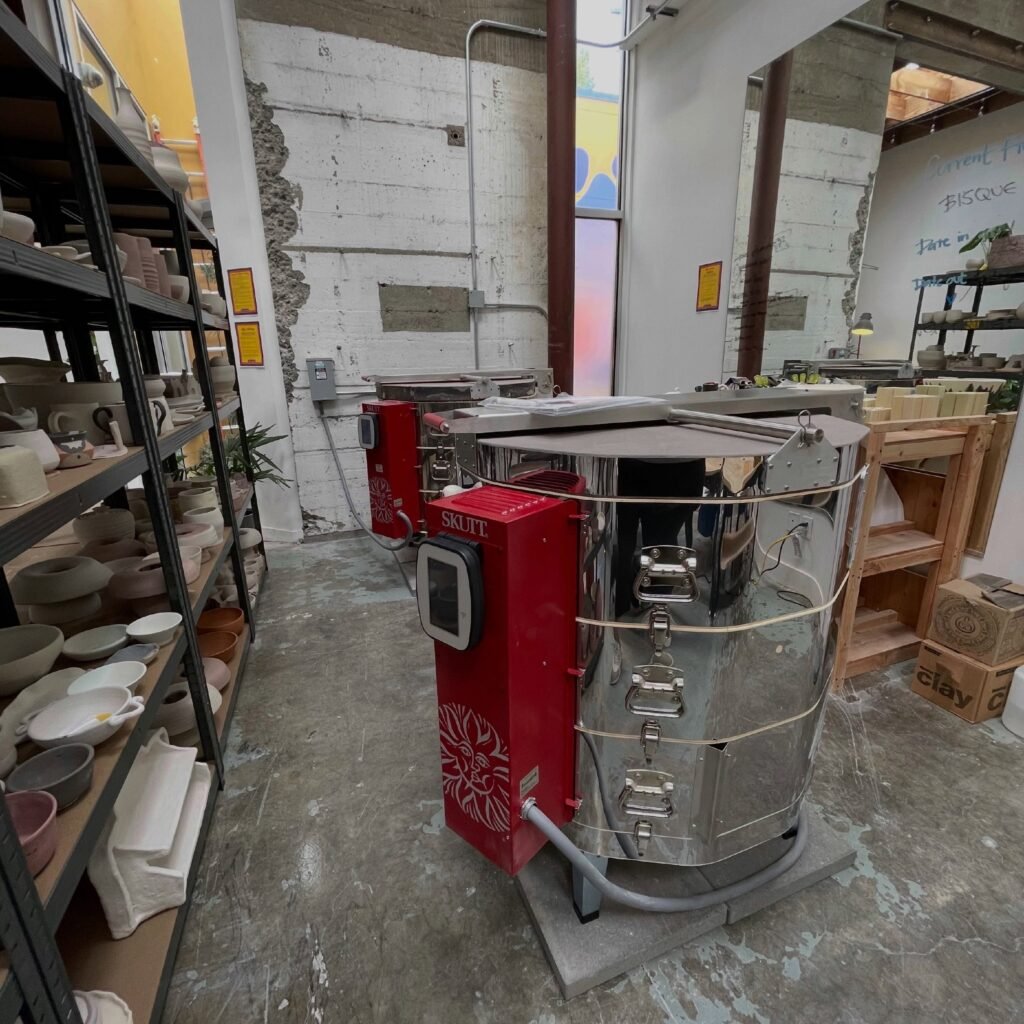
That estimate is useful, but it is conservative. A digitally controlled kiln does not usually draw maximum power throughout an entire firing. Its controller cycles the elements on and off as the kiln approaches and maintains temperature. For exact data, use an electrical-energy monitor suitable for the kiln’s voltage and amperage, or track utility usage across comparable firings.
For most studios, the better business decision is not “How can I spend the least on one firing?” It is “How can I get the most correctly fired, sellable work from every safe firing?”
Quick Answer
Pottery kiln electricity cost can range from a modest amount for a small test firing to a substantially larger amount for a long, high-temperature production firing. The exact cost changes with your kiln’s wattage, the program, its hold time, your utility rate, outside temperature, load, and equipment condition.
Use the formula below as a starting point:
Kiln kW × firing hours × cost per kWh = estimated firing electricity cost
Then divide the firing cost by the number of successful finished pieces to understand your electricity cost per piece.
Key Takeaways
- Pottery kiln electricity cost is based on energy consumed in kilowatt-hours, not just kiln size or firing temperature.
- A kiln’s published kW rating represents maximum power draw; actual use may be lower during a controlled firing.
- Higher temperatures, slower firing schedules, preheats, and holds can increase firing cost.
- A larger kiln can have a lower electricity cost per piece when it is safely and efficiently loaded.
- Repeatedly firing a half-empty kiln increases cost per sellable piece.
- Witness cones are low-cost insurance against expensive underfiring and overfiring.
- Electricity is only one part of kiln ownership. Labor, clay, glaze, maintenance, shelves, kiln wash, rent, and defects belong in your pricing.
- Never shorten a firing or disable required ventilation simply to lower the electric bill.
Table of Contents
- What determines pottery kiln electricity cost
- Kilowatts, kilowatt-hours, volts, and amps
- The firing-cost formula
- Example calculations
- Why cost per piece matters more than cost per firing
- Nine factors that change kiln energy use
- How to lower firing waste safely
- Ownership costs beyond electricity
- Buying a kiln with operating cost in mind
- Frequently asked questions
What Determines Pottery Kiln Electricity Cost?
Pottery kiln electricity cost comes from the energy your kiln consumes during firing. Your utility bills that energy in kilowatt-hours, usually written as kWh.
The biggest variables are:
- Kiln wattage or kilowatt rating
- Kiln voltage and electrical configuration
- Firing duration
- Cone target
- Firing speed
- Preheat and hold time
- Load density
- Kiln condition
- Ventilation requirements
- Local electricity price
A small test kiln and a large production kiln may both fire to cone 6, but their energy use can be very different. Likewise, two identical kilns can have different operating costs in different locations because utility rates vary.
[Comparison Table — ALT: Pottery kiln electricity cost comparison by kiln size, firing length, and utility rate]Kiln type Typical use Total firing cost pattern Cost-per-piece opportunity Test kiln Glaze tests and small pieces Usually lower per firing Limited by low piece count Small studio kiln Home studios and occasional batches Moderate and flexible Good for small batches Mid-size studio kiln Regular home, school, or small-business use Higher total firing cost Often strong when well loaded Production kiln Commercial studios and institutions Highest total firing cost Can be lowest per piece when full
The goal is not to buy the lowest-wattage kiln. The goal is to choose a kiln whose chamber volume, firing range, electrical requirements, and running cost match the work you actually make.
Kilowatts, Kilowatt-Hours, Volts, and Amps Explained
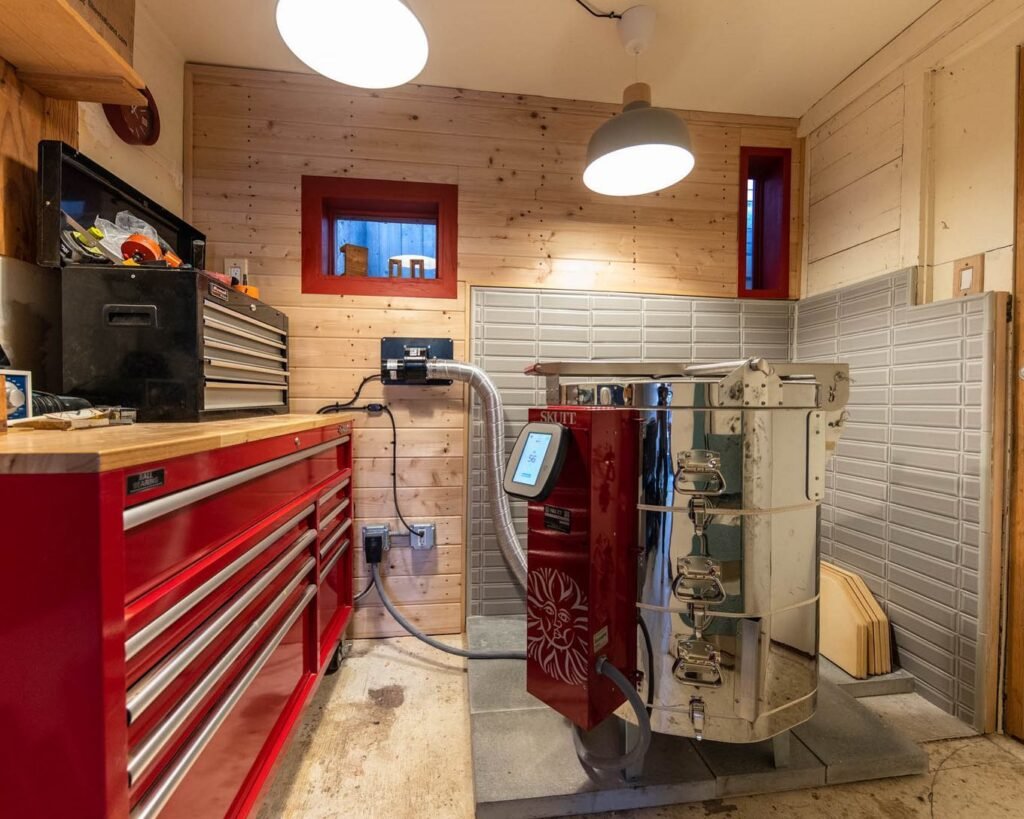
You do not need to be an electrician to understand pottery kiln electricity cost, but you do need to know the difference between power and energy.
| Term | Meaning | Why it matters |
|---|---|---|
| Volts | Electrical pressure | Must match the kiln’s design voltage |
| Amps | Electrical current | Determines circuit and wiring requirements |
| Watts | Electrical power at a moment in time | Often listed on the kiln specification |
| Kilowatts | 1,000 watts | Used for cost estimates |
| Kilowatt-hours | Energy consumed over time | What the utility bills you for |
If a kiln lists volts and amps but not watts, this basic equation can estimate its wattage:
Volts × amps = watts
Then divide by 1,000 to find kilowatts.
For example:
240 volts × 48 amps = 11,520 watts
11,520 watts ÷ 1,000 = 11.52 kW
This is a planning calculation only. For installation, use the exact kiln manual, serial plate, and manufacturer specifications. Skutt’s electrical specification resources provide model-specific circuit and voltage information. A licensed electrician should handle electrical planning and installation.
The Pottery Kiln Electricity Cost Formula
To estimate pottery kiln electricity cost, use:
Kiln kW × firing hours × your utility rate per kWh = estimated electricity cost
Example: Mid-Size Kiln
Imagine a kiln rated at 11.52 kW. Your all-in utility rate is $0.18 per kWh. A glaze firing runs for 7.5 hours.
11.52 kW × 7.5 hours = 86.4 kWh
86.4 kWh × $0.18 = $15.55 estimated maximum firing cost
This calculation assumes the kiln draws its maximum rated power throughout the entire firing. A controller-equipped kiln generally cycles power, so its actual use may be lower. Still, this gives you a practical ceiling for budgeting.

Example: Cost per Piece
If that $15.55 firing produces 40 finished mugs:
$15.55 ÷ 40 = $0.39 electricity cost per mug
If the same kiln fires only eight mugs:
$15.55 ÷ 8 = $1.94 electricity cost per mug
The kiln’s total energy cost did not change much. The cost per piece changed dramatically.
Why Cost per Piece Matters More Than Cost per Firing
A low total pottery kiln electricity cost is not automatically an efficient firing. A small or half-empty firing may look inexpensive until you calculate the number of successful pieces it produces.
This is why production planning matters.
A large kiln can be a poor investment for a hobbyist who fires five mugs at a time. But it can be an excellent investment for a school, community studio, or potter who consistently fills it with safe, properly spaced loads.
The reverse is also true. A kiln that is too small can force frequent firings, delay orders, limit your forms, and create more total energy use across a month.
Before buying, use The KILN DEPOT’s pottery kiln size guide to compare the chamber to your normal output—not just your biggest possible project.
9 Factors That Change Pottery Kiln Electricity Cost
1. Kiln Power Rating
The first input in your pottery kiln electricity cost calculation is the kiln’s kW rating. Higher-wattage kilns can support larger chambers, faster recovery, or higher firing temperatures, but their maximum draw is greater.
Do not compare only horsepower, outside dimensions, or asking price. Compare the exact model, wattage, voltage, chamber volume, maximum cone rating, and expected use.
2. Target Cone and Firing Temperature
Higher-temperature firings generally use more energy and create more wear on elements and thermocouples. A cone 10 firing usually requires more energy and maintenance planning than a low-fire bisque or mid-fire cone 6 glaze firing.
The correct answer is not always to fire cooler. Choose clay and glaze systems that match your artistic goals, food-safety requirements, kiln capability, and production model.
3. Firing Schedule
A slow ramp, long preheat, controlled cooling cycle, or extended hold adds time. More time can raise pottery kiln electricity cost, but that does not make the schedule wasteful.
A preheat may prevent steam-related breakage. A hold may improve glaze development. Controlled cooling may create the surface result you want. The best schedule is the one that delivers mature, consistent work with the lowest defect rate.
4. Kiln Loading
Safe, well-planned loading improves the value of every firing. It does not mean squeezing ware into every inch of the chamber.
Your work needs clearance from elements, kiln walls, shelves, thermocouples, and other pieces. Use appropriate kiln shelf spacing and follow the manufacturer’s loading guidance.
5. Element Condition
Elements oxidize and lose efficiency over time. A kiln may take longer to reach target temperature, struggle at the top of a firing, or fire unevenly as elements age.
If comparable firings are taking longer, do not guess. Use witness cones, check the firing record, and consult the manufacturer or a qualified kiln technician.
6. Thermocouple and Controller Accuracy
A controller only knows what its thermocouple reports. If the thermocouple degrades or a controller setting changes, the displayed result can differ from the heatwork your ware receives.
Use self-supporting witness cones to verify the actual heatwork near the pottery. Witness cones can prevent costly underfiring and overfiring before you change a firing schedule or replace equipment unnecessarily.
7. Insulation and Kiln Condition
Deteriorated brick, damaged element grooves, loose hardware, and a poorly fitting lid can affect kiln performance. Minor cosmetic marks are not always a crisis, but structural or electrical concerns should be addressed before firing.
Regular inspection protects your pottery kiln electricity cost from creeping upward due to slower, less reliable firings.
8. Studio Temperature and Location
A kiln placed in a cold, unconditioned environment may work harder than the same kiln in a stable room. That does not mean you should move a kiln into an unsafe location. Safe clearance, ventilation, electrical service, and manufacturer instructions are non-negotiable.
9. Utility Rate
Your local electricity rate can have a major effect on pottery kiln electricity cost. Check your bill for supply, delivery, time-of-use, seasonal, and demand charges. Use an all-in rate when building a realistic studio budget.
How to Reduce Pottery Kiln Electricity Cost Without Hurting Results
Fire Complete, Safe Loads
The most practical way to lower pottery kiln electricity cost per piece is to load safely and efficiently. Plan production so mugs, bowls, plates, and small forms can share a firing when their clay bodies and glaze schedules are compatible.
Do not force incompatible clay, glaze, or firing ranges into one load just to save energy.
Select the Right Kiln Size
A compact kiln is efficient for tests, samples, and low output. A mid-size kiln can be more efficient for regular batches. A production kiln can offer excellent cost per piece only if you can fill it consistently.
The KILN DEPOT’s guide to choosing your first pottery kiln helps buyers assess capacity, electrical requirements, and realistic studio growth.
Maintain the Kiln
Vacuum debris as your manufacturer directs. Check cords, plugs, elements, brick, thermocouples, latches, and hardware. Keep the kiln area clear and dry.
Do not perform electrical diagnosis or live-voltage testing unless you are qualified. Call a kiln technician or licensed electrician when safety or electrical performance is uncertain.
Use Witness Cones
Witness cones are inexpensive quality control. They confirm whether the ware received the intended heatwork and help you catch underfires, overfires, and uneven heat distribution.
A bad firing is the most expensive kind of firing. It consumes electricity, materials, labor, kiln life, and customer confidence all at once.
Price Finished Work Correctly
Pottery kiln electricity cost should be included in your pricing, but it is not the whole firing cost. Account for:
- Clay
- Glaze and underglaze
- Kiln electricity
- Kiln maintenance
- Element, relay, and thermocouple replacement
- Shelves, posts, and kiln wash
- Studio rent or home-studio overhead
- Packaging
- Labor
- Failed work and seconds
A low electricity cost does not make a mug profitable if the rest of the production process is underpriced.
Ownership Costs Beyond Electricity
The real annual cost of kiln ownership includes maintenance and consumable equipment.
Kiln Furniture
Shelves, posts, setters, and stilts make the firing chamber usable. They also wear over time. Use the correct components for your kiln and temperature range.
The KILN DEPOT’s kiln furniture guide explains how shelves and posts work together. Correct furniture makes it easier to load efficiently without damaging ware or restricting heat circulation.
Kiln Wash
Kiln wash helps protect shelves from glaze drips. It does not eliminate the need for careful glazing and proper loading, but it can extend the useful life of kiln furniture.
Elements, Relays, and Thermocouples
Every electric kiln eventually needs service. Higher firing temperatures, frequent cycles, and poor maintenance can accelerate wear. Plan for these costs rather than treating them as surprises.
Ventilation
A properly installed kiln vent is part of a responsible indoor firing setup. Do not disable a required vent to cut a small amount from your pottery kiln electricity cost. Follow the kiln and vent manufacturer’s instructions.
Buying an Energy-Sensible Pottery Kiln
The best kiln is not simply the one with the lowest wattage. It is the kiln that fits your normal firing volume, work dimensions, clay system, electrical service, and long-term production goals.
Ask these questions before buying:
- What is the model’s listed wattage?
- What voltage, phase, breaker, and receptacle does it require?
- Can my building support that electrical load?
- What cone range will I use most often?
- How many pieces do I expect to fire in a normal month?
- Can I safely fill the chamber regularly?
- Does the kiln fit my tallest and widest work?
- What ventilation is required?
- Are replacement parts available?
- What will the kiln cost to maintain over five years?
[Buying Checklist — ALT: Pottery kiln electricity cost buying checklist beside an electric kiln, shelves, and kiln controller]
Frequently Asked Questions
1. How much does it cost to run a pottery kiln?
Pottery kiln electricity cost depends on the kiln’s kW rating, firing hours, and utility rate. Multiply those figures for a conservative estimate.
2. Do pottery kilns use a lot of electricity?
They can, because they run at high temperatures for hours. Actual energy use varies by kiln, schedule, load, and local rate.
3. How do I calculate the electricity cost of a kiln firing?
Multiply kiln kW by firing hours, then multiply that total by your electricity rate per kWh.
4. What is a kilowatt-hour?
A kilowatt-hour is a unit of energy. Utilities use it to calculate your electric bill.
5. Does a digital kiln use less power?
A digital controller manages power precisely, but it does not guarantee the lowest energy use. Kiln condition, schedule, and loading still matter.
6. Does cone 6 cost more to fire than cone 04?
Generally, yes. Higher-temperature firings normally require more energy and may place more demand on kiln components.
7. Is a large kiln always more expensive to run?
Usually per firing, yes. However, a large kiln can have a lower cost per piece when it is loaded efficiently.
8. Does a kiln use full power during the entire firing?
Not usually. Digital controllers cycle elements to regulate temperature, particularly later in the firing.
9. Can a slow firing increase electricity cost?
Yes, because it runs longer. However, slow schedules may be necessary for reliable drying, glaze development, and finished results.
10. Does a hold increase firing cost?
Usually. The kiln must maintain temperature for a longer period. A hold can still be worthwhile when it improves results.
11. How can I reduce kiln cost per mug?
Fire full, safe loads; select the right kiln size; maintain the kiln; use witness cones; and price all production costs, not just electricity.
12. Does poor loading increase electricity cost?
It can increase the cost per finished piece when you repeatedly run small or inefficient loads.
13. Do old elements increase firing cost?
Worn elements may increase firing time and reduce performance. Track firing duration and witness-cone results to identify changes.
14. Should I turn off the kiln vent to save energy?
No. Follow the manufacturer’s ventilation instructions. Safety and correct firing results come first.
15. Can I fire at night to lower my bill?
Some utilities offer different time-of-use rates. Only consider this if your kiln operation remains safe and complies with manufacturer guidance.
16. Is electricity the largest cost of operating a pottery studio?
Not always. Labor, rent, equipment maintenance, materials, packaging, and defects may exceed the electricity share.
17. Should I buy a smaller kiln to save money?
Only if it fits your normal output and work size. A kiln that is too small can require more firings and slow your studio down.
18. What is the most accurate way to measure kiln energy use?
Use properly rated electrical monitoring equipment or compare actual utility data across similar firings. Consult a qualified electrician when necessary.
19. Can witness cones save money?
Yes. They reduce the risk of wasting full kiln loads through unnoticed underfiring, overfiring, or uneven heatwork.
20. What should I buy with a new kiln?
Plan for kiln furniture, shelves, posts, kiln wash, witness cones, ventilation, electrical installation, and maintenance supplies.
Glossary
Amps: The electrical current a circuit carries.
Cone: A ceramic heatwork measurement used in kiln firing.
Firing schedule: The programmed temperature rise, holds, and cooling stages of a kiln firing.
Heatwork: The combined effect of temperature and time on clay and glaze.
Kilowatt: One thousand watts of electrical power.
Kilowatt-hour: A measure of electrical energy used over time.
Thermocouple: A sensor that reports kiln temperature to the controller.
Witness cone: A pyrometric cone placed near pottery to verify actual heatwork.
Related Articles
For a more efficient and reliable firing setup, explore The KILN DEPOT’s guides to pottery kiln size, kiln shelf spacing, kiln furniture, and replacement kiln shelves.
Final Verdict
Pottery kiln electricity cost is controllable when you measure it correctly, load intelligently, maintain equipment, and price finished work honestly.
Use the kW × hours × rate formula as a conservative starting point. Then keep firing records, monitor witness cones, and calculate cost per successful piece. The goal is not the shortest or cheapest firing. The goal is a safe, repeatable firing process that produces durable, beautiful pottery at a cost your studio can sustain.
Build a Smarter Firing Setup With The KILN DEPOT
Explore electric pottery kilns, kiln furniture, shelves, posts, kiln wash, witness cones, and firing supplies at The KILN DEPOT. Choose equipment that matches your studio’s output, electrical capacity, firing range, and long-term budget.
