Executive Summary
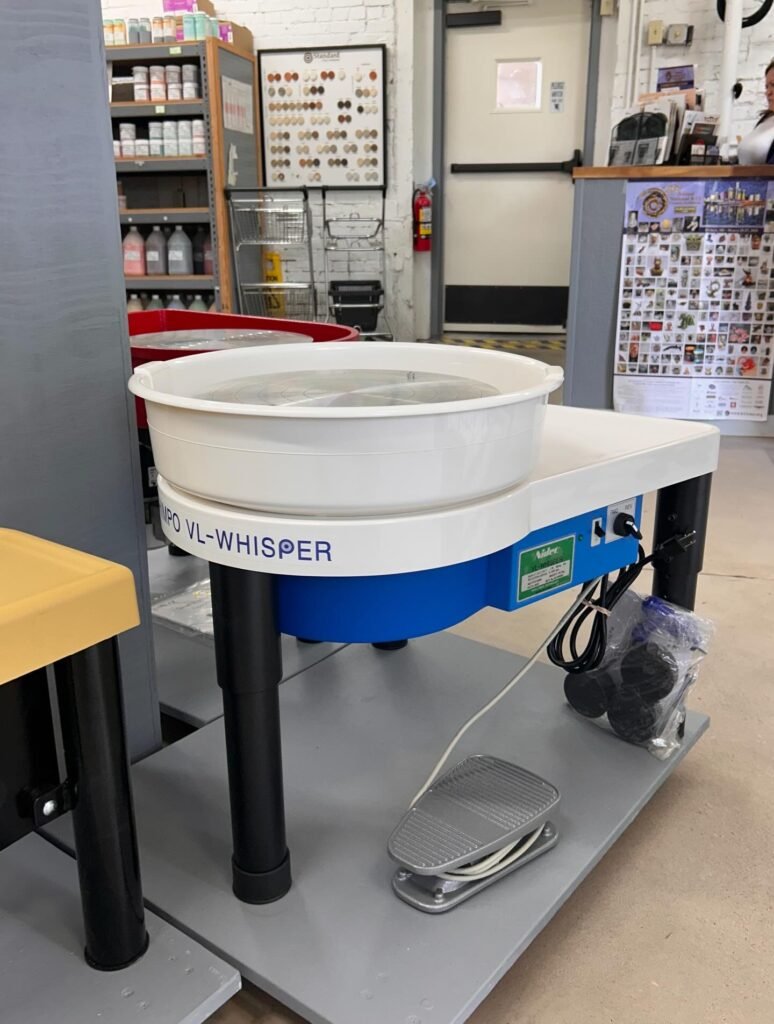
A dependable electric pottery wheel usually costs more than a cheap marketplace listing—and for a reason. Your purchase is not simply a motor and a spinning head. You are buying speed control, torque under pressure, a stable frame, splash-pan design, parts availability, and a warranty that can matter years after checkout.
For most new potters, the smartest purchase is not the lowest-priced wheel or the highest-horsepower wheel. It is a reliable wheel whose capacity, footprint, and controls fit the work they will make in the next two to five years. A portable tabletop model can be an excellent value for small work and limited space. A full-size 1/2 HP wheel is often the more economical long-term choice for someone who expects to throw regularly. Schools and production studios should value durability and serviceability at least as highly as motor power.
Quick Answer
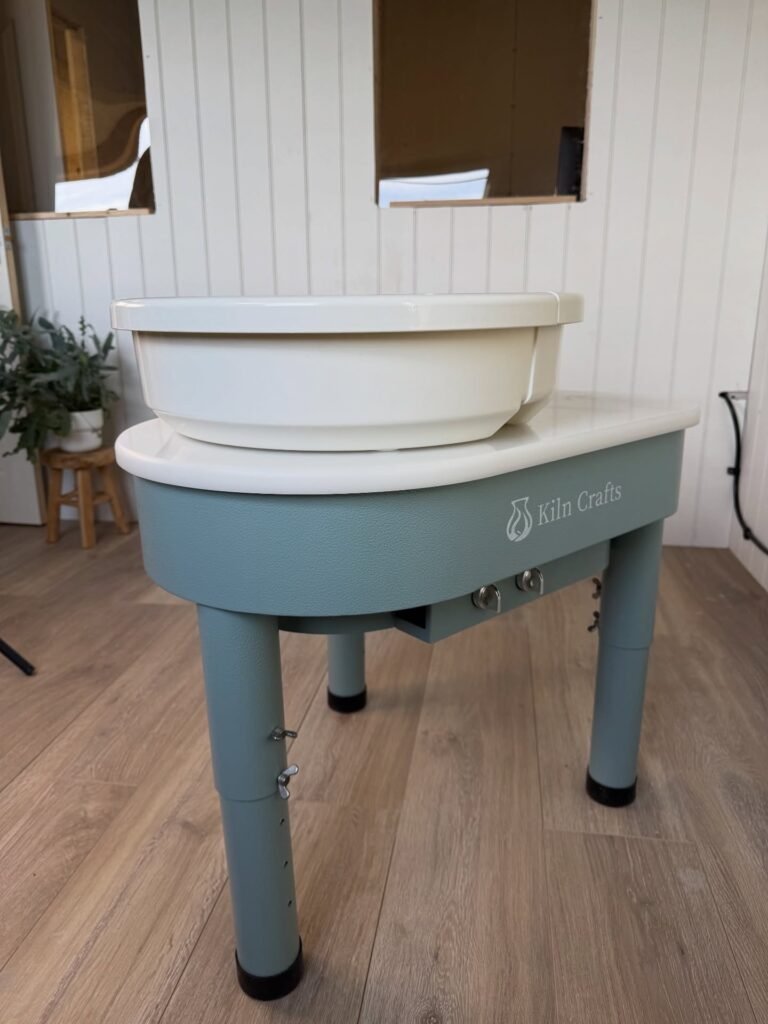
What does a pottery wheel cost? Expect a broad range: compact branded tabletop wheels commonly sit below full-size studio wheels; dependable full-size beginner-to-intermediate wheels generally begin around the low four figures; and heavy-duty, quiet direct-drive, or high-capacity studio models cost more. Add delivery, bats, basic tools, clay, and a firing plan before comparing a wheel’s true cost.
Do not use the sticker price alone to judge value. Compare the wheelhead size, stated centering capacity, control type, included accessories, warranty, and whether replacement parts can be obtained.
Key Takeaways
- Buy capacity for the forms you plan to make, not for an imaginary 200-pound clay ball.
- A proven 1/2 HP full-size wheel is a strong long-term starting point for many committed beginners.
- Tabletop wheels make sense for portability and small-space work; they are not automatically a false economy.
- Quiet operation, stable speed at low RPM, and a comfortable pedal are daily-use features, not luxuries.
- Budget for bats, tools, clay, cleaning supplies, and firing—not just the wheel.
- A good used or refurbished professional wheel can beat a new, lightly built unknown-brand wheel when it has been properly inspected.
Table of Contents
- Why pottery wheel prices vary
- Realistic purchase budgets
- The seven cost drivers
- Which wheel tier fits your work
- Tabletop versus full-size wheels
- New, used, and refurbished choices
- The real cost of ownership
- Buying checklist and mistakes to avoid
- Setup, care, accessories, FAQ, and glossary
Why “Pottery Wheel Cost” Is Not One Number
It is tempting to ask for one price, then sort listings from low to high. That approach misses the features that determine whether a wheel stays enjoyable after the novelty wears off.
An electric wheel has to turn smoothly while your hands apply changing pressure to wet clay. The important question is not merely how fast it turns unloaded. It is whether it remains predictable while you center a lump of clay, pull a wall, or trim a piece at low speed. That is where motor design, controller quality, torque, wheelhead, and chassis construction show up.
[Hero Image — ALT: Potter using a full-size electric wheel while centering clay in a clean home studio]
The price also reflects the kind of ownership a manufacturer supports. A wheel for a school may experience multiple users every day. A wheel for a home studio may need to remain quiet in a shared space. A production potter may prioritize reserve torque, a large wheelhead, and a serviceable drive system. Those are different jobs, and the right price point changes with the job.
Before shopping, read The KILN DEPOT’s guide to pottery wheel torque and why it matters. It explains why horsepower alone does not tell the entire story.
Realistic Pottery Wheel Budgets
Prices change with availability, freight, and promotions, so treat these as planning bands rather than quotes. Confirm the current delivered price and what is included before ordering.
| Buying tier | Typical use | What to expect | Watch for |
|---|---|---|---|
| Branded tabletop | Small work, classes, travel, very limited space | Compact body, smaller wheelhead, lower stated capacity | Optional stand or pedal; batch size limits |
| Full-size starter/studio | Regular home use, teaching, bowls and mugs | 12–14 in. wheelhead, foot pedal, splash pan, stronger frame | Freight and accessory costs |
| Professional/shared-studio | Frequent use, larger forms, schools | Higher capacity, serviceable components, long warranty | Weight, footprint, and outlet requirements |
| Heavy-duty/quiet specialty | Production, large work, sound-sensitive spaces | High torque or direct drive, premium controls | Paying for capacity you will not use |
A Practical Example
The Speedball Artista is a compact example: Speedball lists an 11-inch wheelhead, 1/3 HP motor, 25-pound centering capacity, two-part splash pan, and two-year warranty. That can be a thoughtful buy for a beginner making cups, bowls, and smaller vessels who needs a portable wheel. It is not the right match for a potter who expects to routinely center large amounts of clay or wants the familiar ergonomics of a fixed, full-size wheel.
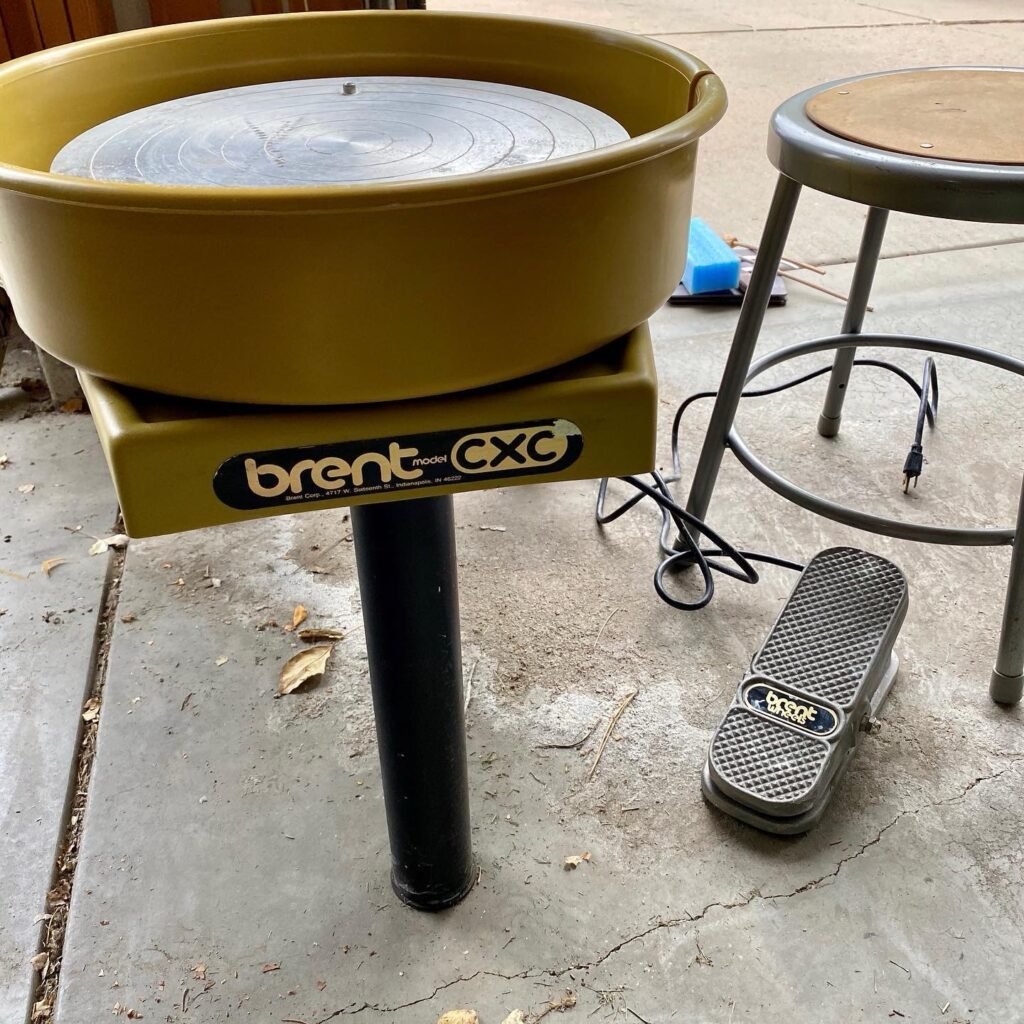
At the next tier, the Brent C has a 14-inch wheelhead, 3/4 HP DC motor, 225-pound stated capacity, and a 10-year warranty. Its capacity far exceeds typical beginner work, but the real value for a committed user is torque reserve and a build intended for long-term studio use. A buyer who does not need that reserve should compare it fairly against the less powerful models rather than assume more is always better.
The 7 Factors That Change Pottery Wheel Price
1. Motor Power and Usable Torque
Horsepower is a useful shorthand, but it is not a universal scorecard. A well-controlled wheel can feel more confidence-inspiring than a higher-numbered motor with abrupt or inconsistent response. Look for a manufacturer’s stated clay capacity and, where available, information about load-sensing or speed regulation.
For regular throwing of moderate forms, a 1/2 HP full-size wheel is substantial. The Brent B versus Brent C comparisonillustrates the useful trade-off: the B is rated at 1/2 HP and 150 pounds, while the C steps to 3/4 HP and 225 pounds. Choose the C because you need additional headroom, not because a larger figure looks safer on paper.
2. Drive System and Sound
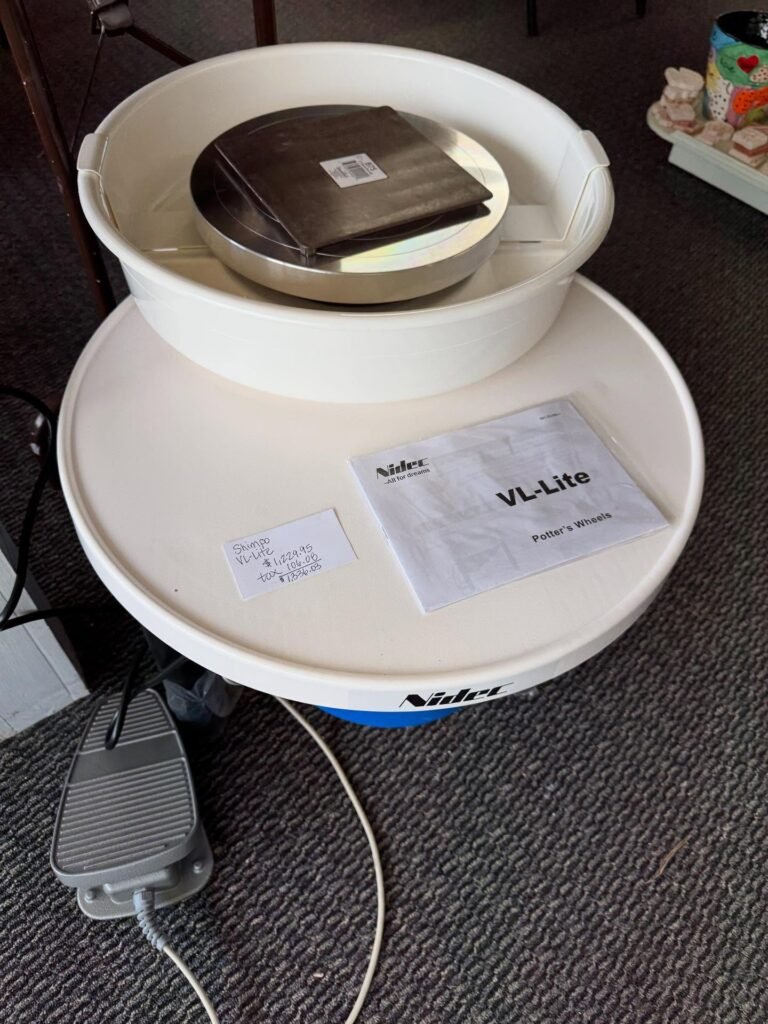
Belt-drive wheels are common, familiar, and serviceable. Direct-drive wheels can be notably quiet and smooth, which is valuable in an apartment, classroom, or studio where conversation and concentration matter. Neither is categorically superior. A direct-drive wheel may justify its cost when low noise is essential; a belt-drive wheel can be the sensible choice when you value a proven, maintainable design.
For a detailed comparison of current models, see The KILN DEPOT’s pottery wheels for sale guide. Manufacturer documentation from NIDEC-SHIMPO is also useful when evaluating its direct-drive options.
3. Wheelhead, Bat Pins, and Bats
A 14-inch wheelhead is common on full-size wheels and offers ample room for ordinary throwing and trimming. An 11-inch head can be perfectly appropriate for compact work. Check the bat-pin spacing before buying a stack of bats; compatibility is not universal.
Bats make it easier to lift soft work from the wheel without distorting it. They are not always included, and their cost is part of a complete setup. The right starter kit is usually modest: two to four compatible bats, rather than every size and material available.
4. Pedal and Speed Control
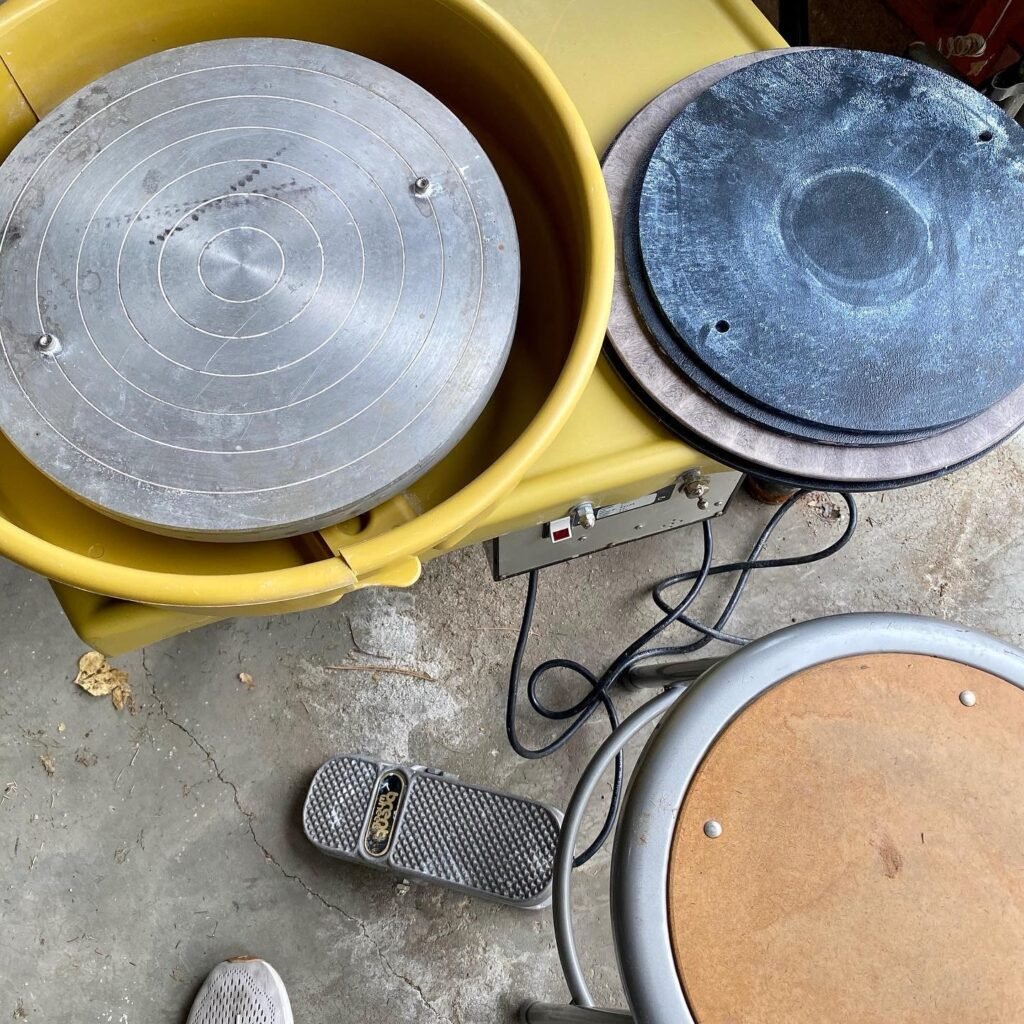
The pedal is a primary contact point. A smooth, progressive foot pedal helps you make small speed changes without startling the clay. If you can try a wheel locally, do it. If you cannot, favor established manufacturers that publish clear specifications and support their equipment.
Some tabletop units use hand control with an optional foot pedal. That is not inherently a flaw; it is a design choice. It is only a poor value if your preferred throwing style requires foot control and you forget to include the optional pedal in the delivered price.
5. Frame, Height, and Stability
An inexpensive-looking wheel can become expensive if it walks, flexes, or places you at an uncomfortable height. Full-size wheels generally provide a more stable seated position. A tabletop wheel needs a truly solid, level surface or compatible leg set.
[Feature Close-up — ALT: Close-up of a pottery wheel foot pedal, splash pan, and adjustable leveling feet]
Consider your body as part of the equipment specification. Your elbows should be able to brace comfortably; your knees should not be trapped against the frame. A wheel that causes strain is not a bargain.
6. Warranty, Parts, and Repairability
Warranties vary by model and brand. Read the actual manufacturer terms, especially exclusions, freight responsibility, and whether the warranty applies in a school or commercial setting. Speedball lists a two-year warranty for the Artista and a 10-year warranty for its Boss Series; always verify the current policy before purchase.
Repairability matters after the warranty ends. Ask whether the seller can help identify replacement pedals, splash pans, belts, control boards, or bearings. A machine with a known parts pathway may have a stronger long-term value than a cheaper one with no support.
7. Delivery, Installation, and the Rest of the Studio
A wheel may ship by freight, particularly a heavy full-size model. Account for delivery access, threshold or lift-gate needs, and where the carton will be opened. Most electric wheels use standard household power, but inspect the exact voltage and outlet requirements in the manual.
Your wheel is one piece of the system. Review what pottery studio equipment you actually need before allocating every dollar to the wheel. You will also need clay handling, a work surface, drying space, and access to appropriate firing.
Which Price Tier Is Right for You?
Best Value for a Casual Beginner With Limited Space: A Branded Tabletop Wheel
Choose this route if you make small to medium work, need to store the wheel away, attend classes, or are not yet certain how frequently you will throw. The Artista-type format is particularly practical when portability is a genuine requirement.
Avoid it if you already know you want to make large forms, want a permanent ergonomic setup, or will be frustrated by a smaller wheelhead. Do not buy an ultra-cheap anonymous wheel simply because it claims a large capacity; published specs, warranty support, and replacement parts matter more than a striking listing image.
Best Long-Term Value for a Committed Beginner: A Full-Size 1/2 HP Wheel
This is the sweet spot for many people who expect to throw each week. It has enough reserve for years of skill growth without paying for maximum production capacity. A full-size wheel also brings a stable work position and usually accepts standard bats more readily.
The home pottery wheel buying guide can help you balance footprint, noise, and capacity before selecting a model.
Best for Schools and Shared Studios: A Durable, Serviceable Full-Size Wheel
Look beyond headline horsepower. A teaching environment benefits from a sturdy pedal, removable splash pan, predictable controls, supported replacement parts, and a manufacturer warranty suited to repeated use. Standardized wheel models simplify teaching and stocking bats or spares.
The Brent C is one rational option for a demanding shared setting; The KILN DEPOT’s Brent C FAQ details its dimensions, 14-inch wheelhead, and service-oriented belt design. It is more wheel than a single beginner needs, which is exactly why it may work well in a busy program.
Best for Production or Very Large Work: High-Capacity Wheels
Buy a high-capacity model when your actual work calls for it: large vessels, substantial platters, a heavy daily production schedule, or a shared studio where users frequently demand more torque. The Brent CXC FAQ describes a 1 HP, 300-pound-capacity model. That reserve has value for the right studio, but it will not make a new potter learn centering faster.
Tabletop vs. Full-Size: A Fair Comparison
| Question | Tabletop wheel | Full-size wheel |
|---|---|---|
| Best for | Small spaces, portability, small work | Regular practice, shared studios, larger forms |
| Typical posture | Depends on table or optional legs | Designed for seated throwing |
| Wheelhead | Often smaller | Often 12–14 inches |
| Setup cost | Can require a sturdy table or leg kit | Higher freight, fewer stand add-ons |
| Storage | Easy to move or stow | Dedicated floor space required |
| Growth path | Can be enough for years of small work | Usually supports broader skill growth |
There is no shame in a tabletop wheel. The mistake is forcing a tabletop machine into a workload it was not designed for—or buying a heavy studio wheel when you need to carry it up stairs and store it in a closet.
New, Used, or Refurbished: Which Is Actually Cheaper?
New Wheels
New equipment gives you known condition, current documentation, and warranty coverage. It is the lowest-risk option for buyers who need dependable use on a schedule, including schools and studios. The extra cost is often justified if downtime would interrupt classes or customer orders.
Used Wheels
A used professional wheel can be a superb value, but only when inspected. Before paying, run it through the full speed range, center a small amount of clay if permitted, check the pedal, examine the wheelhead and bat pins, inspect the splash pan, and ask about repairs. Read The KILN DEPOT’s used pottery wheel checklist before arranging pickup.
Avoid a used wheel when you cannot verify that it powers on, cannot identify the model, or cannot obtain a workable price after expected repairs and transport. “It probably only needs a pedal” is not a condition report.
Refurbished Wheels
Refurbished equipment can be a particularly intelligent middle ground if the work performed is documented and the seller stands behind it. It can preserve budget for clay, tools, or firing while delivering a more robust platform than a questionable entry-level import. See how to evaluate refurbished pottery wheels for the inspection points that matter.
The Real Cost of Ownership
Your first-year budget should separate the wheel from the working studio.
| Item | Why it belongs in the budget | Buy now or later? |
|---|---|---|
| Compatible bats | Move soft work safely | Now: 2–4 |
| Basic tools and sponges | Cut, compress, trim, and clean | Now |
| Clay and reclaim buckets | Practice requires material and waste management | Now |
| Waterproof floor protection | Simplifies cleanup in a home studio | Now if indoors |
| Throwing stool | Helps maintain repeatable posture | Soon |
| Shelving/drying boards | Protects greenware | Soon |
| Kiln access or firing equipment | Turns greenware into finished work | Plan before buying clay |
Firing is often the overlooked expense. If you will use your own kiln, understand the support system as well as the kiln itself: kiln furniture, shelf spacing, and replacement shelves all affect how efficiently you can use the chamber.
Expected Lifespan and Resale Value
A quality branded wheel can provide many years of service when it is cleaned, kept dry around electrical components, and repaired with appropriate parts. There is no responsible universal lifespan because usage, storage, clay residue, and service history vary widely. However, established brands with available parts and recognizable model numbers generally have better resale prospects than unsupported machines.
Keep the manual, purchase record, and any service invoices. They make future maintenance easier and help a buyer trust the machine if you later upgrade.
Buying Guide: Make the Decision in Five Minutes
[Buying Checklist — ALT: Printable pottery wheel buying checklist beside a wheel, bats, and throwing tools]
Start here:
- Will the wheel live in one place? If no, start with branded tabletop options.
- Will you routinely make forms larger than ordinary mugs, bowls, and plates? If yes, prioritize a full-size wheel with greater torque reserve.
- Is silence essential? If yes, compare direct-drive models and manufacturer sound claims.
- Is this for more than one user? If yes, prioritize warranty, parts, pedal durability, and easy cleanup.
- Have you budgeted for firing? If no, solve that before allocating more to motor power.
What to Compare on Every Product Page
- Exact model, voltage, and maximum wheelhead speed
- Motor and stated centering capacity
- Wheelhead diameter and bat-pin pattern
- Included foot pedal, splash pan, bats, or stand
- Dimensions, weight, and shipping method
- Warranty length and commercial/school eligibility
- Replacement-part availability
Six Expensive Buying Mistakes
- Buying by horsepower alone. Pedal feel, torque behavior, and controller quality matter just as much.
- Ignoring ergonomics. A wheel that is too high, too low, or unstable is difficult to use well.
- Forgetting accessories. A seemingly lower-cost wheel may need a pedal, bats, or leg set before it is usable.
- Assuming all bat pins match. Confirm compatibility before buying a bat system.
- Treating a used wheel as risk-free. Test it and price transport and repairs.
- Buying a kiln before planning the entire workflow. Firing, ventilation, kiln wash, furniture, and shelves deserve a plan too.
Setup and Maintenance
Place the wheel on a level, stable surface with clear access to the outlet. Keep water containers where they cannot be kicked into electrical components. Do not use an extension cord unless the manufacturer specifically permits the arrangement; use the manufacturer’s manual as the authority.
After each session, remove clay from the splash pan before it dries. Wipe the wheelhead and exterior with a damp sponge, keeping excess water away from controls, motor openings, and plugs. Do not wash clay slurry into plumbing—settle it in a bucket and dispose of solids appropriately for your local rules.
Periodically check bat pins, pedal cable condition, and any unusual vibration or noise. Stop using the wheel and contact the seller or manufacturer if you notice electrical odor, intermittent speed, heat, a damaged cord, or a wobbling wheelhead. Do not treat DIY electrical repair as ordinary maintenance.
Essential Accessories, in Order
- Compatible bats
- Basic pottery tools and studio supplies
- A comfortable, stable stool
- A wedging surface and clay storage
- Drying boards or shelving
- A splash-control floor mat or washable surface
- A firing solution
Buy specialty ribs, trimming systems, and decorative accessories after you understand your preferred workflow. The American Ceramic Society and NCECA are credible places to continue learning technique and studio practice; product selection should still begin with your space and actual work.
Frequently Asked Questions
1. How Much Should a Beginner Spend on a Pottery Wheel?
Spend enough for a reputable, supported wheel that fits your space and planned work. A tabletop model can be sufficient for small work; a committed beginner often benefits from a full-size 1/2 HP wheel.
2. Is a Cheap Pottery Wheel Worth It?
Only if its manufacturer, warranty, safety documentation, and parts support are credible. A very low price can conceal weak speed control, poor stability, or no repair path.
3. Is 1/3 HP Enough for Pottery?
It can be enough for smaller work on a properly designed tabletop wheel. It is not the ideal choice for frequent large-form throwing.
4. Do Beginners Need a 1 HP Wheel?
Usually no. A 1 HP wheel is valuable for demanding work and production, not a prerequisite for learning.
5. What Is a Good Wheelhead Size?
An 11-inch head suits compact wheels and small work; a 14-inch head is common on full-size studio wheels. Choose based on the scale of work and bats you plan to use.
6. What Does Centering Capacity Mean?
It is a manufacturer’s stated measure of how much clay the wheel can center. It is not a recommendation that a beginner should use that much clay.
7. Do Pottery Wheels Come With Bats?
Some do and some do not. Check the individual listing, including bat sizes and pin compatibility.
8. Can I Use Any Bat on Any Wheel?
No. Confirm bat-pin spacing and the wheelhead configuration first.
9. Are Direct-Drive Wheels Better Than Belt-Drive Wheels?
They can be quieter and smoother, but belt-drive wheels remain durable, practical, and serviceable. The better choice depends on your priorities.
10. Is a Foot Pedal Necessary?
Most throwers prefer it for hands-free speed control. Some compact wheels offer hand control or an optional pedal.
11. Can I Put a Pottery Wheel in an Apartment?
Often yes, if your lease, floor protection, noise considerations, and clay-water cleanup plan allow it. Verify the electrical requirements and manage slurry responsibly.
12. Do Pottery Wheels Need a Special Outlet?
Many U.S. electric wheels use standard household power, but always follow the voltage and circuit requirements in the specific manual.
13. How Loud Is a Pottery Wheel?
Noise differs by drive system, model, load, and room. Compare manufacturer information and prioritize a quieter design when the studio is shared.
14. Can a Pottery Wheel Be Stored in a Garage?
Only if it stays dry, protected from temperature extremes, and safe from dust and impact. Follow the manufacturer’s storage guidance.
15. How Long Does a Pottery Wheel Last?
A supported, well-maintained wheel can last for many years. Actual lifespan depends on use, storage, cleanup, and repair history.
16. Is Buying Used Better Than Buying New?
Used can be better value only when condition, model, function, transport, and repair needs are verified. New is lower risk and includes warranty coverage.
17. Should a School Buy the Most Powerful Wheel?
Not automatically. Schools should prioritize robust construction, consistent controls, service support, and easy cleanup alongside sufficient capacity.
18. What Maintenance Does a Wheel Need?
Routine cleanup, safe water practices, cable and pin checks, and prompt attention to abnormal vibration, noise, or electrical behavior.
19. Do I Need a Kiln Before Buying a Wheel?
No, but you need a firing plan before you make much work. That can be a community studio, class, rental firing service, or your own kiln.
20. What Should I Buy With My First Wheel?
Start with compatible bats, basic tools, clay, buckets, a stable stool, a cleaning plan, and access to firing.
Glossary
Bat: A removable disc mounted on the wheelhead to support wet work.
Bat pins: Pins that secure a compatible bat to the wheelhead.
Centering: Aligning clay on the wheel’s rotational axis before forming it.
Direct drive: A system that drives the wheelhead without a conventional belt.
Foot pedal: A control used to vary wheel speed hands-free.
Torque: Rotational force that helps a wheel resist slowing under load.
Wheelhead: The rotating surface where clay or a bat sits.
Wedging: Preparing clay by kneading to improve consistency and remove air.
Related Articles
If you are narrowing down a model, continue with choosing your first pottery wheel, setting up a wheel at home, and evaluating a refurbished Brent wheel.
Final Verdict
The best pottery wheel cost is the delivered, fully equipped price of a reliable machine you will genuinely use. For small work and tight quarters, a branded tabletop wheel can be the sensible entry. For frequent practice and room to grow, a full-size 1/2 HP or stronger wheel is often the better investment. For schools, shared studios, and large work, pay for durability, serviceability, and capacity—not bragging rights.
Before you buy, list your space, work scale, expected weekly use, preferred control style, and firing plan. Then compare current pottery wheel options at The KILN DEPOT with those needs in mind.
Find the Right Pottery Wheel at The KILN DEPOT
Ready to choose? Explore dependable pottery wheels, compare supported brands, and build a studio setup that leaves room for your work—not just your equipment budget. The KILN DEPOT can help you match a wheel to your space, throwing goals, and long-term plans.
