A refurbished pottery wheel can be one of the best ways to get professional equipment without paying full new-wheel prices.
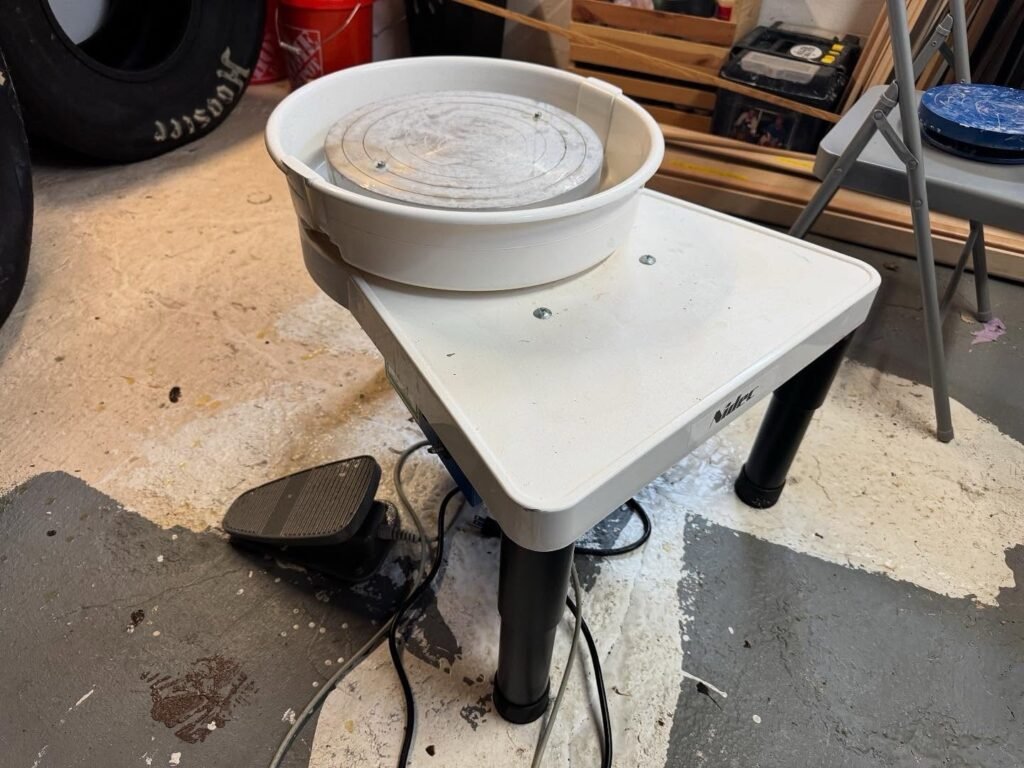
But there is a big difference between a properly refurbished wheel and a used wheel that has simply been cleaned.
That difference matters.
A pottery wheel has a motor, speed control, bearings, wheelhead, pedal, wiring, and other components that can wear over time.
If you’re shopping for refurbished pottery wheels, you want to know exactly what has been checked, what has been replaced, and what you’re actually getting for your money.
What Is a Refurbished Pottery Wheel?
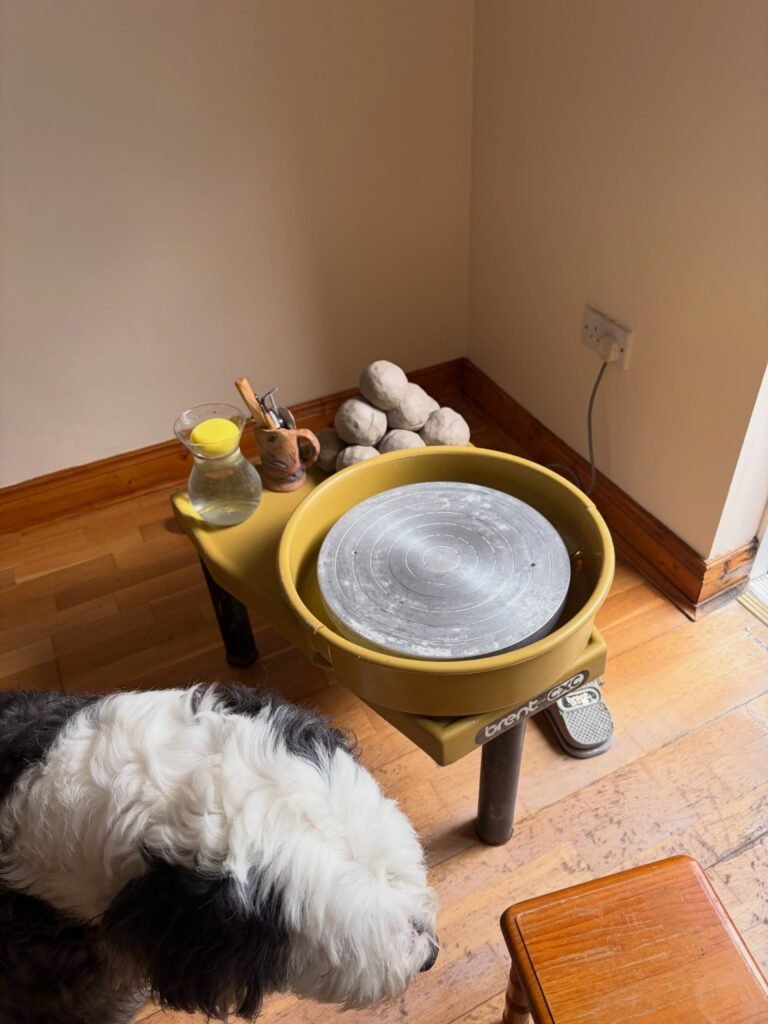
A refurbished pottery wheel is a previously owned wheel that has been inspected, repaired, restored, or tested before being sold again.
The amount of work can vary.
One seller might replace a pedal and clean the wheel.
Another might inspect the motor, replace worn bearings, check the electronics, service the speed control, and test the wheel under load.
Those are completely different levels of refurbishment.
So don’t focus only on the word “refurbished.”
Ask what was actually done.
Refurbished vs Used Pottery Wheel
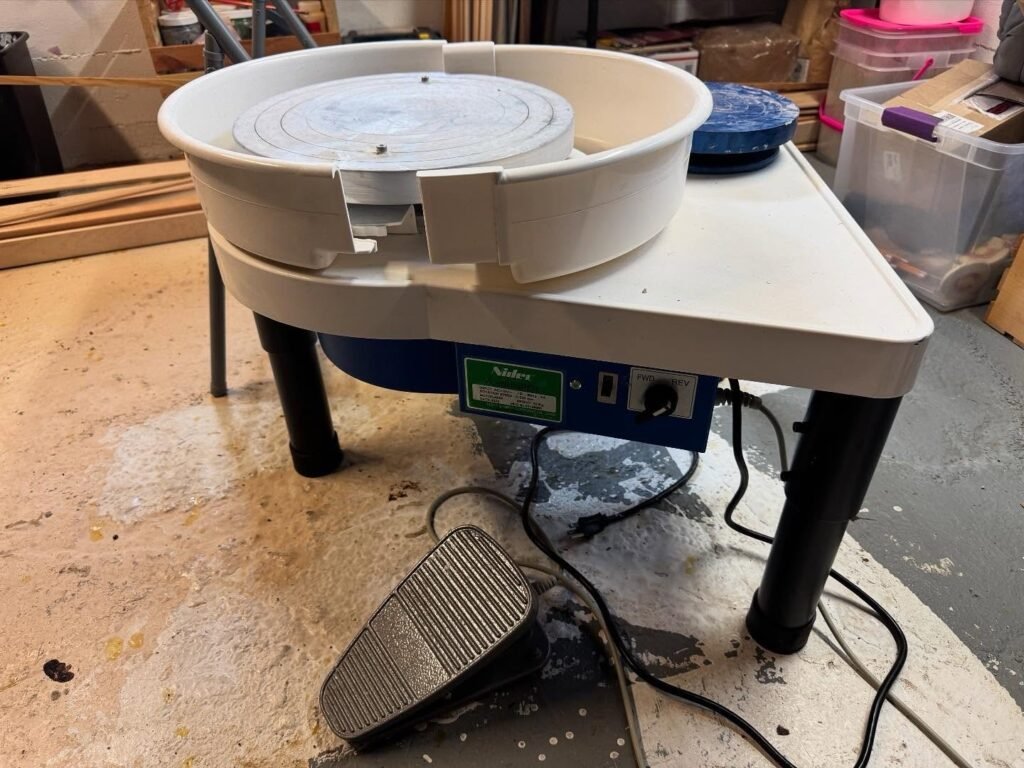
A used pottery wheel simply means the wheel has been previously owned.
It may be in excellent condition.
It may also need repairs.
A refurbished pottery wheel should have received some additional attention before being resold.
That doesn’t automatically make it better.
The quality of the refurbishment matters.
Ask the seller:
What was repaired?
What was replaced?
What was tested?
Who performed the work?
Was the wheel tested with clay?
Is there any warranty?
The answers tell you much more than the word refurbished.
Why Buy a Refurbished Pottery Wheel?
The biggest reason is value.
Professional pottery wheels can be expensive.
A refurbished wheel can give you access to a higher-quality machine while keeping the initial cost lower.
That can be particularly attractive if you’re setting up a complete studio.
You may also need a:
Pottery kiln
Slab roller
Pugmill
Work table
Clay
Kiln shelves
Pottery tools
Saving money on the wheel can leave more room in your budget for everything else.
What Should Be Checked?
A proper refurbishment should address the parts that affect the wheel’s performance.
At minimum, ask about:
Motor
Wheelhead
Bearings
Speed control
Foot pedal
Forward and reverse switch
Power cord
Electrical connections
Splash pan
Frame
Bat pins
The exact checklist will depend on the model.
The important thing is that the seller can explain what was inspected.
Test the Motor
The motor is the heart of the pottery wheel.
Run the wheel slowly.
Then increase the speed.
Listen carefully.
A healthy motor should operate smoothly without unusual grinding, rattling, or excessive vibration.
Don’t only test the wheel with no clay.
Center a realistic amount of clay if possible.
A motor can behave perfectly when unloaded and struggle when you put substantial clay on the wheelhead.
Torque under load matters.
Check the Speed Control
The speed pedal should respond predictably.
Start slowly.
Increase the speed.
Then reduce it.
The wheel shouldn’t suddenly jump from slow to fast.
A good pedal gives you precise control while throwing.
This is particularly important when centering clay or making delicate forms.
If the speed control feels inconsistent, ask whether it was repaired or replaced during refurbishment.
Check the Wheelhead
Look closely at the wheelhead.
It should rotate smoothly without excessive wobble.
Check for:
Wobbling
Dents
Corrosion
Loose bat pins
Damage around the shaft
Excessive movement
A small cosmetic mark isn’t necessarily important.
A wheelhead that doesn’t run true is a different problem.
If possible, place a bat on the wheel and test it while the wheel is turning.
Check the Bearings
Bearings aren’t something you normally think about when buying a pottery wheel.
You should.
Worn bearings can produce noise, vibration, or unwanted movement.
Listen carefully while the wheel runs.
Then place your hand lightly near the wheelhead and pay attention to unusual vibration.
If the seller claims the bearings were replaced, ask when and why.
Refurbished Brent Wheels
Brent pottery wheels are particularly interesting in the refurbished and used market.
The brand has a long history in ceramic studios, schools, and professional pottery environments.
Current Brent specifications show several major models, including the Model B, Model C, and CXC.
The differences are meaningful.
The Model B uses a 1/2 HP motor.
The Model C uses a 3/4 HP motor.
The CXC uses a 1 HP motor.
All three use a 14-inch wheelhead.
That makes the exact model important when comparing prices.
A used or refurbished Brent wheel should never be valued simply as “a Brent.”
Identify the model first.
Refurbished Brent Wheel: What to Check
If you’re considering a refurbished Brent wheel, inspect the:
Motor
Foot pedal
Wheelhead
Bearings
Belt
Speed control
Forward/reverse system
Frame
Splash pan
Power cord
Also ask whether the wheel was used in a school or community studio.
Heavy institutional use doesn’t automatically mean the wheel is bad.
But it can mean more hours of operation.
A lightly used home-studio wheel may have a very different wear profile.
Used Brent Wheel Prices Can Vary Wildly
Recent US listings show just how much prices can vary in the secondhand market.
A Brent Model B was recently listed in Miami for $480.
A used Brent Model C was recently listed in Philadelphia for $620.
A Brent CXC was recently listed at $1,450 in Washington State.
Another CXC listing in Kansas City was priced at $550.
These aren’t standardized market prices.
They’re examples of how dramatically condition, location, seller expectations, and timing can affect the used market.
That is exactly why you shouldn’t decide whether a refurbished Brent wheel is a good deal based on one listing.
Compare the exact model and condition.
Refurbished Shimpo Pottery Wheels
Shimpo pottery wheels are another strong option.
The VL-Whisper is particularly well known for quiet operation.
NIDEC-SHIMPO lists the current VL-Whisper with a direct-drive brushless motor, 100-pound centering capacity, a 14-inch wheelhead, and a speed range of 0 to 250 RPM.
The company also describes it as virtually quiet, with no belt and no vibration.
Those characteristics make the VL-Whisper particularly attractive for home studios where noise matters.
What Makes the VL-Whisper Different?
The direct-drive design is the big difference.
Unlike a traditional belt-driven system, the VL-Whisper uses a brushless direct-drive motor.
That eliminates the belt.
It also reduces the number of mechanical components involved in transmitting power from the motor to the wheelhead.
The manufacturer lists the VL-Whisper at 120 pounds, so it isn’t a lightweight portable wheel.
But that weight can be useful when you’re looking for stability.
For a permanent studio, that’s not necessarily a disadvantage.
Refurbished Shimpo vs Refurbished Brent
Both brands can make sense.
Your choice depends on what matters most.
Choose a refurbished Brent when you prioritize:
Traditional studio construction
Heavy-duty models
Large clay capacity
A proven studio workhorse
Choose a refurbished Shimpo when you prioritize:
Quiet operation
Direct drive
Smooth speed control
Home-studio use
Lower vibration
Neither brand is automatically better.
Match the machine to your work.
Pottery Wheel for a Home Studio
Home studios introduce another factor.
Noise.
If your studio is inside your house or close to living areas, a noisy wheel can become annoying quickly.
This is where a quiet direct-drive wheel such as the Shimpo VL-Whisper can become attractive.
But don’t buy based on the specifications alone.
If you’re buying used or refurbished, listen to the actual machine.
A worn bearing or damaged component can make an otherwise quiet wheel noisy.
Refurbished Pottery Wheels for Beginners
A beginner doesn’t necessarily need a brand-new beginner wheel.
A refurbished professional wheel can sometimes be the better long-term purchase.
For example, a properly refurbished Brent B may give a new potter access to a durable studio machine at a lower price than buying a new professional wheel.
The key question is whether you’re serious about pottery.
If you’re only experimenting, a cheaper entry-level wheel may make sense.
If you already know you’re going to throw regularly for years, spending more on a quality machine can be smarter.
Don’t Buy Based on Motor Horsepower Alone
Horsepower matters.
But it isn’t everything.
A wheel’s overall design affects how it performs.
Look at:
Motor
Torque
Drive system
Speed control
Wheelhead
Frame
Weight
Bearings
Pedal
Maximum centering capacity
A wheel with a smaller motor can still provide excellent throwing performance.
The goal is not to buy the biggest motor.
The goal is to buy a wheel that handles the amount of clay you actually throw.
How Much Clay Do You Throw?
This is one of the easiest ways to narrow your options.
If you mainly make:
Cups
Small bowls
Small vases
Small sculptures
You may not need a heavy-duty production wheel.
If you regularly make:
Large planters
Large vases
Platters
Large sculptural forms
Production pottery
Then torque and stability become much more important.
Buy for your actual work.
Not the work you imagine you’ll make someday.
Ask About the Wheel’s History
Before buying a refurbished pottery wheel, ask how it was used.
A wheel used occasionally by one potter may have very different wear from a wheel used eight hours a day in a university ceramics department.
Ask:
Where was it used?
How long was it used?
How frequently?
Was it commercially used?
Was it maintained?
Why was it sold?
Has anything major been replaced?
The history won’t tell you everything.
But it gives you useful context.
What Does Refurbishment Actually Include?
This is the question I would ask before almost anything else.
“Can you give me a list of everything that was inspected, repaired, or replaced?”
You want specifics.
For example:
Motor inspected
Bearings checked
Pedal tested
Speed control tested
Wheelhead checked
Electrical connections inspected
Power cord inspected
Belt replaced
Splash pan cleaned
Wheel tested under load
That’s much more useful than:
“Fully refurbished.”
Specifics create confidence.
Check Replacement Parts Availability
This is an underrated advantage of established brands.
A wheel is a long-term purchase.
Eventually, something may wear out.
A pedal may fail.
A belt may need replacement.
A switch may need attention.
A controller or electronic component may eventually need servicing.
NIDEC-SHIMPO currently maintains parts lists for its pottery wheels, including the VL-Whisper, with components such as controllers, switches, motor assemblies, pedal assemblies, and power cords listed.
That kind of parts support can make owning an established model much easier.
Don’t Ignore the Foot Pedal
The pedal gets used every time you throw.
Test it carefully.
The wheel should respond smoothly as you press and release it.
Watch for:
Dead spots
Sudden speed changes
Delayed response
Sticking
Excessive looseness
Intermittent operation
A bad pedal doesn’t necessarily kill the deal.
But you need to know what you’re buying.
If it needs replacement, include that cost in your offer.
Check the Splash Pan
This sounds minor.
It isn’t.
A damaged or missing splash pan can be annoying to replace.
Check that:
It fits correctly
It isn’t badly cracked
The clips work
The pieces are complete
Replacement splash pans and components may be available for established models, but you should still factor the cost into your purchase.
Refurbished vs New Pottery Wheel
New is attractive because you know exactly what you’re getting.
You may receive:
Warranty
Current model
New components
Manufacturer support
Predictable condition
Refurbished becomes attractive when the price difference is meaningful.
A refurbished professional wheel can give you better equipment for the same budget.
For example, instead of spending your entire budget on a new entry-level wheel, you may be able to purchase a refurbished professional model and still have money left for tools and clay.
When a Used Wheel Is Better Than Refurbished
Don’t assume refurbished is always the better option.
If you find a used Brent C in excellent condition from a local potter for a very good price, that may be a better purchase than a more expensive refurbished wheel.
You can inspect it.
Test it.
Ask the owner about its history.
And avoid shipping.
The condition and total price matter more than the label.
Calculate the Total Cost
Don’t compare only the sticker price.
Calculate:
Wheel price
Shipping
Freight
Repairs
Replacement parts
Accessories
Delivery
Potential installation costs
For example:
$800 refurbished wheel
$150 shipping
$100 replacement pedal
$50 accessories
Total: $1,100
Now compare that $1,100 against comparable new and used wheels.
That’s how you determine whether you’re actually getting value.
Where to Shop for Pottery Wheels
If you’re comparing refurbished and used pottery wheels, establish a new-equipment benchmark first.
The Kiln Depot offers pottery equipment for ceramic studios and potters across the US.
You can also browse pottery wheels here:
Use current equipment prices to judge whether a refurbished or used wheel is genuinely discounted.
Should You Buy a Refurbished Pottery Wheel Online?
You can.
But ask for details before paying.
Request:
Photos of the actual wheel
Model number
Serial number if available
Video of the wheel operating
Close-ups of the wheelhead
Close-ups of the pedal
Photos of the motor area
Photos of the splash pan
Description of refurbishment work
Warranty information
Shipping information
A seller who is serious about selling refurbished equipment should be comfortable providing useful evidence.
Watch Out for These Red Flags
Be cautious if:
The model number is missing
The seller won’t demonstrate the wheel
The wheel makes unusual noises
The wheelhead wobbles
The pedal cuts out
The motor struggles under load
The refurbishment is unexplained
Replacement parts are unavailable
The price is almost the same as new
The seller refuses to discuss warranty or returns
None of these automatically means the wheel is bad.
But they should make you slow down.
The Best Refurbished Wheel Is the One That Fits Your Work
A professional potter throwing large vessels has different needs from a beginner making mugs twice a week.
A home studio has different priorities from a university ceramics department.
A quiet wheel may matter more to one buyer.
Maximum torque may matter more to another.
Portability may matter to someone else.
Start with your workflow.
Then choose the machine.
Not the other way around.
Final Thoughts
Refurbished pottery wheels can be a smart way to get better equipment without paying full new-equipment prices.
But don’t buy the word “refurbished.”
Buy the actual condition of the machine.
Ask what was repaired.
Check the motor.
Test the pedal.
Inspect the wheelhead.
Listen to the bearings.
Run clay through the wheel.
Confirm parts availability.
Calculate shipping and repair costs.
Then compare the final price with new and used alternatives.
Brent and Shimpo are both worth considering, but the exact model matters.
A properly refurbished Brent wheel can be an excellent studio workhorse.
A refurbished Shimpo can be a great choice when quiet, smooth operation matters.
The goal isn’t simply to find a cheaper pottery wheel.
It’s to find a reliable wheel that gives you years of throwing without blowing your studio budget.
