Pottery kiln insulation does much more than keep the outside of a kiln from getting hot.
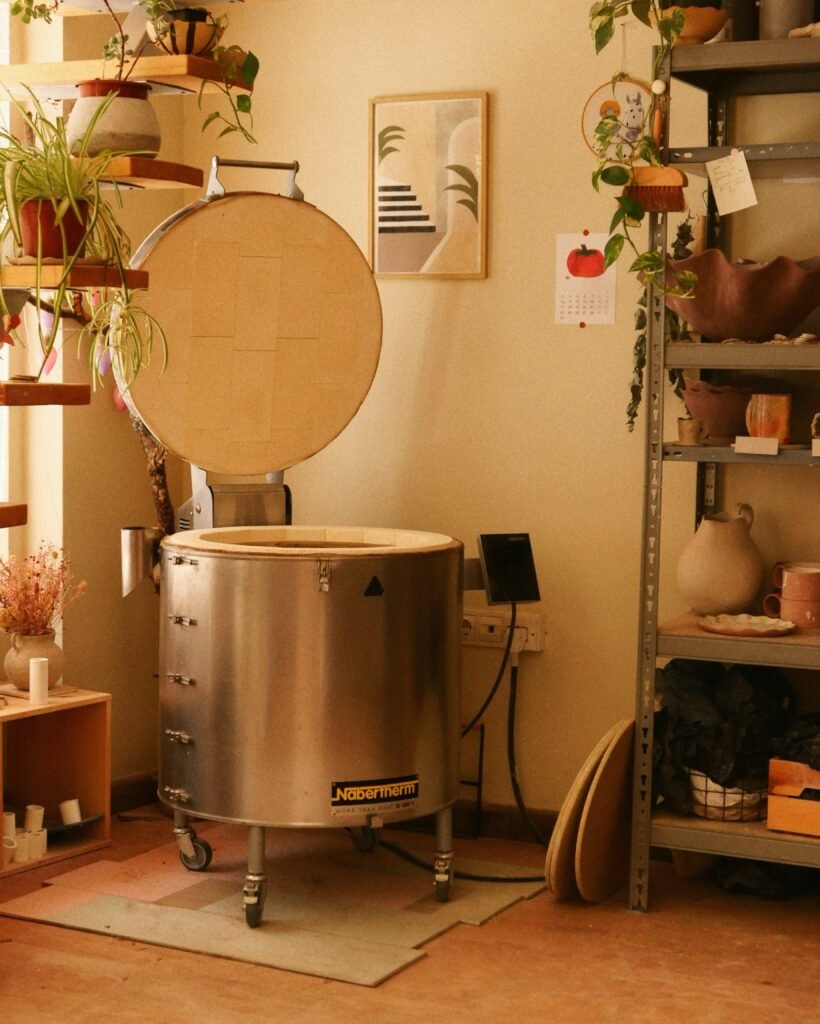
It determines how efficiently the kiln retains heat, how much heat escapes through the walls and lid, how the kiln behaves during long firings and how quickly the chamber cools after the elements shut off.
That makes insulation an important part of kiln construction and an important buying consideration.
The two materials you will encounter most often are insulating firebrick and ceramic fiber. Some kilns use one predominantly. Others combine them.
You may also see different insulation thicknesses, particularly 2.5 inch and 3 inch firebrick construction on electric ceramic kilns.
So which is better?
There is no universal answer.
For a typical pottery kiln buyer, the better choice depends on firing temperature, firing schedule, desired cooling behavior, kiln weight, durability, energy use, maintenance and the type of work being fired.
A heavily insulated kiln is not automatically the best kiln for every potter.
Likewise, a lightweight ceramic fiber kiln is not automatically less capable.
The important thing is understanding what the insulation is doing and how the construction affects the way the kiln operates.
What Is Pottery Kiln Insulation?
Pottery kiln insulation is the heat-resistant material surrounding the firing chamber that slows the movement of heat from the hot interior toward the cooler exterior.
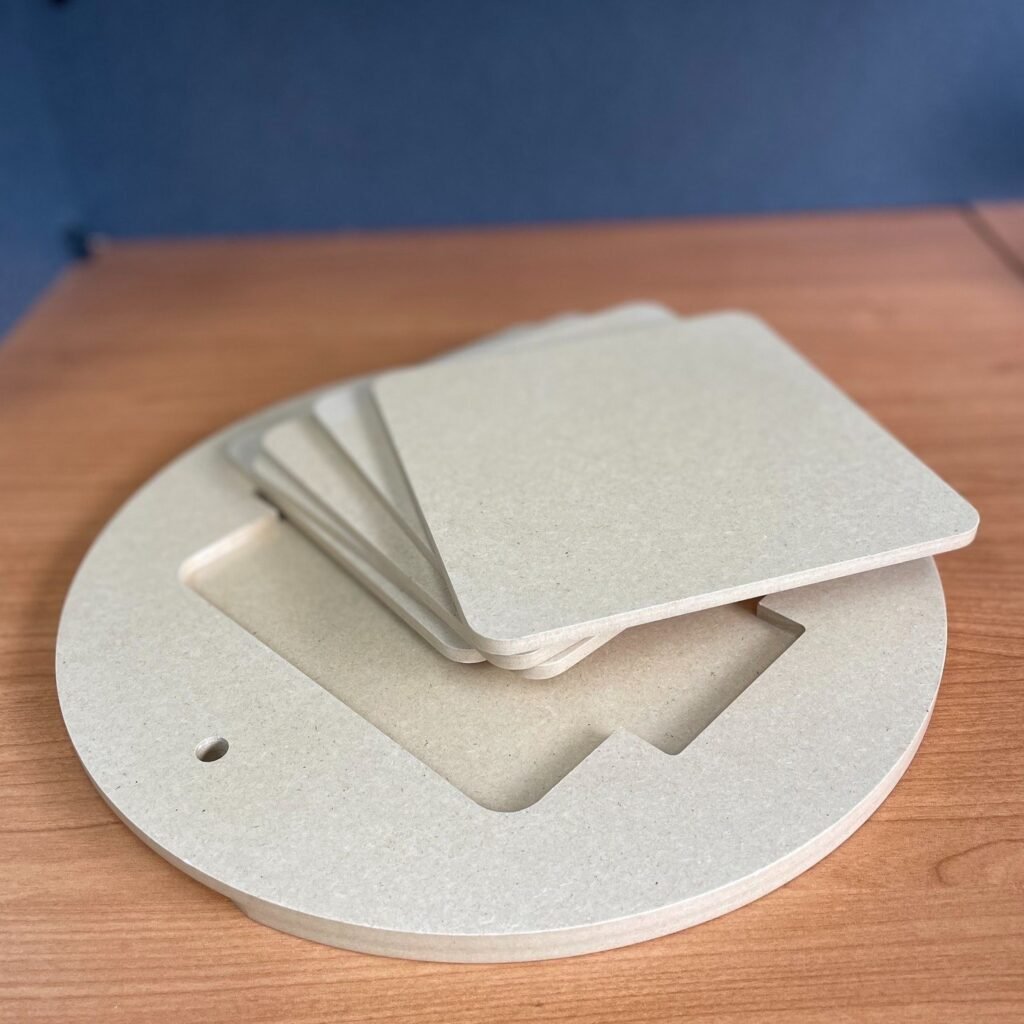
A kiln has to generate enough heat to bring the chamber to its target temperature.
But generating heat is only part of the job.
The kiln also needs to retain that heat.
Without effective insulation, more energy escapes through the kiln walls, lid, floor and other surfaces.
Insulation therefore affects the relationship between the heating elements and the kiln chamber.
A well-designed kiln uses insulation to reduce heat loss while maintaining the structural and thermal characteristics the manufacturer wants.
This is why insulation is not simply a matter of adding as much material as possible.
The manufacturer has to balance:
- Thermal retention
- Structural strength
- Weight
- Element placement
- Maximum temperature
- Cooling characteristics
- Durability
- Serviceability
- Cost
Different kiln designs make different compromises.
Why Pottery Kiln Insulation Matters
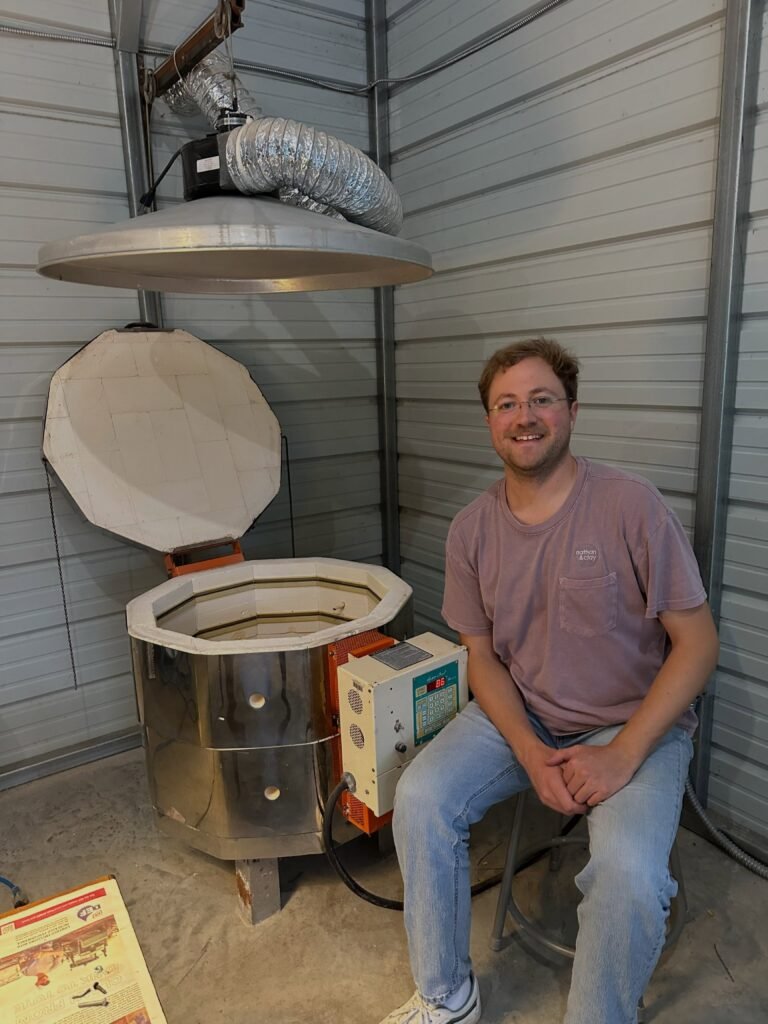
A kiln’s heating elements are responsible for generating heat.
The insulation helps keep that heat where it belongs.
Better heat retention can influence:
- Heating efficiency
- Firing time
- Exterior surface temperature
- Cooling rate
- Electrical energy consumption
- Element workload
- Heat distribution
- Long firing schedules
- The behavior of the kiln during cooling
However, insulation does not work in isolation.
A kiln’s controller, element design, chamber geometry, lid seal, firing schedule, ventilation, loading pattern and electrical supply all influence actual firing performance.
That is why you should not look at insulation thickness and assume you can predict the kiln’s electricity consumption from that number alone.
Firebrick vs Ceramic Fiber
The most important comparison in pottery kiln insulation is often firebrick versus ceramic fiber.
Both can provide effective thermal insulation.
They simply do it differently.
Insulating Firebrick
Insulating firebrick is a lightweight refractory brick designed to withstand high temperatures while providing thermal insulation.
It forms the structural lining of many electric pottery kilns.
The brick provides:
- Thermal insulation
- Physical support
- Element grooves
- A durable interior surface
- Thermal mass
Firebrick kilns are familiar to many ceramic studios because the material is robust and relatively easy to inspect.
Ceramic Fiber
Ceramic fiber is a lightweight refractory insulation material.
It can be manufactured as blankets, boards, modules and other forms.
Compared with firebrick, ceramic fiber generally has lower thermal mass.
That can allow certain fiber-insulated kiln designs to heat and cool relatively quickly.
Paragon’s FiberFuse-16, for example, uses 2 inch ceramic fiber in the lid, walls and bottom. The manufacturer describes the fiber construction as absorbing less heat than firebrick and says this contributes to faster firing and cooling. (paragonkilns.com)
That is an important distinction.
The goal of insulation is not necessarily to make the kiln cool as slowly as possible.
The desired thermal behavior depends on the work and firing process.
Is Ceramic Fiber Better Than Firebrick?
Not universally.
Ceramic fiber can be advantageous when low weight, fast heating and faster cooling are important.
Firebrick can be advantageous when durability, thermal mass and a robust interior structure are priorities.
Some kilns combine the two materials.
That can provide the structural and thermal characteristics of firebrick with additional insulation behind it.
Paragon’s Dragon 24, for example, uses 3 inch insulating firebrick backed by 1 inch of ceramic fiber block insulation in the walls, top and door. (paragonkilns.com)
This illustrates an important point:
You do not necessarily have to choose between firebrick and fiber.
A kiln can use both.
Pottery Kiln Insulation Can Be a Layered System
Think of the kiln wall as a system rather than a single material.
A typical insulated kiln may contain:
Firing chamber
↓
Insulating firebrick or ceramic fiber
↓
Additional insulation
↓
Metal outer shell
The exact construction varies.
Some designs use firebrick alone.
Others add ceramic fiber behind the brick.
Others use fiberboard or blanket systems.
The heating elements also need to be positioned correctly within the insulation system.
This construction affects how heat moves through the kiln.
That is why simply adding extra insulation to an existing kiln is not necessarily a straightforward upgrade.
Why Kiln Insulation Thickness Matters
Thickness matters because more insulation can increase the resistance to heat transfer.
But thicker does not automatically mean better in every situation.
For example, Skutt describes its 3 inch brick construction as an energy-saving upgrade over standard 2.5 inch brick. The company says the additional thickness improves insulation and energy savings, and also notes that thicker firebrick increases the temperature rating and slows cooling. (skutt.com)
That makes 3 inch brick particularly interesting for potters who fire frequently or at higher temperatures.
But there are tradeoffs.
More material can mean:
- More kiln weight
- Greater thermal mass
- Longer cooling
- Different firing characteristics
- Higher purchase cost
So the correct question is not:
“Is thicker insulation better?”
It is:
“Is the additional insulation useful for the way I fire?”
2.5 Inch vs 3 Inch Kiln Brick
The 2.5 inch versus 3 inch comparison is particularly relevant when shopping for electric pottery kilns.
A 3 inch brick wall contains more insulating material than a 2.5 inch wall.
That can reduce heat loss and increase thermal retention.
Skutt specifically markets its 3 inch brick construction as an energy-saving upgrade and recommends it for high-fire models. (skutt.com)
When 3 Inch Brick Makes Sense
Three inch construction can be attractive if you:
- Fire frequently
- Fire at higher temperatures
- Run long firing schedules
- Want greater thermal retention
- Value slower cooling
- Want a heavier-duty kiln construction
It can be particularly interesting for serious production studios.
When 2.5 Inch Brick May Be Enough
Standard 2.5 inch construction can make sense if:
- You fire less frequently
- Your normal firing temperature does not require additional insulation
- You want to reduce purchase cost
- You want a lighter kiln
- You prefer relatively predictable standard construction
There is no requirement that every home potter buy a 3 inch kiln.
Choose based on your firing habits.
Does Thicker Pottery Kiln Insulation Save Electricity?
It can reduce heat loss, but you should be careful with simple claims about exactly how much electricity you will save.
Actual electrical consumption depends on:
- Kiln size
- Insulation
- Firing temperature
- Firing schedule
- Hold time
- Ambient temperature
- Loading
- Element condition
- Electrical supply
- Controller behavior
- Kiln construction
- Ventilation
A heavily insulated kiln can retain heat more effectively, but that does not mean you can predict a specific percentage reduction in electricity from wall thickness alone.
Manufacturers do market thicker insulation as an energy-saving feature.
Skutt describes its 3 inch brick option as providing better insulation and higher energy savings compared with standard 2.5 inch construction. (skutt.com)
Paragon similarly describes additional insulation on certain models as reducing heat loss and energy use during long high-temperature cycles. (paragonkilns.com)
The practical takeaway is that insulation is part of the kiln’s efficiency equation, not the entire equation.
Pottery Kiln Insulation and Cooling
One of the most overlooked effects of insulation is cooling.
More insulation generally means more heat remains inside the kiln.
That can result in slower cooling.
This can be an advantage for some ceramic work.
Slow cooling may be desirable for certain glazes and firing processes.
Paragon specifically describes the extra insulation in its Dragon series as contributing to slower cooling and notes that the design can be useful for long cooling schedules and certain glaze effects. (paragonkilns.com)
But slow cooling is not always desirable.
If your workflow depends on rapid turnaround, a kiln that holds heat for a long time may increase the time between firings.
That means insulation should be evaluated against your production schedule.
Fast Cooling vs Slow Cooling
Consider two potters.
Potter A: Production Studio
The studio fires several times each week.
The goal is predictable high-temperature firing and efficient production.
Long cooling times can increase the gap between loads.
Potter B: Glaze Specialist
The potter intentionally uses controlled slow cooling for particular glaze results.
Thermal retention may be valuable.
The same insulation characteristic can therefore be an advantage to one potter and a disadvantage to another.
This is why there is no universal “best” pottery kiln insulation.
Pottery Kiln Insulation and Heat Retention
Heat retention is one of the fundamental jobs of insulation.
A kiln with effective insulation does not need to lose as much energy through its walls and lid.
But heat retention also depends on the areas where insulation is weakest.
Potential heat-loss points include:
- Lid
- Door
- Peepholes
- Element grooves
- Floor
- Seams
- Damaged firebrick
- Poorly fitting doors
- Gaps around removable components
A kiln can have thick walls and still lose heat through a poorly fitting lid.
That is why kiln construction quality matters as much as insulation thickness.
The Lid Is Part of the Insulation System
Do not evaluate kiln walls and ignore the lid.
The lid can represent a significant portion of the kiln’s exposed surface.
Its construction affects:
- Heat retention
- External temperature
- Cooling rate
- Firing efficiency
- Dust contamination
- Mechanical durability
Paragon’s Dragon 24, for example, uses the same 3 inch firebrick and 1 inch ceramic fiber block concept in the top and door as in the walls. (paragonkilns.com)
That is a reminder that insulation should be evaluated as a complete enclosure.
Pottery Kiln Insulation and Element Life
Insulation can also influence the environment in which heating elements operate.
If the kiln loses excessive heat, the elements may need to work harder or remain energized longer to maintain the desired firing conditions.
Manufacturers sometimes connect improved insulation with element longevity.
Paragon states on its Dragon product information that its extra insulation contributes to lower energy use and longer element life. (paragonkilns.com)
But do not interpret that as meaning insulation alone determines element life.
Element life is also affected by:
- Firing temperature
- Firing frequency
- Kiln atmosphere
- Contamination
- Element design
- Element condition
- Voltage
- Firing schedule
- Physical damage
A well-insulated kiln still requires normal element maintenance.
Pottery Kiln Insulation and Temperature Uniformity
Insulation is also relevant to temperature uniformity, but it is only one factor.
A kiln needs to maintain reasonably consistent conditions throughout the chamber.
The following can influence uniformity:
- Element placement
- Zone control
- Shelf spacing
- Load density
- Firing speed
- Insulation
- Lid and floor construction
- Thermocouple placement
- Kiln geometry
That means upgrading insulation does not automatically fix uneven firing.
If you are experiencing hot and cold spots, start with the entire firing system.
Our guide to Kiln Temperature Uniformity: How to Get Even Firing covers loading, shelf spacing and other factors that affect temperature distribution.
Ceramic Fiber Kilns: Advantages
Ceramic fiber construction can offer several practical advantages.
Lower Weight
Fiber is lightweight compared with a comparable volume of firebrick.
That can make some fiber kilns easier to move.
Fast Heating
Because fiber has lower thermal mass, some fiber-insulated designs can heat quickly.
Fast Cooling
Less stored heat can also mean faster cooling.
Efficient Small Kiln Design
Ceramic fiber can be particularly useful for small kilns where fast firing and cooling are priorities.
Paragon’s FiberFuse-16 is an example of a fiber-insulated kiln designed around low weight and rapid heating and cooling characteristics. (paragonkilns.com)
Ceramic Fiber Kilns: Limitations
Ceramic fiber also has tradeoffs.
Fiber can be more vulnerable to physical damage than a robust firebrick surface.
Repeated contact, scraping or impact can damage the insulation.
Fiber can also require different maintenance practices from brick.
If you regularly load heavy kiln furniture, large shelves or awkward work, a robust firebrick chamber may be preferable.
The specific construction matters enormously.
Do not reject fiber because of a generic assumption.
Look at how the manufacturer has designed and protected the fiber.
Firebrick Kilns: Advantages
Firebrick remains popular for good reasons.
Durable Interior
Insulating firebrick provides a rigid chamber lining.
Element Grooves
Elements can be recessed into grooves in the brick.
Thermal Mass
Brick stores heat, which can contribute to slower cooling.
Repairability
Individual damaged bricks can sometimes be replaced.
Familiar Construction
Many ceramic technicians and potters are accustomed to working with brick kilns.
Skutt’s standard and 3 inch brick construction demonstrates how insulating firebrick can form the primary thermal and structural system of a production pottery kiln. (skutt.com)
Firebrick Kilns: Limitations
Firebrick also has disadvantages.
It is heavier than ceramic fiber.
It stores more heat.
It can crack if subjected to impact or thermal stress.
Damaged brick may need repair or replacement.
A heavily insulated brick kiln may also take longer to cool.
That is not necessarily a defect.
It is a characteristic of the thermal system.
What About Combination Insulation?
Combination insulation can offer a useful middle ground.
A kiln might use:
- Firebrick on the inside
- Ceramic fiber behind the brick
- A steel outer case
This gives the kiln a durable interior surface while adding insulation outside the brick.
Paragon uses this type of construction on several higher-insulation models. Its Dragon 24 uses 3 inch firebrick backed by 1 inch ceramic fiber block, for 4 inches of wall insulation. (paragonkilns.com)
This kind of construction can be particularly attractive when the manufacturer wants strong heat retention without relying entirely on additional brick thickness.
Pottery Kiln Insulation and Kiln Weight
Weight matters more than many buyers realize.
A kiln may need to be:
- Delivered through a doorway
- Moved into a garage
- Placed on a stand
- Relocated within a studio
- Serviced
- Transported when selling
Firebrick construction tends to be heavier than fiber construction.
That can influence delivery and installation.
Before buying a large kiln, measure:
- Door width
- Hallway width
- Stairways
- Garage entrances
- Studio access
- Final installation location
A kiln that physically fits the room may still be impossible to get through the building.
Our Pottery Kiln Setup guide covers installation planning in more detail.
Pottery Kiln Insulation and Exterior Temperature
Good insulation helps keep more heat inside the chamber, but the outside of a kiln can still become extremely hot.
Do not interpret “well insulated” as “safe to touch.”
Kiln shells, lids and surrounding areas can reach temperatures capable of causing burns or damaging nearby materials.
That is why proper clearance remains essential.
Insulation does not replace safe installation.
Follow the manufacturer’s clearance requirements and local building and fire-safety requirements.
Can You Add More Insulation to a Kiln?
Sometimes modifications are technically possible.
That does not mean you should do them casually.
A kiln is an integrated system.
Changing insulation thickness can affect:
- Heating performance
- Element temperature
- Controller behavior
- Cooling
- External surface temperature
- Weight
- Element life
- Maximum temperature
- Structural loading
If you want better insulation, look for a manufacturer-approved upgrade first.
Skutt, for example, offers specific 3 inch brick configurations rather than telling owners to improvise additional insulation around an existing kiln. (skutt.com)
Do not simply wrap a kiln in insulation material without understanding the manufacturer’s design.
Pottery Kiln Insulation and Damaged Firebrick
Small cracks in firebrick are not automatically catastrophic.
Kiln brick is a refractory material and can develop cracks during normal thermal cycling.
The important question is the size, location and effect of the damage.
A deeper crack, missing section, damaged element groove or deteriorating wall deserves more attention.
Our guide to Kiln Brick Repair covers inspection and repair considerations in more detail.
Do not confuse cosmetic surface cracking with major structural or thermal damage.
When Should Kiln Insulation Be Replaced?
There is no universal replacement schedule.
Inspect the insulation instead.
Look for:
- Missing brick
- Deep cracks
- Broken corners
- Collapsed sections
- Exposed element areas
- Damaged fiber
- Large gaps
- Excessive deterioration
- Loose material
- Areas where the insulation no longer maintains the intended chamber structure
The correct repair depends on the construction.
Firebrick may be replaced individually.
Fiber may be patched or replaced in sections.
Some repairs are simple.
Others should be handled by an experienced kiln technician.
Pottery Kiln Insulation in Used Kilns
Insulation deserves special attention when buying used equipment.
Ask:
How old is the kiln?
How frequently was it fired?
What temperature was it normally fired to?
Was the kiln transported?
Has the brick been repaired?
Have the elements been replaced?
Has the lid been dropped?
Are there missing or damaged bricks?
Is the fiber intact?
Look inside the kiln.
Do not inspect only the exterior shell.
A clean-looking kiln can still have significant interior deterioration.
This is one reason our used pottery kiln inspection guide recommends examining the actual firing chamber rather than relying on photographs of the outside.
Should You Buy a Kiln With Cracked Firebrick?
Not automatically a deal breaker.
The severity matters.
A small superficial crack can be very different from:
- A large missing section
- A damaged element groove
- A loose brick
- A deteriorated floor
- Major lid damage
The cost and complexity of repair should be included in the purchase decision.
If you are buying a used kiln at a significant discount, the condition of the insulation can help determine whether the discount is actually worthwhile.
Does Pottery Kiln Insulation Affect Firing Speed?
Yes, but not in a simple “more insulation equals faster firing” relationship.
A kiln’s firing speed depends on:
- Element power
- Electrical supply
- Kiln size
- Load
- Insulation
- Ambient temperature
- Controller programming
- Ventilation
- Element condition
More insulation can reduce heat loss.
But additional insulation can also increase thermal mass if the design adds more firebrick.
That means a heavily insulated brick kiln may have excellent heat retention while still having a different heating and cooling response from a lightweight fiber kiln.
The complete design matters.
Pottery Kiln Insulation and High-Fire Firing
High-fire pottery places greater demands on kiln construction.
At Cone 6 and especially Cone 10, the kiln spends significant time at elevated temperatures.
Heat retention becomes increasingly important.
This is one reason manufacturers offer thicker brick options on some high-fire models.
Skutt specifically recommends its 3 inch brick option for high-fire models and describes the thicker construction as improving insulation and slowing cooling. (skutt.com)
If you regularly fire Cone 10, insulation should be part of your kiln comparison.
But it should still be evaluated alongside element design, controller capability, kiln rating and firing requirements.
For Cone 6 buyers, our Best Pottery Kiln for Cone 6 guide covers the broader buying decision.
Pottery Kiln Insulation and Energy Efficiency
When comparing kilns, energy efficiency should not be reduced to insulation thickness.
Two kilns with the same wall thickness can have different efficiency because of:
- Chamber geometry
- Lid construction
- Door seal
- Element efficiency
- Controller operation
- Ventilation
- Insulation type
- Floor construction
- Firing schedule
- Loading
A well-designed kiln uses these systems together.
For a buyer, the better question is:
How does the manufacturer describe the complete thermal design?
Look for information about:
- Insulation thickness
- Insulation material
- Lid construction
- Door construction
- Floor construction
- Element placement
- Energy-saving options
That tells you far more than a single number.
What Is the Best Pottery Kiln Insulation for a Home Studio?
For many home potters, standard insulating firebrick construction is a sensible starting point.
It is durable, familiar and suitable for a wide range of ceramic firing.
A 3 inch brick model can make sense if you fire frequently or want greater thermal retention.
A ceramic fiber kiln can make sense if low weight and rapid heating and cooling are important.
A combination brick-and-fiber design can be attractive when you want a durable interior with additional thermal insulation.
The best choice depends on the studio.
Choose Firebrick If You Prioritize
- Durability
- Traditional kiln construction
- Thermal mass
- Robust chamber walls
- Frequent ceramic firing
Consider Ceramic Fiber If You Prioritize
- Low weight
- Fast heating
- Fast cooling
- Small kiln applications
- Rapid turnaround
Consider Combination Construction If You Want
- Durable firebrick interior
- Additional insulation
- Strong heat retention
- Reduced heat loss
- Slower cooling
What Should You Look for When Buying a Kiln?
Do not start with insulation.
Start with the work.
1. What Do You Fire?
Mugs, bowls and small sculptures have different capacity requirements from large platters or production ware.
2. What Temperature Do You Fire?
Cone 6 and Cone 10 users may have different priorities.
3. How Often Do You Fire?
Frequent firing makes efficiency and durability more important.
4. How Fast Do You Need the Kiln to Cool?
Production studios may value shorter turnaround.
Certain glaze processes may benefit from slower cooling.
5. What Electrical Supply Do You Have?
A kiln’s electrical requirements can affect your total installation cost.
6. How Much Weight Can Your Studio Handle?
A heavily insulated brick kiln can be substantially heavier than a lightweight fiber design.
7. What Is the Total Cost?
Include:
- Kiln
- Stand
- Electrical installation
- Ventilation
- Kiln furniture
- Delivery
- Maintenance
- Future element replacement
8. What Does the Manufacturer Say About the Insulation?
This is where you compare the actual construction.
Pottery Kiln Insulation Buying Checklist
Before purchasing, ask the seller or manufacturer:
- What insulation material is used?
- How thick are the kiln walls?
- How thick is the lid?
- How is the floor insulated?
- Is ceramic fiber used behind the brick?
- Is the kiln rated for the temperature I need?
- Does the manufacturer offer a thicker insulation option?
- How does the insulation affect cooling?
- What is the kiln’s weight?
- How is damaged insulation repaired?
- Are replacement bricks or fiber available?
- Can the kiln be serviced locally?
- Is the insulation covered by the warranty?
These questions can reveal important differences between models that look similar from the outside.
Common Pottery Kiln Insulation Mistakes
Mistake 1: Assuming thicker is always better
More insulation can be useful, but it also affects weight, thermal mass and cooling.
Mistake 2: Looking only at wall thickness
The lid, floor, door and seams matter too.
Mistake 3: Assuming ceramic fiber is inferior
Fiber can provide excellent insulation and can be ideal for particular kiln designs.
Mistake 4: Assuming firebrick is automatically more efficient
Efficiency depends on the complete kiln design.
Mistake 5: Ignoring cooling behavior
Slow cooling can be useful or inconvenient depending on your firing process.
Mistake 6: Modifying insulation without manufacturer guidance
Changing the thermal design can affect kiln operation.
Mistake 7: Ignoring insulation condition on used kilns
Interior damage can be more important than a clean exterior.
Mistake 8: Buying based on energy claims alone
Actual electricity use depends on the kiln and how you operate it.
Pottery Kiln Insulation FAQ
What is the best insulation for a pottery kiln?
There is no single best material. Insulating firebrick, ceramic fiber and combination systems can all work well. The best choice depends on the kiln’s intended firing temperature, heating and cooling characteristics, durability requirements and application.
Is ceramic fiber better than firebrick?
Not universally. Ceramic fiber is lightweight and can heat and cool quickly. Firebrick provides a durable chamber and greater thermal mass. Some kiln designs use both.
Are 3 inch kiln walls better than 2.5 inch?
Three inch firebrick provides more insulation than 2.5 inch construction. Manufacturers such as Skutt market 3 inch brick as an energy-saving option and recommend it for certain high-fire applications. (skutt.com) Whether it is worth paying more depends on how you fire.
Does thicker insulation save electricity?
It can reduce heat loss, but actual electricity consumption depends on the complete kiln design, firing schedule, temperature, load and other factors.
Does insulation affect cooling?
Yes. More thermal mass and stronger heat retention can contribute to slower cooling. Lightweight fiber construction can cool faster in some designs.
Is ceramic fiber safe inside a pottery kiln?
Ceramic fiber is used as high-temperature refractory insulation in kiln construction. Follow the manufacturer’s instructions and avoid disturbing or damaging insulation unnecessarily.
Can I add insulation to my existing kiln?
Do not assume that adding insulation is a safe or useful modification. Changes can affect heating, cooling, element conditions, weight and controller behavior. Use manufacturer-approved upgrades where available.
How long does kiln insulation last?
There is no universal lifespan. Insulation can last for many years but may deteriorate from repeated firing, physical impact, contamination, thermal cycling or other damage.
Can cracked firebrick still be used?
Small cracks are not automatically a reason to discard a kiln. The location, depth and severity matter. Major damage, missing sections or damaged element grooves should be evaluated before continued operation.
Is a heavily insulated kiln better for Cone 6?
Not automatically. Heavier insulation can improve heat retention and may reduce heat loss, but you should also consider firing speed, cooling behavior, element design, chamber size and controller capability.
Does insulation affect element life?
It can influence the thermal environment and how much heat the kiln loses, but element life depends on many factors including temperature, firing frequency, element design, voltage, contamination and firing conditions.
Final Verdict
Pottery kiln insulation is one of those specifications that looks simple until you understand how many parts of kiln performance it affects.
Firebrick provides a durable refractory chamber and useful thermal mass.
Ceramic fiber provides lightweight insulation with lower thermal mass and can support fast heating and cooling.
Combination construction can provide the advantages of both.
Then there is thickness.
A 3 inch firebrick kiln can retain heat differently from a 2.5 inch kiln, and manufacturers such as Skutt specifically position thicker brick as an energy-saving and high-fire option. (skutt.com)
But thicker is not automatically better.
If you need rapid turnaround, additional thermal mass may work against your production schedule.
If you want controlled slow cooling for certain glaze work, stronger heat retention may be an advantage.
If you move your kiln frequently, weight matters.
If you fire high-temperature ceramics regularly, thermal retention and construction quality become more important.
And if you are buying used equipment, the condition of the insulation can be more important than the original specification printed in the catalog.
The best approach is to evaluate the entire kiln.
Look at the insulation material.
Look at its thickness.
Look at the lid and floor.
Look at the element placement.
Look at the controller.
Look at the electrical requirements.
Look at the firing temperature.
Look at the cooling characteristics.
Then match those characteristics to the way you actually make pottery.
A good kiln is not simply the kiln with the thickest walls.
It is the kiln whose pottery kiln insulation, heating system, controller, chamber size and construction work together for the firing schedule you need.
That is the specification worth paying for.
