Setting up a pottery studio can get expensive very quickly.
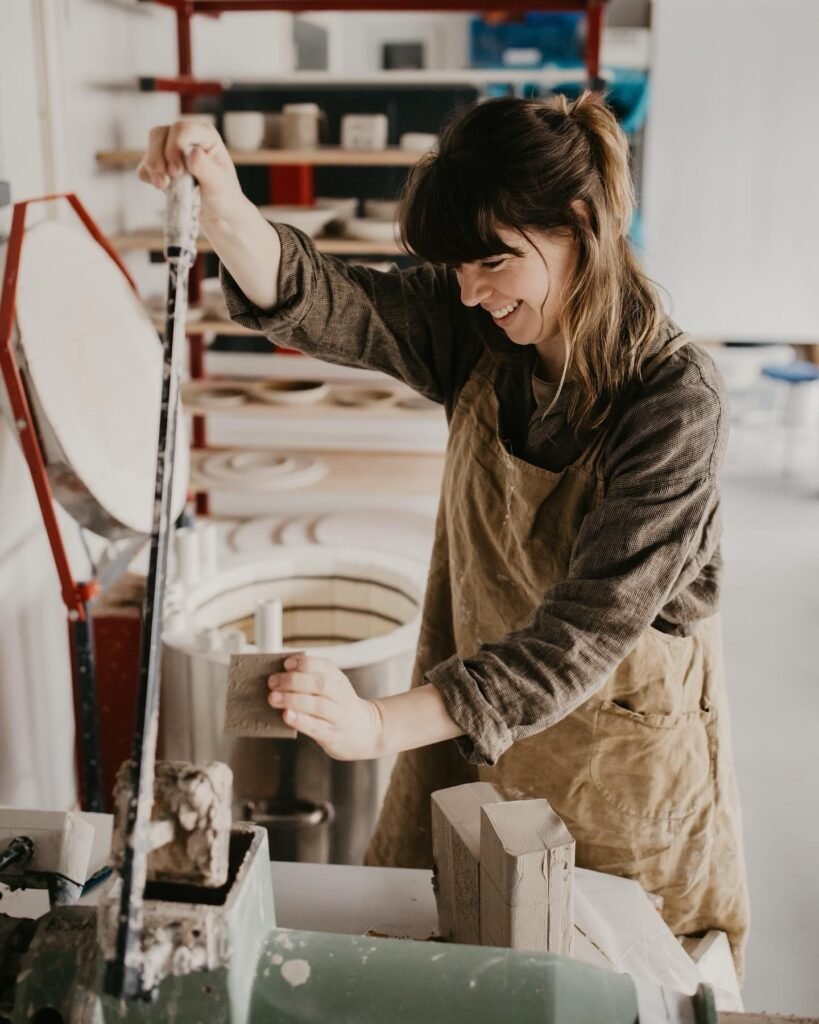
The mistake is buying equipment before deciding what your studio actually needs.
A pottery studio doesn’t have to start with every machine imaginable.
You need the right equipment for the kind of pottery you make, the amount of space you have, and how much production you expect.
This guide breaks down the most important pottery studio equipment, what to buy first, and where used or refurbished equipment can make the biggest difference.
What Pottery Studio Equipment Do You Actually Need?
A functional pottery studio can be built around a relatively small number of essentials.
For a typical home throwing studio, the core equipment is:
Pottery wheel
Kiln or access to firing
Work surface
Wedging area
Clay storage
Drying and storage shelves
Basic pottery tools
Water and cleanup area
If you plan to process your own clay, make slabs, or produce pottery at higher volume, you’ll eventually add more specialized equipment.
That might include:
Pugmill
Slab roller
Clay mixer
Extruder
Glaze mixing equipment
Spray booth
Additional storage
The important point is that you don’t need all of this on day one.
Start With Your Type of Pottery
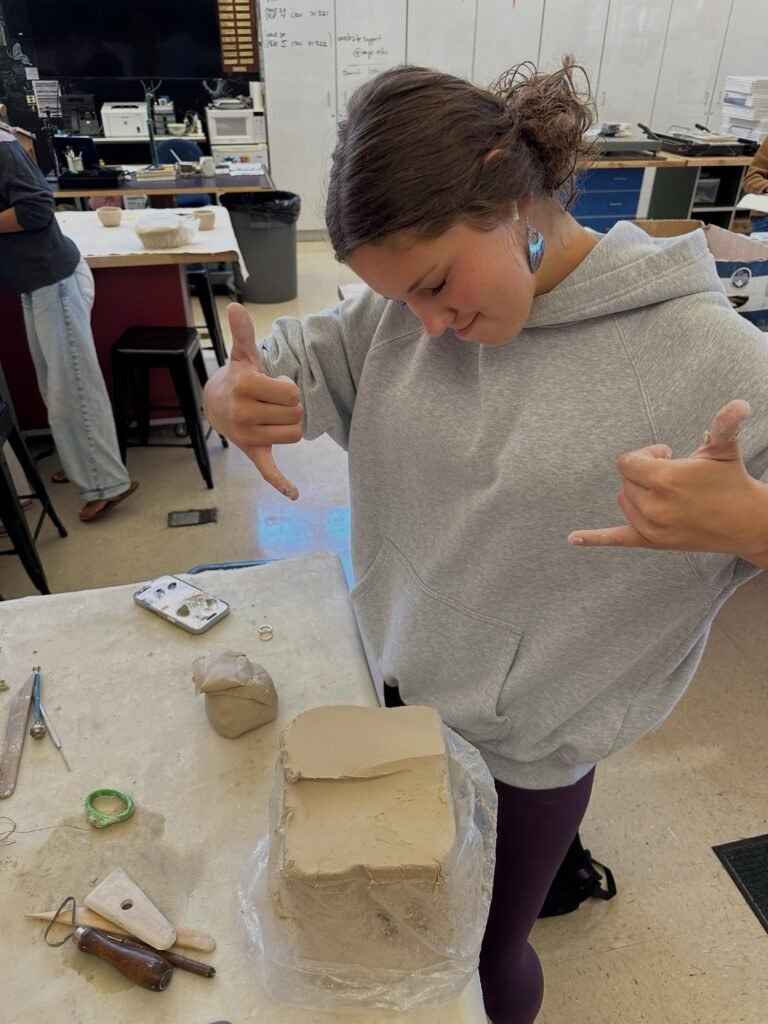
Your equipment should follow your workflow.
A studio focused on wheel throwing has different requirements from a studio making hand-built sculpture.
A production pottery business has different requirements from someone making a few pieces every weekend.
Ask yourself:
What do I make?
How much do I make?
How often do I work?
Do I fire my own work?
Do I reclaim clay?
Do I mix my own clay?
Do I make slabs?
Do I need to produce large quantities?
Your answers determine what equipment deserves your money.
Pottery Wheel
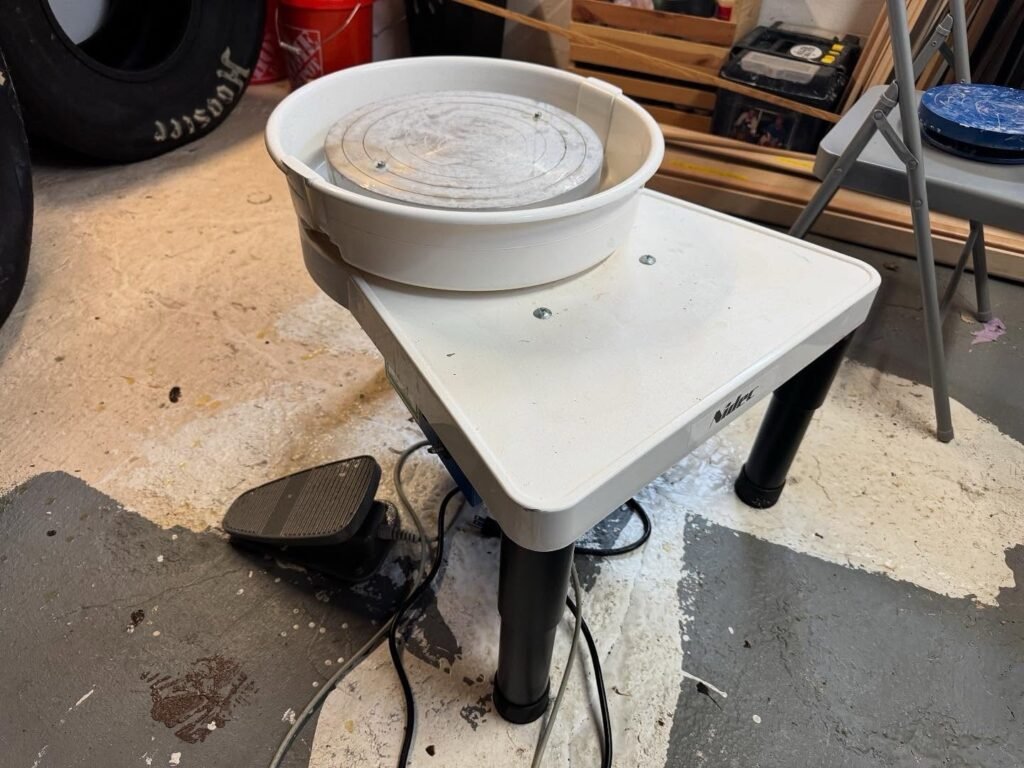
For many studios, the pottery wheel is the centerpiece.
If you’re primarily throwing, this is one piece of equipment worth buying carefully.
Look at:
Motor performance
Torque
Wheelhead size
Speed control
Pedal response
Stability
Noise
Parts availability
You don’t necessarily need the most expensive wheel.
A good used pottery wheel can be a smart way to get professional equipment while keeping the initial investment under control.
For a serious studio, established brands such as Brent and Shimpo are worth researching.
Pottery Kiln
If you want complete control over your pottery production, eventually you’ll probably want your own kiln.
The kiln is usually one of the largest purchases in a pottery studio.
But it is also where many first-time studio owners underestimate the total cost.
The kiln itself isn’t the entire project.
You may also need:
Electrical work
Ventilation
Kiln furniture
Shelving
Kiln wash
Pyrometric cones
Installation
A suitable location
Safety equipment
Before buying a kiln, confirm the electrical requirements and make sure your studio can safely accommodate it.
Don’t buy the kiln first and figure out the installation afterward.
Used and Refurbished Kilns Can Save Money
A used or refurbished kiln can significantly reduce your initial equipment cost.
But condition matters.
Check:
Elements
Controller
Thermocouple
Firebrick
Wiring
Relays
Lid
Floor
Kiln furniture
Ask whether the kiln has been test-fired.
Also determine whether replacement parts are still available.
A cheap kiln that needs extensive electrical or element work may cost more than a properly maintained used kiln.
Work Table
You don’t need an expensive commercial workbench.
You need something sturdy, comfortable, and easy to clean.
A good work surface gives you room for:
Hand building
Trimming
Carving
Glazing
Wedging
Clay preparation
Tool storage
The height matters too.
A work table that is too low can become uncomfortable during extended studio sessions.
Wedging Area
You need somewhere to prepare clay.
A wedging table doesn’t have to be complicated.
The important thing is having a stable surface that can handle repeated pressure.
Common options include:
Plaster wedging tables
Wooden wedging tables
Canvas-covered surfaces
Dedicated wedging boards
If you’re processing a lot of reclaim, this is where a pugmill eventually becomes much more useful.
Clay Storage
Clay takes up more space than many beginners expect.
You need somewhere to store:
Fresh clay
Reclaimed clay
Different clay bodies
Test tiles
Drying pieces
Glazes
Raw materials
Keep clay organized and protected from unnecessary drying.
If you work with multiple clay bodies, label everything clearly.
Confusing two clay bodies can create an expensive problem later.
Drying and Storage Shelves
A pottery studio needs more shelving than most people expect.
Fresh work needs somewhere safe to dry.
Finished work needs somewhere to wait for firing.
Glazed work needs somewhere to sit before entering the kiln.
Finished pieces need storage after firing.
Adjustable shelving is particularly useful because pottery comes in wildly different sizes.
Leave enough space between shelves for larger forms.
Basic Pottery Tools
You don’t need hundreds of tools.
Start with the basics.
A practical tool collection can include:
Needle tool
Rib
Wire cutter
Wooden tools
Loop tools
Trimming tools
Sponges
Metal scraper
Calipers
Measuring tools
Buckets
Brushes
As your technique develops, you’ll discover which specialty tools actually improve your work.
Don’t buy an enormous tool kit simply because it looks impressive.
Pugmill
A pugmill becomes valuable when you’re processing significant amounts of clay.
It can help with:
Clay reclaim
Mixing
Moisture consistency
De-airing
Clay preparation
If you’re making a few pieces each week, you probably don’t need one immediately.
If you’re running a production studio or reclaiming large amounts of clay, it can become one of the most useful pieces of pottery equipment you own.
Pottery Slab Roller
A slab roller becomes valuable when you work with:
Tiles
Platters
Hand-built vessels
Architectural ceramics
Sculpture
Large slabs
You can make slabs by hand with a rolling pin or guides.
But a slab roller can dramatically improve consistency and reduce physical effort when you’re producing slabs regularly.
A used slab roller can be worth considering if you’re trying to control your studio budget.
Clay Extruder
An extruder is another optional piece of equipment.
It can help produce consistent shapes and profiles for:
Handles
Coils
Decorative elements
Architectural forms
Repetitive components
It’s particularly useful when your work requires the same shape repeatedly.
For a beginner’s studio, however, it is usually less urgent than a good wheel, kiln, work surface, and storage.
Glaze Mixing Equipment
Once you’re making your own glazes, the studio starts becoming more complicated.
You may need:
Digital scale
Mixing buckets
Sieves
Hydrometer
Whisk
Blender or mixer
Measuring containers
Raw material storage
Good organization becomes increasingly important as your glaze inventory grows.
Label every glaze clearly.
Record recipes.
Keep materials organized.
Kiln Furniture
This is one of the easiest expenses to forget.
Buying a kiln doesn’t necessarily mean you’re ready to fire.
You may need:
Shelves
Posts
Kiln wash
Pyrometric cones
Furniture accessories
The amount you need depends on the kiln size and what you’re firing.
Budget for kiln furniture before ordering the kiln.
Ventilation
Ventilation is an important part of studio planning.
Kilns produce heat and firing fumes.
Clay and glaze materials can also create airborne dust.
Your ventilation strategy should be planned alongside the equipment rather than added as an afterthought.
A university ceramics laboratory, for example, may have dedicated glaze labs, raw-material mixing areas, electric and gas kilns, clay mixers, pugmills, slab rollers, spray booths, and other specialized facilities.
A home studio obviously won’t need that entire setup.
But it demonstrates how different processes require different equipment and dedicated areas.
Pottery Studio Equipment for a Small Space
You don’t need a huge building to make pottery.
A small studio can work if you organize it properly.
Prioritize:
Wheel
Compact work surface
Vertical storage
Clay storage
Drying shelves
Cleanup area
Firing solution
Use vertical space whenever possible.
Rolling carts can also make small studios more flexible.
Equipment that can be moved or stored efficiently can make a surprisingly large difference.
What Should You Buy First?
If your budget is limited, prioritize equipment according to how directly it affects your ability to make pottery.
A sensible order is:
Pottery wheel
Basic tools
Work surface
Storage
Firing access
Kiln
Kiln furniture
Clay processing equipment
Slab roller
Extruder
Pugmill
Specialized equipment
This isn’t a universal rule.
If you already have access to a community kiln, for example, buying your own kiln may not make sense immediately.
If you mainly hand-build, a slab roller might be more valuable than a wheel.
Buy according to your workflow.
Should You Buy New Pottery Equipment?
Not necessarily.
New equipment gives you predictable condition and usually comes with manufacturer support.
But used equipment can provide much better value.
This is particularly true for durable equipment such as:
Pottery wheels
Kilns
Slab rollers
Pugmills
Extruders
A well-maintained used machine can continue working for years.
The important thing is knowing what you’re buying.
Where Used Pottery Equipment Makes the Most Sense
Used equipment can make the biggest difference on expensive machines.
Saving $100 on a handful of tools isn’t going to transform your studio budget.
Saving hundreds or thousands on a wheel, kiln, slab roller, or pugmill can.
That makes larger equipment the place to spend more time comparing new, used, and refurbished options.
Don’t Forget the Hidden Costs
The equipment list isn’t the entire studio budget.
You may also have:
Electrical work
Ventilation
Plumbing
Shelving
Lighting
Delivery
Installation
Clay
Glazes
Kiln furniture
Cleaning supplies
Safety equipment
Storage containers
Waste disposal
Repairs
These costs can add up quickly.
Potters discussing home studios frequently point out that electrical work for a kiln, ventilation, plumbing, kiln furniture, shelving, and other infrastructure can become major expenses beyond the headline equipment prices.
That is why a realistic studio budget should include the space itself, not just the machines.
Pottery Studio Equipment for a Production Studio
A production studio changes the equation.
Once you’re making pottery consistently for sale, time becomes more valuable.
Equipment that saves labor starts making more financial sense.
A production studio might eventually use:
Multiple pottery wheels
Large kiln
Pugmill
Slab roller
Extruder
Clay mixer
Large shelving system
Glaze mixing station
Drying racks
Ware carts
The University of Cincinnati’s ceramics lab provides a useful example of how specialized a larger ceramics operation can become, with multiple kilns, pottery wheels, a slab roller, extruders, clay mixers, a pugmill, glaze equipment, and dedicated work areas.
You don’t need all of that to start.
Build toward it as your production actually demands it.
Pottery Equipment Near Me
If you’re looking for equipment locally, search for:
Pottery equipment near me
Used pottery equipment near me
Ceramic equipment near me
Pottery wheels near me
Pottery kilns near me
Used pottery kilns near me
Used pottery wheels near me
Pottery studio equipment for sale
Also check local pottery studios, schools, universities, community art centers, estate sales, and studio closures.
Studio closures and upgrades can be particularly interesting because equipment is sometimes sold in groups.
Compare Before You Buy
Before buying expensive equipment, compare the used price with current new equipment.
The Kiln Depot carries pottery equipment for ceramic studios, including wheels, kilns, clay processing equipment, and other studio equipment.
You can use current equipment pricing as a benchmark when evaluating used and refurbished equipment.
Build the Studio You Need
The best pottery studio isn’t the one with the most equipment.
It’s the one where your workflow makes sense.
You should be able to:
Prepare clay
Make your work
Dry it safely
Glaze it
Fire it
Store it
Clean efficiently
Repeat the process
Every piece of equipment should make one of those steps easier.
If it doesn’t, you probably don’t need it yet.
Final Thoughts
Pottery studio equipment can become expensive quickly, but you don’t need to buy everything at once.
Start with the equipment that directly supports the way you make pottery.
For many studios, that means a good pottery wheel, reliable firing access, a solid work surface, storage, and basic tools.
Then add equipment as your production grows.
A pugmill makes more sense when you’re reclaiming large amounts of clay.
A slab roller makes more sense when you’re regularly making slabs.
A clay extruder makes more sense when you’re producing repetitive forms.
Additional wheels make sense when one wheel is limiting your production.
And larger kilns make sense when your firing schedule becomes a bottleneck.
Buy equipment because your studio needs it.
Not because you saw someone else using it.
That approach will save you money and leave you with a studio that actually works.
