Kiln furniture is everything that supports, separates, protects, or positions pottery inside a kiln.
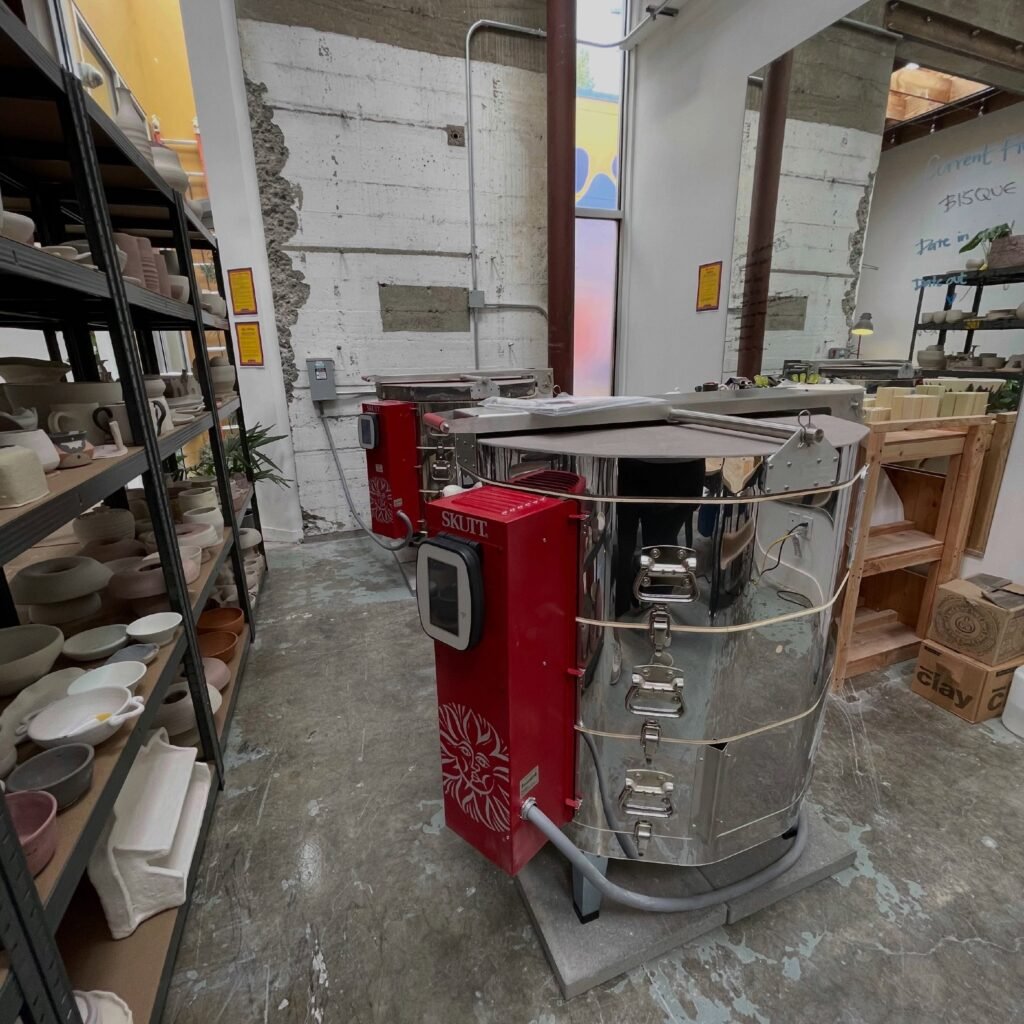
That includes kiln shelves, posts, stilts, setters, rings, cranks, and other refractory accessories used to load the firing chamber efficiently.
For most pottery studios, the core system is simple: shelves plus posts.
The shelves create usable firing levels. The posts create the vertical separation between those levels. Together, they determine how much pottery you can fire in one load without putting ware, shelves, elements, or the kiln walls in the wrong position.
The mistake is treating kiln furniture as an afterthought.
A kiln can have excellent elements and a good controller and still be frustrating to use if the shelf sizes, post heights, and loading arrangement do not match the chamber.
This guide explains what kiln furniture includes, how shelves and posts work together, how to choose sizes, how much furniture you actually need, how to load it safely, and what to look for when buying new, used, or replacement pieces.
What Is Kiln Furniture?
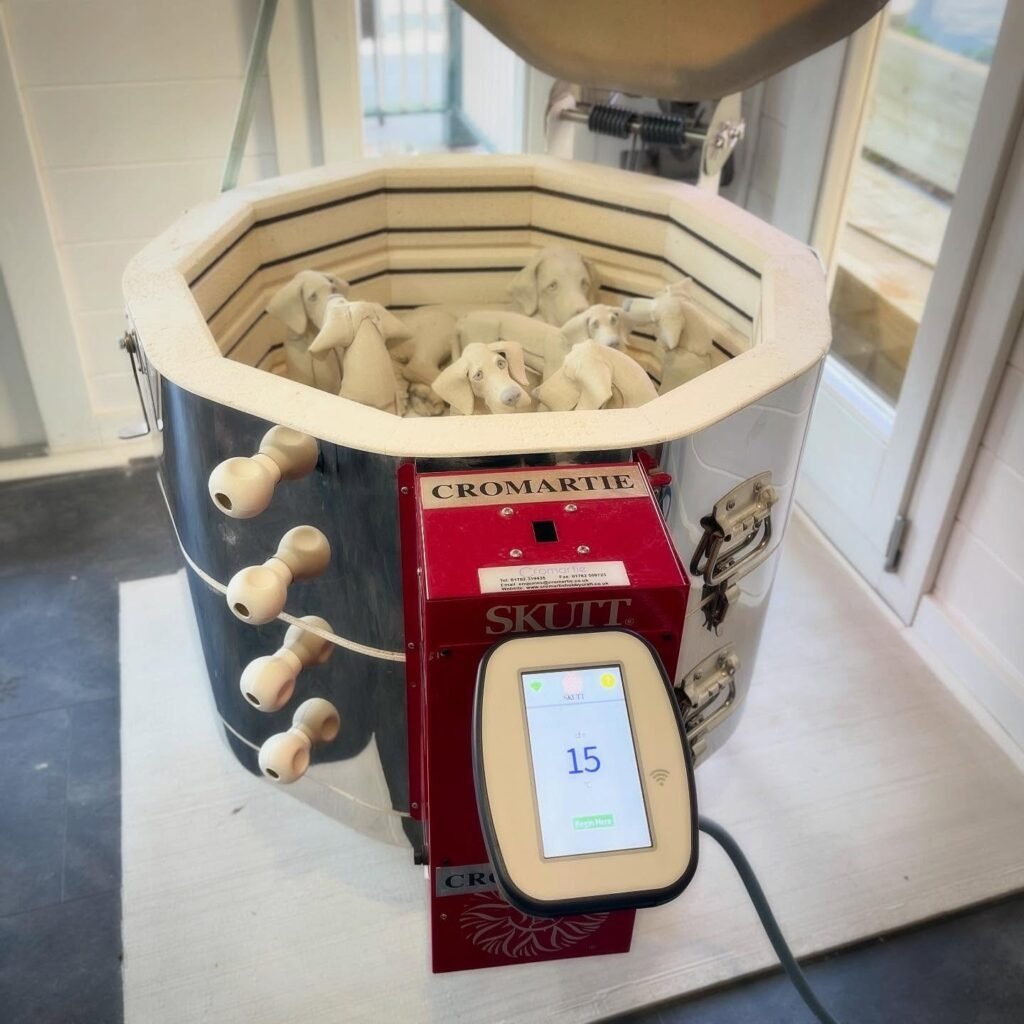
Kiln furniture is the collection of refractory components used inside a kiln to support and separate ceramic ware during firing.
The most common pieces are:
- Kiln shelves
- Kiln posts
- Half shelves
- Kiln stilts
- Plate setters
- Bowl setters
- Specialty setters
- Rings
- Racks and support accessories
The exact combination depends on what you fire.
A pottery studio making mugs and bowls may need mostly shelves and posts.
A studio firing plates may benefit from specialized setters.
A studio making sculptural work may need taller posts, half shelves, or custom loading arrangements.
The common feature is that these components are exposed to kiln temperatures and must remain stable enough to support the load.
Why Kiln Furniture Matters
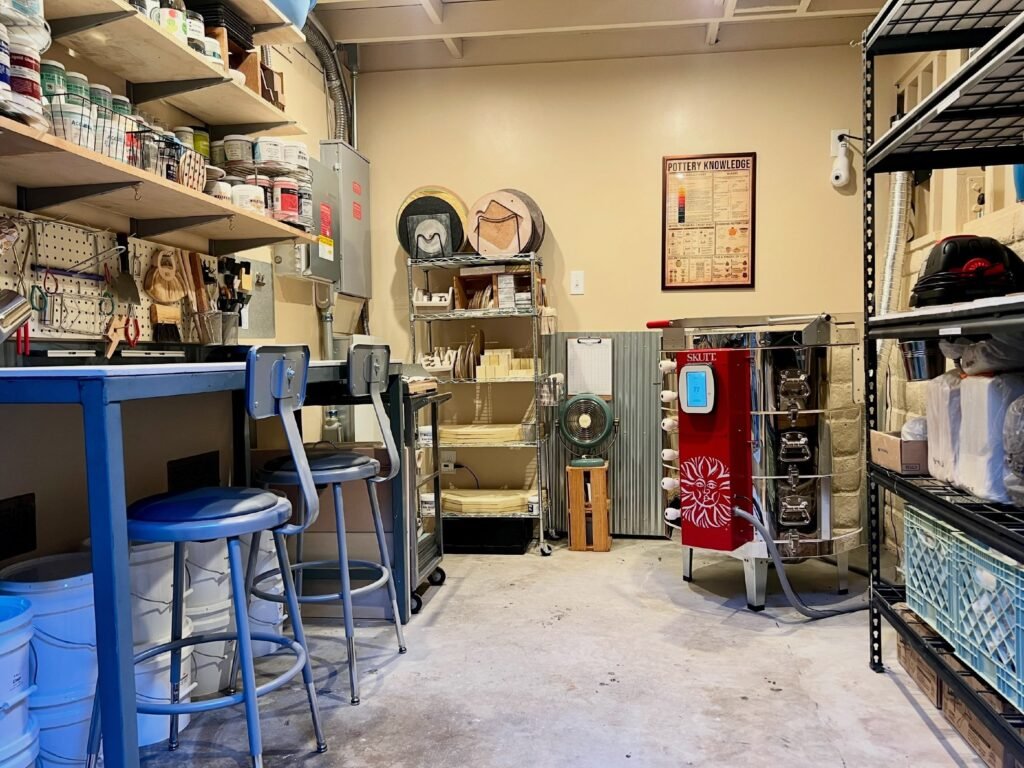
Kiln furniture determines how efficiently you can use the available chamber.
Consider a kiln with a large internal volume.
If you have only one shelf and a few short posts, much of that volume may be unusable.
Add additional shelves and appropriate posts, and the same kiln can accommodate several firing levels.
But more shelves are not automatically better.
Every shelf and post takes up vertical space.
Every shelf also creates another surface that can affect heat circulation and loading.
The goal is not to fill the kiln with as much furniture as possible.
The goal is to create useful firing levels while maintaining appropriate clearance and supporting the ware correctly.
Kiln Shelves: The Foundation of the System
Kiln shelves are the horizontal platforms that support pottery.
They need to withstand repeated heating and cooling while carrying the weight of the ware placed on them.
Shelves are available in different materials, thicknesses, shapes, and sizes.
Common kiln shelf materials include:
- Cordierite
- High-alumina refractory materials
- Silicon carbide
- Other manufacturer-specific refractory compositions
The correct material depends on the kiln temperature, firing conditions, shelf design, and manufacturer recommendations.
Orton, for example, manufactures refractory kiln furniture and offers multiple shelf materials and configurations for ceramic firing applications.
Do not assume that the cheapest shelf is the best shelf for your kiln.
Shelf weight, thermal shock resistance, maximum recommended temperature, thickness, and durability all matter.
What Size Kiln Shelf Do You Need?
Shelf size should be based primarily on the usable internal dimensions of the kiln.
The shelf needs to fit without touching the kiln wall.
It also needs to leave enough clearance for the heating elements and other components according to the kiln manufacturer’s loading instructions.
This is why a shelf advertised as “24 inches” does not necessarily mean it belongs in every kiln with a roughly 24-inch chamber.
Measure the firing chamber.
Then compare those measurements with the actual shelf dimensions.
For round kilns, diameter matters.
For square or rectangular kilns, width and depth both matter.
Also consider corner geometry.
A round shelf inside a round kiln leaves a different clearance pattern from a square shelf inside a rectangular chamber.
Should a Kiln Shelf Be the Same Size as the Kiln?
No.
The shelf should be smaller than the usable chamber.
You need clearance between the shelf edge and the kiln wall.
That clearance is particularly important around the heating elements.
A shelf should never be forced into the chamber because it is “almost” the correct size.
If it touches the wall or presses against an element, it can create a serious problem.
The exact clearance depends on the kiln design.
Follow the manufacturer’s recommendations rather than using a universal measurement.
Kiln Posts: The Vertical Support System
Kiln posts sit between shelves and create vertical separation.
They are usually refractory blocks or columns designed to carry the weight of the shelf above.
Post height determines the distance between shelves.
Common post heights vary considerably.
Short posts are useful when firing smaller pieces.
Taller posts are useful when firing mugs, vases, sculptures, or other taller forms.
The important thing is not simply buying the tallest posts available.
You want enough clearance for the pottery without wasting chamber height.
How Many Kiln Posts Should You Use?
The number depends on the shelf size, shelf thickness, load, and manufacturer recommendations.
A common arrangement uses three posts positioned around the shelf rather than placing one post directly at each corner.
For larger shelves, additional support may be appropriate.
The posts need to be positioned so that the shelf remains stable and adequately supported.
Avoid creating an unstable stack of tall posts.
A tall stack can become increasingly sensitive to small loading errors.
For very tall shelf arrangements, shorter post combinations can sometimes provide more flexibility.
Three Posts vs Four Posts
Three-post support is common because three points define a stable plane.
That does not mean three posts are always appropriate.
Larger or heavier shelves may require additional support.
The shelf manufacturer’s recommendations should take precedence.
The post positions also matter.
If all the posts are placed too close together, the shelf edges may remain poorly supported.
If they are placed too close to the shelf edge, they may become unstable.
If they are placed directly above posts on the shelf below, the load path becomes more predictable.
That is one reason experienced potters tend to build organized vertical columns of support.
Kiln Furniture and Shelf Spacing
Shelf spacing is one of the most important parts of kiln loading.
The shelves need to be far enough apart for the pottery to fit comfortably.
They also need to maintain the clearance required around the kiln’s heating elements and thermocouple.
Do not assume that every shelf level should be the same height.
You can use different post heights to create:
- Short levels for bowls
- Medium levels for mugs
- Tall levels for vases
- Open space for sculptures
- Specialized levels for plates
The Kiln Depot’s kiln shelf spacing guide covers the relationship between posts, shelf levels, pottery height, and chamber clearance in more detail.
Good kiln furniture gives you flexibility.
Half Shelves
Half shelves are extremely useful when a full shelf would waste space.
Imagine you have several tall pieces on one side of the kiln and shorter pieces on the other.
A full shelf may force you to leave a large unused area above the tall work.
A half shelf lets you use the available chamber more efficiently.
Half shelves can also make loading easier when the kiln contains mixed forms.
They are particularly useful for:
- Mugs
- Bowls
- Small sculptures
- Tall vases
- Mixed-height loads
The exact shape and size need to match the kiln.
Do not assume two half shelves from one manufacturer will fit another manufacturer’s kiln.
Kiln Stilts
Kiln stilts serve a different purpose from ordinary shelf posts.
A stilt is generally used to support glazed ware while minimizing contact between the glazed surface and the firing surface.
They are especially useful for certain glazed forms where the foot or bottom needs to remain separated from the shelf.
Stilts are commonly associated with glaze firing.
The correct stilt depends on the shape and size of the piece.
The stilt needs to support the ware without becoming unstable during firing.
When Should You Use Stilts?
Stilts are useful when:
- A glazed surface needs to remain separated from the shelf
- The piece has a form that cannot sit directly on its foot
- The glaze firing requires elevated support
- You are working with specialized ceramic forms
They are not a replacement for ordinary shelf posts.
Shelf posts support the shelves.
Stilts support individual pieces.
Confusing the two can lead to poor loading arrangements.
Plate Setters and Specialty Kiln Furniture
Flat plates can be difficult to load efficiently.
A plate takes up a large horizontal footprint but may not need much vertical space.
Specialized plate setters can help keep plates stable while using the chamber more efficiently.
Other specialty furniture includes:
- Bowl setters
- Tile setters
- Cup setters
- Ring supports
- Sculpture supports
- Saggers
- Prop systems
Whether you need these depends entirely on what you make.
A beginner making mugs and bowls does not need a warehouse of specialized setters.
A production studio making hundreds of identical forms may find them extremely useful.
How Much Kiln Furniture Do You Actually Need?
Do not buy a giant furniture package simply because it looks impressive.
Start with the kiln.
Then start with the work.
A basic pottery setup may need:
- Several shelves
- Several sets of posts
- A mixture of post heights
- Kiln stilts if your work requires them
The exact quantity depends on chamber dimensions.
A larger kiln needs more furniture to use its volume effectively.
A small kiln may need only a few shelves.
Your typical pottery height matters too.
If you mostly make small bowls, you may need more shelves and shorter posts.
If you make large vases, you may use fewer shelves with taller spacing.
Buying Kiln Furniture for a New Kiln
If you are purchasing a new kiln, the manufacturer or dealer can often provide a furniture package designed around the kiln’s dimensions.
That is usually easier than assembling every component individually.
But compare what is actually included.
A package may contain:
- Shelves
- Posts
- Stilts
- Furniture supports
- Specialty accessories
Check the quantity and dimensions rather than assuming a “furniture kit” includes everything you need.
Some packages are designed for a particular kiln size but may not maximize every possible loading configuration.
Buying Replacement Kiln Furniture
Replacement furniture becomes necessary when shelves crack, warp, chip excessively, or otherwise become unsuitable for service.
Posts can also become damaged.
When replacing a shelf, match:
- Length
- Width or diameter
- Thickness
- Material
- Maximum recommended temperature
- Kiln application
When replacing posts, match:
- Height
- Cross-section
- Material
- Load requirements
Do not replace a specialized high-temperature shelf with a random refractory board simply because the dimensions are similar.
The material matters.
Can You Use a Cracked Kiln Shelf?
A cracked kiln shelf deserves careful inspection.
A small hairline crack does not automatically mean the shelf will immediately fail.
But a structural crack can worsen during heating.
A shelf failure can damage the pottery beneath it and potentially create a much larger kiln problem.
Never assume a cracked shelf is safe simply because it survived the previous firing.
Inspect the crack, the shelf condition, and the manufacturer’s guidance.
If the shelf is significantly damaged, replacement is usually the sensible approach.
This is particularly important for large shelves carrying heavy loads.
Kiln Shelf Warping
Warping can occur over repeated firing cycles.
The risk depends on shelf material, thickness, firing temperature, loading, support arrangement, and thermal cycling.
A warped shelf can become unstable.
It can also change the vertical clearance between shelves.
If a shelf rocks significantly on a flat surface or creates an unstable loading arrangement, investigate before putting it back into service.
Do not attempt to force a warped refractory shelf flat.
Replacement may be more appropriate.
Kiln Furniture and Kiln Wash
Kiln wash protects shelves from glaze drips.
It should be applied correctly and maintained.
The goal is to create a sacrificial surface that makes glaze contamination easier to remove without permanently bonding glaze to the shelf.
Do not cover the shelf excessively.
Heavy buildup can flake and contaminate the kiln.
The Kiln Depot’s kiln wash guide covers application, removal, maintenance, and common mistakes.
Keep kiln wash on the shelf surface.
Avoid getting it onto heating elements, thermocouples, or other components.
How to Stack Kiln Furniture
A basic shelf stack looks like this:
Kiln floor
Posts
Shelf
Posts
Shelf
Posts
Shelf
The posts should be positioned consistently so the load is transferred downward through stable support points.
Avoid creating a leaning tower.
Avoid placing posts randomly from one level to another.
If possible, align support columns vertically.
This gives the shelves a more predictable load path.
How to Load Kiln Furniture Safely
Load the kiln from the bottom upward.
Start by placing the bottom shelf or first level of pottery.
Then position the posts.
Then place the next shelf.
Continue upward.
Before closing the lid, check:
- Shelf stability
- Post stability
- Pottery clearance
- Element clearance
- Thermocouple clearance
- Lid clearance
- Overall stack height
Do not force the lid closed.
If the lid touches the top shelf, pottery, or posts, the load is too tall.
Remove something or change the shelf arrangement.
Kiln Furniture and Heating Elements
One of the biggest loading mistakes is treating the elements as if they are protected walls.
They are not.
Keep shelves, posts, pottery, and tools away from the elements according to the kiln manufacturer’s instructions.
A shelf that touches an element can damage the element.
A piece of pottery that falls against an element can damage it.
A post positioned incorrectly can create a similar problem.
Skutt’s kiln-loading guidance emphasizes maintaining appropriate clearance between the ware, shelves, and elements.
The relationship between furniture and the heating system is one reason correct shelf sizing matters.
Kiln Furniture and the Thermocouple
The thermocouple measures temperature inside the firing chamber.
Furniture and ware should not interfere with it.
When building your shelf stack, inspect the thermocouple position.
Make sure shelves, posts, and pottery do not strike or obstruct it.
The Kiln Depot’s kiln thermocouple guide explains what the sensor does, common failure symptoms, replacement considerations, and positioning concerns.
This is another reason not to treat kiln furniture as merely storage equipment.
It directly interacts with the kiln’s firing environment.
Kiln Furniture for Different Types of Pottery
Mugs
Mugs generally benefit from moderate shelf spacing.
Short posts can maximize the number of levels.
Bowls
Bowls can often be stacked efficiently depending on their diameter and height.
Half shelves can be useful when mixing bowls with taller work.
Plates
Plates require more horizontal space.
Specialized setters can sometimes improve capacity and stability.
Vases
Vases require greater vertical clearance.
Fewer shelves with taller posts may be necessary.
Sculptures
Sculptures vary too much for one universal furniture arrangement.
The primary concern is stable support and sufficient clearance.
Tiles
Tiles can benefit from specialized setters or carefully designed shelf arrangements.
Avoid unsupported spans that exceed the shelf manufacturer’s recommendations.
Kiln Furniture for Different Kiln Sizes
Small kilns generally need smaller shelves and fewer support pieces.
Medium kilns can benefit from a mixture of full and half shelves.
Large kilns require more attention to shelf weight, support placement, and loading strategy.
The important thing is to match the furniture to the actual chamber.
The Kiln Depot’s pottery kiln size guide explains why chamber volume alone is not enough when evaluating a kiln.
Usable firing space depends on how effectively you can arrange the shelves and posts.
Kiln Furniture Storage
Kiln shelves should be stored carefully.
Do not lean large shelves where they can fall.
Do not stack them carelessly.
Large refractory shelves are heavy and can break when dropped.
Store shelves on a stable, flat support surface.
Keep posts organized by height.
A simple system using separate containers or shelves for short, medium, and tall posts makes loading faster.
It also makes it easier to notice missing or damaged pieces.
Common Kiln Furniture Mistakes
Buying the Wrong Shelf Size
Measure the chamber before ordering.
Using Too Few Posts
Insufficient support can stress the shelf.
Using Too Many Posts
More support is not automatically better if it creates unstable or impractical loading.
Stacking Posts Randomly
Create stable, consistent support columns.
Using Cracked Shelves
A damaged shelf can fail during firing.
Ignoring Shelf Thickness
Two shelves with identical dimensions can behave differently if they have different thicknesses and materials.
Overloading the Shelves
Respect the shelf manufacturer’s loading recommendations.
Touching the Elements
Keep all furniture away from heating elements.
Blocking the Thermocouple
Maintain the required clearance.
Packing the Kiln Too Tightly
More pottery is not necessarily a better firing.
The kiln still needs appropriate clearance and heat circulation.
How Long Does Kiln Furniture Last?
There is no single lifespan.
Shelf life depends on:
- Material
- Thickness
- Firing temperature
- Thermal cycling
- Loading weight
- Support arrangement
- Handling
- Storage
- Glaze contamination
- Physical damage
A studio firing occasionally may get many years from its shelves.
A production studio firing constantly will place much more demand on the same components.
Posts can also last a long time if handled carefully.
The main causes of premature damage are often physical rather than mysterious.
Dropping shelves is bad for shelves.
Dragging them against hard surfaces is bad for them.
Storing them improperly is bad for them.
Repeated exposure to excessive thermal stress can also shorten their useful life.
Buying Used Kiln Furniture
Used kiln furniture can be a practical way to reduce the cost of setting up a studio.
But inspect it.
For shelves, look for:
- Cracks
- Warping
- Severe chips
- Glaze contamination
- Excessive wear
- Evidence of structural failure
For posts, look for:
- Cracks
- Missing sections
- Severe chips
- Deformation
- Unstable bases
Do not buy a large collection of used furniture simply because the price per piece looks low.
A mixed pile of incompatible shelf sizes can be less useful than a smaller matching set.
Kiln Furniture and Refurbished Kilns
If you are buying a refurbished kiln, ask what furniture is included.
A refurbished kiln may have a serviced controller and replaced elements while still having old shelves.
That is not necessarily a problem.
Kiln furniture is consumable equipment.
The question is whether the included furniture is usable.
Ask for:
- Shelf dimensions
- Shelf quantity
- Post heights
- Shelf material
- Condition
- Any cracks or repairs
- Whether the furniture matches the kiln
This gives you a more realistic idea of what you are actually buying.
A Practical Kiln Furniture Starter Set
For a new pottery studio, start with the pieces that match your typical work.
A sensible basic system generally includes:
- Several shelves sized for the kiln
- Multiple sets of short posts
- Multiple sets of medium posts
- Some taller posts if you make larger work
- A few half shelves if the kiln and work justify them
- Stilts only if your glazing process requires them
Do not buy every specialty setter immediately.
Build the system around your actual production.
If your work changes, add furniture later.
Kiln Furniture Buying Checklist
Before buying any kiln furniture, check:
☐ Shelf dimensions
☐ Shelf thickness
☐ Shelf material
☐ Maximum recommended temperature
☐ Kiln chamber dimensions
☐ Number of shelves
☐ Number of posts
☐ Post heights
☐ Post material
☐ Condition of used furniture
☐ Compatibility with the kiln
☐ Shipping and handling cost
☐ Availability of replacements
☐ Your typical pottery dimensions
This prevents one of the most common studio purchases: buying furniture that technically fits the kiln but does not work well for the pottery you actually make.
FAQ: Kiln Furniture
What is kiln furniture?
Kiln furniture is the collection of refractory components used inside a kiln to support and separate ceramic ware. Shelves and posts are the most common examples.
How many kiln shelves do I need?
It depends on the kiln’s chamber height and the height of your pottery.
You need enough shelves to use the chamber efficiently without compromising clearance.
How many posts go under a kiln shelf?
The number depends on shelf size, shelf material, load, and manufacturer recommendations. Three-post arrangements are common, but larger shelves may require additional support.
Can kiln shelves touch the kiln wall?
They should not be forced against the kiln wall or heating elements. Maintain the clearance specified by the kiln manufacturer.
Can I use kiln shelves from another brand?
Possibly, if the dimensions, material, thickness, temperature rating, and clearances are appropriate.
Do not assume compatibility based only on diameter or width.
Can cracked kiln shelves be repaired?
Some minor damage may be repairable, but a structurally compromised shelf should generally be replaced rather than trusted with a heavy firing load.
What are kiln posts used for?
Kiln posts support shelves and create vertical separation between firing levels.
What are kiln stilts used for?
Stilts support individual glazed pieces and keep portions of the ware separated from the shelf surface during firing.
Final Takeaway
Kiln furniture is one of the simplest parts of a pottery kiln to understand and one of the easiest to get wrong.
The basic system is straightforward:
Shelves create firing levels. Posts create separation. Stilts and setters support specialized forms.
But the details matter.
Shelf size needs to match the chamber.
Post height needs to match the pottery.
Support needs to be stable.
Furniture needs to stay clear of heating elements and the thermocouple.
Damaged shelves need to be evaluated before reuse.
And used furniture should be inspected just like a used kiln itself.
The best kiln furniture setup is not necessarily the largest one.
It is the one that gives you enough useful firing levels for the work you actually make while maintaining the clearances required by the kiln.
For a new studio, start with matching shelves and a useful range of post heights.
For an existing studio, add half shelves or specialty setters only when they solve a real loading problem.
For a used kiln purchase, inspect the included furniture carefully and price replacement pieces into the total cost if necessary.
Good kiln furniture does not make a kiln fire hotter.
It does something more practical: it lets you use the firing chamber safely, efficiently, and repeatedly without turning every firing into a loading puzzle.
