A pottery slab roller can completely change the way you work with clay.
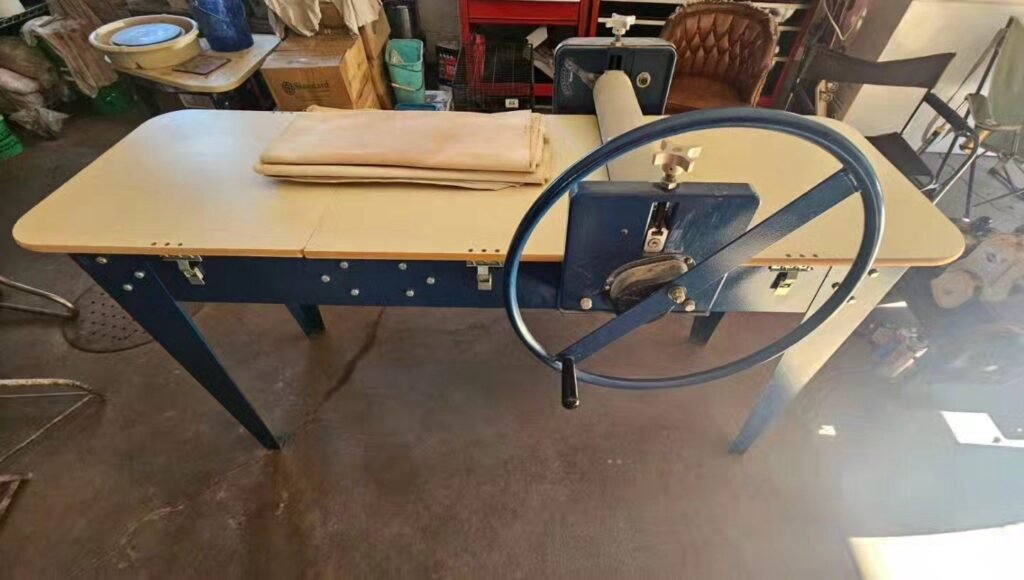
Instead of repeatedly rolling slabs by hand, a slab roller can produce consistent sheets of clay with much less physical effort.
That makes it useful for everything from plates and trays to tiles, boxes, sculpture, architectural ceramics, and large hand-built forms.
But not every pottery slab roller is built for the same kind of studio.
A compact tabletop machine may be perfect for occasional handbuilding.
A larger floor-standing roller may make much more sense for a busy ceramics studio.
The key is choosing the machine around your actual work.
What Is a Pottery Slab Roller?
A pottery slab roller is a piece of ceramic equipment designed to turn a mass of clay into a flat, evenly compressed slab.
The clay is placed on a surface and passed through rollers that compress it to a controlled thickness.
Depending on the design, the thickness may be controlled with:
Adjustable rollers
Gauge rails
Thickness settings
Hand wheels
Pins
Mechanical adjustment systems
The result is a more consistent slab than many potters can produce by hand.
What Can You Make With a Slab Roller?
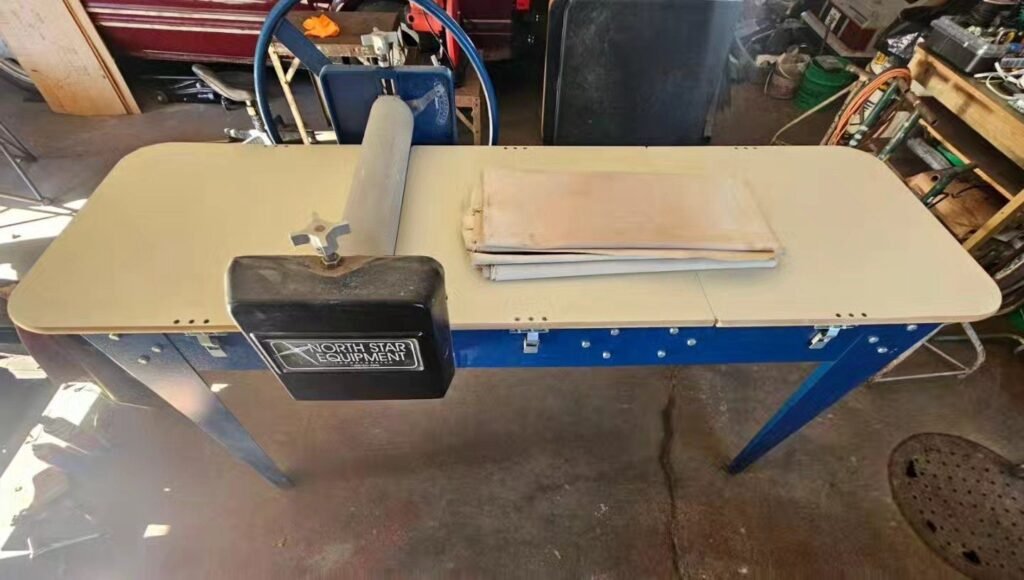
A pottery slab roller isn’t limited to one type of pottery.
You can use slabs for:
Plates
Platters
Trays
Tiles
Boxes
Planters
Wall pieces
Sculpture
Architectural ceramics
Large hand-built vessels
Furniture components
Textured clay panels
Because slab building allows you to work with flat sheets of clay, it opens up forms that can be difficult to make on the wheel.
Do You Actually Need a Pottery Slab Roller?
Not every potter needs one.
If you only make an occasional slab, a rolling pin and thickness guides may be enough.
A slab roller becomes much more valuable when you:
Make slabs regularly
Need consistent thickness
Work with large slabs
Make multiple identical pieces
Produce tiles
Make large hand-built pottery
Want to reduce physical effort
Teach ceramics
Run a production studio
The more frequently you make slabs, the easier it becomes to justify dedicated equipment.
Pottery Slab Roller vs Rolling Pin
The simplest alternative to a slab roller is a rolling pin.
It is inexpensive and takes up very little space.
But rolling clay by hand can become tiring.
It can also be difficult to maintain perfectly consistent thickness across a large slab.
A slab roller is designed specifically to make this process easier and more repeatable.
That doesn’t make a rolling pin obsolete.
For small projects and beginners, it can still be perfectly practical.
The question is how much slab work you actually do.
What Size Pottery Slab Roller Should You Buy?
Start with the size of slabs you normally make.
Measure the width of your largest typical project.
Then consider how much working space you have.
Common considerations include:
Bed width
Roller width
Maximum slab thickness
Overall footprint
Working height
Storage requirements
A wider machine gives you more room for large slabs, but it also requires more studio space.
Don’t buy the largest machine simply because it has the biggest specifications.
Buy the size that matches your work.
Bed Width Matters
Bed width is one of the most important specifications.
A narrow slab roller can work well for:
Small plates
Tiles
Small boxes
Small sculptures
A wider roller becomes more useful for:
Large platters
Large trays
Architectural pieces
Large sculpture
Production work
Think about the largest slabs you actually need rather than the largest slab you could theoretically make.
Slab Thickness Matters Too
Different projects require different slab thicknesses.
A thin slab might work for some decorative or small forms.
A thicker slab may be needed for:
Large platters
Structural pieces
Furniture
Architectural ceramics
Large sculpture
Check the machine’s adjustment range before buying.
Some slab rollers are designed around a relatively narrow thickness range, while others provide considerably more adjustment.
Shimless vs Shim-Based Slab Rollers
Traditional slab rollers may use thickness guides or shims to control the final slab thickness.
These systems can work very well.
But modern shimless designs allow the operator to adjust the roller itself.
That can make changing thickness faster.
If you frequently move between different slab thicknesses, an adjustable roller can be especially convenient.
The important thing is not whether the machine uses the word “shimless.”
It’s whether you can reliably achieve the thickness you need.
Manual Pottery Slab Rollers
Manual slab rollers use a hand crank or wheel to move the clay through the rollers.
They are mechanically simple.
They also don’t require electrical power.
That can make them attractive for:
Home studios
Schools
Small studios
Occasional use
Potters who want a simple machine
Manual operation isn’t necessarily a disadvantage.
For many potters, the process is straightforward and perfectly manageable.
Motorized Slab Rollers
Motorized slab rollers use a powered drive system.
They can be particularly useful in production environments.
If you’re making large quantities of slabs, reducing repetitive manual work can become valuable.
A motorized machine may make sense when:
Several people use the equipment
The studio produces slabs daily
Large quantities are required
Physical effort is becoming a bottleneck
Production speed matters
But motorization adds complexity and cost.
For occasional use, it may be unnecessary.
Tabletop vs Floor-Standing Slab Rollers
A tabletop slab roller can be attractive when space is limited.
You can potentially store it when it isn’t being used.
This makes it useful for smaller studios and classrooms.
Floor-standing models take up more permanent space but can provide a larger working area and more substantial construction.
The right choice depends on how often you use the equipment.
If the machine is going to be used every day, permanent installation may be worth the space.
If you use it twice a month, portability may matter more.
Pottery Slab Roller for a Home Studio
Home studios need to think about footprint.
Measure the available space before buying.
Then account for the space needed around the machine.
You need room to:
Load clay
Handle the slab
Move around the equipment
Store canvas
Move finished slabs
Clean the work area
A machine that technically fits in the room can still be impractical if you can’t work comfortably around it.
Slab Roller for a Production Studio
Production studios have different priorities.
A slab roller may be used repeatedly throughout the day.
In that situation, look closely at:
Construction
Roller design
Adjustment mechanism
Bed width
Drive system
Maintenance
Replacement parts
Consistency
Ease of operation
The machine needs to fit the studio’s production volume.
Buying equipment that is designed for occasional hobby use and expecting it to survive heavy daily production can create problems.
Pottery Slab Roller for Schools
Ceramics classrooms have another consideration.
Multiple students may use the machine.
That means durability and simplicity matter.
A classroom slab roller should ideally be straightforward enough that students can learn to use it correctly.
Teachers should also consider:
Access
Safety
Storage
Cleaning
Supervision
Maintenance
The equipment needs to survive repeated use by people with different levels of experience.
What Should You Look for in a Pottery Slab Roller?
Before buying, compare the actual specifications.
Look at:
Roller width
Bed dimensions
Thickness range
Adjustment mechanism
Construction
Manual or motorized drive
Overall footprint
Working height
Portability
Replacement parts
Warranty
Shipping
The machine’s specifications should match your workflow.
Construction Quality Matters
A slab roller experiences repeated mechanical stress.
The frame needs to remain stable while the clay passes through the rollers.
Look for solid construction and a reliable adjustment mechanism.
A machine that flexes or has excessive play can make consistent slabs more difficult.
This becomes increasingly important with larger slabs and heavier clay.
Check the Adjustment Mechanism
The adjustment mechanism determines how easily you can control slab thickness.
Turn the adjustment system.
Check whether it moves smoothly.
Look for excessive play.
If buying used, ask whether the adjustment mechanism has ever been repaired.
A worn mechanism can make an otherwise good machine frustrating to use.
What About a Used Pottery Slab Roller?
Used slab rollers can be attractive because quality machines can be expensive.
The used market can provide opportunities to buy professional equipment for considerably less than new-equipment prices.
But inspect carefully.
Check:
Rollers
Frame
Adjustment mechanism
Bearings
Handles
Canvas
Hardware
Signs of rust
Cracks
Excessive movement
Missing parts
A used machine should be priced according to its actual condition.
Buying a Used Slab Roller Online
If you can’t inspect the machine yourself, ask for detailed photographs.
You should see:
The rollers
Adjustment mechanism
Frame
Bed
Canvas
Hardware
Model plate
Ask the seller to demonstrate the machine if possible.
A short video showing the rollers moving and the thickness adjustment operating can reveal problems that photographs won’t show.
Pottery Slab Roller Price
Prices vary considerably depending on size, construction, brand, and configuration.
Current US listings show inexpensive tabletop machines in the hundreds of dollars, while larger professional slab rollers can cost well over $1,000.
For example, current US listings for Shimpo’s SR3050 show pricing around $1,300 before considering shipping and other costs.
That makes comparing new and used equipment worthwhile.
Don’t compare only the sticker price.
Also consider:
Shipping
Assembly
Accessories
Replacement parts
Condition
Warranty
Installation
Shipping Can Change the Calculation
Slab rollers are heavy equipment.
That matters when you’re buying online.
A machine that appears inexpensive can become considerably more expensive after freight shipping.
Before committing to a purchase, calculate the complete delivered cost.
For used equipment, local pickup can sometimes make the economics much more attractive.
Pottery Slab Roller Brands
Several manufacturers are well known in the ceramics equipment market.
Depending on availability and your budget, you may encounter machines from brands such as:
North Star
Shimpo
Bailey
Soldner
Brent
The brand matters, but it should not be the only deciding factor.
Compare the actual machine.
Look at dimensions, construction, adjustment, condition, and replacement-part availability.
Shimpo Slab Rollers
Shimpo is one of the established names in ceramics equipment.
The SR3050, for example, is a two-roller design with adjustable thickness and a large working capacity.
Current US listings describe the SR3050 as capable of producing slabs up to 3 inches thick.
That illustrates why looking at actual specifications is more useful than simply searching for the cheapest slab roller.
North Star Slab Rollers
North Star is another established name potters encounter when shopping for slab equipment.
Its equipment is widely associated with pottery studios, schools, and production environments.
When comparing a North Star machine with another slab roller, focus on the specifications and workflow rather than brand recognition alone.
Can a Slab Roller Replace Hand Rolling?
Not completely.
There will always be projects where hand rolling is simpler.
A slab roller is a tool.
It doesn’t eliminate the need for:
Clay preparation
Compression
Texture control
Cutting
Joining
Forming
Drying management
You still need good handbuilding technique.
The machine simply makes one part of the process faster and more consistent.
Slab Roller vs Pugmill
These machines solve completely different problems.
A slab roller creates flat sheets of clay.
A pugmill processes clay.
A pugmill can be useful for:
Reclaiming clay
Mixing clay
De-airing clay
Homogenizing clay
A slab roller is useful for:
Flat slabs
Tiles
Handbuilding
Large forms
Architectural work
If you’re deciding which equipment to buy first, look at the bottleneck in your studio.
If clay preparation is taking too much time, consider a pugmill.
If producing slabs is slowing you down, consider a slab roller.
Do Beginners Need a Slab Roller?
Not necessarily.
A beginner can learn handbuilding without one.
But if you’re specifically interested in slab construction, having a roller can make the process considerably easier.
It can also encourage you to explore forms that would otherwise be difficult to produce consistently.
The question isn’t whether beginners are “allowed” to use one.
It’s whether the equipment will actually get used.
Is a Pottery Slab Roller Worth It?
For a potter who regularly makes slabs, it can be one of the most useful studio upgrades.
For someone who makes a slab once every few months, it may not justify the cost or space.
Think about frequency.
If the machine saves you time every week, its value compounds.
If it sits unused for most of the year, the money may be better spent elsewhere.
Pottery Slab Roller for Sale
If you’re ready to compare pottery slab rollers for sale, start with the specifications rather than the photographs.
Determine:
Your slab size
Your thickness range
Your production volume
Your available space
Your budget
Then compare machines that actually fit those requirements.
The Kiln Depot carries ceramic studio equipment and can be a useful place to compare available pottery equipment.
For other studio equipment, including kilns, wheels, and clay-processing equipment, browse:
A Simple Pottery Slab Roller Buying Checklist
Before purchasing, confirm:
The maximum slab width
The thickness range
The machine footprint
Working height
Manual or motorized operation
Construction
Adjustment mechanism
Replacement parts
Warranty
Shipping cost
Installation requirements
Used condition, if applicable
Total delivered price
If those numbers make sense for your studio, you’re much closer to finding the right machine.
Final Thoughts
A pottery slab roller isn’t essential for every ceramic artist.
But for potters who regularly work with slabs, it can save time, reduce repetitive physical work, and improve consistency.
The right machine depends on what you make.
Small occasional projects may call for a compact manual roller.
A busy production studio may need a larger, heavier machine.
A classroom may prioritize durability and simplicity.
A home studio may prioritize footprint.
There isn’t one perfect slab roller for every potter.
Choose the machine around your clay, your workspace, and your workload.
That’s how you get equipment that actually earns its place in the studio.
