A used pugmill can save a pottery studio thousands of dollars, especially when a new machine would put too much pressure on the equipment budget. The catch is that pugmills are heavy, mechanical machines with motors, augers, bearings, seals, barrels, and sometimes vacuum systems that all need to work together.

That makes condition more important than age.
A machine that looks rough on the outside can still be an excellent buy. Another that looks clean can hide expensive mechanical problems.
Before buying a used pugmill, inspect the parts that actually determine whether the machine will earn its place in your studio.
1. Test the Used Pugmill Before Buying
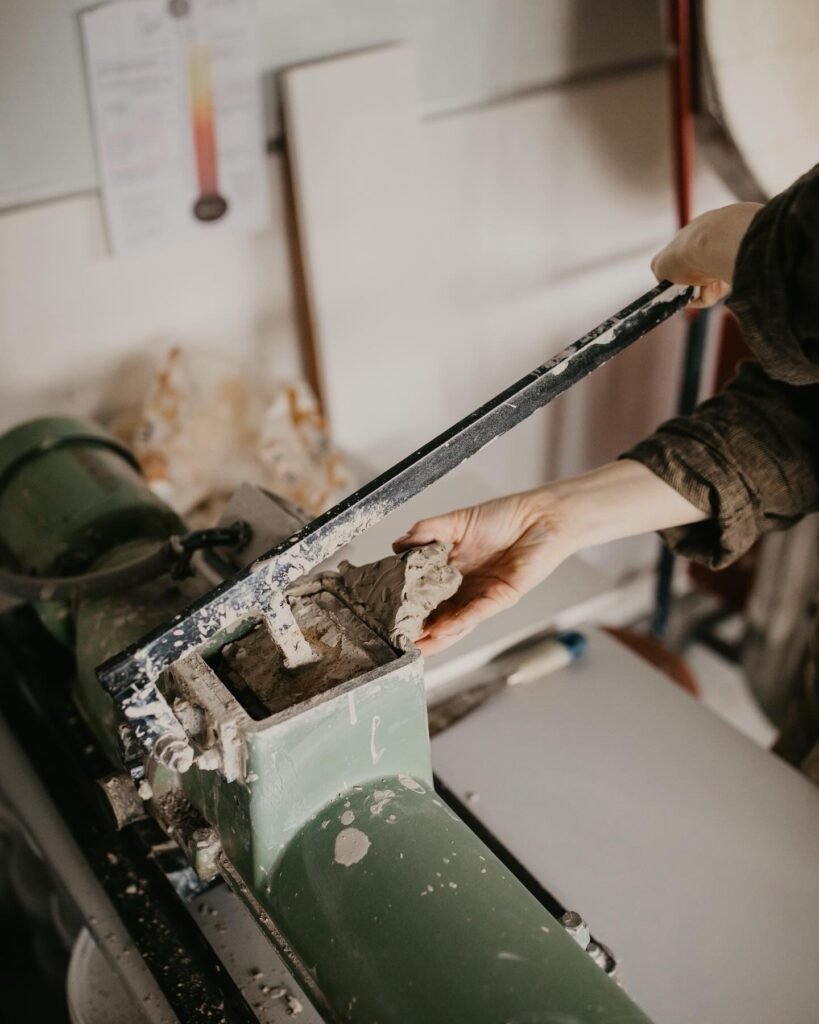
The best inspection starts with a working machine.
If possible, ask the seller to run the pugmill while you watch.
Listen to the motor.
Watch the auger.
Check how consistently clay moves through the barrel.
Pay attention to unusual vibration, grinding, knocking, or changes in motor speed.
A pugmill that runs smoothly with clay tells you far more than one that simply powers on.
If the seller cannot demonstrate the machine, ask for a detailed video showing it running under normal conditions.
A used pugmill is too expensive to evaluate from photographs alone.
2. Inspect the Auger and Barrel
The auger is one of the most important components in a pugmill.
Look for excessive wear on the blades, unusual scoring, corrosion, cracks, or damaged sections.
Ask whether the auger has ever been removed for cleaning or repair.
The barrel deserves equal attention.
Dried clay buildup can hide wear and make cleaning difficult. Heavy wear around the barrel or extrusion area can indicate years of demanding use.
If you can inspect the inside, do it.
You want to know what the machine looks like where the clay actually moves.
3. Check the Motor and Drive System
A pugmill needs serious torque.
That makes the motor and drive system critical when evaluating used equipment.
Listen for unusual sounds when the machine starts.
A loud knock, grinding sound, or persistent vibration deserves investigation.
Ask about the motor’s age and whether it has ever been replaced or rebuilt.
Check the belts, couplings, gearbox, and other drive components where applicable.
A machine that runs quietly and consistently is much more attractive than one that needs an immediate mechanical overhaul.
Replacement parts can turn a bargain into a major project very quickly.
4. Examine the Vacuum System
If you’re buying a de-airing pugmill, don’t forget the vacuum system.
The entire point of de-airing is to remove trapped air from the clay before it exits the machine.
Check the vacuum pump.
Inspect hoses, seals, fittings, gauges, and the vacuum chamber.
Ask the seller to demonstrate the vacuum system rather than simply telling you that it works.
A machine can have a perfectly healthy motor and auger while still having a problem with the vacuum system.
If the pugmill produces clay with significant air pockets despite proper loading and operation, the vacuum side deserves attention.
For comparison, The Kiln Depot’s current pugmill guide explains the practical difference between standard pugging and vacuum de-airing:
5. Check the Electrical Requirements
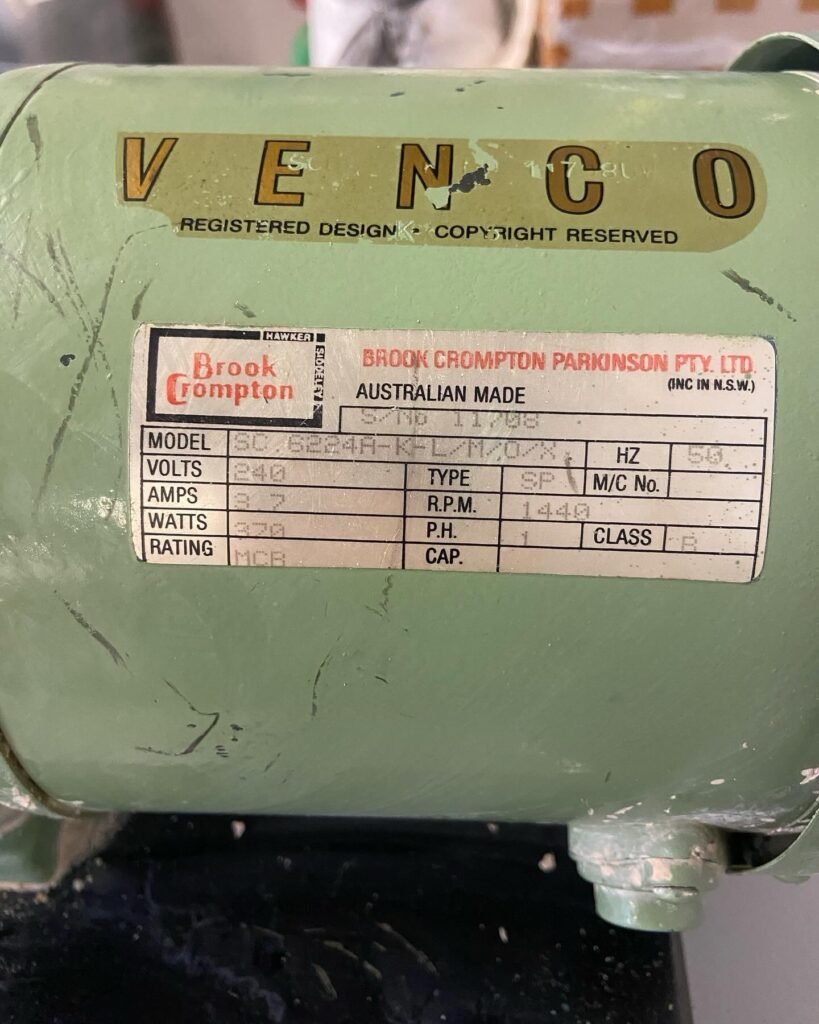
Never buy a used pugmill without verifying its electrical specifications.
Find the data plate.
Record the voltage.
Check the phase.
Check the amperage.
Then compare those requirements with your studio’s electrical service.
This matters even more with older or larger pugmills.
A machine that requires electrical service your studio doesn’t have can create a much larger expense than expected.
Before committing to a used pugmill, make sure you know exactly what installation will require.
If the electrical setup is unclear, have a qualified electrician assess it.
6. Ask How Much Clay the Machine Has Processed
Hours of use tell only part of the story.
Ask what type of clay the pugmill processed and how frequently it ran.
A machine used occasionally by one potter can have a very different wear profile from one used every day in a school or production studio.
Ask:
- How many years was it used?
- How often did it run?
- What clay bodies went through it?
- Was it used for porcelain?
- Was it cleaned after each use?
- Has it ever jammed?
- Has the auger been replaced?
- Has the motor been rebuilt?
- Has the vacuum pump been serviced?
These answers help you estimate the machine’s remaining useful life.
7. Inspect the Extrusion Opening and Die
The extrusion end is another area worth checking.
Look for damage, excessive wear, corrosion, or modifications.
Ask whether the original die or extrusion components are included.
Replacement parts can vary significantly between brands and models, so knowing what is included can make a major difference to the real value of the machine.
A seller who has maintained the original accessories and documentation is generally giving you more useful information than someone offering only the machine itself.
8. Compare Used Pugmill Pricing With Refurbished Equipment
This is where the purchase decision becomes more interesting.
A cheap used pugmill isn’t automatically the best deal.
Imagine finding one for $2,000.
Then you discover that it needs a motor repair, vacuum service, new seals, and several hours of cleaning.
The purchase price may no longer look so attractive.
Now compare that with a refurbished pugmill that costs more but has already undergone inspection and repair.
The difference may be worth paying.
The Kiln Depot currently lists a refurbished Gladstone G55 Vertical Pugmill at $3,976, reduced from $5,680. The listing describes it as fully operational and provides its motor, output, dimensions, construction, and other specifications. citeturn1search9
You can see the actual refurbished unit here:
That gives buyers an important benchmark when evaluating private used equipment.
Used Pugmill vs Refurbished Pugmill

The word “used” tells you that the machine had a previous owner.
It does not tell you how thoroughly the machine was inspected.
“Refurbished” should mean that additional work has been performed, although the exact process varies from seller to seller.
Always ask what refurbishment included.
Was the motor tested?
Were bearings checked?
Was the auger inspected?
Was the vacuum system tested?
Were worn parts replaced?
Was the machine test-run with clay?
What warranty is included?
Those questions matter much more than the label.
For a buyer with mechanical experience, a used pugmill may offer exceptional value.
For someone who wants fewer unknowns, refurbished equipment can make more sense.
9. Calculate the Full Cost of a Used Pugmill
Heavy pottery equipment creates one additional problem: transportation.
A pugmill isn’t something you casually throw into the back of a car.
Freight, loading, unloading, installation, electrical work, repairs, and replacement parts can all affect the final cost.
That means you should calculate:
Purchase price
- shipping or freight
- electrical installation
- repairs
- replacement parts
- installation or setup
= actual investment
Only then can you compare the used machine with a refurbished or new pugmill.
A $2,500 used machine that needs $2,000 in additional work is not really a $2,500 machine.
What Makes a Used Pugmill Worth Buying?
The best used pugmills usually have several things in common.
They have a clear ownership history.
The motor runs properly.
The auger turns smoothly.
The barrel remains in good condition.
The vacuum system works when applicable.
The electrical requirements are known.
Replacement parts remain available.
The seller allows a meaningful inspection.
Most importantly, the price leaves enough room for normal maintenance without destroying the value of the purchase.
Don’t confuse cosmetic wear with mechanical failure.
A scratched cabinet doesn’t matter much.
A damaged gearbox does.
When Should You Walk Away?
Some warning signs deserve serious caution.
Walk away or negotiate heavily if:
- The seller refuses to demonstrate the machine
- The motor makes severe grinding or knocking sounds
- The auger is badly damaged
- The vacuum system doesn’t work
- Major electrical components look damaged
- The model or specifications cannot be verified
- Replacement parts are impossible to source
- The barrel has severe wear
- The machine has been sitting unused for many years without maintenance
- The asking price is close to a properly refurbished alternative
A used machine should give you a financial advantage.
If the risk becomes too high, that advantage disappears.
Who Should Buy a Used Pugmill?
Used pugmills make the most sense for buyers who understand the trade-off.
They can be excellent for established potters, production studios, schools, community studios, and serious home studios that process enough clay to justify the equipment.
They make less sense for someone who only recycles a small amount of clay a few times each month.
In that situation, the purchase price, floor space, electrical requirements, and maintenance may outweigh the time savings.
If you aren’t sure whether a pugmill makes financial sense for your studio, The Kiln Depot’s guide to pugmill sizing can help you match machine capacity to your actual clay volume:
Why Refurbished Pugmills Can Be a Sweet Spot
For many buyers, refurbished equipment sits between two extremes.
New equipment gives you the lowest uncertainty but usually costs the most.
A private-party used machine can cost much less but carries more unknowns.
A properly refurbished pugmill can potentially offer a lower purchase price while reducing some of the mechanical uncertainty associated with buying completely as-is equipment.
That’s especially useful with expensive studio machinery.
The Kiln Depot currently has a dedicated refurbished equipment category and a refurbished Gladstone G55 pugmill available, giving buyers a concrete option to compare against private used listings. citeturn1search4turn1search9
Final Thoughts
A used pugmill can be an excellent investment when the machine has been properly evaluated and the price reflects its condition.
Don’t buy based on appearance.
Test the motor.
Inspect the auger.
Check the barrel.
Test the vacuum system.
Verify the electrical requirements.
Ask about the machine’s history.
Then calculate the total cost of getting it into your studio and ready to work.
If the numbers still make sense, you’ve potentially found a very good deal.
If the machine needs too much work, compare it with a refurbished pugmill before taking on someone else’s repair project.
The goal isn’t simply to find the cheapest pugmill.
The goal is to find the most reliable pugmill for the money.
