3D clay printing is giving ceramic artists a new way to work with clay. A clay 3D printer can build complex forms layer by layer from a digital design.
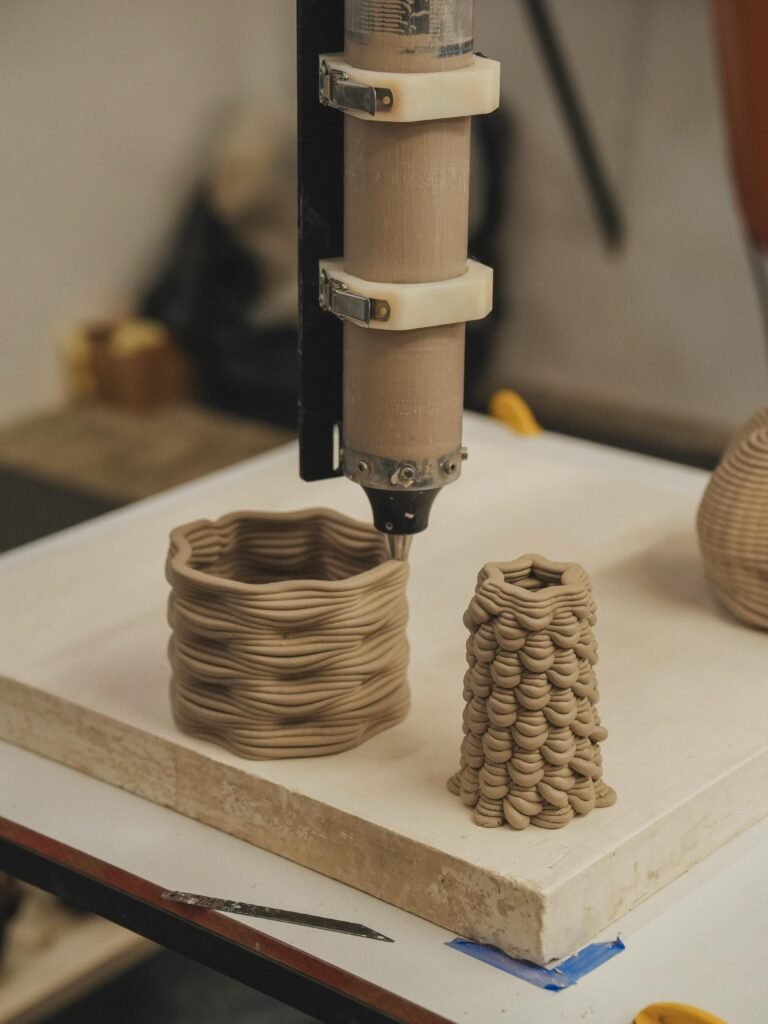
Unlike plastic 3D printing, the material is still wet clay. It must have the right consistency, dry carefully, and survive firing in a kiln.
So why is this technology getting more attention?
The answer comes down to creative freedom, repeatability, and the ability to produce forms that can be difficult to build by hand.
Why Is 3D Clay Printing Growing in Popularity?
Ceramic 3D printing has been developing for years. However, more artists, designers, schools, and studios are now exploring what the technology can do.
Recent ceramic work shows how digital fabrication can work alongside traditional methods. Artists can print a basic structure and then add hand finishing, glazing, and other techniques.
Research is also focused on improving the process. One area of interest is dimensional accuracy because printed clay can change shape during printing and drying.
As a result, 3D clay printing is becoming more than an experimental technique. It is developing into another practical way to form ceramic objects.
How Does 3D Clay Printing Work?
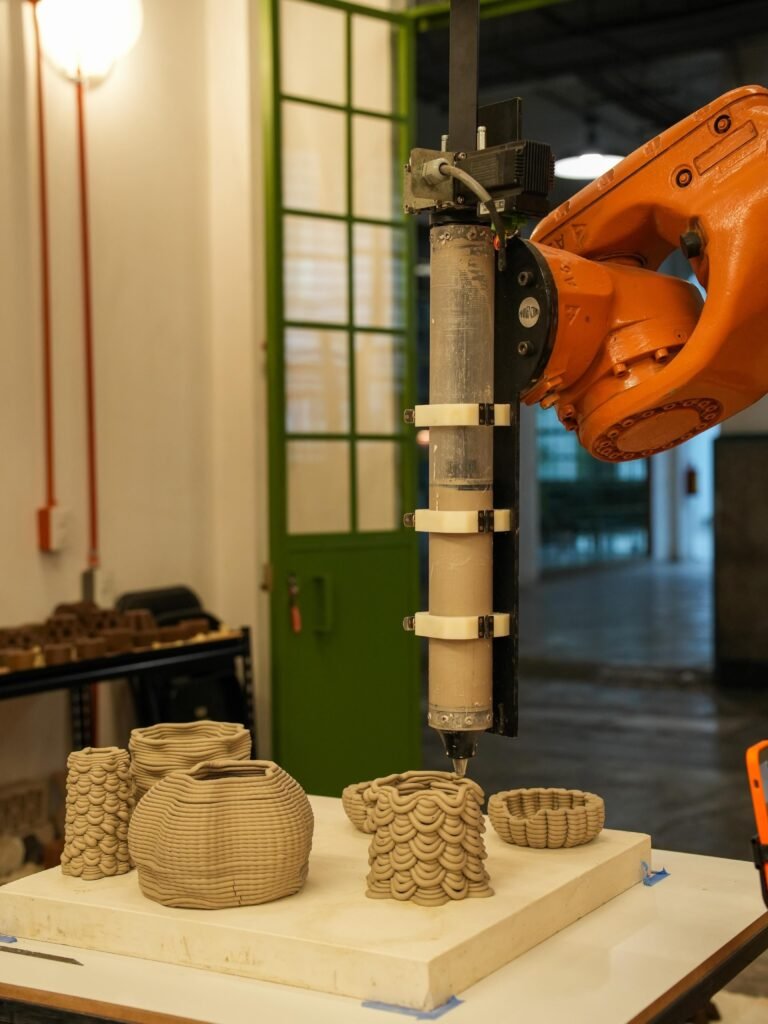
A clay 3D printer uses an extrusion system to push clay through a nozzle.
The printer follows a digital design and deposits the material in layers. Each pass adds more clay until the object reaches its intended shape.
The basic workflow is:
Digital design → clay preparation → printing → drying → finishing → firing
Several factors affect the finished result. Clay moisture, nozzle size, print speed, layer height, and extrusion pressure all matter.
That means the printer is only part of the process. Successful ceramic printing also requires an understanding of clay behavior.
What Kind of Clay Can You Print?
Not every clay body works with every printer.
The clay needs enough plasticity to move through the extrusion system. At the same time, it needs enough strength to support the layers above it.
Clay that is too wet may slump. Material that is too stiff can make extrusion difficult.
For that reason, always check the manufacturer’s material recommendations before choosing a clay body.
What Can You Make With a Clay 3D Printer?
The biggest advantage is design flexibility.
A printer can create unusual curves, repeating patterns, hollow structures, and other forms that may require significant time to construct by hand.
Common applications include:
- Sculptural vessels
- Decorative pottery
- Planters
- Architectural pieces
- Large ceramic forms
- Experimental objects
- Prototypes
- Repeated designs
Digital files also make experimentation easier. You can modify a design, save different versions, and print another iteration without rebuilding the entire form.
This makes 3D printing pottery particularly interesting for artists who want to combine digital design with traditional ceramic techniques.
Does 3D Clay Printing Replace a Pottery Wheel?
No. The two tools serve different purposes.
A pottery wheel works especially well for rotational forms such as bowls, cups, plates, and many vases.
A clay printer becomes more useful when the design involves complex geometry, unusual structures, or repeatable digital forms.
Therefore, choosing between them depends on what you want to make.
A beginner who wants to learn traditional wheel throwing may have little reason to buy a printer. A designer creating complex sculptural forms may find a printer far more useful.
For many studios, the best approach is to use both.
Why Does Nozzle Size Matter?
The nozzle determines how much clay is deposited during each pass.
A smaller nozzle can produce finer lines and greater detail. However, printing can take longer.
Larger nozzles deposit more material and can speed up larger projects. The trade-off is less fine detail.
| Nozzle | Best suited for | Main trade-off |
| Small | Fine detail | Slower printing |
| Medium | General work | Balanced performance |
| Large | Large forms | Less detail |
The right choice depends on the project.
A small decorative vessel may benefit from finer extrusion. Meanwhile, a large sculpture may benefit from faster material deposition.
What Happens After the Printing Is Finished?
Printing is only one stage of making the ceramic piece.
The object still contains considerable moisture. It needs to dry slowly and evenly before firing.
Large or complicated forms can be particularly sensitive to drying problems. Rushing the process can increase the risk of cracks or distortion.
Once the piece is dry, you can finish it by hand if needed.
Possible finishing work includes:
- Trimming the base
- Smoothing selected areas
- Removing excess clay
- Adding hand-built details
- Refining joints
- Preserving the printed texture
Some artists try to hide the layer lines. Others make them part of the visual character of the finished piece.
Does 3D Printed Pottery Need a Kiln?
Yes.
A 3D printer creates the form, but a kiln completes the ceramic process.
After the clay has dried, it must be fired according to the requirements of the clay body and intended finish.
Kiln capacity also matters when planning a studio around a clay printer. A large printer can produce pieces that will not fit comfortably inside a small kiln.
Therefore, consider your printer and kiln together if you plan to produce large ceramic work.
What Are the Benefits of 3D Clay Printing?
There are several reasons ceramic artists are exploring the technology.
Complex designs
Digital modelling makes unusual shapes easier to create.
Repeatability
A saved design can be printed again, which can help production studios maintain consistency.
Faster experimentation
Digital models can be changed without rebuilding a physical prototype from scratch.
Large-scale production
Large-format machines can create substantial ceramic forms.
The PotterBot Scara V4, for example, is designed for large-scale ceramic and paste printing. The Kiln Depot lists a standard printing envelope of up to 72 inches in diameter and 45 inches in height.
Hybrid craftsmanship
Printed forms can still receive substantial hand work. Artists can carve, smooth, assemble, glaze, or otherwise modify the piece after printing.
The result can combine digital precision with traditional craftsmanship.
What Are the Limitations?
3D clay printing is not a shortcut around learning ceramics.
The equipment can be expensive. Users also need to understand digital modelling, printer settings, clay preparation, drying, and firing.
Material consistency can create another challenge. Small changes in moisture can affect extrusion and print quality.
Drying presents another risk. Complex printed forms can crack or deform if moisture leaves the piece unevenly.
For those reasons, a clay printer works best when it solves a specific studio problem.
How Much Does a 3D Clay Printer Cost?
The price depends heavily on the size and capabilities of the machine.
Smaller studio printers are generally less expensive than large professional systems. Large-format machines can represent a significant investment.
The Kiln Depot currently offers several PotterBot systems, including the PotterBot Micro 10, PotterBot 10 Pro, and PotterBot Scara V4.
The Scara V4 is aimed at substantially larger work. Its current listing shows a $28,000 price and describes the machine as a large-format ceramic and paste printer.
That does not mean the largest machine is the best choice.
Instead, match the printer to your projects, production needs, available space, and budget.
Who Should Consider a Clay 3D Printer?
A clay printer can make sense for several types of users.
Ceramic artists can explore complex digital forms.
Production studios can reproduce selected designs more consistently.
Schools and universities can introduce students to digital fabrication alongside traditional ceramics.
Designers and architects can turn digital concepts into physical ceramic prototypes.
Experienced makers who already use CAD or 3D modelling may also find the workflow appealing.
For someone who simply wants to learn basic wheel throwing, however, a pottery wheel may be the more sensible first investment.
3D Clay Printing vs. a Pottery Wheel
| Feature | 3D clay printer | Pottery wheel |
| Complex geometry | Excellent | More difficult |
| Rotational forms | Possible | Excellent |
| Digital repeatability | Excellent | Limited |
| Large sculptural forms | Strong | More labor intensive |
| Digital design | Important | Not required |
| Hand finishing | Common | Common |
| Kiln required | Yes | Yes |
Neither tool is automatically better.
The right choice depends on the kind of ceramic work you want to produce.
Frequently Asked Questions
What is 3D clay printing?
3D clay printing uses a machine to extrude wet clay layer by layer according to a digital design.
Can you use regular pottery clay in a 3D printer?
Sometimes. The clay must have suitable moisture and extrusion properties. Always check the printer manufacturer’s requirements first.
Does 3D printed pottery need a kiln?
Yes. The printed clay must dry completely before it can be fired into ceramic.
Can you glaze 3D printed pottery?
Yes. Once the piece has been properly dried and bisque fired, it can be glazed using a process suitable for the clay body and firing temperature.
Is 3D clay printing good for beginners?
It can be useful, but it is not necessary for someone who simply wants to learn traditional pottery. A wheel is usually a more direct starting point.
Final Takeaway
3D clay printing is not replacing traditional pottery. It is expanding the ways artists can work with clay.
The technology combines digital design with a material that still demands traditional ceramic knowledge.
Artists can create complex forms, repeat successful designs, and experiment with shapes that may be difficult to build by hand.
At the same time, clay still needs careful preparation, drying, finishing, and firing.
That balance is what makes the technology interesting.
If digital fabrication fits your work, a clay 3D printer can become a powerful addition to your studio. If your goal is to learn traditional pottery, start with the equipment that teaches those fundamentals.
When you are ready to explore digital ceramics, browse The Kiln Depot’s 3D clay printer options and choose a machine based on the work you actually plan to make.
i
