Before you buy a pottery kiln for your home studio, check the electrical requirements first. A kiln may fit perfectly in your garage or studio, yet still require a new circuit, different outlet, or electrical upgrade before you can safely fire.
The three numbers to understand are voltage, amperage and circuit requirements.
For smaller kilns, 120V power may be enough. Larger electric pottery kilns commonly require 240V service and a dedicated circuit. However, the exact requirement depends on the kiln model, so always use the manufacturer’s specifications rather than guessing from the kiln’s size.
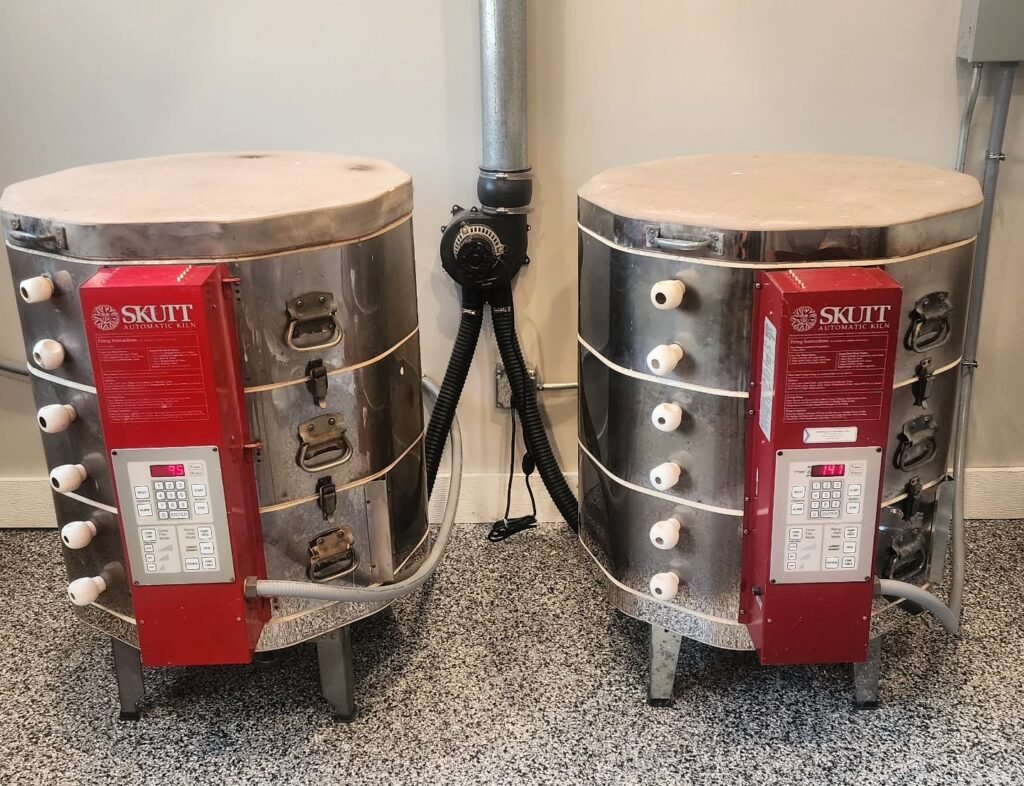
What Electrical Requirements Does a Pottery Kiln Have?
Every electric pottery kiln has a specific electrical requirement.
That requirement normally includes:
- Voltage
- Amperage
- Circuit rating
- Plug or hardwired connection
- Recommended wire size
- Outlet type, when applicable
These specifications work together.
For example, knowing that a kiln requires 240V does not tell you whether your existing electrical service can safely power it. You also need to know how many amps the kiln draws and whether the circuit is suitable.
Therefore, never choose a kiln based on voltage alone.
Do Pottery Kilns Use 120V or 240V?
They can use either.
Small electric kilns are available in 120V configurations, while many larger pottery kilns use 208V or 240V power.
The difference matters because higher-capacity kilns generally require more electrical power.
A small test or hobby kiln may work with a suitable 120V circuit. By contrast, a larger home-studio kiln may require a dedicated 240V circuit.
The Kiln Depot currently lists models across different electrical configurations, including compact electric kilns and larger 240V models. (The Kiln Depot)
So, don’t assume that every kiln needs the same electrical setup.
Can You Run a Pottery Kiln From a Normal Wall Outlet?
Sometimes, but not always.
This is one of the most common mistakes beginners make.
A kiln advertised as “120V” does not necessarily mean you can plug it into any standard household outlet.
For example, The Kiln Depot’s guide to the Skutt KM-614 explains that the model uses approximately 120V power but requires a dedicated 20-amp circuit and the appropriate receptacle rather than simply using any ordinary 15-amp household outlet. (The Kiln Depot)
Consequently, check the complete electrical specification before purchasing.
If the kiln requires a dedicated circuit, do not share that circuit with other appliances.
Why Does a Kiln Need a Dedicated Circuit?
A kiln can draw substantial electrical current for hours.
Sharing its circuit with another high-demand appliance can overload the circuit or cause the breaker to trip.
More importantly, electrical work should be designed around the kiln’s actual load rather than improvised after the kiln arrives.
That’s why a dedicated circuit is commonly required for electric kilns.
If you’re planning a new studio, it is much easier to discuss the kiln’s exact specifications with an electrician before installation.
What Does 240V Mean for a Home Pottery Studio?
A 240V kiln usually requires more planning than a small 120V model.
Depending on the kiln, you may need:
- A dedicated 240V circuit
- An appropriately rated breaker
- Correctly sized conductors
- The correct receptacle or connection
- Sufficient capacity at the electrical panel
- Professional installation
The exact requirements vary by kiln.
For example, The Kiln Depot’s published information for the Skutt KMT-1027-3 lists 240V power, a 50-amp dedicated circuit and a NEMA 6-50 receptacle. (The Kiln Depot)
That does not mean every 240V kiln requires a 50-amp circuit.
Instead, it demonstrates why the specific model specification matters.
Does a Pottery Kiln Need Its Own Breaker?
In many installations, yes.
The circuit must be appropriately sized for the kiln’s electrical load.
However, don’t simply install a larger breaker because you want to make the kiln work.
The breaker, wiring and kiln load must be matched correctly.
If the existing circuit is undersized, the solution is not to swap in a larger breaker without addressing the wiring and electrical system.
That can create a serious safety hazard.
If you’re unsure, have a qualified electrician evaluate the installation.
What If Your Electrical Panel Isn’t Large Enough?
This is where buying the kiln first can become an expensive mistake.
Suppose you’ve found the perfect kiln and discover afterward that your electrical panel cannot support the required circuit.
You may then need additional electrical work.
Depending on the home, that could involve:
- A new circuit
- A subpanel
- Panel modifications
- Additional wiring
- Service upgrades
The cost varies significantly by home and location.
Recent U.S. pottery discussions illustrate how different these installations can be. One potter reported paying for a new 240V line for a garage kiln, while another was planning dedicated circuits during a home build specifically to avoid expensive changes later. (Reddit)
Those are individual experiences, not universal prices.
Still, they highlight the same lesson:
Check the electrical system before buying the kiln.
Can You Put a Kiln in a Garage?
A garage can be a practical location for a home pottery kiln, but the electrical setup is only one part of the decision.
You also need to consider:
- Required clearances
- Combustible materials
- Ventilation
- Local building requirements
- Electrical installation
- Manufacturer instructions
- Insurance considerations
Recent U.S. Reddit discussions show how many questions come up when potters install kilns in garages, including electrical capacity, ventilation and insurance. (Reddit)
Therefore, don’t treat “garage” as an automatic yes.
Check the kiln manufacturer’s installation requirements and applicable local requirements first.
Does a Kiln Need Ventilation?
Yes, ventilation deserves attention even when the kiln is electric.
Electric kilns don’t produce combustion exhaust in the same way as fuel-fired kilns. However, firing clay and glazes can release gases and other fumes.
A suitable kiln ventilation system can help remove those emissions from the studio.
The Kiln Depot currently carries EnviroVent systems specifically for kiln ventilation. (The Kiln Depot)
Also, don’t assume that opening a garage door is automatically an adequate ventilation strategy. The appropriate setup depends on the kiln, room and installation.
What Should You Check Before Buying a Kiln?
Before placing an order, collect these numbers from the kiln’s specifications:
Voltage: Is it 120V, 208V or 240V?
Amperage: How many amps does the kiln draw?
Circuit: What dedicated circuit does the manufacturer specify?
Receptacle: What plug or outlet configuration does it require?
Physical location: Can you install it with the required clearances?
Ventilation: How will firing fumes be managed?
Panel capacity: Can your home’s electrical system support the load?
This short checklist can prevent a surprisingly expensive mistake.
A Simple Example
Imagine you’re considering a kiln that requires 240V power.
Finding a 240V outlet in your garage does not automatically mean you’re ready.
First, confirm that the outlet is actually suitable for the kiln.
Next, verify the circuit rating.
Then, compare the kiln’s electrical requirements with the wiring and breaker.
Finally, have a qualified electrician confirm the installation if you’re unsure.
In other words, voltage is only the starting point.
Should You Choose a Smaller Kiln to Avoid Electrical Work?
Sometimes that can be a reasonable strategy.
A smaller kiln may have lower electrical requirements and a smaller firing chamber.
For a hobby potter making mugs, small bowls or test pieces, that may be enough.
However, don’t choose a kiln solely because it has an easier electrical requirement.
Think about how much work you actually want to fire.
A kiln that is too small can become frustrating if you regularly have to split loads.
The better approach is to balance capacity, electrical requirements, studio space and budget.
What About Buying a Used Kiln?
Used kilns can be attractive because the equipment itself may cost considerably less.
However, electrical compatibility becomes even more important with used equipment.
Before buying, find the model and exact electrical specifications.
Check the data plate.
Confirm the voltage.
Confirm the amperage.
Inspect the cord, plug and wiring.
If the kiln has been modified, ask who performed the work and what was changed.
A used kiln that appears inexpensive can become expensive if it requires major electrical work before it can be operated safely.
Frequently Asked Questions
Does a pottery kiln need 240V?
Not always. Some smaller electric kilns operate on 120V, while larger models commonly require 208V or 240V. Always check the exact kiln specifications.
Can I plug a kiln into a normal outlet?
Only if the kiln is specifically designed for that circuit and receptacle. A 120V kiln may still require a dedicated 20-amp circuit rather than an ordinary 15-amp outlet. (The Kiln Depot)
Does a pottery kiln need a dedicated circuit?
Many electric kilns do. The correct circuit depends on the kiln’s electrical specifications and local electrical requirements.
Can I install a pottery kiln in my garage?
A garage can be suitable for some kiln installations, but you must follow the manufacturer’s clearance, electrical and ventilation requirements and check applicable local rules.
Should an electrician install my kiln circuit?
If new wiring, a new circuit, panel work or a different receptacle is required, use a qualified electrician rather than attempting electrical work beyond your expertise.
Is 240V better than 120V for a pottery kiln?
Neither is automatically better. The appropriate voltage depends on the kiln’s design, capacity and electrical requirements.
Final Thoughts
The electrical requirements of a pottery kiln should be part of your buying decision from the beginning.
Don’t wait until the kiln arrives to discover that your outlet is wrong.
Instead, identify the kiln’s voltage, amperage, circuit and receptacle requirements first. Then check whether your home studio can support them.
For a small hobby kiln, the installation may be relatively straightforward.
For a larger home-studio kiln, you may need professional electrical work.
Either way, planning ahead is cheaper and safer than trying to solve the problem after you’ve already bought the kiln.
Once you know what your electrical system can support, you can compare kilns with much more confidence. Browse The Kiln Depot’s pottery kiln collection and compare models by size, temperature rating and electrical configuration before choosing the one that fits your studio.
