A used pottery kiln can be one of the smartest ways to lower the cost of building a home ceramics studio. It can also become an expensive mistake if you buy an old kiln without checking its condition, electrical requirements, and replacement parts.
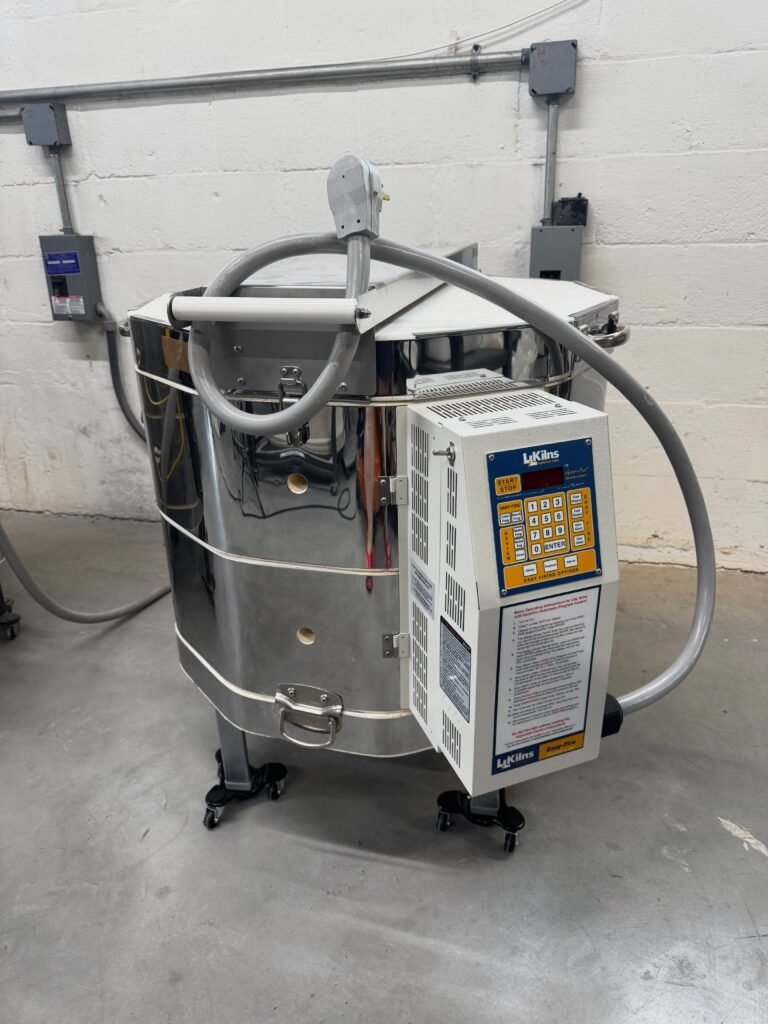
The good news is that you don’t need to be a kiln technician to spot many of the biggest warning signs.
Before handing over your money, inspect the firebrick, elements, controller, wiring, kiln body, shelves and electrical specifications. Most importantly, find out exactly what model you’re buying and how it was used.
Is Buying a Used Pottery Kiln Worth It?
Yes, sometimes.
A used kiln can make sense when the seller has maintained it properly, replacement parts are available, and the asking price reflects its age and condition.
However, a low purchase price doesn’t automatically mean a good deal.
For example, a kiln listed for $500 might need elements, a controller, shelves, wiring repairs and professional installation. Once those costs are added, the “bargain” may no longer be attractive.
On the other hand, an older kiln with good bricks, healthy elements, a working controller and readily available parts can provide years of useful service.
Therefore, evaluate the kiln’s total cost, not just the seller’s asking price.
1. Find the Exact Kiln Model First
Before inspecting anything else, identify the kiln.
Look for the manufacturer’s name and model number on the data plate, controller, frame or documentation.
The model matters because it tells you what the kiln was designed to do.
You need to know:
- Maximum firing temperature
- Chamber size
- Voltage
- Amperage
- Controller type
- Available replacement parts
- Original element specifications
- Recommended electrical circuit
This information also lets you compare the used kiln with the cost of a newer alternative.
If the seller cannot tell you the model, don’t automatically walk away. Instead, photograph the data plate and contact the manufacturer or a qualified kiln technician before buying.
2. Inspect the Firebrick Carefully
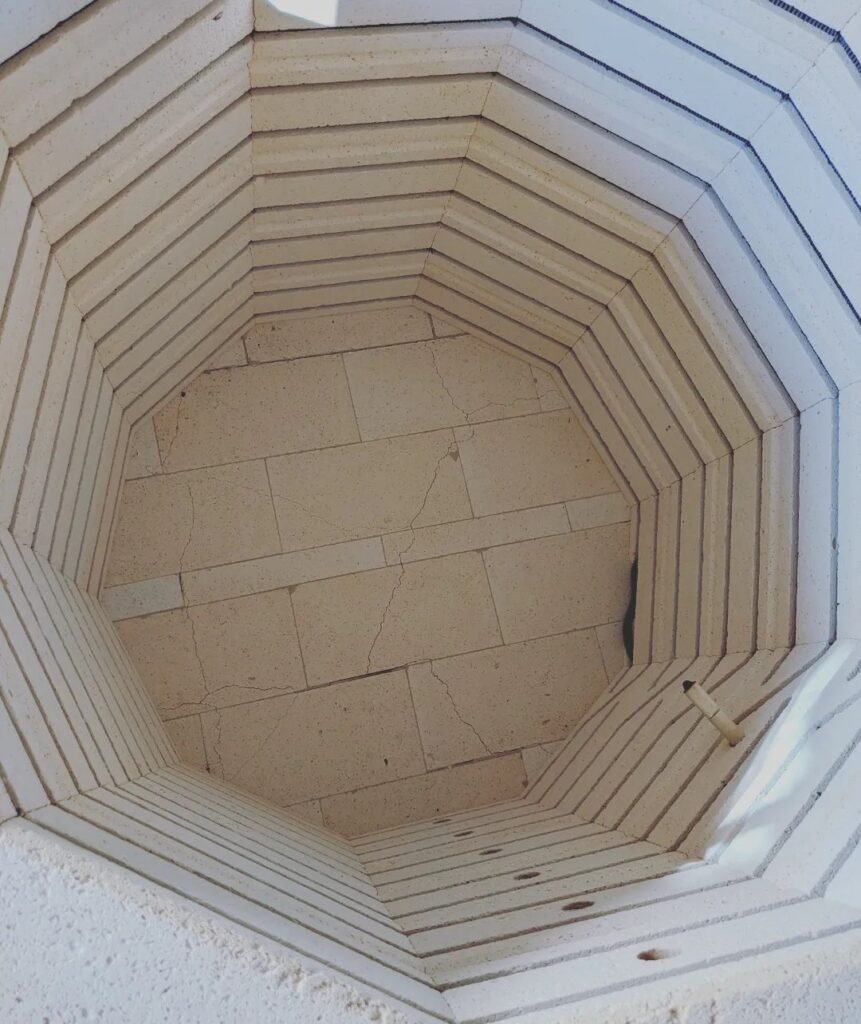
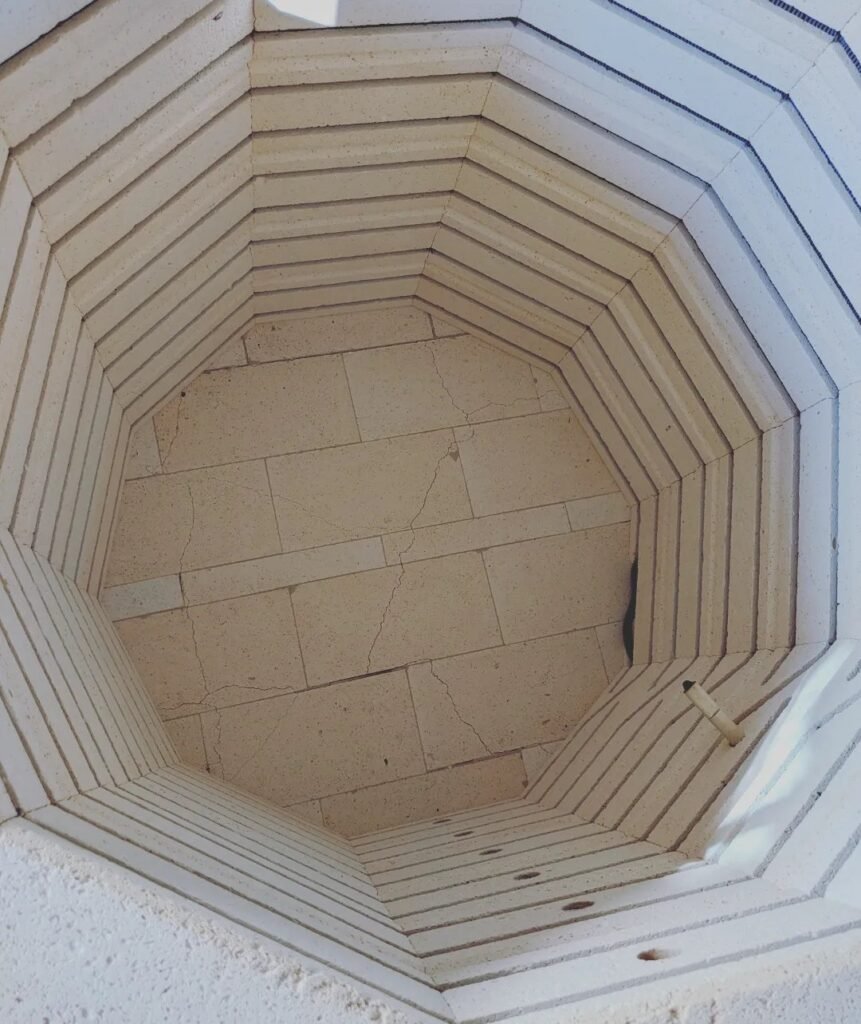
Firebrick is one of the first things to inspect.
Small surface cracks are not automatically a deal breaker. Older kilns can show normal wear from years of heating and cooling.
However, serious damage deserves much more attention.
Look for:
- Large cracks
- Missing pieces
- Deep erosion
- Crumbling brick
- Areas damaged around the elements
- Brick that appears loose
- Severe damage around peepholes or corners
Pay particular attention to the areas surrounding the heating elements.
A kiln with worn brick may still be repairable. Nevertheless, substantial brick replacement can add significant labor and material costs.
If the seller says, “The bricks have always looked like that,” don’t rely on the statement alone. Photograph the damage and get an opinion from someone familiar with kiln repair.
3. Look at the Heating Elements
The heating elements are another major inspection point.
Older elements can become thinner, brittle or visibly distorted after many firings.
Inspect them for:
- Broken sections
- Extreme thinning
- Heavy oxidation
- Sagging
- Burned areas
- Elements pulled away from their channels
- Evidence of previous replacement
Some discoloration is normal.
However, visibly damaged elements should affect the price you are willing to pay.
Replacement costs vary considerably by kiln model, so identify the kiln before assuming that an element replacement will be inexpensive.
The Kiln Depot’s existing maintenance guide notes that element life varies substantially with firing temperature and frequency. That is why the number of years a kiln has existed isn’t enough to determine its remaining element life. (The Kiln Depot)
4. Check the Controller
If the kiln has a digital controller, turn it on if the seller allows you to do so.
Look for obvious problems such as:
- Missing display segments
- Error messages
- Buttons that don’t respond
- Flickering displays
- Damaged wiring
- Cracked housings
- Unusual behavior during startup
Ask whether the controller has ever been replaced.
Also ask whether the kiln has been serviced recently.
A modern controller can make an older kiln much more useful. Conversely, an obsolete controller with limited parts availability can change the economics of the purchase.
Don’t assume that because the display turns on, the kiln is fully operational.
5. Inspect the Electrical Connection
Electrical compatibility can make or break a used-kiln purchase.
Check the kiln’s data plate for its voltage and amperage.
Then compare those requirements with the electrical service available where you plan to install it.
A used kiln may require 120V, 208V or 240V power. The required circuit also varies by model.
The Kiln Depot’s electrical guidance explains why voltage alone isn’t enough. A kiln can use 120V and still require a dedicated circuit with the appropriate amperage and receptacle. (The Kiln Depot)
Therefore, don’t buy a kiln simply because the seller says, “It plugs into a regular outlet.”
Verify the actual specifications.
If new wiring or a dedicated circuit is required, have the installation evaluated by a qualified electrician.
6. Ask How Often the Kiln Was Used
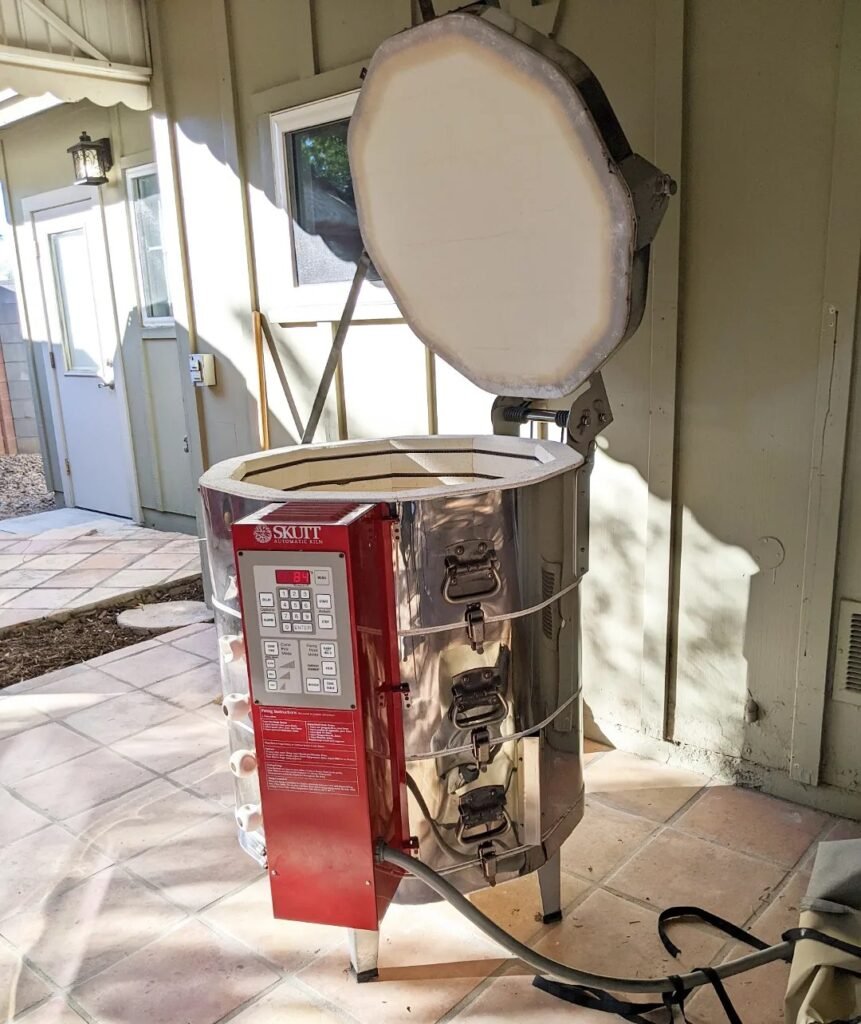
Age matters, but firing history can matter just as much.
Ask:
How often was it fired?
Then ask:
What temperatures and cones was it normally fired to?
A kiln that spent years firing high-temperature loads several times a week has experienced different wear from one that was used occasionally for small hobby projects.
Also ask:
- When was it last fired?
- Why is it being sold?
- Who owned it?
- Was it used commercially?
- Were any parts replaced?
- Has it ever overheated?
- Has it ever had controller errors?
The answers won’t prove the kiln’s condition, but they can help you understand its history.
7. Check the Kiln Furniture
Don’t forget the shelves and posts.
A used kiln may look inexpensive until you discover that the included furniture is damaged or incomplete.
Inspect shelves for:
- Major cracks
- Warping
- Glaze buildup
- Severe chipping
- Excessive kiln-wash accumulation
Also count the posts and confirm that the shelves actually fit the kiln.
Replacement furniture can add hundreds of dollars to the cost of setting up a kiln, depending on the size and configuration.
Consequently, treat kiln furniture as part of the purchase price.
8. Look for Previous Repairs
Repairs aren’t automatically bad.
In fact, a kiln that has received professional maintenance may be a better purchase than one that has never been serviced.
The important question is what was repaired and how it was repaired.
Ask for receipts if available.
Look for evidence of:
- Replaced elements
- Replaced thermocouples
- Controller upgrades
- Repaired brick
- Rewired connections
- Replacement relays or contactors
- Lid or hinge repairs
A documented repair history gives you more information than a seller simply saying the kiln “works great.”
9. Be Careful With Kilns That Have Been Sitting for Years
This is one of the biggest warning signs with estate-sale and marketplace kilns.
A kiln that hasn’t been used for ten years isn’t necessarily worthless.
However, long-term storage raises questions about its condition and electrical components.
Today’s pottery discussions show exactly why this matters. One recent buyer reported purchasing a second-hand Duncan kiln that had been unused for more than ten years and was already seeing deterioration in the insulation before even testing it. (Reddit)
That doesn’t mean every dormant kiln is unsafe.
It means you should inspect it carefully before connecting power.
If the seller cannot demonstrate that the kiln works, treat it as untested equipment, not as a working kiln.
10. Don’t Assume “It Worked for Me” Means It Works for You
A seller may honestly believe the kiln works.
Nevertheless, their electrical setup may be completely different from yours.
Their kiln might have been connected to a circuit that you don’t have.
Their firing schedule might also have been different from yours.
Therefore, verify the technical requirements independently.
You need to know whether the kiln can reach the temperature you need, whether replacement parts remain available, and whether you can legally and safely install it at your location.
Used Pottery Kiln Inspection Checklist
Before paying, work through this list:
| What to check | What you’re looking for |
| Model | Exact manufacturer and model number |
| Firebrick | Cracks, erosion, missing sections |
| Elements | Breaks, thinning, severe oxidation |
| Controller | Working display, buttons and programming |
| Thermocouple | Damage or obvious wear |
| Wiring | Damage, deterioration or questionable modifications |
| Lid/door | Proper fit and hinges |
| Shelves | Cracks, warping and glaze damage |
| Posts | Complete and usable set |
| Electrical | Correct voltage, amperage and circuit |
| History | Firing frequency and previous repairs |
| Parts | Current availability |
| Installation | Suitable location and ventilation |
If several major items need attention, stop thinking about the kiln as a cheap purchase.
Start thinking about it as a repair project.
When Should You Walk Away?
Sometimes the smartest decision is to leave the kiln behind.
Be especially cautious when:
- The model cannot be identified
- The electrical specifications are missing
- The seller refuses inspection
- The bricks are severely damaged
- Elements are visibly broken
- The controller is nonfunctional
- Wiring has questionable modifications
- Replacement parts are unavailable
- The kiln has been exposed to significant moisture
- The seller cannot explain its history
- The price doesn’t leave room for repairs
A low price isn’t enough to overcome every problem.
If you cannot determine what you’re buying, you’re not really buying a kiln.
You’re buying an unknown repair bill.
New vs Used: Which Makes More Sense?
A used kiln usually wins on upfront price.
A new kiln wins on predictability.
With a new kiln, you know the model, specifications, condition and current parts support. With a used kiln, you may save substantially, but you also accept more uncertainty.
There is a third option worth considering: refurbished equipment.
The Kiln Depot has a dedicated refurbished-equipment section for buyers who want lower-cost equipment without simply taking a chance on an unknown private-sale machine. (The Kiln Depot)
That can be particularly attractive for a first home studio where reliability matters but the budget is limited.
Frequently Asked Questions
Is a used pottery kiln worth buying?
It can be. A well-maintained used kiln with good bricks, functional controls, available parts and suitable electrical requirements can be an excellent value.
What should I check first on a used kiln?
Start with the exact model and data plate. Then inspect the firebrick, heating elements, controller, wiring and kiln furniture.
How old is too old for a pottery kiln?
There is no universal age limit. Condition, maintenance history, parts availability and previous firing use are more useful indicators than age alone.
Should I buy an untested kiln?
Only if the price reflects the risk and you have budgeted for inspection and potential repairs. An untested kiln should not be valued like a confirmed working kiln.
Are used kiln elements expensive to replace?
The cost depends heavily on the kiln model, number of elements and labor. Get the exact model before estimating replacement costs.
Is a refurbished kiln safer than a used kiln?
Not automatically, but professionally refurbished equipment can reduce some of the uncertainty associated with buying equipment with an unknown history. Ask what was inspected, repaired and tested before purchase.
Final Thoughts
Buying a used pottery kiln can be a smart way to build a home studio without paying full retail for every piece of equipment.
However, the cheapest kiln is not necessarily the best deal.
Before buying, identify the model, inspect the bricks and elements, test the controller when possible, verify the electrical requirements, examine the kiln furniture and investigate its maintenance history.
Most importantly, calculate the total cost after repairs and installation.
If the numbers still make sense, a used kiln may be an excellent purchase.
If they don’t, there is no shame in walking away.
A dependable kiln is an important part of a home studio. Sometimes paying more for equipment with a known condition, available parts and clear specifications is cheaper than trying to rescue an unknown kiln after it reaches your garage.
If you’re comparing your options, explore The Kiln Depot’s kiln collection and refurbished equipment before making a final decision.