A used pottery wheel can be one of the smartest ways to get serious pottery equipment for less money. You can find older Brent, Shimpo, and other professional wheels that still have plenty of useful life left in them.
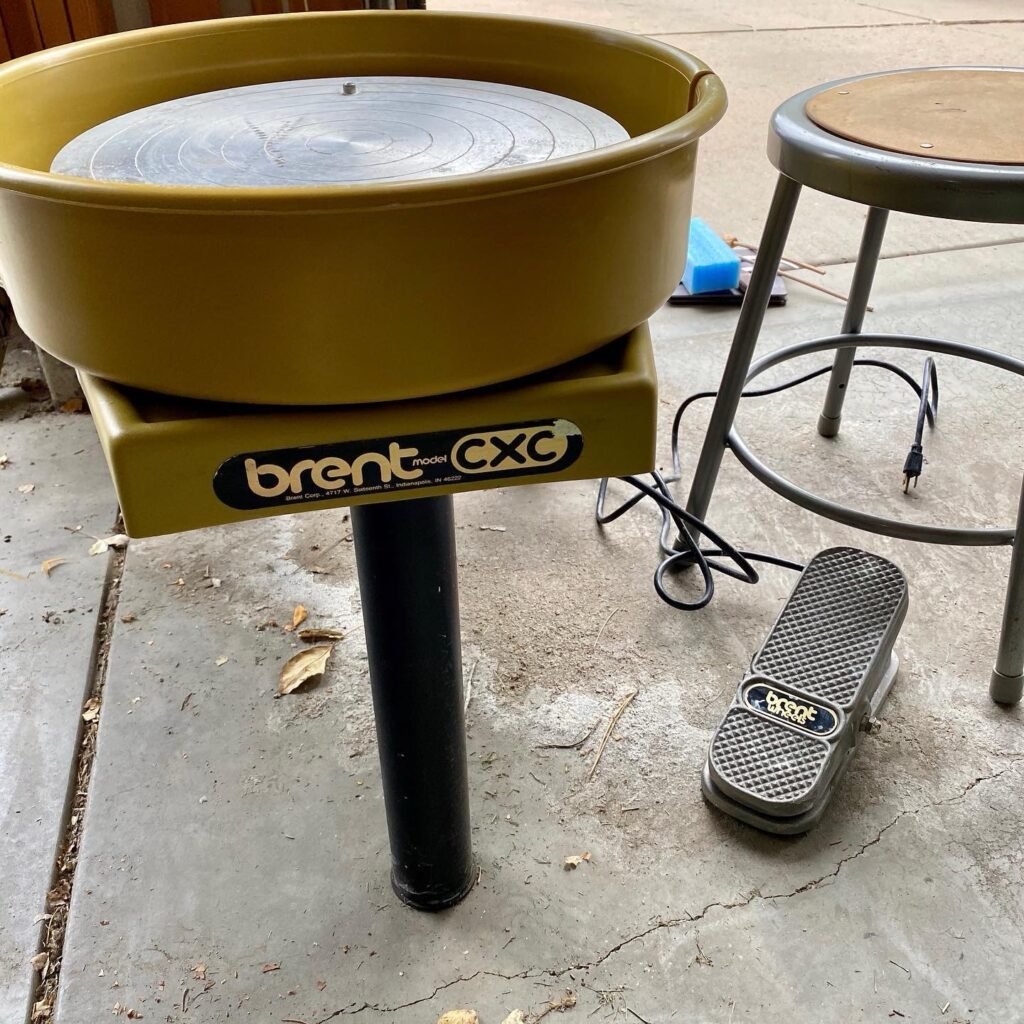
The problem is that appearance does not tell you everything.
A wheel can look clean and still have motor, pedal, bearing, belt, or electrical problems. That is why buying a used pottery wheel requires more than checking the price and plugging it in for thirty seconds.
Before you buy, work through these nine checks.
1. Test the Used Pottery Wheel Under Load
The first test is simple.
Put clay on the wheel and actually center it.
Do not judge the wheel only while it spins empty.
A healthy pottery wheel should maintain reasonably consistent speed when you increase the pressure and load. If the wheel slows dramatically, struggles to maintain torque, or makes unusual noises, investigate before buying.
This matters because a wheel that spins perfectly without clay can behave very differently once you start centering several pounds.
Ask the seller whether you can test the wheel with clay.
If they refuse to let you test it, treat that as a warning sign.
2. Check the Wheelhead for Wobble
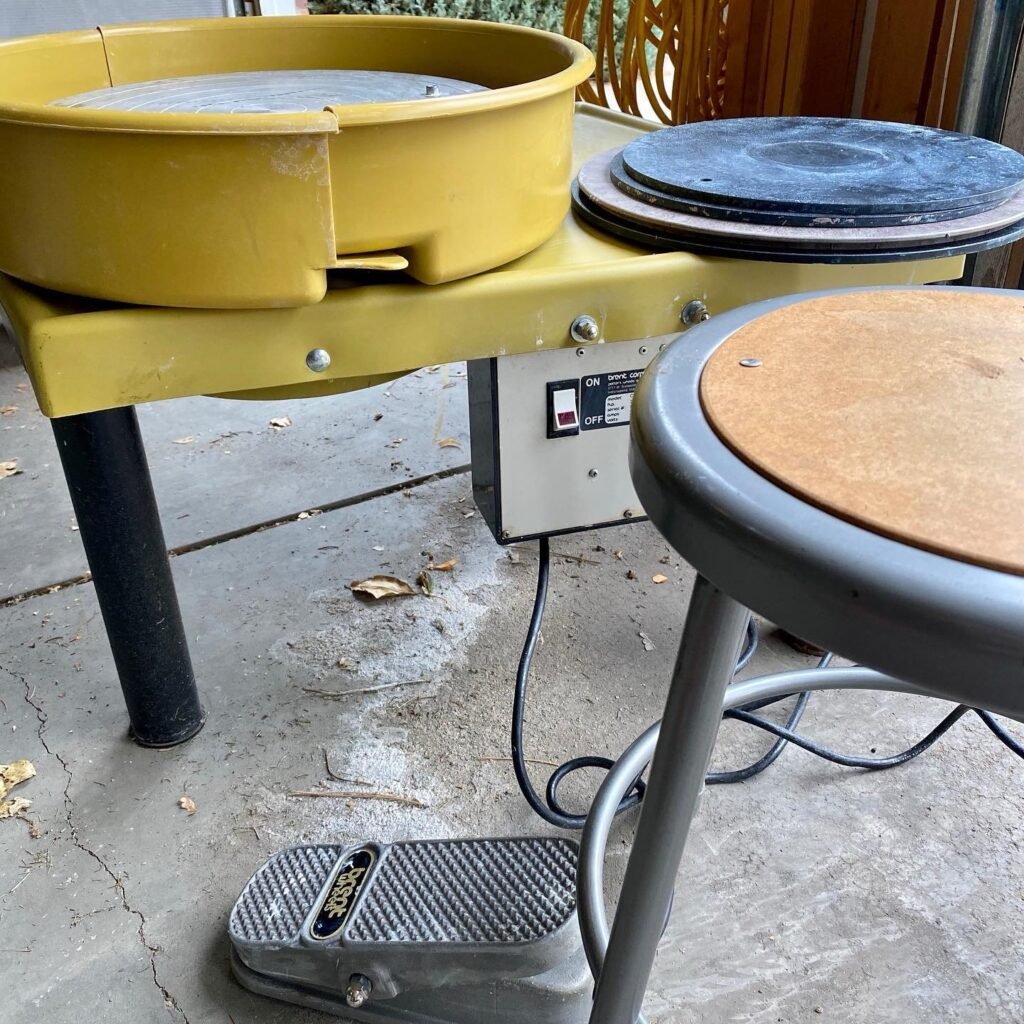
Watch the wheelhead while it rotates.
You want smooth, consistent rotation without obvious side-to-side movement.
A small amount of wear does not necessarily mean the wheel is unusable, but noticeable wobble can make throwing frustrating.
It becomes particularly obvious when you are trying to center clay or create precise forms.
Put your hand lightly against the wheelhead and watch the edge as it turns.
Then place a straight object near the edge without touching it.
If the distance changes significantly during rotation, investigate why.
A bent wheelhead, worn bearing, damaged shaft, or other mechanical problem could be responsible.
3. Test the Foot Pedal
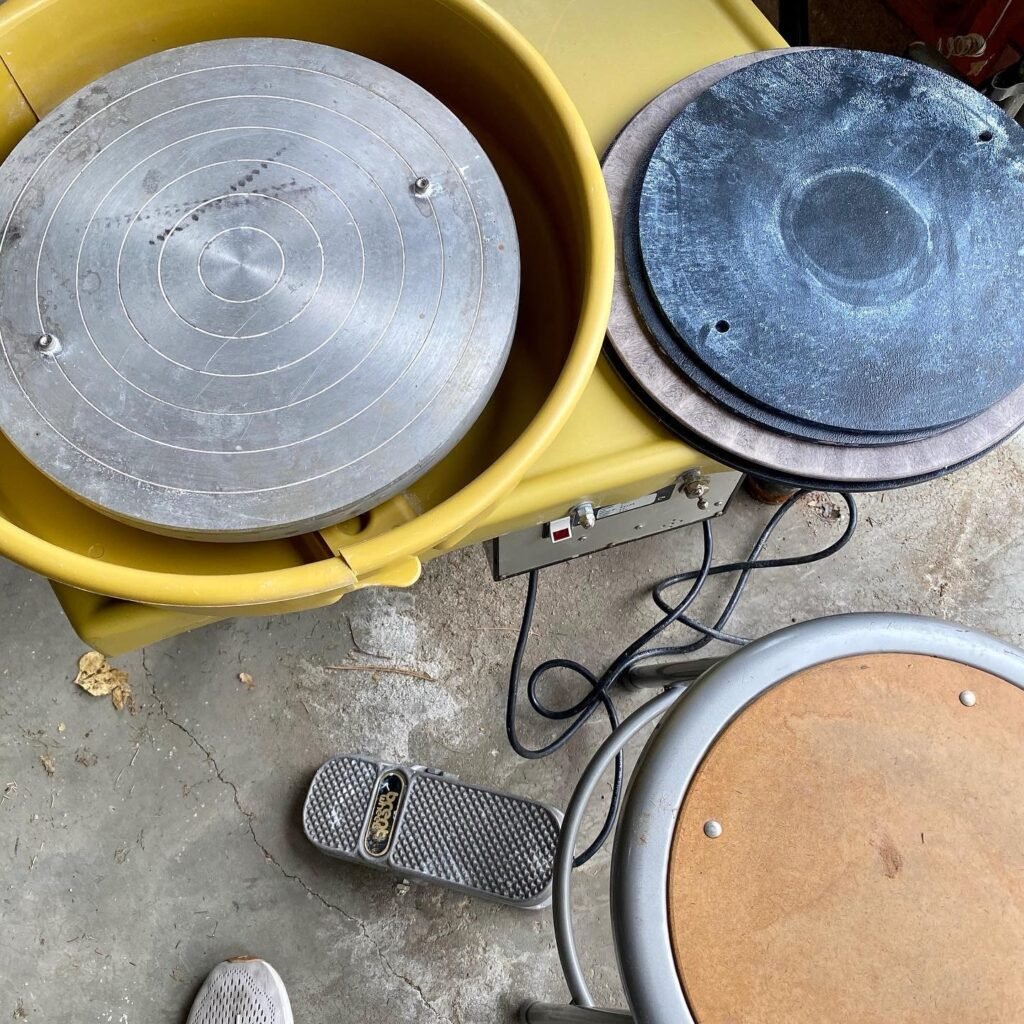
The foot pedal deserves just as much attention as the motor.
Move it slowly through the full speed range.
The wheel should respond smoothly.
You should not have to push the pedal unusually hard to change speed.
You also should not experience sudden jumps from slow to fast.
Test forward and reverse if the wheel has a reversing switch.
Older wheels can develop problems in the pedal or controller after years of use, so do not assume the motor is the only component worth checking.
AMACO Brent provides equipment support for its wheels and specifically asks owners about maintenance history, serial numbers, electrical connection, and whether the wheel was purchased secondhand. Their support information is useful when evaluating an older Brent.
4. Listen to the Motor and Drive System
A pottery wheel should not sound like a machine that is fighting for its life.
Listen carefully while it runs.
A mild motor sound is normal.
Grinding, squealing, rattling, clicking, or sudden changes in sound deserve investigation.
If the wheel uses a belt-drive system, ask when the belt was last replaced.
Brent wheels use belt-drive systems, and the manufacturer provides replacement and service information for its equipment.
You can review the current Brent wheel lineup and specifications here:
Do not automatically reject an older wheel because the belt needs replacing.
A relatively inexpensive maintenance item can be very different from a major motor or transmission problem.
The important thing is knowing what you are actually buying.
5. Check the Wheelhead Size and Condition
Most serious pottery wheels have a substantial wheelhead designed to handle regular studio use.
Look for deep scratches, corrosion, dents, or damage around the bat-pin holes.
Check whether the wheelhead sits securely.
Also inspect the bat pins if the wheel uses them.
Loose or damaged pins can create problems when you throw on bats.
For example, the current Brent Model C uses a 14-inch cast aluminum wheelhead with two bat pins and concentric markings for centering.
Those details are useful when evaluating an older Brent because they give you a reference point for what the equipment should look like and how it should function.
6. Inspect the Splash Pan
The splash pan may seem insignificant compared with the motor.
It is not.
Look for cracks, missing pieces, broken clips, and poor fit.
A damaged splash pan does not necessarily make a wheel a bad purchase, but replacement costs should be part of your calculation.
Also check whether the splash pan is an original component or a replacement.
Older wheels sometimes have aftermarket modifications.
That is not automatically bad.
You simply want to know what you are buying.
7. Find Out How the Wheel Was Used
Ask the seller questions.
How old is the wheel?
Was it used at home or in a school?
Was it used every day?
How much clay was typically thrown?
Was it stored in a damp environment?
Has the motor ever been replaced?
Has the pedal been replaced?
Has the wheel ever required electrical repair?
Why are they selling it?
You do not need a perfect history.
You need enough information to understand the wear level.
A wheel that spent ten years in a home studio making a few pots each weekend could have a very different service history from one that ran for hours every day in a busy ceramics classroom.
8. Check the Electrical Requirements
Never skip the electrical information.
Find the model number and data plate.
Check the voltage and amperage requirements.
Make sure the wheel is compatible with the electrical service where you intend to use it.
This becomes particularly important when buying older or imported equipment.
Do not assume that every pottery wheel uses the same electrical setup.
If you are unsure, have a qualified electrician verify the requirements before installation.
The cheapest used pottery wheel is not a bargain if getting it operational requires unexpected electrical work.
9. Calculate the Real Cost Before Buying
This is where many used-equipment buyers make mistakes.
They see a $700 pottery wheel and compare it with a $1,500 new wheel.
That is not necessarily an apples-to-apples comparison.
Suppose the $700 wheel needs:
- A new pedal
- A replacement belt
- New splash pan
- Electrical work
- Bearing service
- Shipping
Your $700 wheel may quickly become a $1,100 or $1,300 wheel.
That could still be a good deal.
It could also make a refurbished wheel the better option.
The right comparison is not:
Used price vs new price.
It is:
Total cost of ownership vs condition and expected service life.
Used Pottery Wheel vs Refurbished Pottery Wheel
This is where the distinction between used and refurbished equipment becomes important.
A used pottery wheel may simply mean that someone previously owned it.
That does not tell you how thoroughly it has been inspected.
A refurbished pottery wheel should involve additional work or inspection before resale, although the exact refurbishment process varies by seller.
Ask what was actually done.
Was the motor tested?
Was the pedal inspected?
Was the wheelhead checked?
Were worn components replaced?
Was the wheel tested under load?
Was it cleaned and serviced?
What warranty or return protection comes with it?
Those questions matter more than the word “refurbished” itself.
If you want the lowest possible purchase price and know how to inspect equipment, a used wheel can be attractive.
If you want to reduce the uncertainty that comes with secondhand equipment, a properly refurbished pottery wheel can make more sense.
Is a Used Brent Wheel Worth Buying?
A used Brent wheel can be particularly attractive because Brent has a long-established presence in ceramics and continues to support its equipment.
The current Brent lineup includes the Model B, Model C, CXC, and other specialty models.
The manufacturer lists the Model C with a 3/4 HP motor and 225-pound continuous clay capacity, while the CXC uses a 1 HP motor and supports up to 300 pounds continuously.
Older Brent wheels can therefore still be worth considering if the mechanical and electrical condition is good.
Do not buy one simply because it says Brent on the front.
Buy it because the specific wheel has been properly evaluated.
Used Pottery Wheel for a Beginner
A beginner does not necessarily need a brand-new wheel.
In fact, buying a good used wheel can leave more money available for clay, tools, bats, shelving, and eventually a kiln.
The mistake is buying the cheapest wheel you can find.
Beginners benefit from reliability.
If the wheel constantly loses speed, the pedal behaves unpredictably, or the wheelhead wobbles, you have enough problems learning pottery without fighting your equipment.
A good used wheel should make learning easier, not harder.
If you are comparing new models as well, The Kiln Depot’s guide to the best pottery wheels for home studios gives you a useful baseline for comparing different wheel types and performance levels.
When Should You Walk Away From a Used Wheel?
Some problems should make you cautious.
Walk away or negotiate heavily if:
- The wheelhead has significant wobble
- The motor struggles badly under load
- The pedal cuts out
- The controller behaves unpredictably
- The wheel makes serious grinding noises
- Electrical components look damaged
- The seller refuses a basic test
- The model or electrical specifications cannot be verified
- Replacement parts are difficult to find
- The asking price is close to the cost of a properly refurbished unit
You do not have to rescue someone else’s broken pottery equipment.
There will always be another wheel.
What About Buying a Used Wheel Online?
Online buying requires more caution because you cannot physically test the machine before paying.
Ask the seller for a video.
Have them show the wheel starting from rest.
Ask them to run it slowly and then at higher speed.
Ask them to place clay on the wheel and demonstrate it under load.
Request close-up photos of the wheelhead, pedal, controller, motor area, serial plate, and splash pan.
If the seller cannot provide basic evidence that the wheel works, factor that risk into the price.
For expensive equipment, transparency matters.
Where Refurbished Pottery Wheels Can Make Sense
A refurbished pottery wheel can occupy the middle ground between buying privately used equipment and buying new.
You can potentially get professional equipment at a lower price while reducing some of the uncertainty surrounding condition.
That makes refurbished equipment particularly interesting for:
- Home studios
- New pottery businesses
- Schools
- Community studios
- Art centers
- Potters upgrading from entry-level equipment
- Studios trying to control capital costs
The Kiln Depot’s pottery wheel selection includes multiple wheel models and is a useful place to compare equipment specifications before deciding what type of wheel makes sense for your studio:
Final Thoughts
A used pottery wheel can be an excellent purchase.
The key is knowing what you are buying.
Test the wheel under load.
Watch for wheelhead wobble.
Check the pedal.
Listen to the motor.
Inspect the splash pan.
Ask about maintenance.
Verify the electrical requirements.
Then calculate the complete cost rather than focusing only on the sticker price.
If you find a well-maintained used Brent, Shimpo, or comparable professional wheel at the right price, you may get years of useful service without paying full new-equipment pricing.
If the condition is uncertain, compare the machine against properly refurbished pottery wheels before handing over your money.
The goal is not to find the cheapest used pottery wheel.
The goal is to find the best wheel for the money.
