Shopping for pottery wheels for sale can get confusing fast. Brent, Shimpo, Speedball, and newer direct-drive models all promise smooth throwing, but their motors, clay capacities, drive systems, and prices can vary considerably.
The right pottery wheel depends on what you actually throw.
A beginner making mugs does not need the same wheel as a production potter throwing large vessels. A quiet home studio may prioritize a direct-drive wheel, while a classroom may value durability and easy servicing.
Here are nine pottery wheels worth considering when you’re ready to buy.
1. Brent B Pottery Wheel
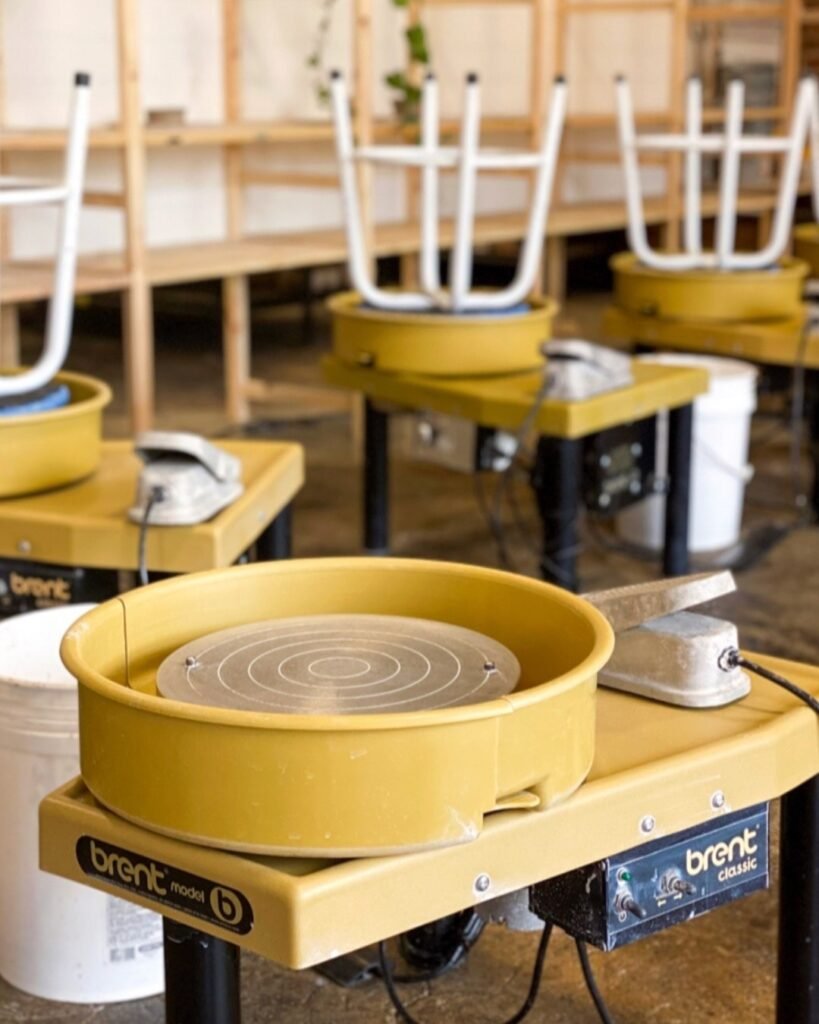
The Brent B is one of the strongest choices for beginners and everyday studio work.
It uses a 1/2 HP motor and handles up to 150 pounds of clay continuously. Its 14-inch wheelhead gives you plenty of room for typical pottery projects, while the belt-drive design makes the machine familiar and straightforward to maintain.
The current Kiln Depot price is $1,775.
That makes the Brent B a particularly interesting option for buyers who want a professional wheel without immediately stepping into the higher price of the CXC.
If most of your work involves mugs, bowls, plates, and moderate-size forms, the B may provide all the power you actually need.
See the Brent B here:
2. Brent C Pottery Wheel
The Brent C moves up to a 3/4 HP motor and a 225-pound continuous clay capacity.
That extra power makes it more attractive for potters who regularly throw larger forms.
The wheel maintains the same 0 to 240 RPM speed range and 14-inch wheelhead found across the standard Brent lineup.
The current Kiln Depot price is $1,980.
The Brent C is also a strong choice for schools, art centers, and shared studios where equipment needs to handle frequent use.
If you’re deciding between the B and C, the real question is whether your work justifies the additional power.
Compare the Brent C here:
3. Brent CXC Pottery Wheel
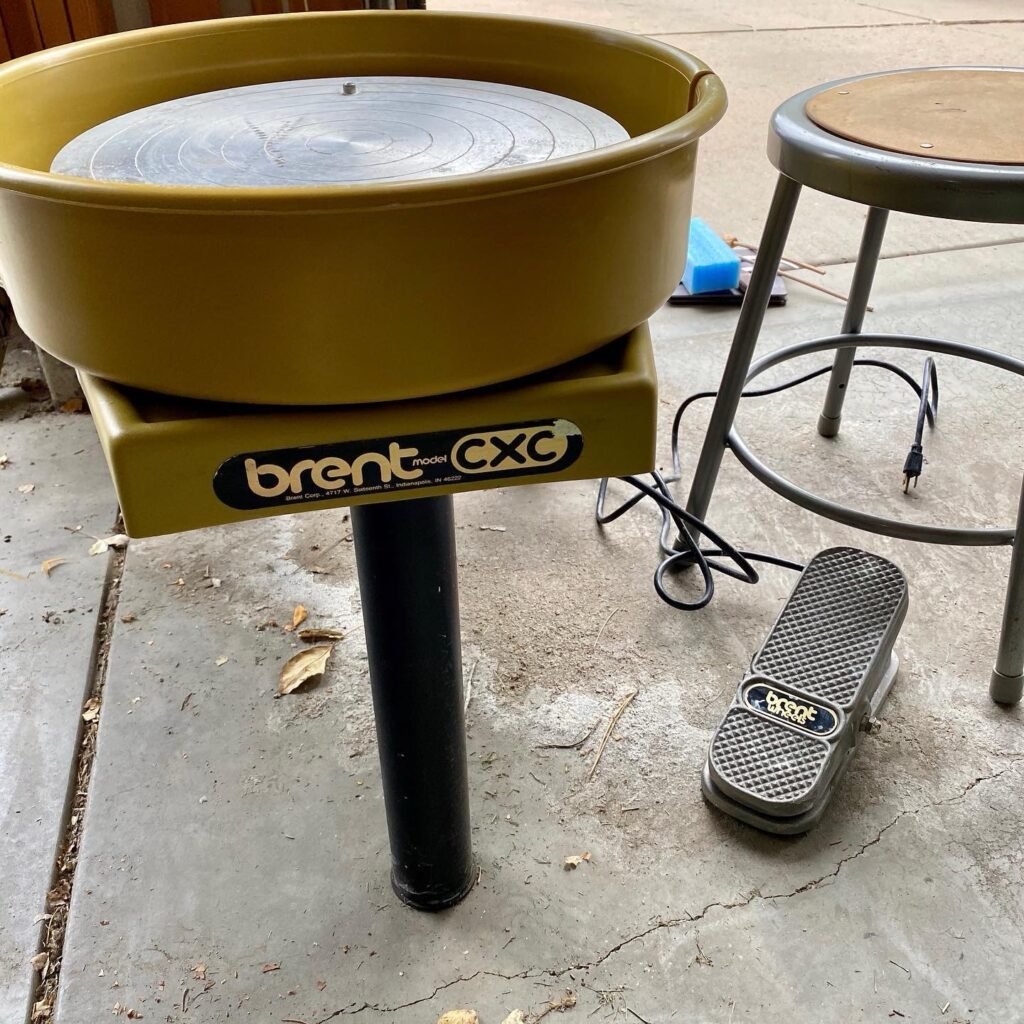
The Brent CXC is the heavy-duty option in the standard Brent lineup.
Its 1 HP motor and 300-pound continuous centering capacity give it substantially more headroom for large forms and demanding production work.
That makes it especially attractive for professional potters who regularly work with large quantities of clay.
You shouldn’t automatically buy the CXC simply because it has the biggest motor.
If your normal work never approaches the capacity of the Brent B or C, the additional power may not provide enough practical benefit to justify choosing the larger model.
For production pottery, however, the CXC becomes much easier to justify.
4. Shimpo VL Whisper
The Shimpo VL Whisper takes a completely different approach.
Instead of using a traditional belt-drive system, it uses direct drive.
The result is exceptionally quiet operation and smooth control.
That makes the VL Whisper particularly attractive for home studios, apartments, shared spaces, and potters who throw late at night.
The Potter’s Shop currently lists the VL Whisper at $1,849, giving buyers a useful current market benchmark.
The Kiln Depot also carries the Shimpo line, making it worth comparing against the Brent models before you choose.
If noise matters almost as much as throwing performance, put the VL Whisper high on your shortlist.
5. BTH D3 Pottery Wheel
The BTH D3 offers a different combination of features at a lower price point.
It uses a 400-watt direct-drive motor with a 130-pound centering capacity and a speed range of 0 to 300 RPM.
The wheel also includes adjustable legs and a 14-inch wheelhead.
The current Kiln Depot price is $1,144.
That makes it an interesting option for buyers who want direct-drive operation without moving into the higher price range of some established professional models.
You can see the full specifications here:
6. Speedball Artista
The Speedball Artista is designed around a smaller footprint and lighter workload.
It uses a 1/3 HP motor, an 11-inch wheelhead, and a 25-pound centering capacity.
That makes it much more appropriate for smaller projects than heavy production throwing.
The current Kiln Depot price is $429.
For someone setting up a small studio or looking for an affordable entry point, the Artista can make sense.
Just understand its limitations.
If you expect to move quickly into large bowls, platters, or heavy forms, you may outgrow the 25-pound centering capacity.
Read the full Artista breakdown here:
7. Shimpo VL-Lite
The Shimpo VL-Lite sits in an interesting position for buyers who want a lightweight professional-style wheel.
It offers a more portable design than many full-size studio wheels while still providing enough performance for serious pottery work.
The Potter’s Shop currently lists the VL-Lite at $1,099.
That puts it above basic beginner wheels but below some heavy-duty professional models.
For a buyer who needs something easier to move around the studio, it deserves consideration.
8. Choose a Used Pottery Wheel
Buying new isn’t the only way to get a professional pottery wheel.
A used pottery wheel can provide substantial savings when you find a well-maintained Brent, Shimpo, or comparable professional model.
Current secondhand listings show active demand for used Brent and other pottery wheels, including professional models selling locally and through online marketplaces.
The important part is condition.
Before buying used, check:
- Motor performance
- Wheelhead wobble
- Foot pedal response
- Bearings
- Drive system
- Splash pan
- Electrical requirements
- Maintenance history
Don’t compare the purchase price alone.
Add shipping, repairs, replacement parts, and setup before deciding whether the used wheel is actually cheaper.
For a complete inspection checklist, read:
9. Consider a Refurbished Pottery Wheel
Refurbished pottery wheels can make sense for buyers who want lower pricing without accepting all the uncertainty of an as-is private sale.
The key is understanding what refurbishment actually includes.
Ask whether the motor was tested.
Ask whether the pedal was inspected.
Ask whether the wheelhead and bearings were checked.
Ask whether worn components were replaced.
Ask whether the wheel was test-run under load.
A refurbished wheel should give you more information and confidence than a completely untested secondhand machine.
That can make the additional cost worthwhile.
Which Pottery Wheel Should You Buy?
The answer depends on your workload.
Choose the Brent B if you want a dependable professional wheel for normal studio work without paying for unnecessary capacity.
Choose the Brent C if you regularly throw larger pieces and want more power.
Choose the Brent CXC if you do serious production work and need maximum capacity.
Choose the Shimpo VL Whisper if quiet, smooth direct-drive operation matters most.
Choose the BTH D3 if you want direct drive and strong specifications at a lower price.
Choose the Speedball Artista if budget and compact size matter more than heavy clay capacity.
Choose the Shimpo VL-Lite if portability is an important part of your setup.
Choose used equipment if you’re comfortable inspecting condition and want to maximize savings.
Choose refurbished equipment if reducing uncertainty matters more than finding the absolute lowest price.
Pottery Wheels for Sale: Compare the Total Value
Price is important, but it shouldn’t be the only factor.
Compare:
- Motor power
- Centering capacity
- Wheelhead size
- Speed range
- Drive system
- Noise
- Weight
- Footprint
- Warranty
- Replacement parts
- Shipping
- Intended workload
A $400 wheel and a $2,000 wheel serve very different buyers.
The cheapest option wins only when it can actually handle the work you need it to do.
If you have to replace the machine a year later because you outgrew it, the initial saving wasn’t necessarily a saving.
Pottery Wheel for a Home Studio
Home-studio buyers should pay particular attention to noise, footprint, electrical requirements, and storage.
A large production wheel can perform beautifully but still be a poor choice if it dominates your available space.
Likewise, a powerful belt-driven wheel may be unnecessary if you primarily make small pieces and need quiet operation.
Think about where the wheel will sit.
Think about who else lives or works nearby.
Think about how much clay you normally use.
Then choose accordingly.
For a broader comparison of studio wheel options, see:
Buying Pottery Wheels for Sale From The Kiln Depot
The Kiln Depot currently stocks pottery wheels from established manufacturers alongside other ceramic studio equipment.
The current selection includes Brent models, BTH equipment, and other pottery-wheel options.
Browse the pottery wheel collection here:
If you’re unsure which model fits your work, compare the motor power and centering capacity first.
Those two specifications will eliminate many unsuitable options immediately.
Then compare noise, drive system, size, price, and warranty.
Final Thoughts
There is no single best pottery wheel for every potter.
The best choice depends on what you throw, where you work, how often you throw, and how much capacity you actually need.
For a dependable professional starting point, the Brent B is difficult to ignore.
For more demanding work, the Brent C and CXC provide substantially more capacity.
For quiet operation, the Shimpo VL Whisper stands out.
For a lower-cost direct-drive option, the BTH D3 deserves consideration.
For a compact beginner setup, the Speedball Artista offers a much lower entry price.
And if saving money is your main priority, a carefully inspected used or refurbished pottery wheel can provide professional equipment for considerably less than buying new.
Before you buy, compare the complete package rather than chasing the lowest price.
Then choose the pottery wheel that gives your studio the performance, capacity, and reliability you actually need.
Browse the current pottery wheels for sale at The Kiln Depot and compare the available models before making your choice.
