A used slab roller can save you a lot of money compared with buying new.
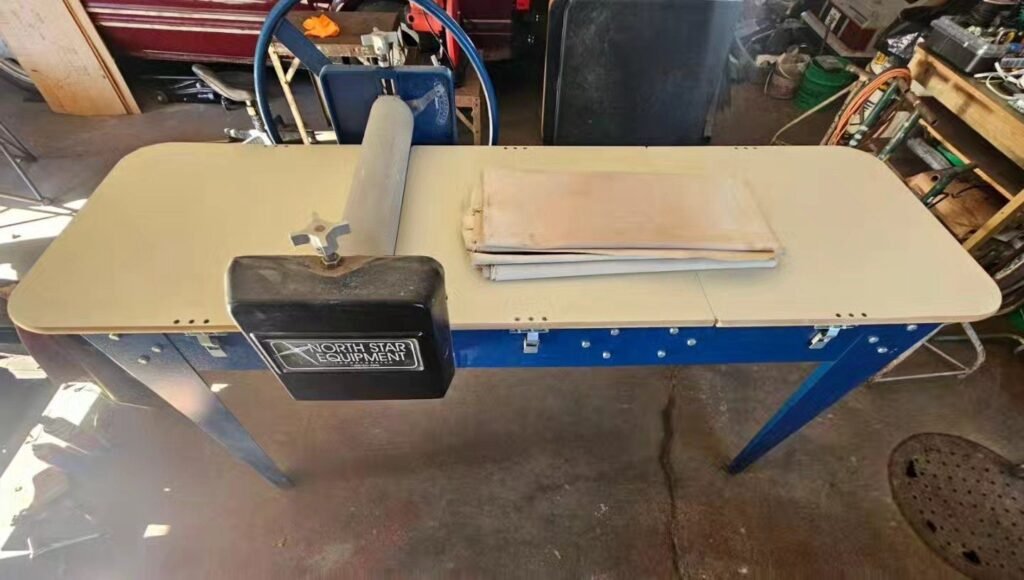
It can also become one of the best equipment purchases in your studio.
But there’s a catch.
Not every used slab roller is a good deal.
A machine can look perfectly fine in photographs and still have worn rollers, damaged bearings, missing parts, or other problems that aren’t obvious until you start using it.
If you’re shopping for a used slab roller for pottery, here’s what to check before you buy.
Why Buy a Used Slab Roller?
A slab roller is a major piece of studio equipment.
New models can cost well over $1,000, with larger professional machines costing considerably more.
Buying used can give you access to a better-built machine for less money.
That’s particularly useful if you’re setting up a home studio, expanding a classroom, or adding equipment to an established pottery studio.
You may also find older professional models that are no longer sold new.
The key is buying the machine rather than simply buying the lowest price.
What Does a Slab Roller Do?
A slab roller compresses and rolls clay into relatively even sheets.
Those slabs can then be used to make:
Plates
Platters
Tiles
Boxes
Trays
Sculptures
Large vessels
Architectural ceramics
Handbuilt pottery
The biggest advantage is consistency.
Instead of repeatedly rolling clay with a rolling pin, you can produce slabs with much more predictable thickness.
That makes a slab roller particularly useful if you make a lot of handbuilt pottery.
Used Slab Roller vs New Slab Roller
The biggest advantage of buying new is predictability.
You know the machine’s age.
You know its condition.
You normally receive manufacturer support.
You may also receive a warranty.
A used slab roller is different.
The price can be much lower, but you’re taking on more responsibility for checking the machine.
That doesn’t make used equipment a bad choice.
It means condition matters.
A well-maintained professional slab roller can be a much better purchase than a neglected machine simply because the neglected machine is cheaper.
How Much Is a Used Slab Roller Worth?
There isn’t one fixed used slab roller price.
Value depends on:
Brand
Model
Age
Condition
Roller condition
Table condition
Accessories
Size
Portability
Availability of replacement parts
Local demand
Shipping cost
Current new price
For example, recent US resale listings have shown used North Star slab rollers offered around $450 for a lightly used portable model, while larger complete setups can sell for several thousand dollars.
That huge difference is why you should compare the actual machine rather than using a single “used price” as your benchmark.
Check the Rollers First
The rollers are the heart of the machine.
Inspect them carefully.
Look for:
Deep scratches
Dents
Rust
Uneven surfaces
Clay buildup
Damage around the edges
Anything that could affect the consistency of the slab
Run the rollers if possible.
They should move smoothly.
If the rollers catch, wobble, or feel rough, investigate why before buying.
A cosmetic scratch isn’t necessarily a major problem.
A damaged roller that produces uneven slabs is.
Check the Roller Adjustment
A good slab roller should allow you to control slab thickness.
Check the adjustment mechanism carefully.
Turn the handles or adjustment controls.
They should move smoothly rather than feeling seized or excessively loose.
Make sure both sides adjust consistently.
If one side is significantly different from the other, the machine may require attention before it can produce even slabs.
Look at the Tables
The tables support your clay and canvas as you roll.
Inspect them for:
Warping
Cracks
Loose hardware
Water damage
Excessive wear
Missing components
A small cosmetic mark isn’t usually important.
A warped table can be.
The surface needs to remain stable while you’re applying pressure to the clay.
Check the Frame
The frame should feel solid.
Look underneath the machine.
Check for:
Cracks
Bent components
Broken welds
Loose bolts
Heavy corrosion
Improvised repairs
A slab roller doesn’t need to look new.
But the structural components need to be sound.
Be especially careful with machines that have clearly been modified or repaired without proper parts.
Used Slab Roller With a Hand Crank
Many slab rollers use a hand crank.
Test it.
Turn the crank slowly.
Then turn it through a full cycle.
It shouldn’t feel excessively rough or difficult to operate.
Listen for unusual noises.
A little resistance from a heavy machine can be normal.
Grinding, binding, or sudden changes in resistance deserve investigation.
Used Electric Slab Roller
Electric slab rollers can make repeated slab production much easier.
They’re particularly useful for studios producing large quantities of slabs.
But an electric machine introduces additional components that need to be checked.
Test:
Motor operation
Forward and reverse functions if applicable
Speed control
Roller movement
Emergency stop
Electrical connections
Any unusual vibration
Don’t assume the motor works simply because the seller says the machine was working recently.
Test it.
Check the Canvas
The canvas may look like a small detail.
It isn’t.
Canvas helps prevent clay from sticking and affects how you work with the slab.
Inspect the included canvas for:
Tears
Heavy clay buildup
Severe stretching
Missing pieces
Contamination
If the machine doesn’t include canvas, find out what replacement material is recommended before buying.
The machine itself may be in excellent condition, but you’ll still need to budget for the missing accessories.
Check the Slab Thickness
If you’re able to test a used slab roller, actually roll some clay.
Don’t just turn the handle with an empty machine.
Put clay through it.
Check whether the resulting slab is reasonably consistent.
Measure the thickness at several points.
If one side is significantly thicker than the other, investigate the roller alignment and adjustment mechanism.
This simple test can tell you more than a dozen photographs.
Ask About the Machine’s History
Ask the seller:
How old is it?
How often was it used?
Why are you selling it?
Was it used in a school?
Was it used commercially?
Was it kept indoors?
Was it exposed to moisture?
Has anything been repaired?
Are all original parts included?
Has the roller ever been replaced?
Do you have the original manual?
These questions aren’t about interrogating the seller.
They’re about understanding what you’re buying.
A machine used twice a month in a private studio has a very different history from one used by hundreds of students every semester.
Used Slab Roller From a School
School equipment deserves particular attention.
A slab roller in a school may have been used heavily for years.
That doesn’t automatically make it a bad purchase.
In fact, schools sometimes use professional equipment that would be expensive for an individual to purchase new.
But inspect it carefully.
Look for:
Heavy wear
Loose hardware
Missing accessories
Damaged adjustment mechanisms
Clay buildup
Rust
Repairs
If the machine has been maintained properly, age alone shouldn’t eliminate it from consideration.
Used Slab Roller for a Home Studio
Home potters have different requirements.
You may not need a huge production slab roller.
Space can be more important.
A compact or tabletop model can make sense if you primarily produce smaller pieces.
Before buying, measure the area where you plan to use it.
Remember that you need space around the machine too.
You need to be able to load clay, move canvas, remove slabs, and work comfortably.
Portable Used Slab Roller
A portable slab roller can be especially useful for small studios.
It can be moved when you’re not using it.
Some tabletop models can also be stored when space is limited.
But don’t assume portable means flimsy.
Check the frame.
Check the rollers.
Check the adjustment system.
Then consider whether the machine can handle the size of slabs you actually make.
Used Slab Roller for a Production Studio
Production studios should focus on throughput.
If you’re producing dozens or hundreds of slabs regularly, the machine needs to withstand repeated use.
Look closely at:
Roller construction
Frame strength
Adjustment mechanism
Drive system
Table size
Maintenance history
Replacement parts
A cheap machine that constantly needs attention can become expensive when it slows production.
For production work, reliability matters as much as purchase price.
Used North Star Slab Roller
North Star is one of the names worth knowing when shopping for a used slab roller.
The company makes several slab-roller configurations, including portable and larger studio models.
Used North Star machines also appear regularly in US resale listings.
That makes them worth considering when you’re comparing used equipment.
Don’t buy based on the brand alone, though.
Inspect the exact model and condition.
Used Bailey Slab Roller
Bailey is another established name in ceramic equipment.
Bailey currently offers both tabletop and larger slab-roller equipment.
A used Bailey can therefore be an interesting option if you’re looking for established studio equipment without paying full new-equipment pricing.
Again, condition matters more than the logo.
Check the actual machine.
Used Brent Slab Roller
Brent is another familiar name in pottery equipment.
If you find a used Brent slab roller, compare the asking price with the current price of an equivalent new model.
Then factor in:
Condition
Accessories
Age
Shipping
Replacement parts
Any necessary repairs
A used machine only makes financial sense when the total cost remains attractive.
How to Inspect a Used Slab Roller Before Buying
If you’re inspecting the machine in person, follow this order.
First, examine the frame.
Then inspect the rollers.
Next, test the adjustment mechanism.
Then operate the crank or motor.
After that, roll an actual slab.
Finally, check all included accessories.
This takes much less time than dealing with a machine that turns out to have a serious problem.
What to Bring When Inspecting a Used Slab Roller
You don’t need a workshop full of tools.
Bring:
Tape measure
Flashlight
Small level
Gloves
Notebook or phone
If the seller allows you to test the machine, bring a small amount of clay if practical.
The tape measure is particularly useful.
A slab roller that looked compact online can be surprisingly large in person.
Don’t Forget Shipping
This is one of the biggest mistakes people make when buying used pottery equipment.
A machine might be listed for $700.
Then you discover that shipping costs another $600.
Suddenly the bargain doesn’t look nearly as attractive.
Before buying, calculate:
Purchase price
Shipping
Pickup cost
Moving equipment
Replacement parts
Repairs
Accessories
Installation
Your real cost is the total.
Local Pickup vs Shipping
Local pickup can make used equipment much more attractive.
You can inspect it before paying.
You can test it.
You don’t have to deal with freight damage.
And you may save a significant amount on transportation.
The downside is that heavy slab rollers can require a truck and several people to move safely.
Plan the pickup before agreeing to buy.
Should You Buy a Refurbished Slab Roller?
A refurbished slab roller can be worth considering if you want lower risk than an ordinary private-party used machine.
But ask what refurbishment means.
A legitimate refurbishment should tell you what was inspected, serviced, repaired, or replaced.
Ask for details.
If the seller can’t explain what was done, treat the machine as used rather than assuming refurbishment means new condition.
Used Slab Roller Buying Checklist
Before buying, check:
Roller condition
Roller alignment
Adjustment mechanism
Frame
Tables
Crank or motor
Canvas
Hardware
Accessories
Rust
Water damage
Replacement parts
Model number
Age
Maintenance history
Shipping cost
Total purchase cost
If possible, test the machine with clay.
That one step can reveal problems that photographs won’t show.
When Is a Used Slab Roller a Good Deal?
A used slab roller can be a good deal when:
The machine is structurally sound.
The rollers are in good condition.
The adjustment system works.
The machine produces consistent slabs.
Replacement parts are available.
The accessories are included.
The total cost is substantially below comparable new equipment.
The seller can explain its history.
You don’t need a perfect machine.
You need a machine whose condition makes sense for the price.
When Should You Walk Away?
Be cautious if:
The rollers are badly damaged.
The frame is bent.
The adjustment system is seized.
The machine produces uneven slabs.
There is significant corrosion.
Electrical components look damaged.
Important parts are missing.
The seller refuses to demonstrate it.
The price is close to a new machine.
Shipping makes the total cost unreasonable.
There will always be another piece of used pottery equipment.
Don’t let a low asking price pressure you into buying a machine you don’t trust.
Where to Buy a Used Slab Roller
If you’re looking for used or refurbished pottery equipment, compare private listings with professionally inspected equipment.
The Kiln Depot carries slab rollers alongside pottery wheels, kilns, pugmills, and other studio equipment.
Browse the slab roller collection:
You can also compare the broader pottery equipment selection:
Looking at new equipment gives you an important benchmark when evaluating a used machine.
You can compare the used asking price against the price and specifications of an equivalent new model.
Is a Used Slab Roller Right for You?
If you’re building a pottery studio on a budget, a used slab roller can be a smart way to get more equipment for your money.
But don’t make the decision based on price alone.
Look at the rollers.
Test the adjustment mechanism.
Check the frame.
Roll actual clay if you can.
Ask about the machine’s history.
Then calculate the complete cost, including transportation and any repairs.
A $500 machine that needs $700 in repairs isn’t a $500 machine.
A $1,000 machine that works perfectly and would cost $2,000 or more to replace may be an excellent purchase.
The condition tells the story.
Final Thoughts
Buying a used slab roller doesn’t have to be complicated.
You just need to know what you’re looking at.
Check the rollers.
Check the adjustment system.
Check the frame.
Test the machine.
Calculate the total cost.
And compare the used price with current new-equipment prices before you commit.
For potters who make a lot of handbuilt work, the right slab roller can save time every time you sit down to prepare clay.
If you’re ready to compare your options, browse the slab rollers available at The Kiln Depot and use the specifications and current pricing as your benchmark before buying used.
Building a ceramics studio can get expensive very quickly.
A pottery wheel here.
A kiln there.
Then suddenly you’re looking at pugmills, slab rollers, extruders, wedging tables, shelving, ventilation and dozens of smaller tools.
The good news is that you don’t need to buy everything at once.
The smartest approach is to build your studio around the work you actually do.
This guide breaks down the most important ceramic studio equipment and explains what each piece does, who needs it, and when it makes sense to buy it.
What Is Ceramic Studio Equipment?
Ceramic studio equipment includes the larger machines, furniture, and tools used to prepare clay, form pottery, fire finished work, and manage a working ceramics studio.
The major categories include:
Pottery wheels
Kilns
Pugmills
Slab rollers
Clay extruders
Wedging tables
Clay mixers
Glaze equipment
Shelving
Ventilation equipment
Clay reclaim equipment
Not every studio needs every category.
A wheel-throwing home studio may need a wheel and kiln but have little use for a slab roller.
A production studio may need almost everything on the list.
Your process should determine your equipment.
The Core Ceramic Studio Equipment Every Studio Should Consider
Most pottery studios eventually need equipment from several basic categories.
Clay preparation
Forming
Firing
Glazing
Storage
Cleaning
Start with the stages of your workflow.
First, how do you prepare clay?
Next, how do you form it?
Then, how do you dry and fire it?
Finally, how do you glaze and finish it?
This approach makes it much easier to decide what equipment deserves your money first.
Pottery Wheels
For wheel-thrown pottery, the pottery wheel is usually the center of the studio.
A good wheel gives you controlled rotation while you center and shape the clay.
Important specifications include:
Torque
Wheelhead size
Clay capacity
Speed control
Pedal response
Forward and reverse operation
Construction
Noise
For a home studio, noise and footprint can matter just as much as power.
For production pottery, durability and torque become much more important.
If you’re looking specifically for a wheel, browse the current pottery wheel selection at The Kiln Depot.
Pottery Kilns
A kiln turns finished greenware into permanent ceramic ware.
It is one of the biggest equipment purchases in a studio.
Before buying a kiln, consider:
Internal dimensions
Firing temperature
Voltage
Amperage
Phase
Controller
Ventilation
Available floor space
Electrical service
The kiln needs to match both your pottery and your building.
A small kiln can be perfectly adequate for a hobby studio.
A production studio may need considerably more firing capacity.
Browse pottery kilns here:
Electric Pottery Kilns
Electric kilns are widely used in home studios, schools and professional ceramic studios.
They are particularly convenient when you want programmable firing schedules.
Modern controllers can allow you to program ramp and hold schedules and monitor the firing process.
But don’t choose a kiln simply because it looks large.
Check the electrical requirements first.
A kiln that your building cannot safely power isn’t a bargain.
Pugmills
A pugmill is primarily a clay-processing machine.
It can help studios reclaim clay, mix clay bodies and prepare workable clay for throwing or handbuilding.
This becomes increasingly useful as your studio produces more clay waste.
Instead of throwing every scrap away, you can reclaim suitable clay and put it back into your workflow.
A pugmill can therefore become both a productivity tool and a waste-reduction tool.
If you regularly reclaim large amounts of clay, it may eventually become one of the most valuable pieces of equipment in your studio.
Pottery Slab Rollers
A slab roller turns clay into consistent sheets.
It is particularly useful for handbuilding.
Potters use slab rollers for:
Plates
Platters
Tiles
Boxes
Large vessels
Sculpture
Architectural ceramics
A slab roller can also reduce the repetitive physical work involved in rolling large slabs by hand.
If your studio focuses heavily on slab construction, this equipment can make a major difference.
Clay Extruders
A clay extruder forces clay through a shaped die to create repeatable profiles.
They’re useful for:
Handles
Coils
Tubes
Decorative trim
Architectural components
Sculptural forms
Repeated shapes
An extruder can save a surprising amount of time when you need to make the same component repeatedly.
It doesn’t replace handbuilding.
It makes certain parts of handbuilding faster.
Wedging Tables
A wedging table gives you a dedicated surface for preparing clay.
This may sound simple, but a proper work surface can improve the entire studio workflow.
A good wedging area should be:
Stable
Comfortable
Easy to clean
Large enough for your clay
Located near clay storage
If you’re constantly preparing clay on a temporary table, a dedicated wedging area can be a worthwhile upgrade.
Clay Mixers
Clay mixers are useful when you prepare your own clay bodies.
They can help mix dry materials and moisture into a more consistent clay body.
This becomes more important for studios that:
Mix large quantities
Develop custom clay bodies
Process reclaimed materials
Need repeatable batches
For a small hobby studio, buying a clay mixer may be unnecessary.
For a production studio, it can become a major efficiency improvement.
Glaze Equipment
Glazing requires more than a bucket of glaze.
Depending on your process, you may eventually need:
Glaze mixers
Sieves
Scales
Buckets
Spray equipment
Dipping containers
Glaze storage
Test tiles
The equipment you need depends heavily on how you apply glaze.
A potter who brushes commercial glazes onto small pieces needs a very different setup from a production studio spraying hundreds of pieces.
Ceramic Studio Equipment for Beginners
A beginner does not need a fully equipped commercial studio.
Start with the equipment that directly supports your current work.
For example, a beginner making wheel-thrown pottery might start with:
Pottery wheel
Basic hand tools
Work surface
Clay storage
Shelving
Drying space
Access to a kiln
Notice that a kiln doesn’t necessarily have to be the first major purchase.
You can pay a local studio or firing service to fire your work while you learn.
That can dramatically reduce the initial investment.
Building a Home Ceramic Studio
A home studio should be designed around your available space.
Before buying equipment, measure:
Floor space
Doorways
Ceiling height
Electrical outlets
Water access
Ventilation
Storage
Equipment clearance
Don’t forget delivery.
A large kiln, pugmill or slab roller may fit inside your studio but still be impossible to get through the doorway.
Measure before you order.
Ceramic Studio Equipment for a Garage
Garages are popular locations for home ceramics studios because they usually provide more space than an interior room.
They also make cleanup easier.
But garages can have temperature fluctuations, dust, moisture and electrical limitations.
Plan the space carefully.
Keep dry clay and glaze materials organized.
Use appropriate cleaning methods.
And make sure any kiln installation follows the manufacturer’s electrical and ventilation requirements.
Ceramic Studio Equipment for a Basement
Basements can work well for pottery.
They’re often quieter than garages and can provide a dedicated workspace.
However, moisture management becomes particularly important.
Clay, water and wet cleanup already introduce moisture into the environment.
Make sure equipment is protected from standing water and that the room has appropriate ventilation.
Also consider how you’ll move heavy equipment downstairs.
A pottery wheel is one thing.
A large kiln or pugmill is another.
Ceramic Studio Equipment for a School
School ceramics studios have different requirements from home studios.
Equipment may be used by dozens or hundreds of students.
That makes durability particularly important.
Schools should consider:
Heavy-duty wheels
Durable work tables
Reliable kilns
Clay reclaim systems
Storage
Ventilation
Clay traps
Glaze storage
Easy-to-clean surfaces
Safety procedures
Equipment designed for occasional hobby use may not survive years of classroom use.
Ceramic Studio Equipment for Production Pottery
Production studios should think in terms of bottlenecks.
Where are you losing time?
If forming is slow, look at additional wheels.
If clay preparation is slowing production, consider a pugmill.
If slab production is the problem, look at a slab roller.
If firing is limiting output, consider additional or larger kiln capacity.
Don’t buy equipment because another studio has it.
Buy equipment because your workflow needs it.
Used Ceramic Studio Equipment
Used ceramic studio equipment can significantly reduce the cost of building a studio.
Current US resale listings show used kilns, Brent wheels, Shimpo wheels and slab rollers being offered by private sellers. citeturn0search1turn0search11
But used equipment requires inspection.
Check:
Condition
Model
Age
Electrical requirements
Maintenance history
Replacement parts
Missing components
Repair history
Reason for sale
A low price isn’t automatically a good deal.
The equipment still needs to work.
Refurbished Ceramic Studio Equipment
Refurbished equipment can offer another option.
Instead of taking on all the uncertainty of a private-party purchase, you may be able to buy equipment that has been inspected, serviced or tested.
However, ask what refurbishment actually means.
Find out:
What was inspected?
What was replaced?
Was it test-run?
Are replacement parts available?
Is there a warranty?
The word refurbished alone doesn’t tell you enough.
How Much Does Ceramic Studio Equipment Cost?
There isn’t one studio-equipment budget.
A beginner can start relatively small.
A professional production studio can spend tens of thousands of dollars.
Your biggest expenses will often be:
Kiln
Pottery wheels
Pugmill
Slab roller
Clay mixer
Ventilation
Electrical installation
Studio construction
The important thing is to build in stages.
You don’t need to purchase every machine on day one.
How to Build a Ceramic Studio on a Budget
Start with equipment that directly produces finished work.
For a wheel-focused potter, that might mean:
Pottery wheel
Basic tools
Clay
Work surface
Storage
Firing access
Then upgrade based on the problems you encounter.
If reclaiming clay becomes a major task, consider a pugmill.
If rolling slabs becomes tedious, consider a slab roller.
If production increases, consider additional wheels.
If firing becomes the bottleneck, consider a kiln.
This keeps your spending connected to actual demand.
New vs Used Ceramic Studio Equipment
Both options have advantages.
New equipment generally provides:
Known condition
Manufacturer support
Warranty
Current specifications
Used equipment can provide:
Lower purchase cost
Professional equipment at a discount
Access to discontinued models
Faster studio expansion
The best option depends on your budget and your ability to inspect equipment.
For expensive machinery, condition matters more than whether the equipment is technically new.
What Ceramic Equipment Should You Buy First?
Start with your primary method of making pottery.
If you throw:
Buy a good wheel.
If you primarily handbuild:
Consider a slab roller or extruder.
If you reclaim large amounts of clay:
Consider a pugmill.
If you’re firing frequently:
Consider a kiln.
If you’re doing all of these:
Build the studio in stages.
This prevents you from spending thousands of dollars on equipment that sits unused.
When Is It Time to Upgrade?
Equipment should solve a problem.
Upgrade when:
You’re waiting to use equipment
You’re producing more than your current setup can handle
Your current machine is slowing production
Repairs are becoming frequent
Your workflow has changed
You need more capacity
Your current equipment no longer fits your work
Don’t upgrade simply because a newer model exists.
If your current wheel throws perfectly, there’s no urgent reason to replace it.
Ceramic Studio Equipment for Sale
When you’re ready to buy, compare the equipment category rather than searching randomly for individual machines.
Look at:
Kilns
Pottery wheels
Pugmills
Slab rollers
Clay extruders
Other studio equipment
The Kiln Depot carries pottery and ceramic equipment for home potters, educators and professional studios.
Compare the specifications, condition, capacity and total delivered cost before buying.
What to Check Before Buying Ceramic Equipment
Before placing an order, ask:
Will it fit my studio?
Can my building power it?
Do I have enough workspace?
How heavy is it?
How will it be delivered?
Are replacement parts available?
What maintenance does it require?
Is there a warranty?
What accessories are included?
What is the total delivered price?
These questions become even more important with large equipment.
A Practical Ceramic Studio Equipment Checklist
A basic studio may eventually include:
Pottery wheel
Kiln
Work table
Wedging surface
Clay storage
Drying shelves
Tool storage
Glaze storage
Cleaning equipment
A growing studio may add:
Pugmill
Slab roller
Clay extruder
Clay mixer
Glaze mixer
Additional wheels
Additional kiln furniture
A production studio may need even more specialized equipment.
The important point is that your studio should grow around your production needs.
Don’t Buy Your Dream Studio All at Once
This is one of the biggest mistakes new potters make.
They see a fully equipped studio online and assume they need all of it immediately.
You don’t.
Start with the equipment that allows you to make the work.
Then let your workflow tell you what comes next.
The best equipment purchase is often the one that removes your biggest bottleneck.
Final Thoughts
Ceramic studio equipment can turn a basic workspace into a productive pottery studio.
But buying more equipment doesn’t automatically make a better studio.
The goal is to build a workflow where every major machine has a purpose.
A pottery wheel handles throwing.
A kiln handles firing.
A slab roller handles consistent slabs.
An extruder handles repeatable profiles.
A pugmill handles clay processing and reclaim.
Each machine solves a different problem.
Start with the problem that’s costing you the most time.
Then buy the equipment that solves it.
If you’re ready to build or upgrade your studio, compare the ceramic equipment available at The Kiln Depot and choose equipment based on your actual workload, available space and budget.
