Need replacement kiln shelves? A cracked, warped, or missing shelf can quickly turn into a problem when you are trying to load your next firing.
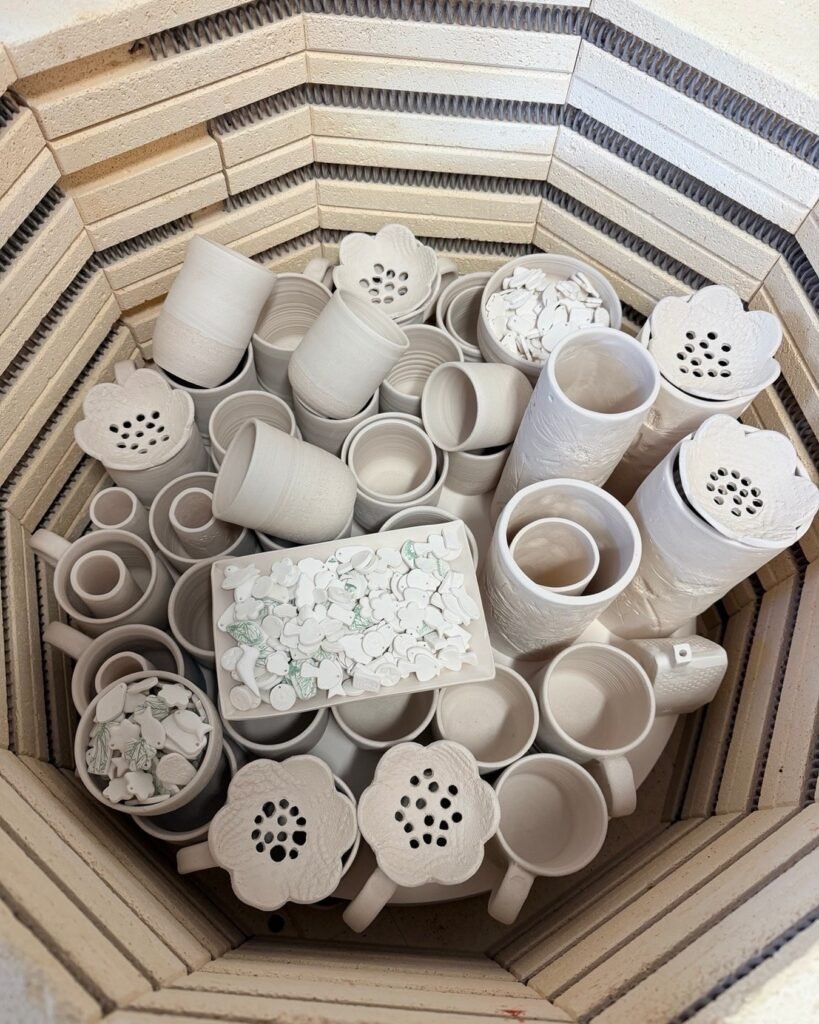
Fortunately, you usually do not need to replace the entire kiln. You can replace individual shelves, add extra shelves, or change your shelf configuration to suit the pottery you make.
The important part is buying the correct shelf.
Kiln shelves come in different sizes, shapes, thicknesses, and materials. Therefore, a shelf that looks close to the one you already have may still be the wrong choice.
Before you order replacement kiln shelves, check these seven things.
1. Start With Your Exact Kiln Model
The easiest way to make a wrong purchase is to start with shelf dimensions instead of the kiln.
Find the exact model number of your kiln first.
Then check which shelves are designed for that model.
This matters because two kilns can have similar outside dimensions while using different shelf shapes. A multi-sided kiln, for example, may need shelves shaped to follow the chamber walls.
Skutt explains that its shelves are designed around the contours of its multi-sided kiln chambers. The company also offers different shelf configurations for different models.
So, if you own a Skutt kiln, start with the model number rather than simply searching for a generic shelf.
The same principle applies to Paragon, Olympic, Evenheat, and other kiln brands.
2. Measure the Shelf You Need to Replace
Once you know the kiln model, measure the existing shelf.
Check:
- Width
- Length
- Diameter if it is round
- Thickness
- Overall shape
If the original shelf is badly damaged, measure another shelf from the same kiln if possible.
You can also measure the inside of the kiln chamber and compare those measurements with the manufacturer’s specifications.
Do not assume that a shelf labeled “18-inch kiln shelf” will automatically fit an 18-inch kiln.
The usable chamber dimensions are what matter.
Even a small difference in shape can prevent the shelf from sitting correctly.
3. Choose the Correct Shelf Shape
Replacement kiln shelves are available in several shapes.
Depending on your kiln, you may need a round, square, rectangular, multi-sided, full, or half shelf.
The shape affects how efficiently you can use the kiln chamber.
For example, Skutt offers half shelves for many of its multi-sided ceramic kilns. These shelves can make loading easier because each piece is lighter and easier to handle.
Half shelves also give you more loading flexibility.
You can stagger them or arrange them differently depending on the size and height of the pottery inside the kiln.
However, a full shelf can make more sense when you regularly fire large pieces that need a continuous surface.
Therefore, do not automatically assume that half shelves are better.
Choose the configuration that matches the work you actually fire.
4. Check the Shelf Thickness
Thickness is one of the most important specifications to check.
A thicker shelf generally provides more rigidity and can resist warping better under demanding firing conditions.
However, it also weighs more and takes up more vertical space.
A thinner shelf can be lighter and leave more room for pottery, but the appropriate thickness depends on the kiln, shelf span, and firing temperature.
Skutt specifically notes that some of its larger 1227 models are available with 1-inch and 5/8-inch shelves. For higher-temperature firing on those larger spans, it recommends the thicker option because it provides better resistance to warping.
That does not mean every kiln needs a 1-inch shelf.
Instead, match the thickness to the manufacturer’s recommendation for your kiln.
If you are replacing a shelf because it warped, thickness is especially worth checking before you order the replacement.
5. Consider the Material
Kiln shelves are made from refractory materials designed to tolerate repeated heating and cooling.
Traditional ceramic kiln shelves are commonly made from materials such as cordierite because of their ability to handle thermal shock.
However, there are also premium kiln shelf materials designed for specific performance advantages.
This is where your firing routine matters.
A potter who fires occasionally may have very different needs from a production studio firing several times every week.
Think about:
- Your maximum firing temperature
- How frequently you fire
- The weight of your typical loads
- How often you handle the shelves
- How much you want to spend
The goal is not to buy the most expensive shelf.
The goal is to buy a shelf that performs appropriately for your kiln and firing schedule.
6. Decide Whether You Need Full or Half Shelves
If your kiln supports both configurations, this decision deserves some thought.
Full shelves give you one continuous surface.
That can be useful for large plates, platters, sculptures, and other pieces that need the full diameter of the kiln.
Half shelves offer a different advantage.
Because each shelf is smaller, they are easier to lift and position. You can also create different loading arrangements when firing pieces of different sizes.
Skutt notes that half shelves can provide more loading options and can be staggered to help airflow through the kiln.
They can also reduce the amount of weight you have to handle each time you load or unload the kiln.
For a studio producing lots of smaller pottery, that flexibility can be useful.
For large work, however, full shelves may be more practical.
7. Check Your Shelf Posts Before Ordering
A new shelf is only part of the loading system.
Your shelf posts also need to work with it.
Posts determine the distance between shelf levels. They also support the shelves while the kiln is firing.
Skutt recommends using three posts to support each shelf in typical applications, although larger shelves may require additional support.
The first shelf should also be raised above the kiln floor.
That allows heat to move underneath the shelf instead of placing the ware directly on the kiln floor.
Before buying a replacement shelf, inspect your existing posts.
Look for:
- Cracks
- Chips
- Significant warping
- Glaze buildup
- Damaged edges
If the shelf is damaged but the posts are still in good condition, you may only need one replacement shelf.
If several components are damaged or missing, a complete furniture kit may make more sense.
When Should You Replace a Kiln Shelf?
A kiln shelf does not need to look brand new to remain useful.
Surface discoloration is normal.
Small amounts of wear are also expected after repeated firings.
However, significant cracks and warping deserve attention.
A cracked shelf can become a serious problem during firing. Likewise, a badly warped shelf may no longer provide a stable surface for your pottery.
Heavy glaze buildup can also create problems.
Kiln wash helps prevent glaze from bonding directly to the shelf. Skutt recommends coating shelves with kiln wash because it helps prevent dripping glaze from fusing pottery to the shelf.
If a glaze drip does reach the shelf, remove it carefully rather than continuing to fire with a large buildup.
Can You Buy Individual Replacement Kiln Shelves?
Yes.
You do not always need a complete furniture kit.
Individual shelves make sense when you have one damaged shelf and the rest of your kiln furniture is still usable.
They can also be useful if you want to add another shelf to your existing setup.
For example, The Kiln Depot carries individual kiln shelves in different sizes and configurations, including square, round, rectangular, and other kiln-specific options.
You can browse the current kiln shelves collection to compare the available options.
Buying only what you need can also be more economical than replacing an entire furniture set.
When Should You Buy a Complete Furniture Kit?
Individual shelves make sense for a simple replacement.
A furniture kit can make more sense when you are starting from scratch.
If you purchased a used kiln that came without shelves and posts, for example, you need more than one replacement shelf.
You may also want a complete kit if your existing furniture is heavily damaged or incomplete.
The Kiln Depot’s guide to kiln furniture, shelves, and posts explains how the different components work together.
Still, do not automatically buy a full kit when one shelf is the only problem.
Replace what actually needs replacing.
How Many Kiln Shelves Do You Need?
The answer depends on the height of your kiln and the pottery you normally fire.
A taller kiln can accommodate more shelf levels.
However, adding more shelves does not mean you should fill every available inch.
Your pottery needs adequate clearance from the shelf above it, the kiln walls, and other components.
Skutt’s ceramics guidance recommends leaving space between shelves and the kiln walls, raising the bottom shelf above the kiln floor, and keeping adequate clearance around the work.
Therefore, plan your shelf levels around your pottery rather than trying to maximize the number of shelves.
A few well-spaced shelves are more useful than an overcrowded kiln.
Replacement Kiln Shelves for High-Fire Pottery
If you regularly fire at higher temperatures, pay particular attention to shelf specifications.
High-fire work puts greater demands on kiln furniture.
The shelf needs to tolerate the temperature and repeated thermal cycling without excessive warping.
Large shelf spans also matter.
A shelf that performs well at a lower temperature may not be the best choice for repeated high-temperature firing.
That is why manufacturer specifications matter more than a generic claim that a shelf is “high temperature.”
Check the rated temperature, thickness, size, and intended kiln application before purchasing.
A Simple Buying Checklist
Before ordering replacement kiln shelves, confirm:
- Your exact kiln model.
- Shelf width and length.
- Shelf diameter if applicable.
- Shelf shape.
- Full or half configuration.
- Shelf thickness.
- Material.
- Maximum firing temperature.
- Compatibility with your existing posts.
- Whether you need one shelf or a complete furniture kit.
Once these details match, the buying decision becomes much easier.
Final Thoughts
Replacement kiln shelves are simple to buy when you know what your kiln actually requires.
The biggest mistake is treating them as universal accessories.
They are not.
The correct shelf needs to fit the kiln chamber, work with your existing posts, tolerate your firing temperatures, and suit the type of pottery you make.
If one shelf has cracked, buying an individual replacement may be all you need.
If your kiln is missing most of its furniture, a complete kit may be the better solution.
Either way, start with the kiln model.
Then check the dimensions, shape, thickness, material, and temperature rating.
That small amount of research can save you from ordering a shelf that does not fit, does not perform properly, or simply does not make sense for the way you fire.
