If you’re searching for the best Skutt kiln, you’re already looking at one of the most respected names in ceramics. Whether you’re building your first home pottery studio, replacing an aging kiln, or expanding a production workshop, investing in the right kiln will influence the quality of your work, firing efficiency, and long-term operating costs for years to come.
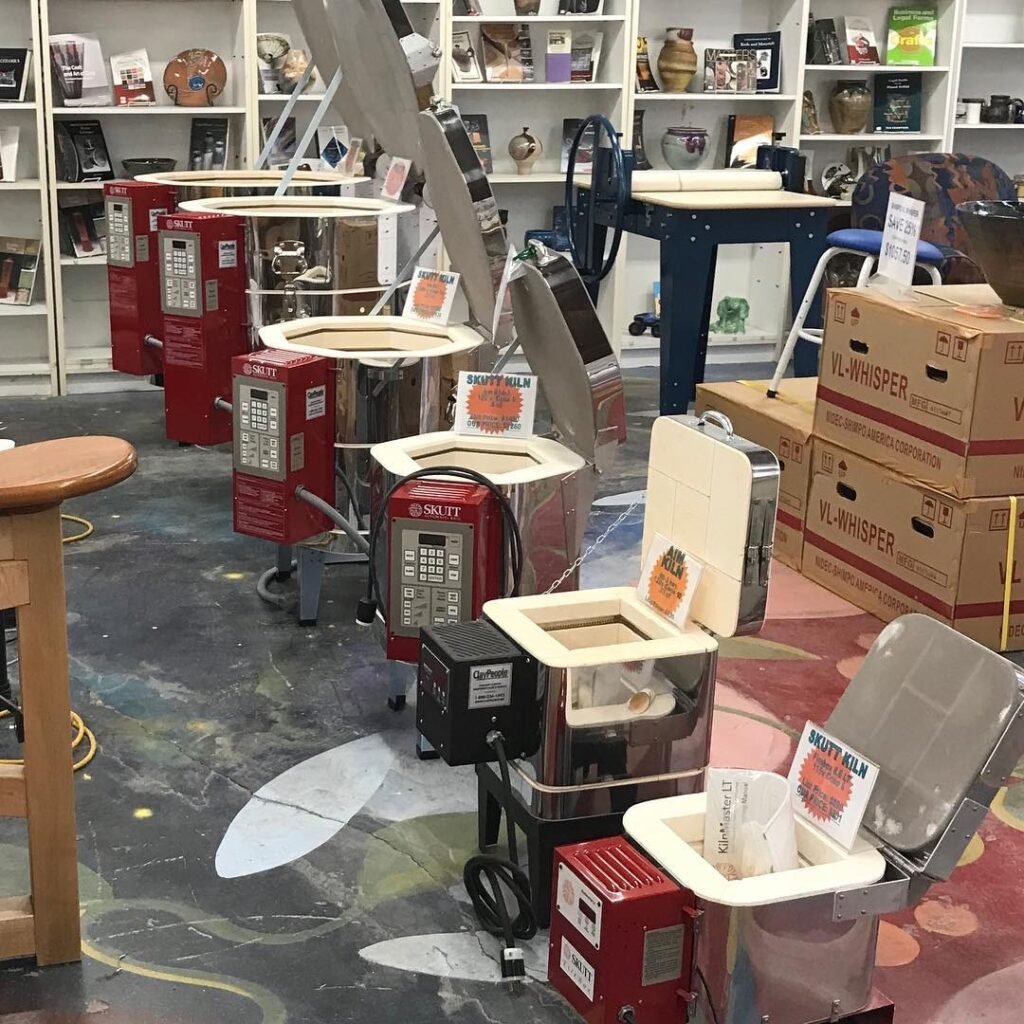
A Skutt kiln has become the preferred choice for thousands of ceramic artists because it combines dependable construction, user-friendly digital controls, excellent customer support, and long-term reliability. From hobby potters making mugs on weekends to professional studios firing hundreds of pieces every month, Skutt offers models designed for nearly every type of ceramic artist.
This buying guide explains how to choose the right Skutt kiln, compares the most popular models, highlights important features, and helps you avoid common buying mistakes.
Quick Answer
The Skutt KM-1027 is the best all-around Skutt kiln for most ceramic artists because it balances firing capacity, efficiency, affordability, and room for future growth. Smaller studios often prefer the KM-818 or KM-822, while production potters typically benefit from the larger KM-1227.
Key Takeaways
- Skutt is one of the most trusted kiln manufacturers in the ceramics industry.
- Choose a kiln based on your future production, not just your current workload.
- The KM-1027 offers the best balance of size, efficiency, and value.
- Professionally refurbished Skutt kilns can provide excellent value.
- Proper ventilation and electrical planning are essential before installation.
Why Choose a Skutt Kiln?
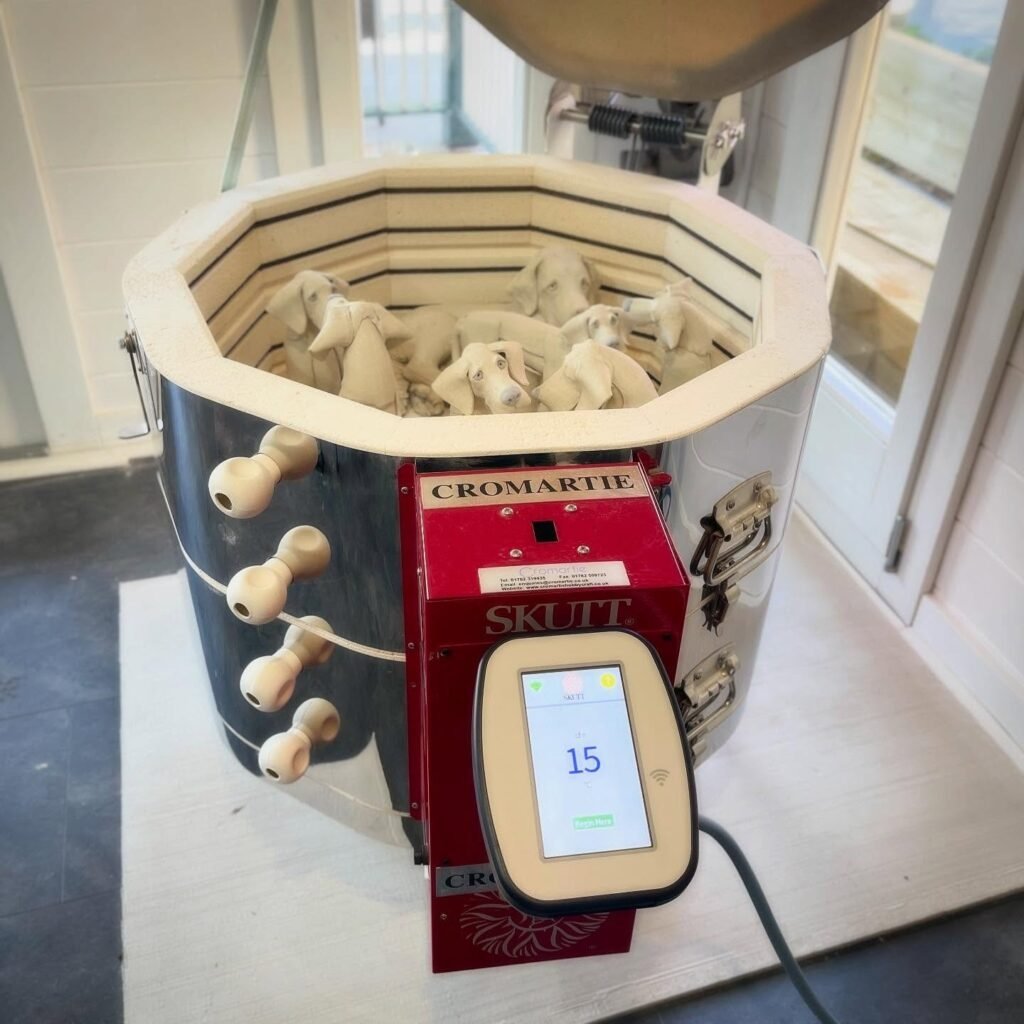
Buying a kiln is one of the biggest investments you’ll make as a ceramic artist. Unlike pottery wheels or hand tools, a kiln becomes the heart of your studio. Every finished piece depends on consistent firing temperatures and reliable performance.
Skutt has earned its reputation by manufacturing kilns that are designed to last for decades with proper maintenance.
Some of the biggest reasons ceramic artists choose a Skutt kiln include:
- Consistent firing temperatures
- Digital programmable controllers
- Excellent replacement part availability
- Durable firebrick construction
- Strong resale value
- Wide dealer network
- Outstanding technical documentation
- Easy programming for beginners
- Advanced firing options for professionals
Because replacement elements, relays, thermocouples, shelves, and accessories remain readily available, many Skutt kilns stay in active use for twenty years or more.
What Makes a Good Pottery Kiln?
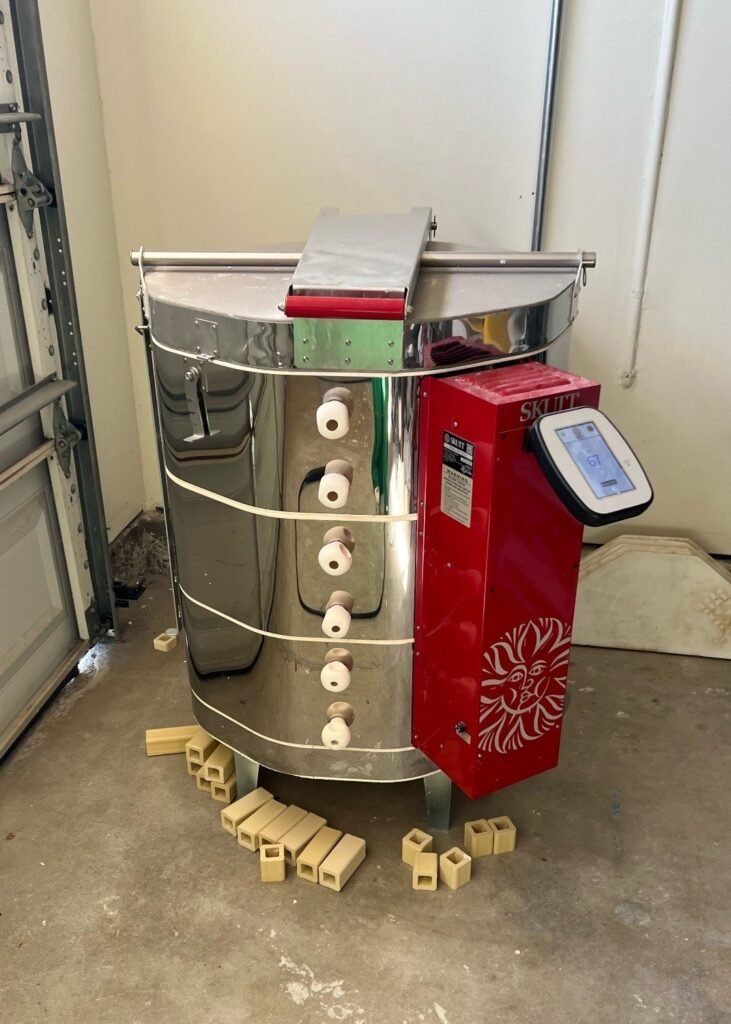
The best kiln isn’t always the largest or the most expensive.
Instead, the ideal kiln matches your:
- Production volume
- Studio size
- Electrical service
- Clay body
- Firing temperature
- Budget
- Future business growth
Buying a kiln that’s too small often leads to unnecessary firing cycles and increased electricity costs. Buying one that’s significantly larger than your needs may increase installation costs without providing additional value.
Planning for moderate growth usually provides the best long-term investment.
Understanding Cone Ratings
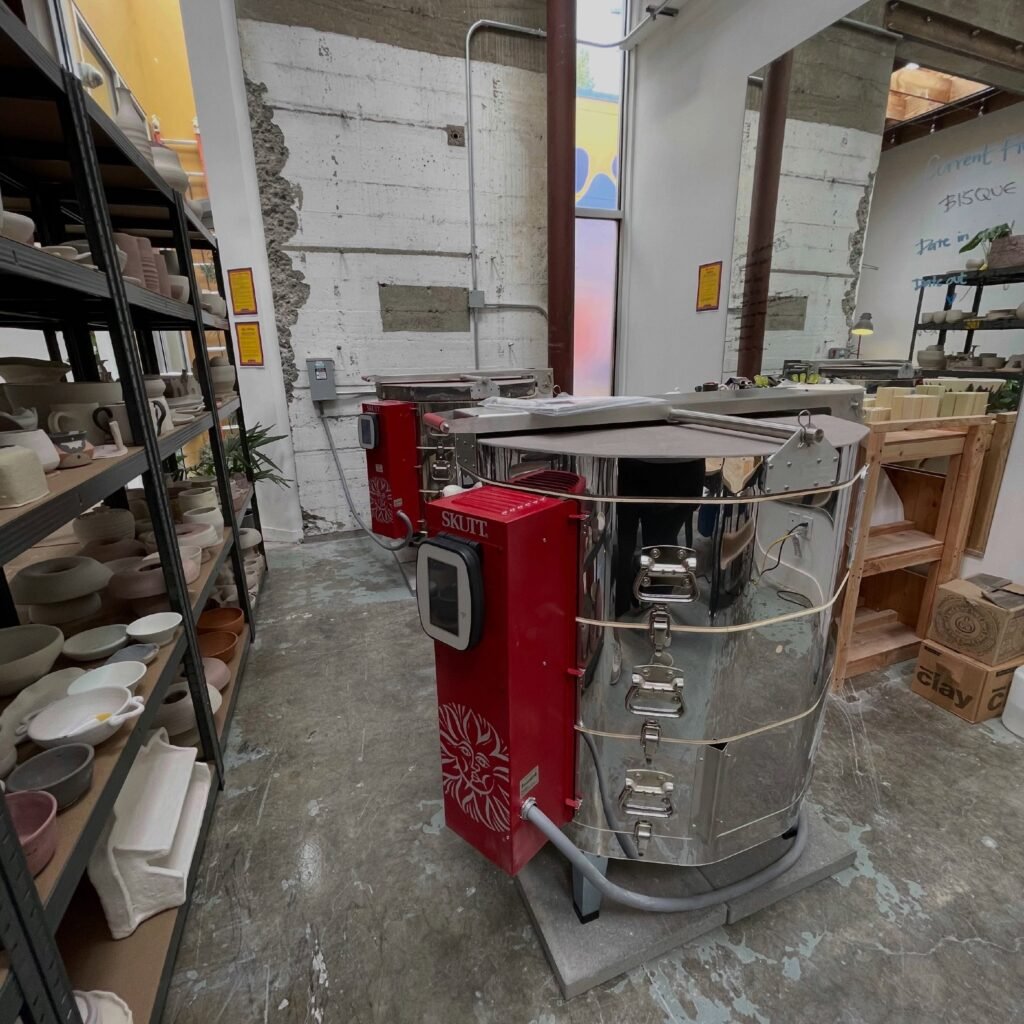
Before purchasing a kiln, it’s important to understand ceramic firing temperatures.
Most ceramic artists regularly fire at one of three temperature ranges.
| Cone | Typical Use |
|---|---|
| Cone 06–04 | Bisque firing |
| Cone 5–6 | Mid-fire stoneware |
| Cone 10 | High-fire stoneware and porcelain |
Most Skutt kilns comfortably handle both bisque and glaze firings, making them suitable for a wide variety of ceramic work.
Popular Skutt Kiln Models
Skutt KM-818
The KM-818 is one of the smallest full-featured Skutt kilns available. It works exceptionally well for hobby potters, glaze testing, jewelry makers, and ceramic artists with limited studio space.
Best For
- Beginners
- Apartments
- Small studios
- Test firing
- Small production batches
Pros
- Compact footprint
- Lower operating costs
- Easy installation
- Reliable digital controller
Cons
- Limited production capacity
- Can be outgrown quickly
Skutt KM-822
Many potters consider the KM-822 the perfect middle ground.
It offers noticeably more interior space than the KM-818 while remaining practical for garages and home studios.
Best For
- Functional pottery
- Home studios
- Serious hobbyists
- Weekend production
Pros
- Excellent value
- Increased firing capacity
- Fits many residential studios
- Lower electrical requirements than larger models
Skutt KM-1027
The KM-1027 is arguably the flagship Skutt kiln.
Professional ceramic artists frequently recommend it because it offers enough capacity for growing businesses without requiring the massive electrical demands of larger production kilns.
Its deeper chamber allows multiple shelf levels, making it ideal for mugs, bowls, dinnerware, serving platters, and larger ceramic forms.
Best For
- Professional potters
- Schools
- Community studios
- Growing pottery businesses
Why Buyers Love It
- Excellent capacity
- Reliable performance
- Long service life
- Strong resale value
- Outstanding production efficiency
For many studios, the KM-1027 is the last kiln they’ll need for many years.
Skutt KM-1227
If your studio regularly produces larger firing loads, the KM-1227 offers significantly greater capacity.
Instead of running multiple firings each week, many production potters consolidate work into fewer firing cycles.
That saves:
- Electricity
- Time
- Labor
- Wear on kiln elements
The KM-1227 is an excellent choice for full-time ceramic businesses.
Comparison Table
| Model | Best For | Capacity | Studio Size |
|---|---|---|---|
| KM-818 | Beginners | Small | Home |
| KM-822 | Hobbyists | Medium | Home |
| KM-1027 | Professionals | Large | Medium |
| KM-1227 | Production | Very Large | Commercial |
New vs Used vs Refurbished
A new Skutt kiln provides the latest controller technology and manufacturer warranty.
A used kiln often costs significantly less but should always be inspected for:
- Brick damage
- Worn elements
- Relay condition
- Controller operation
- Rust
- Wiring damage
Professionally refurbished Skutt kilns offer an attractive middle ground by replacing common wear items while reducing purchase cost.
For many buyers, refurbished equipment provides the best value.
Common Buying Mistakes
Avoid these common mistakes when purchasing a kiln.
- Buying too small.
- Ignoring electrical requirements.
- Forgetting ventilation.
- Underestimating future production.
- Buying solely on price.
- Forgetting kiln furniture.
- Not budgeting for accessories.
Avoiding these mistakes can save thousands of dollars over the lifetime of your kiln.
Buyer Checklist
Before purchasing a Skutt kiln, ask yourself:
✓ How much pottery do I produce?
✓ What is my largest piece?
✓ What firing temperatures do I use?
✓ Is my electrical service adequate?
✓ Do I have enough studio space?
✓ Do I need a vent system?
✓ Should I buy new or refurbished?
✓ Will my production increase?
If you answer these questions before purchasing, you’ll be far more likely to choose the right kiln.
Frequently Asked Questions
Which Skutt kiln is best for beginners?
The KM-818 is an excellent starting point for hobby potters and smaller home studios.
Which Skutt kiln is most popular?
The KM-1027 remains one of the most popular Skutt kiln models because of its balance between size, efficiency, and affordability.
How long does a Skutt kiln last?
With proper maintenance, many Skutt kilns remain in service for decades.
Should I buy a used Skutt kiln?
A used kiln can be an excellent investment if it has been carefully inspected and maintained.
Are refurbished Skutt kilns worth buying?
Yes. Professionally refurbished kilns often include new heating elements, inspected controllers, and replacement wear components while costing less than new equipment.
Can I install a Skutt kiln in my garage?
Many home studios use garage installations, provided the electrical supply, ventilation, and clearances comply with local codes and the manufacturer’s guidance.
Final Thoughts
A Skutt kiln is more than a piece of equipment—it’s the foundation of your ceramic studio. Choosing the right model can improve firing consistency, reduce operating costs, and give your pottery business room to grow.
Whether you’re buying your first kiln or upgrading an existing studio, compare your production goals, available space, electrical requirements, and long-term plans before making a decision. A well-chosen Skutt kiln can provide decades of reliable service and become one of the most valuable investments in your pottery journey.
Ready to find the right kiln? Browse The Kiln Depot’s selection of new, used, and professionally refurbished Skutt kilns, compare popular models, and explore our pottery wheels, slab rollers, and studio equipment to build a ceramic workspace that grows with you.
go on
The direction is good, but if your goal is to outrank Skutt, Clay-King, Sheffield Pottery, and The Ceramic Shop, we need to stop writing “blog posts” and start writing definitive buying resources.
The article above would probably score 75–85 in Rank Math. I want your cornerstone content consistently in the 95–100range. To do that, here’s what I’d add next.
How Does a Skutt Kiln Work?
Understanding how a Skutt kiln operates will help you make a more informed purchasing decision and get the most from your investment.
Unlike gas kilns that require manual burner adjustment and fuel management, a Skutt electric kiln uses electric heating elements embedded in insulated firebrick walls. When electricity flows through these elements, they generate radiant heat that gradually raises the temperature inside the firing chamber.
A digital controller constantly monitors the temperature using a thermocouple. Instead of guessing when the kiln has reached temperature, the controller automatically adjusts the firing schedule to follow programmed heating and cooling rates.
Modern Skutt kilns allow you to save firing programs, making it easy to reproduce successful glaze results. This consistency is one of the biggest reasons professional ceramic artists choose electric kilns for functional pottery and production work.
Main Components of a Skutt Kiln
Every Skutt kiln includes several key components that work together to produce reliable firings:
- Firebrick insulation
- Heating elements
- Digital controller
- Thermocouple
- Lid safety switch
- Peepholes
- Kiln stand
- Electrical wiring
- Lid and hinge assembly
Each part plays an important role in maintaining even temperatures and long-term durability.
What Can You Fire in a Skutt Kiln?
A common misconception is that electric kilns are only suitable for beginner ceramics. In reality, modern Skutt kilns are capable of firing a wide variety of materials used by hobbyists, educators, and professional ceramic artists.
You can fire:
- Earthenware
- Stoneware
- Porcelain
- Ceramic sculpture
- Functional dinnerware
- Decorative pottery
- Tiles
- Ceramic jewelry
- Test tiles
- Glaze samples
Many Skutt kilns are rated to Cone 10, making them suitable for both mid-fire and high-fire clay bodies.
Understanding Voltage Before Buying
Electrical requirements are one of the most overlooked aspects of purchasing a kiln.
Skutt manufactures kilns in several voltage configurations, including 120V, 208V, and 240V. The correct option depends on your studio’s electrical service.
120V Kilns
Ideal for:
- Apartments
- Small studios
- Hobby potters
- Jewelry firing
Advantages:
- Standard household outlet (model dependent)
- Lower installation costs
- Compact size
Limitations:
- Smaller firing chamber
- Lower production capacity
240V Kilns
Most full-size Skutt kilns operate on 240V electrical service.
Advantages:
- Faster heating
- Larger firing chambers
- Better suited for production work
Most home studios with larger kilns require installation by a licensed electrician to ensure the electrical circuit meets local code requirements.
Single-Phase vs. Three-Phase Power
Commercial buyers frequently ask whether they need single-phase or three-phase power.
Single-Phase
Most residential homes and small studios.
Three-Phase
Larger commercial buildings, universities, industrial studios.
Unless you’re operating from a commercial facility, your Skutt kiln will most likely use single-phase power.
Choosing the Right Controller
One of the biggest advantages of modern Skutt kilns is their advanced controller technology.
Benefits include:
- Automatic firing programs
- Delayed start
- Controlled cooling
- Multiple user programs
- Error diagnostics
- Repeatable glaze firings
For production potters, programmable controllers dramatically improve consistency and reduce human error.
Should You Buy a Vent System?
A kiln vent isn’t always legally required, but it’s one of the best upgrades you can make.
A proper vent system can help:
- Improve firing consistency
- Reduce odors
- Remove fumes
- Improve air circulation
- Extend element life
- Create a safer studio environment
Studios firing regularly often consider a vent system essential.
Essential Accessories for Every Skutt Kiln
Your kiln purchase is only part of the investment. Most ceramic artists also need several accessories before firing their first load.
Kiln Furniture Kit
Includes:
- Shelves
- Posts
- Supports
Without kiln furniture, stacking multiple shelves efficiently is impossible.
Kiln Wash
Protects shelves from glaze drips and extends their lifespan.
Witness Cones
Although digital controllers are highly accurate, witness cones remain one of the best methods for confirming heatwork inside the kiln.
Heat-Resistant Gloves
Protect your hands while unloading warm shelves and kiln furniture.
Vent System
Recommended for improved safety and firing performance.
Cost of Ownership
Many buyers focus entirely on purchase price.
Instead, consider the total cost of ownership.
This includes:
- Purchase price
- Freight shipping
- Electrical installation
- Ventilation
- Kiln furniture
- Replacement elements
- Electricity
- Routine maintenance
A kiln that costs more initially may ultimately be less expensive to own if it better matches your production needs and reduces the number of firing cycles.
Expert Buying Tip
If you’re debating between two Skutt kiln sizes, the larger model is often the better long-term investment—provided your studio has the space and electrical capacity.
Many potters eventually outgrow smaller kilns, while a slightly larger model allows room for larger projects, higher production, and future business growth without requiring another major equipment purchase.
This is the level of depth I’d continue adding throughout the pillar page. By the time it’s complete (around 4,000–5,000 words), it would comprehensively answer buyer questions, strengthen topical authority, and create many opportunities for internal linking to The Kiln Depot’s product and category pages.
go on
Skutt Kiln vs. Other Kiln Brands
Choosing the right kiln often means comparing Skutt with other leading manufacturers. While every brand has strengths, understanding the differences helps you invest in equipment that matches your studio’s needs.
Skutt vs. L&L Kilns
Both manufacturers produce high-quality electric kilns capable of firing to Cone 10. L&L kilns are known for their heavy-duty construction and element protection, making them popular in educational and production environments.
Skutt, however, is often preferred by home studios and small businesses because of its intuitive digital controllers, extensive dealer network, and broad availability of replacement parts.
Choose Skutt if you:
- Want an easy-to-use controller
- Need strong dealer support
- Plan to purchase replacement parts locally
- Are building a home or small commercial studio
Choose L&L if you:
- Operate a high-volume production studio
- Prioritize element protection
- Need industrial-duty construction
Skutt vs. Olympic Kilns
Olympic kilns offer a wide range of electric and gas models and are often competitively priced.
Skutt generally offers:
- More advanced controller options
- Better nationwide support
- Higher resale value
- Larger community of users
Olympic remains a good option for budget-conscious buyers, but many first-time kiln owners appreciate the simplicity and documentation that come with Skutt.
Skutt vs. Paragon Kilns
Paragon is especially well known for glass fusing, jewelry, and specialty kilns.
If your primary focus is pottery, stoneware, or porcelain, Skutt’s lineup provides more options specifically designed for ceramic firing.
Skutt vs. Evenheat
Evenheat produces premium electric kilns with excellent craftsmanship and quiet operation.
Both companies manufacture outstanding products.
Many buyers choose between them based on:
- Dealer availability
- Preferred controller
- Chamber size
- Budget
- Local support
How Much Does a Skutt Kiln Cost?
One of the most common questions buyers ask is:
“How much does a Skutt kiln cost?”
The answer depends on several factors.
Pricing varies according to:
- Kiln size
- Controller type
- Voltage
- Furniture kit
- Vent system
- Freight shipping
- Installation requirements
Although smaller kilns generally cost less upfront, larger kilns often provide better long-term value because they reduce the number of firing cycles required.
When budgeting, remember to include:
- Electrical installation
- Kiln stand
- Ventilation
- Shelves
- Posts
- Kiln wash
- Freight delivery
Thinking about the complete investment rather than just the purchase price will help you make a smarter buying decision.
Maintaining Your Skutt Kiln
A well-maintained kiln performs more consistently, consumes energy more efficiently, and lasts significantly longer.
Fortunately, routine maintenance is straightforward.
Inspect Heating Elements
Heating elements gradually wear with repeated firings.
Signs they may need replacement include:
- Longer firing times
- Difficulty reaching temperature
- Uneven firing
- Controller error messages
Replacing worn elements restores firing performance and helps maintain consistent glaze results.
Check the Thermocouple
The thermocouple measures the temperature inside your kiln.
Over time, repeated exposure to extreme heat causes it to wear.
A damaged thermocouple may lead to inaccurate firing temperatures.
Replacing it periodically helps maintain firing accuracy.
Clean the Kiln Regularly
Small pieces of clay, glaze drips, and debris can accumulate inside the firing chamber.
After each firing:
- Remove loose debris.
- Vacuum carefully using a HEPA vacuum designed for fine dust.
- Inspect shelves.
- Repair glaze drips promptly.
Keeping the kiln clean improves efficiency and extends the life of the firebrick.
Protect Your Kiln Shelves
Kiln shelves are one of the most valuable accessories you own.
Applying kiln wash creates a protective barrier that helps prevent glaze from permanently sticking to the shelf surface.
Reapply kiln wash whenever necessary to maintain protection.
Common Skutt Kiln Problems
Even high-quality kilns occasionally require maintenance.
Some common issues include:
Kiln Won’t Reach Temperature
Possible causes:
- Worn heating elements
- Failing relay
- Faulty thermocouple
- Incorrect voltage
Uneven Glaze Results
Possible causes:
- Improper shelf spacing
- Overloaded kiln
- Worn elements
- Incorrect firing schedule
Controller Displays Error Code
Most modern Skutt controllers include diagnostic error codes.
Common causes include:
- Thermocouple failure
- Power interruption
- Relay malfunction
- Excessively long firing cycles
Consult the controller manual or an authorized technician before replacing components.
Signs You’ve Outgrown Your Kiln
Many ceramic artists eventually reach the point where their current kiln limits productivity.
You may need a larger kiln if:
- You’re firing multiple times each week.
- Finished work no longer fits comfortably.
- You’re turning away wholesale orders.
- Shelves are always packed.
- Customers are waiting for inventory.
Moving from a KM-818 to a KM-1027—or from a KM-1027 to a KM-1227—can dramatically increase production without requiring additional labor.
Mistakes to Avoid When Buying a Skutt Kiln
Many buyers regret their first kiln purchase—not because the kiln was poor quality, but because it wasn’t the right size or configuration.
Avoid these common mistakes:
- Choosing the cheapest kiln instead of the right kiln.
- Ignoring future production goals.
- Forgetting electrical installation costs.
- Buying without measuring studio space.
- Skipping a vent system.
- Forgetting to budget for kiln furniture.
- Overlooking freight delivery requirements.
- Purchasing without comparing chamber sizes.
- Ignoring replacement part availability.
- Waiting until your kiln fails before planning an upgrade.
Avoiding these mistakes will save money, reduce frustration, and help your studio grow more efficiently.
Expert Recommendations
If you’re buying your first Skutt kiln, the KM-822 offers an excellent balance between affordability, capacity, and future flexibility.
If you’re planning to sell pottery professionally, the KM-1027 is one of the strongest long-term investments because it provides production-level capacity without moving into much larger commercial equipment.
For schools, teaching studios, and production facilities, larger models such as the KM-1227 deliver outstanding efficiency by reducing the number of firing cycles needed each month.
