The best pugmill for pottery is the one that matches the condition of your clay and the amount of clay you process.
That sounds obvious, but it is where most pugmill buying decisions go wrong.
A potter who mainly needs to de-air already workable clay has a different requirement from a studio that wants to throw dry scraps, water, and old clay into one machine and get usable clay back out.
Then there is capacity.
A compact studio pugmill may be perfect for a home potter but completely inadequate for a university ceramics department processing hundreds of pounds of clay.
So before comparing brands, decide what you actually want the machine to do.
The most important questions are:
- Do you need mixing, or only pugging and de-airing?
- How much clay do you process at a time?
- Do you need to reclaim dry scraps?
- How much space and electrical capacity do you have?
- Do you need a compact studio machine or production equipment?
Once those are clear, the right pugmill becomes much easier to identify.
Best Pugmill for Pottery: Quick Comparison
| Type | Best For | Main Advantage | Main Limitation |
| Compact de-airing pugmill | Small studios | Ready-to-throw clay | Limited capacity |
| Pugmill mixer | Reclaiming and blending | Can mix clay and adjust moisture | More complex |
| Heavy-duty pugmill | Schools and production | High throughput | Large and expensive |
| Used professional pugmill | Budget-conscious studios | More capacity for the money | Condition varies |
| Refurbished pugmill | Buyers wanting lower risk | Professionally serviced equipment | Availability varies |
There is no universal winner.
The best machine depends on your workflow.
What Does a Pugmill Actually Do?
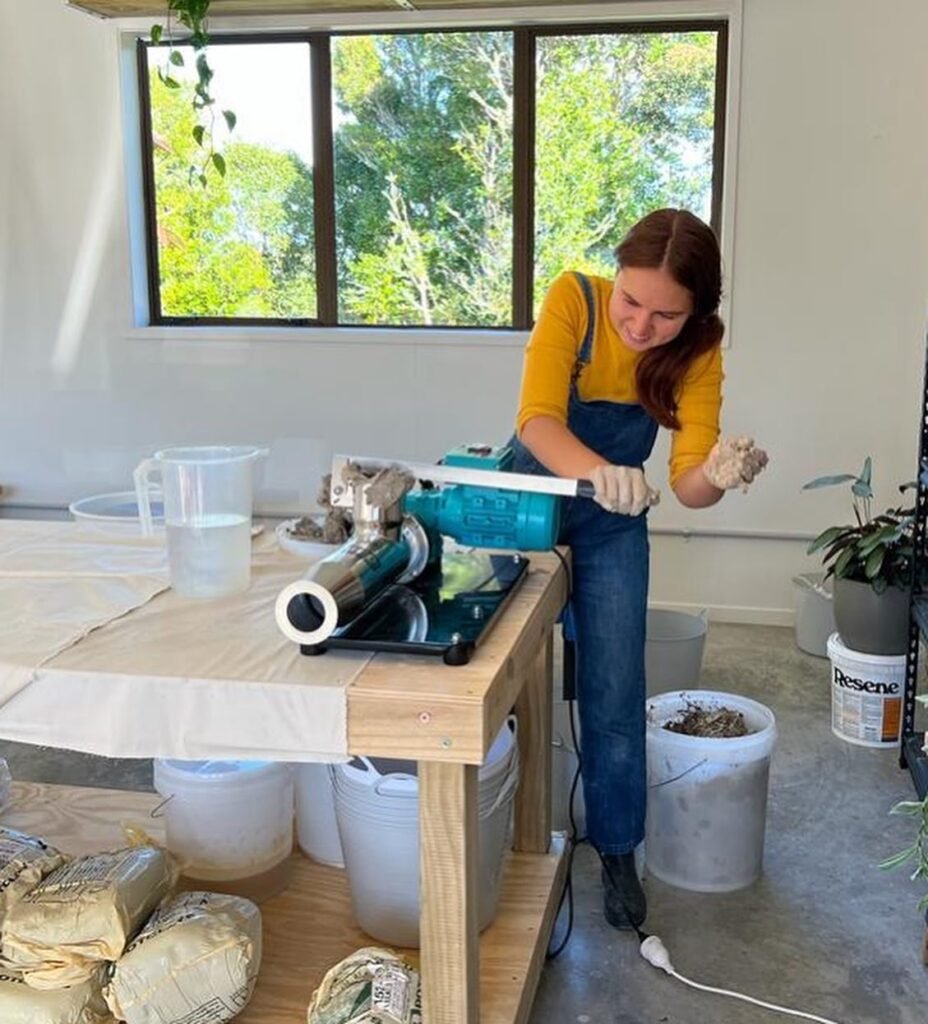
A pugmill processes clay through a chamber using an auger or similar mechanical system.
Depending on the design, it can:
- Blend clay
- Reclaim scraps
- Mix moisture
- Remove air
- Homogenize clay
- Extrude clay into logs
- Prepare clay for throwing
- Prepare clay for slabs or other forming processes
That last point matters because pugmills are not all designed to perform the same jobs.
Some are primarily pugmills.
Others are genuinely mixer-pugmills.
The distinction can dramatically change how you use the machine.
Pugmill vs Mixer-Pugmill
This is probably the most important distinction in the entire buying decision.
A conventional pugmill generally expects the clay to already be in a workable condition.
A mixer-pugmill can do more of the preparation inside the machine.
Peter Pugger’s VPM-9, for example, is designed as a vacuum de-airing pugger-mixer. The manufacturer says it can accept moist clay, broken greenware, slop, powder and water, then mix, de-air and pug the material.
That is fundamentally different from feeding already-prepared clay into a conventional pugmill.
If you routinely have dry scraps and want to reclaim them without a separate mixing process, a mixer-pugmill can save substantial labor.
If your clay is already prepared and you mainly want to remove air and homogenize it, you may not need that capability.
Do You Need a De-Airing Pugmill?
Not necessarily.
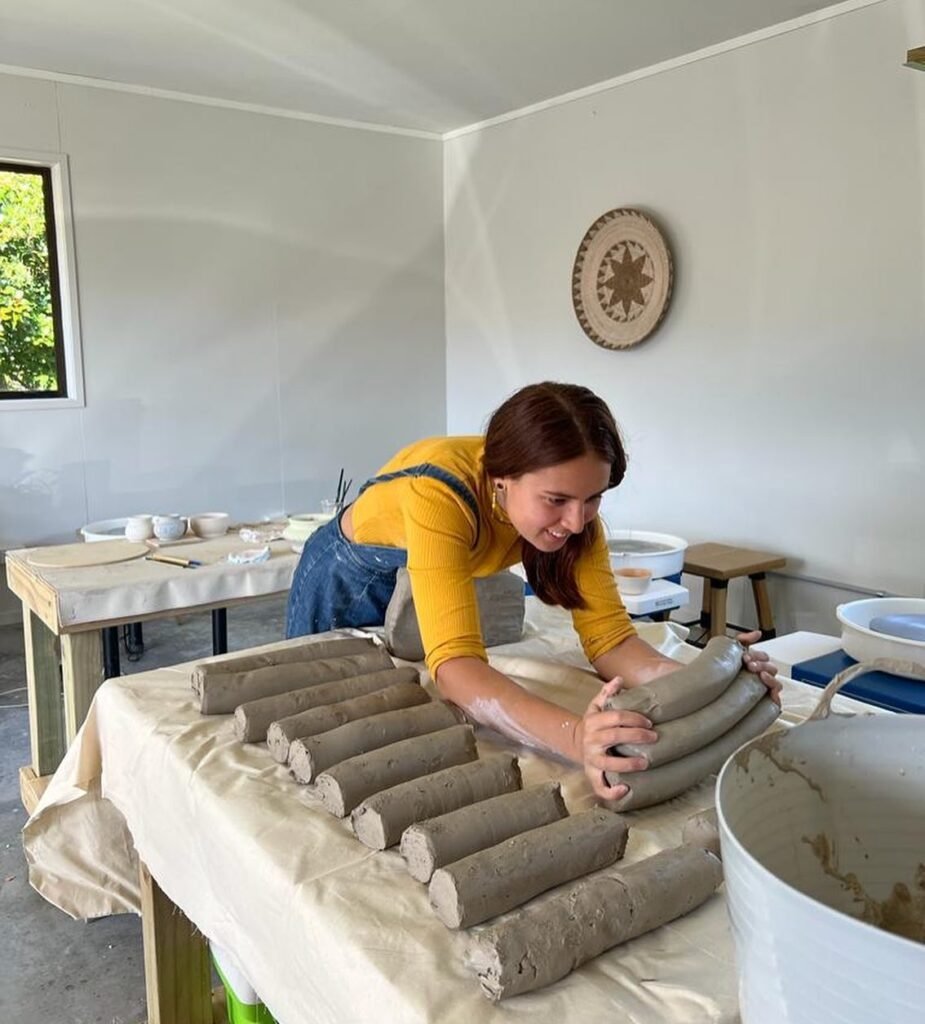
A de-airing pugmill uses vacuum to remove trapped air from the clay as it is processed.
This can produce dense, consistent clay that is ready for throwing, handbuilding or other forming processes.
De-airing is particularly useful when:
- You throw frequently
- You recycle clay regularly
- You want consistent clay density
- You want to minimize hand wedging
- You work with large quantities of reclaim
- You want clay ready to use directly from the machine
But de-airing adds complexity and cost.
If you only process small quantities of clay occasionally, the extra expense may not be justified.
The right question is not:
“Is de-airing better?”
It is:
“Will I use de-airing enough to justify paying for it?”
Best Pugmill for Pottery Reclaim
For many potters, reclaiming clay is the main reason to buy a pugmill.
Clay scraps accumulate quickly.
Throwing trimmings, failed pots, dried chunks and excess clay into a reclaim system can turn waste into usable material.
But there are two very different reclaim workflows.
Workable scrap
If your scraps are already soft and reasonably homogeneous, a conventional pugmill may be enough to blend and de-air them.
Dry or difficult scrap
If you want to process much drier material and adjust moisture inside the machine, a mixer-pugmill becomes more attractive.
Peter Pugger’s VPM-9 is specifically designed around this type of workflow. Its manufacturer states that unfired clay, including broken greenware, slop, powder and water, can be processed in the machine.
That capability is one of the strongest arguments for a mixer-pugmill.
Best Pugmill for Pottery Home Studios
A home studio usually has three constraints:
Space.
Power.
Volume.
You probably do not need a machine designed for a university ceramics department if you process a few buckets of clay each week.
Compact machines can make more sense.
Peter Pugger’s VPM-9, for example, measures 36 inches long by 14 inches wide by 14 inches high and has a maximum batch capacity of 25 pounds. The manufacturer lists a 500-pound-per-hour pugging rate and 150-pound-per-hour mixing rate, although actual throughput varies with clay condition and moisture.
That illustrates an important point.
Batch capacity and hourly output are not the same thing.
A machine can have a high theoretical hourly output while still being designed around relatively small batches.
For a home studio, batch size may be more relevant than headline throughput.
Best Pugmill for Production Pottery
Production studios have a different problem.
The machine needs to keep up.
If you are processing hundreds of pounds of clay regularly, a compact pugmill can become a bottleneck.
BlueBird’s current production range illustrates the difference. Its Model 3000 is a large direct-drive production pugmill intended for schools, university ceramics departments and full-time production studios. The manufacturer lists it at 780 pounds and gives dimensions of approximately 73.75 by 28.25 by 40.5 inches.
That is not home-studio equipment.
And that is exactly the point.
Do not buy production machinery simply because the specifications look impressive.
Buy it because your workflow actually requires it.
Peter Pugger vs BlueBird
Peter Pugger and BlueBird represent two different approaches to studio clay processing.
Peter Pugger’s compact VPM machines combine mixing, pugging and vacuum de-airing.
BlueBird offers both non-deairing and de-airing studio pugmills, as well as much larger production machines.
The current BlueBird Studio Pugmill range includes the 425 and 440 models. BlueBird lists both at approximately 400 pounds per hour, with the 425 performing basic pugging, reclaiming and extrusion without de-airing, while the 440 produces de-aired clay. Both use a 1/3 HP motor and 115V power.
That makes the comparison less about brand loyalty and more about workflow.
If you need mixing from dry scraps, Peter Pugger’s mixer-pugger design is important.
If you already have workable clay and mainly need pugging and de-airing, a BlueBird-style studio pugmill may fit the workflow better.
Peter Pugger vs Shimpo
The Kiln Depot’s existing brand comparison identifies a useful difference between Peter Pugger and Shimpo.
Peter Pugger’s compact machines are designed around mixing as well as pugging.
Shimpo’s standard compact pugmills are primarily intended for already-workable clay that needs pugging and de-airing rather than complete mixing from dry powder and water.
That means neither approach is automatically better.
Choose Peter Pugger if integrated reclaiming and mixing are central to your workflow.
Consider Shimpo when your clay is already workable and your priority is pugging and de-airing.
What About Bailey Pugmills?
Bailey is another established name in ceramic processing equipment.
Its range has included conventional pugmills as well as mixer-pugmill systems designed for reclaiming and clay preparation.
Historical Bailey documentation describes its MXP mixer-pugmills as machines capable of mixing, pugging, reclaiming and extruding, with models available in different batch capacities.
For current purchases, however, verify the exact model, availability and specifications rather than relying on older catalog material.
This is particularly important with ceramic equipment because model ranges and configurations change.
How Much Pugmill Capacity Do You Need?
Do not start with pounds per hour.
Start with your actual clay consumption.
Ask:
How many pounds of clay do I process each week?
Then:
How much do I process in one batch?
Then:
How often do I reclaim?
For example, a potter processing 25 pounds of reclaim at a time has little reason to buy a machine designed around industrial production unless there are other requirements.
A school processing several hundred pounds every day has the opposite problem.
Capacity should match workload.
Batch Capacity vs Output Rate
These numbers are easy to confuse.
A manufacturer might advertise a pugging rate of hundreds of pounds per hour.
That does not mean you can load that amount into the machine at once.
Peter Pugger’s VPM-9 illustrates this clearly.
Its maximum batch capacity is 25 pounds, while its listed pugging rate is 500 pounds per hour. Its mixing rate is listed at 150 pounds per hour.
The difference exists because the machine processes repeated batches.
When comparing pugmills, look at both numbers.
Pugmill Motor Power
Motor horsepower matters, but it should not be the only specification you compare.
Also consider:
- Gear reduction
- Auger design
- Clay consistency
- Chamber design
- Batch size
- De-airing system
- Intended duty cycle
A smaller motor on a well-designed geared machine can perform differently from a larger motor in another design.
This is why horsepower alone is a poor way to rank pugmills.
Pugmill Size and Studio Space
Measure before you buy.
And measure more than the machine footprint.
You also need room for:
- Loading clay
- Removing clay logs
- Cleaning
- Opening service panels
- Moving buckets
- Storing reclaim
- Accessing electrical connections
A machine that technically fits against a wall may be miserable to use if you cannot comfortably load it.
This becomes especially important with production pugmills.
Electrical Requirements
Compact pugmills can sometimes operate from ordinary electrical service.
Peter Pugger lists the VPM-9 with 120V availability and optional 208 to 240V operation. Its listed electrical specification is 3/4 HP, single-phase, 8 amps at 120V or 6 amps at 240V.
BlueBird’s current Studio Pugmill listing specifies 115V power for its 425 and 440 models.
Larger machines can have very different requirements.
Before buying, verify the exact electrical specification of the model and configuration.
Do not assume that because a small pugmill works from a standard outlet, a larger machine will too.
Stainless Steel vs Standard Construction
Material choice can matter if you work with clay bodies that are prone to corrosion or contamination concerns.
Stainless components are particularly attractive when working with:
- Porcelain
- White stoneware
- Light-colored clay
- Multiple clay bodies
- Studios concerned about cross-contamination
Peter Pugger’s VPM-9 uses stainless steel for its shaft, augers and paddles and an aluminum mixing/pugging chamber.
But stainless steel should not be treated as an automatic reason to spend more.
Consider how you actually use the machine.
Cleaning a Pugmill
A pugmill does not eliminate clay maintenance.
You still need to clean it appropriately.
Cleaning becomes especially important when switching between clay bodies.
For example, moving from a dark clay to porcelain without proper cleaning can introduce unwanted contamination.
Peter Pugger’s VPM-9 is designed so the mixing/pugging chamber can be removed using four bolts for cleaning, according to the manufacturer.
That type of serviceability is worth considering before purchase.
A machine that is difficult to clean can become a nuisance even if it performs well.
Do Pugmills Need Regular Maintenance?
Yes, although the amount depends on the design.
Inspect:
- Auger
- Blades
- Bearings
- Seals
- Vacuum system
- Electrical connections
- Bolts
- Output nozzle
- Hopper
- Gearbox
Follow the manufacturer’s maintenance schedule.
Also keep clay from accumulating in areas where it can interfere with moving components.
Maintenance is easier when the machine is designed for access.
New vs Used Pugmill
A used pugmill can be an excellent way to obtain professional equipment for less money.
But pugmills are mechanical machines.
Condition matters.
Before buying used, inspect:
- Motor
- Gearbox
- Auger
- Blades
- Bearings
- Seals
- Vacuum system
- Electrical components
- Output nozzle
- Barrel
- Safety controls
Then test the machine with clay if possible.
Do not evaluate it only while running empty.
A pugmill that sounds fine without clay can behave very differently under load.
The Kiln Depot’s existing used pugmill guide covers the used-equipment inspection process in more detail.
Refurbished Pugmills
A refurbished pugmill can occupy a useful middle ground.
The important question is what refurbishment actually included.
Ask whether the seller:
- Tested the motor
- Inspected the gearbox
- Checked bearings
- Replaced seals
- Inspected the auger
- Tested the vacuum
- Checked electrical components
- Cleaned the machine
- Tested it under load
A machine should not receive a large price premium simply because the listing says “refurbished.”
You want to know what was done.
How Much Does a Pugmill Cost?
Prices vary enormously by size and capability.
A compact studio pugmill and a university production machine are not remotely comparable purchases.
The current Peter Pugger VPM-9 is listed by the manufacturer at $5,699, while its VPM-9HC high-compression model is listed at $7,749.
BlueBird’s Model 3000 production pugmill is currently listed at $10,500.
These prices illustrate why capacity and workflow should come before brand preference.
Do not spend $10,000 on a production pugmill to process a few buckets of reclaim each month.
Likewise, do not buy a compact 25-pound-batch machine if your studio processes hundreds of pounds every week.
Is a Pugmill Worth It?
For occasional potters, maybe not.
For regular pottery production, it can dramatically reduce the labor associated with clay preparation.
A pugmill becomes more attractive when you:
- Reclaim clay regularly
- Produce significant scrap
- Throw frequently
- Prepare large amounts of clay
- Work with multiple clay bodies
- Want consistent de-airing
- Sell pottery commercially
- Teach ceramics
- Run a community or school studio
If you rarely reclaim clay, buying a large machine may not make financial sense.
Best Pugmill for a Home Potter
For a home potter, prioritize:
- Compact footprint
- Appropriate batch size
- Simple electrical requirements
- Easy cleaning
- Reliable de-airing
- Parts availability
A compact mixer-pugmill is particularly attractive if reclaiming dry scraps is a regular part of your process.
A compact de-airing pugmill may make more sense if your clay is already workable.
Best Pugmill for a School or Teaching Studio
A school needs something different.
Multiple students may produce large quantities of reclaim.
The machine needs to tolerate regular use and be relatively straightforward to operate.
Consider:
- Capacity
- Safety controls
- Cleaning access
- Replacement parts
- Service support
- Electrical requirements
- Throughput
At this scale, buying based solely on initial price can be a mistake.
Downtime affects an entire studio.
Best Pugmill for a Production Studio
Production studios should focus on throughput and reliability.
Calculate how much clay you actually process each week.
Then determine whether the machine can handle that workload without becoming the bottleneck.
At this level, a large BlueBird or Bailey system may make more sense than a compact studio pugmill.
The right production machine should be evaluated as infrastructure rather than simply as another pottery tool.
Five Pugmill Buying Mistakes
Buying based on brand alone
Peter Pugger, BlueBird, Bailey and Shimpo all have different designs.
Compare the machine, not just the logo.
Ignoring the mixing requirement
If you want to process dry scraps and water, a conventional pug-only machine may not be enough.
Comparing hourly output without checking batch size
A high hourly number does not tell you how much material the hopper can accept at once.
Buying too much capacity
Unused capacity is expensive.
Ignoring cleaning
Clay contamination and maintenance become much more important as your studio uses multiple clay bodies.
Best Pugmill for Pottery: Buying Checklist
Before purchasing, confirm:
Purpose: Do you need pugging, de-airing, mixing, or all three?
Clay condition: Will you feed workable clay or dry scraps?
Batch size: How many pounds do you process at once?
Output: How much clay do you need per hour?
Space: Can you load and service the machine comfortably?
Power: Does your electrical system support it?
Construction: Are the materials appropriate for your clay bodies?
Cleaning: Can you access the auger and chamber?
Parts: Can you obtain replacement components?
Maintenance: What does the manufacturer require?
Price: What is the total installed cost?
Future use: Will the machine still suit your studio as production grows?
Frequently Asked Questions
What is the best pugmill for pottery?
The best pugmill for pottery depends on your clay workflow. A compact de-airing pugmill can suit a small studio, while a mixer-pugmill is more appropriate if you regularly reclaim dry scraps and adjust moisture inside the machine.
Do I need a de-airing pugmill?
Not necessarily. De-airing is useful when you want dense, ready-to-use clay with minimal wedging, but occasional potters may not process enough clay to justify the additional cost.
What is the difference between a pugmill and a mixer-pugmill?
A conventional pugmill primarily processes workable clay. A mixer-pugmill can also mix clay and adjust moisture, depending on the design.
Is Peter Pugger better than BlueBird?
They use different approaches. Peter Pugger’s VPM machines emphasize integrated mixing, reclaiming and vacuum de-airing. BlueBird offers both non-deairing and de-airing studio pugmills as well as larger production equipment.
Can a pugmill recycle dry clay?
Only some machines are designed to do this directly. Mixer-pugmills such as Peter Pugger’s VPM-9 are specifically designed to process dry or broken unfired clay with water.
How much does a pottery pugmill cost?
Current examples range from several thousand dollars for compact studio equipment to more than $10,000 for large production machines. Capacity, construction and de-airing or mixing capabilities are major price factors.
Is a pugmill worth it for a home studio?
It can be if you reclaim clay frequently or produce enough pottery that clay preparation has become a significant labor cost. For occasional pottery, hand reclaiming may be more economical.
Should I buy a used pugmill?
A used pugmill can provide substantial savings, but inspect the motor, gearbox, auger, vacuum system, seals, bearings and electrical components before buying.
Final Buying Decision
The best pugmill for pottery is not necessarily the biggest, fastest or most expensive machine.
Start with your clay.
If you mostly process already-workable clay, a straightforward de-airing pugmill may be all you need.
If you regularly have dry scraps, slop, powder and inconsistent reclaim, a mixer-pugmill can save considerably more labor.
If you run a school or production studio, throughput becomes the priority.
And if budget is the limiting factor, a well-maintained used professional pugmill may give you considerably more capacity than buying a small new machine.
The simplest decision framework is:
Already workable clay → pug and de-air.
Dry scraps and moisture adjustment → mixer-pugmill.
Small studio → compact machine.
Regular production → higher-capacity machine.
Large production → industrial or production-scale equipment.
That is a much better way to choose than simply searching for the “best” brand.
