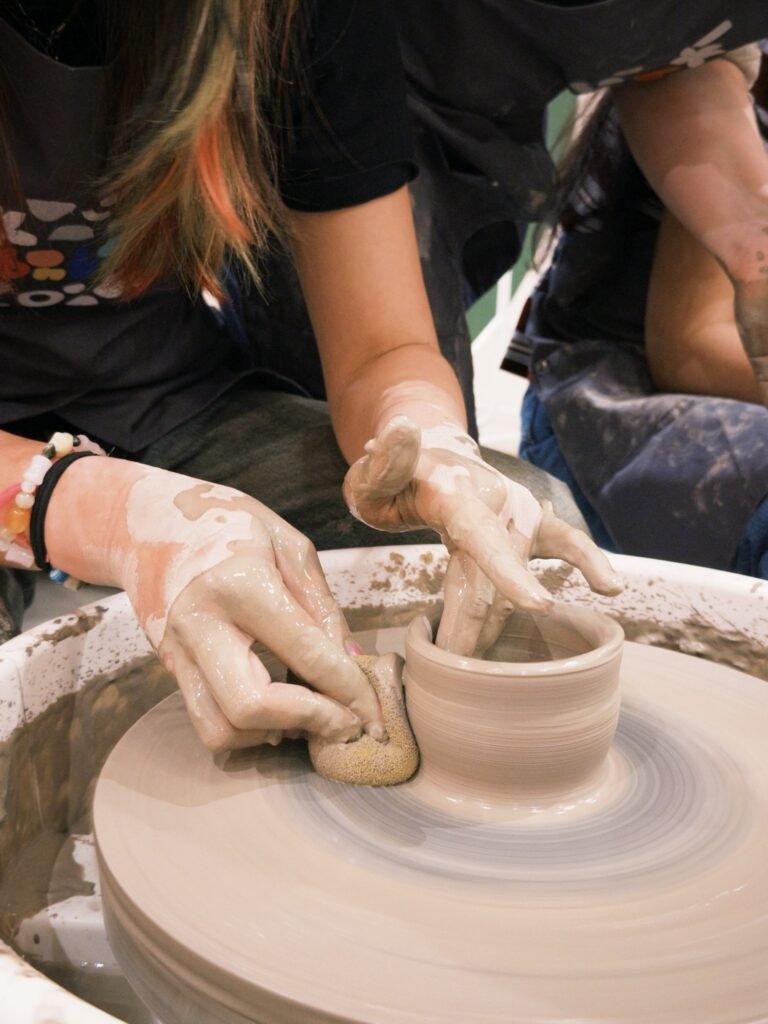
A pottery wheel’s clay capacity tells you how much clay the machine is designed to handle, but the number alone does not tell the whole story.
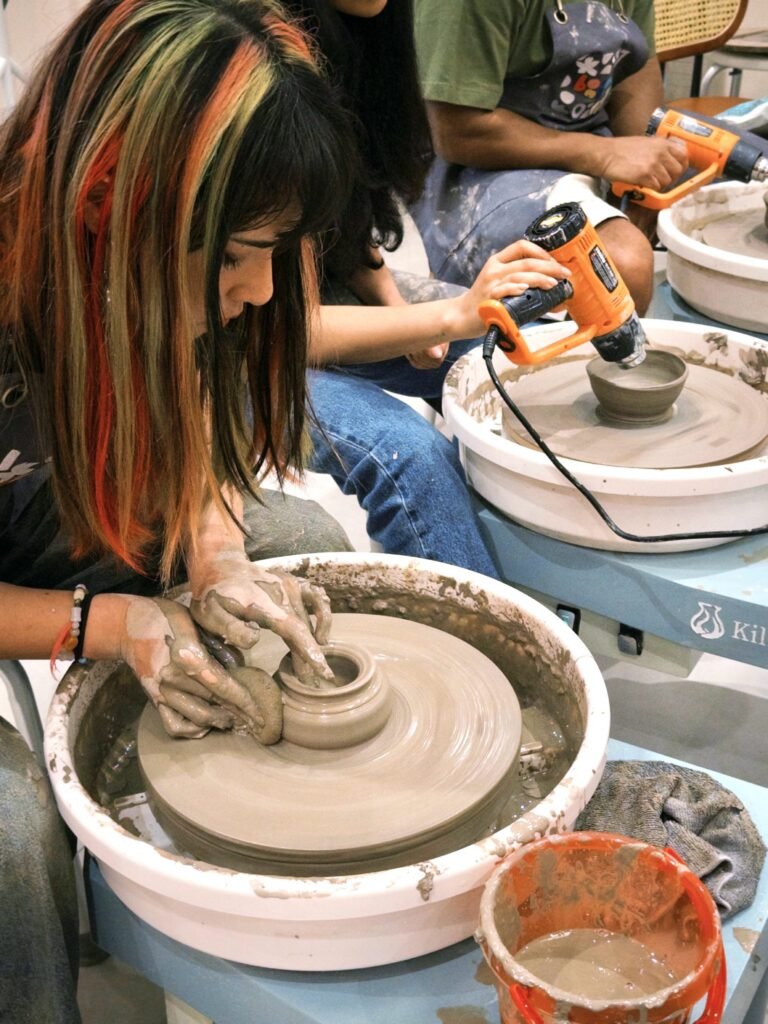
Two wheels may advertise similar clay capacities while feeling very different when you center a heavy lump. Motor power, torque, wheelhead size, construction, speed control, and your throwing technique all affect the experience.
Therefore, if you are buying a pottery wheel for larger work, don’t look at the advertised capacity in isolation.
What Does Pottery Wheel Clay Capacity Mean?
Pottery wheel clay capacity is the approximate amount of clay a wheel can center and throw effectively.
Manufacturers often provide a maximum clay capacity in pounds or kilograms. That number gives buyers a useful starting point.
However, it does not mean every potter will comfortably throw that amount.
For example, an experienced potter with strong centering technique may work comfortably near a wheel’s upper limit. A beginner may find the same amount difficult to control.
Consequently, treat the manufacturer’s capacity as a specification rather than a promise about your personal throwing experience.
How Much Clay Can a Pottery Wheel Handle?
There is no single capacity that applies to every pottery wheel.
Small hobby wheels may be designed for relatively modest amounts of clay. Heavier studio wheels can handle substantially larger pieces.
The important question is therefore not simply:
“How many pounds can this wheel handle?”
Instead, ask:
“How much clay do I realistically want to throw?”
A potter making small cups has different requirements from someone throwing large planters or tall vessels.
Your typical work should determine the wheel you buy.
Clay Weight Is Only Part of the Equation
A large amount of clay places significant force on the wheel.
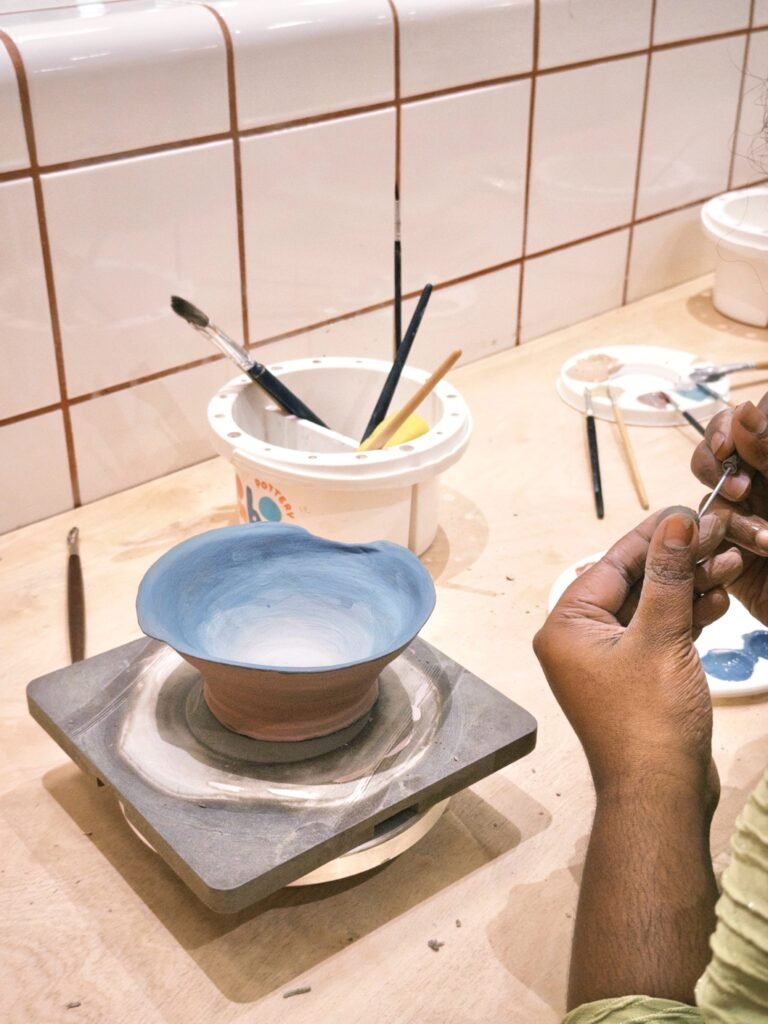
As you center the clay, the motor must maintain rotation while you apply pressure. That’s where torque becomes important.
A wheel with strong torque can maintain rotation under load more effectively than a lightweight machine.
This matters particularly when you work with heavy clay or large forms.
However, motor horsepower alone does not tell you how a wheel will perform. The drive system, gearing, controller, wheel construction, and overall design also influence how the wheel behaves under pressure.
Therefore, avoid comparing motors using one specification alone.
Why Torque Matters When Centering Heavy Clay
Centering is usually the stage where a wheel’s strength becomes most obvious.
A small amount of clay may feel easy on almost any reasonable pottery wheel.
Add several pounds, however, and the difference becomes much easier to notice.
A strong wheel should maintain consistent rotation while you push against the clay.
If the wheel slows dramatically whenever you apply pressure, centering becomes more difficult. You may also spend more physical effort fighting the machine rather than shaping the clay.
For larger work, that distinction matters.
A wheel with enough torque lets you focus more on the clay and less on keeping the wheel moving.
Does Wheelhead Size Affect Clay Capacity?
Yes, but not in isolation.
A larger wheelhead gives you more physical surface area for supporting larger forms.
That can make throwing wide vessels more comfortable.
Nevertheless, a large wheelhead does not automatically mean the wheel can handle a very heavy lump of clay.
The motor and drive system still need to provide enough power and torque.
Think of wheelhead size as one part of the overall system.
If you regularly make wide platters, large bowls, or broad sculptural forms, wheelhead diameter becomes more important. If you mainly throw small mugs and bowls, you may gain little from a much larger wheelhead.
How Much Clay Should a Beginner Throw?
Beginners generally benefit from starting smaller.
A large lump of clay requires more strength and better centering technique. Consequently, jumping immediately to very heavy amounts can make learning harder.
Instead, start with manageable pieces.
Once you can center consistently, increase the amount gradually.
That approach helps you develop control without turning every throwing session into a physical struggle.
More clay does not automatically mean better pottery.
In fact, a well-centered smaller form is far more useful for learning than an oversized piece that you cannot control.
When Do You Need a Heavy-Duty Pottery Wheel?
You probably need a heavier-duty wheel when your normal work consistently approaches the limits of your current machine.
Signs include:
- The wheel slows noticeably under pressure
- You regularly throw large amounts of clay
- You make large platters or bowls
- You produce tall or heavy vessels
- Your work frequently exceeds the wheel’s comfortable capacity
- You want more stability during centering
- You are producing larger work for sale
If those situations sound familiar, upgrading may make more sense than continually fighting a smaller wheel.
Don’t Buy Based on Maximum Capacity Alone
A common buying mistake is choosing the wheel with the biggest advertised clay capacity.
That sounds logical.
However, maximum capacity may not reflect what you actually need.
Suppose you normally throw three to five pounds of clay.
A wheel capable of handling much more may provide little practical benefit unless you also need its heavier construction, larger wheelhead, or stronger torque.
On the other hand, buying a lightweight wheel when you regularly throw ten-pound forms can become frustrating quickly.
The sweet spot is the wheel that comfortably handles your normal workload.
Pottery Wheel Capacity vs. Your Actual Pottery
Before shopping, examine your work.
Make a quick list of your most common forms.
| Typical work | What matters most |
| Small mugs | Smooth speed control |
| Bowls | Stability and control |
| Plates | Wheelhead size |
| Large planters | Torque and stability |
| Tall vessels | Torque and steady speed |
| Heavy sculptural forms | Overall machine strength |
| Production pottery | Reliability and consistent control |
This approach is more useful than choosing a wheel based on a single headline specification.
Your work determines the equipment.
Does Clay Type Affect Wheel Performance?
Yes.
Different clay bodies can feel very different under pressure.
A soft, plastic clay may be relatively easy to center. A stiffer body can demand considerably more force.
Clay moisture also matters.
If the clay is unusually stiff, the wheel may feel as though it has less power because you are applying more resistance.
Therefore, don’t judge a wheel solely from one difficult batch of clay.
Your clay preparation affects the throwing experience too.
What About Large Pieces?
Large pottery creates another challenge.
As the diameter and height of a form increase, the throwing process becomes more demanding.
You may need to center more clay at once. You may also need greater control as the walls become taller and thinner.
At that point, wheel stability becomes increasingly important.
A heavy wheel can feel more planted on the floor while you work. That stability can make large pieces more comfortable to throw.
However, large pottery also depends on technique.
A powerful wheel cannot compensate for poor centering or an unsuitable clay body.
Should You Upgrade Your Wheel?
If your current wheel handles your normal work comfortably, there may be little reason to upgrade.
A new wheel becomes easier to justify when your equipment is actively limiting your work.
Ask yourself:
Am I regularly exceeding the wheel’s comfortable capacity?
Does the wheel slow when I center larger amounts of clay?
Do I want to make larger forms?
Would a larger wheelhead improve my workflow?
Is the machine stable enough for the work I make?
If the answers point toward larger work, start comparing heavier-duty wheels.
What Should You Look for When Buying a Wheel?
Start with your normal clay weight.
Then consider the largest pieces you realistically expect to make.
Next, look at:
- Maximum clay capacity
- Motor and drive system
- Torque
- Wheelhead diameter
- Speed range
- Direction reversal
- Bat system
- Splash pan design
- Foot-pedal control
- Overall stability
- Manufacturer support
After that, compare actual models.
The Kiln Depot currently carries pottery wheels from established brands including Brent, Shimpo, and other manufacturers. Its wheel selection ranges from compact options to equipment designed for more demanding studio use. (The Kiln Depot)
The site also has a recent comparison of Brent, Shimpo, and Speedball wheels that can help with the next stage of your research. (The Kiln Depot)
When a Smaller Wheel Is Actually Better
More powerful equipment is not automatically better.
A compact wheel can be an excellent choice for a potter who makes small work, has limited studio space, or wants a lighter setup.
Smaller equipment can also reduce the initial cost.
Therefore, don’t let impressive specifications convince you to buy capacity you don’t need.
The best pottery wheel is the one that fits your work, space, budget, and long-term plans.
Frequently Asked Questions
How much clay can a pottery wheel handle?
The amount varies by model. Check the manufacturer’s stated capacity, but remember that comfortable working capacity can depend on clay stiffness, throwing technique, torque, and the type of form you are making.
Does more horsepower mean a better pottery wheel?
Not necessarily. Motor power is only one part of the equation. Torque, drive design, speed control, wheel construction, and stability also affect performance.
What is the best pottery wheel for large amounts of clay?
Look for a wheel with appropriate clay capacity, strong torque, a stable frame, and a wheelhead suited to your work. The right model depends on how much clay you normally throw.
Can a beginner use a heavy-duty pottery wheel?
Yes. A heavy-duty wheel can be used by a beginner. However, starting with manageable amounts of clay is still important because technique matters more than machine strength.
Does wheelhead size affect pottery wheel performance?
It can. A larger wheelhead provides more support for wide forms, but wheelhead diameter alone does not determine how much clay the machine can handle.
Should I upgrade my pottery wheel if it struggles with large clay?
If your wheel regularly slows or feels unstable when handling the amount of clay you normally use, upgrading may be worthwhile. First confirm that the problem is not caused by overly stiff clay or another mechanical issue.
Final Thoughts
Pottery wheel clay capacity is useful information, but it should never be the only number you consider.
Your normal clay weight matters.
So does torque.
Wheelhead size, stability, motor design, speed control, and your throwing technique also influence how comfortably a wheel handles larger work.
Therefore, buy around the pottery you actually make.
If you mainly throw mugs and small bowls, you probably don’t need the largest wheel in the studio.
If you regularly make large planters, platters, or heavy vessels, however, a stronger wheel can make a noticeable difference.
The goal isn’t to find the wheel with the biggest capacity.
It’s to find the wheel that gives you enough power and stability to make the work you want without constantly fighting your equipment.
When you’re ready to compare models, explore The Kiln Depot’s pottery wheel collection and use your typical clay weight and largest forms as the starting point.