A used Brent wheel can be an excellent way to get professional pottery equipment without paying full new-equipment pricing. Brent wheels have earned a strong reputation among potters, schools, studios, and ceramic programs, which also makes them popular on the secondhand market.
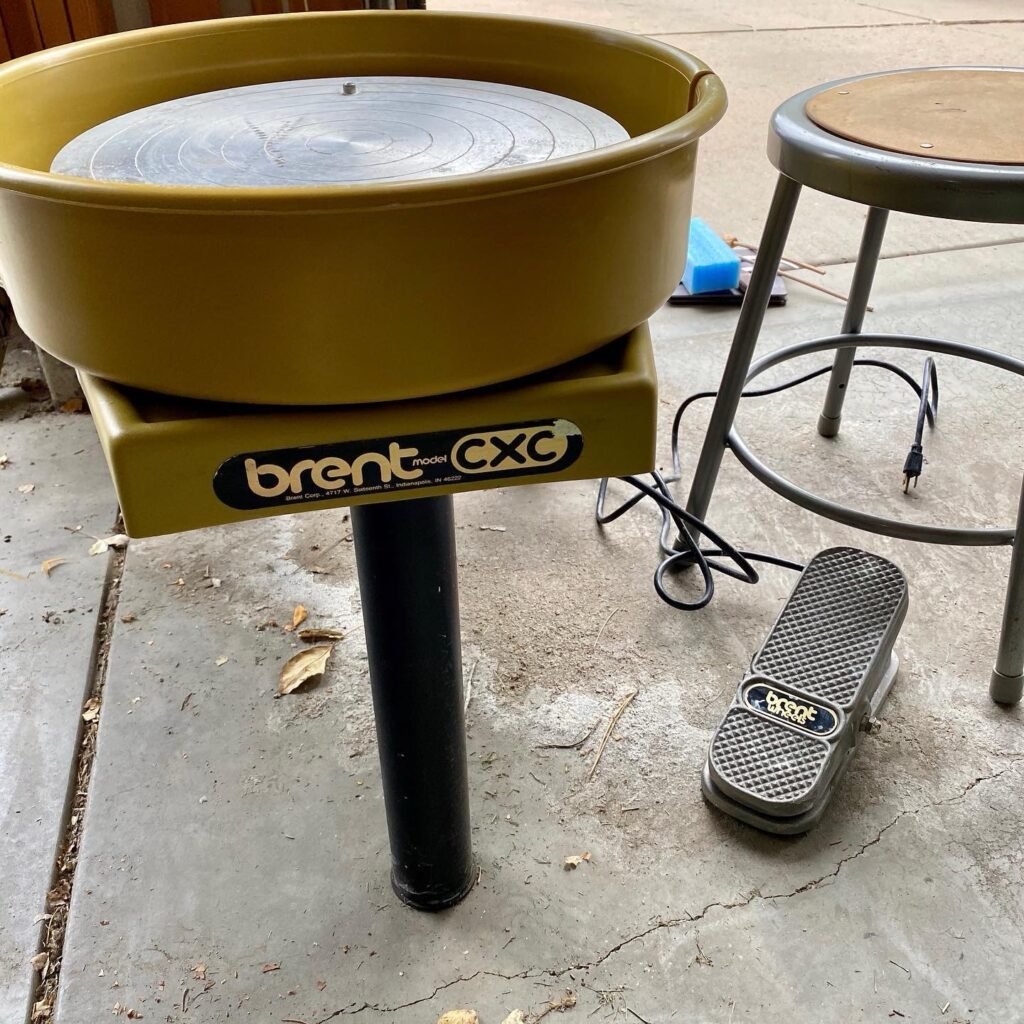
That popularity creates an important question.
How do you know whether the used Brent wheel you’re looking at is actually a good deal?
The answer comes down to condition, maintenance, and the total cost of ownership.
Before buying, check these eight areas carefully.
1. Test the Used Brent Wheel With Clay
The first test should involve actual clay.
Turning the wheel on and watching an empty wheelhead spin does not tell you enough.
Place a reasonable amount of clay on the wheel and try centering it.
Watch how the wheel responds when you apply pressure.
A healthy wheel should maintain consistent speed rather than slowing dramatically under load.
Listen for unusual sounds while the motor works.
Grinding, squealing, knocking, or excessive vibration deserves further investigation.
If you’re buying remotely, ask the seller to send a video showing the wheel operating with clay.
That gives you much more useful information than photographs alone.
2. Check the Brent Wheelhead for Wobble
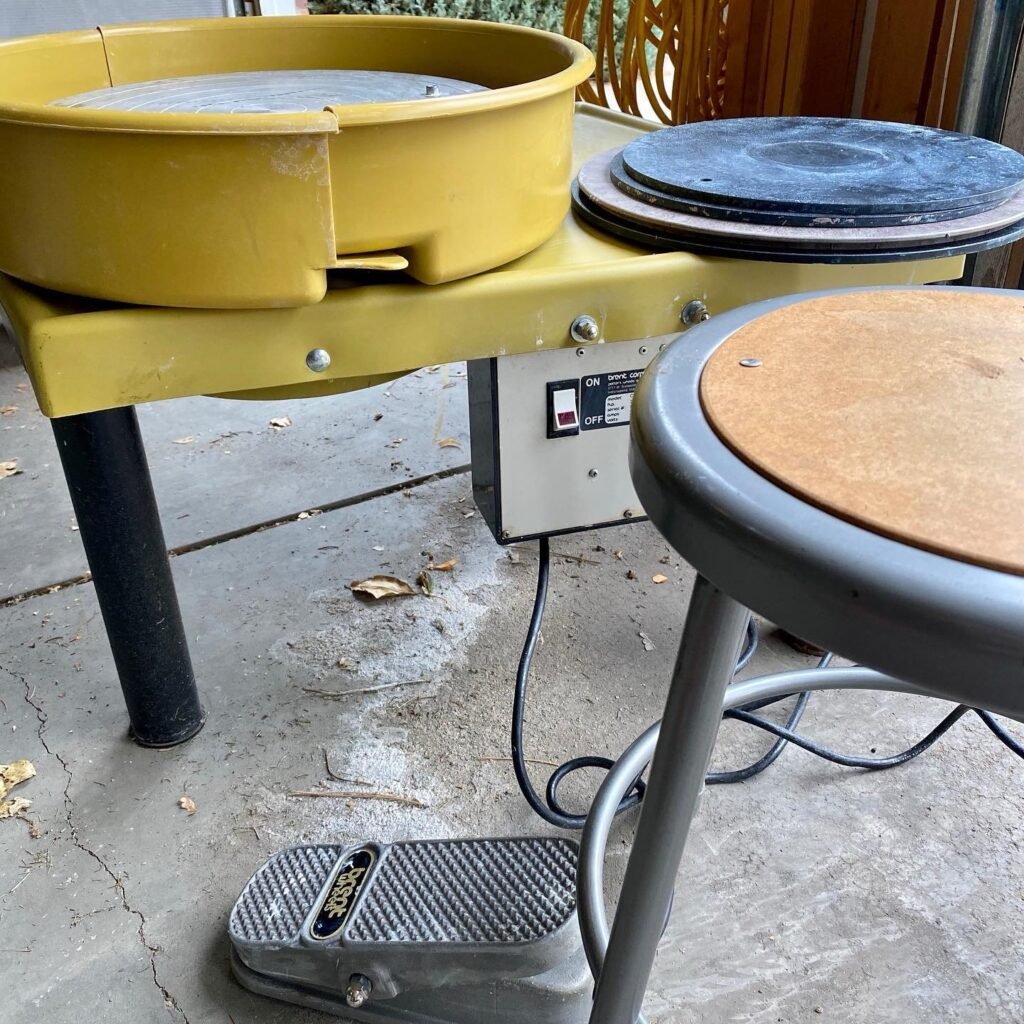
Watch the wheelhead carefully while it rotates.
You want smooth, consistent movement.
A noticeable side-to-side wobble can make throwing frustrating and may indicate problems with the wheelhead, shaft, bearings, or other components.
Place a straight object near the edge of the wheelhead without touching it.
Watch the gap as the wheel turns.
If the distance changes significantly, investigate before buying.
Also inspect the wheelhead for deep corrosion, dents, cracks, or damaged bat-pin holes.
Cosmetic scratches aren’t necessarily important.
Mechanical problems are.
3. Test the Foot Pedal
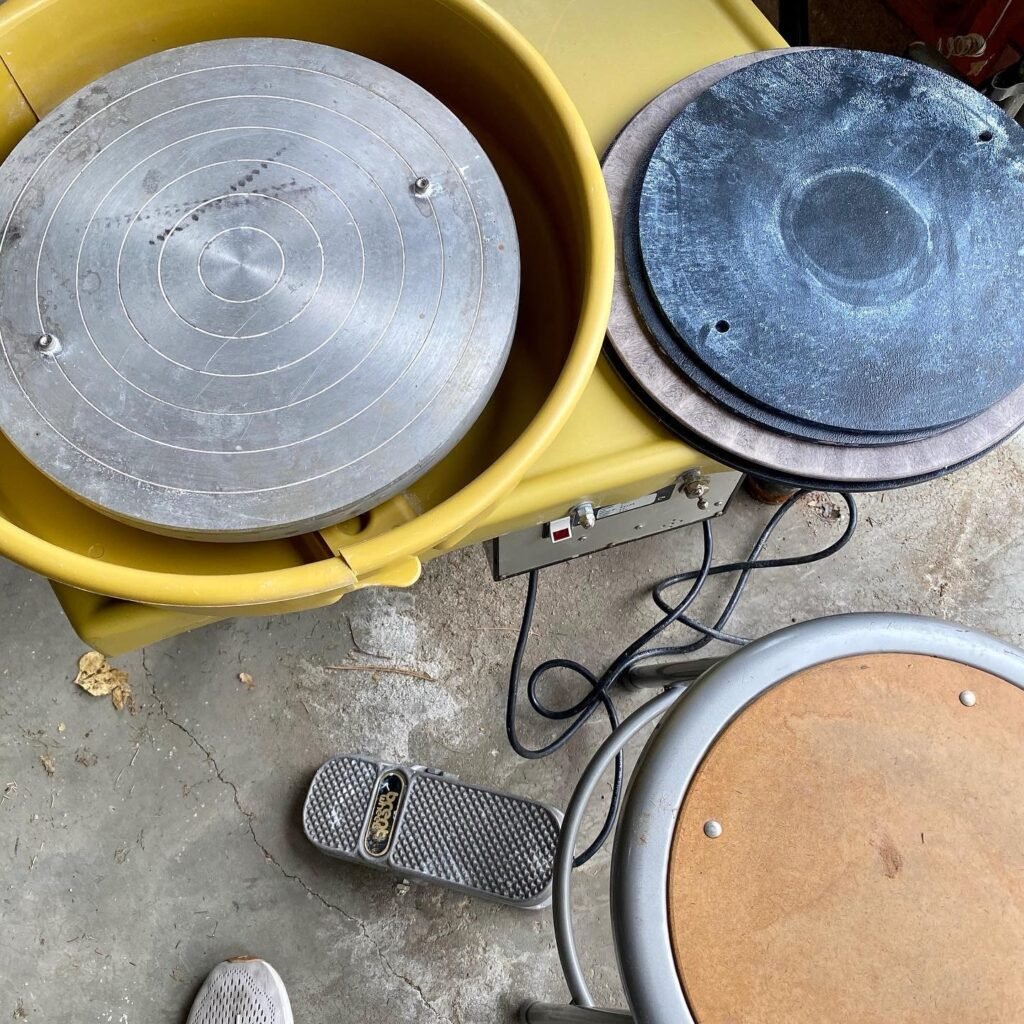
The pedal controls one of the most important parts of throwing: speed.
Move it slowly from low speed to high speed.
The response should feel predictable and smooth.
The wheel should not suddenly jump from slow to fast.
It should also stop responding correctly when you release the pedal.
Test the reverse function if the model has one.
Older pottery wheels can develop problems in the pedal or electronic controls, so don’t assume the motor is the only component worth inspecting.
AMACO Brent provides support resources for its equipment, including information for owners who purchased equipment secondhand:
If you’re buying an older Brent, having the model and serial information available can make it easier to identify the correct parts and specifications.
4. Listen to the Motor
A pottery wheel’s motor should operate smoothly.
Some operating noise is normal.
Severe grinding, rattling, squealing, or unusual vibration is not something to ignore.
Run the wheel slowly.
Then increase the speed.
Finally, test it under load with clay.
A motor that sounds fine without clay but struggles once you begin centering deserves attention.
Ask the seller whether the motor has ever been repaired or replaced.
Also ask whether the wheel has spent years in a school or production studio.
Heavy daily use can create a very different wear pattern from occasional home-studio use.
5. Inspect the Belt and Drive Components
Many older wheels have drive components that deserve a closer look after years of use.
Inspect accessible belts, pulleys, couplings, and related hardware for obvious wear.
Look for cracking, excessive slack, damage, or signs of previous repairs.
A worn belt may be a relatively simple maintenance issue.
A damaged drive system is a much bigger concern.
Don’t automatically reject a used Brent because it needs routine maintenance.
Instead, determine what needs replacing and what the repair will actually cost.
The current Brent wheel lineup provides a useful reference when comparing older machines with modern models:
6. Verify the Electrical Specifications
Before buying any used Brent wheel, identify its electrical requirements.
Check the model number and data plate.
Verify the voltage.
Check the amperage.
Then make sure your studio has the appropriate electrical supply.
This becomes especially important when buying older equipment from another country or when the machine has been modified.
Never assume that an older wheel automatically matches the electrical setup in your studio.
If you’re uncertain, ask a qualified electrician to verify the requirements.
A great used pottery wheel becomes a much less attractive purchase if you discover after delivery that your studio needs unexpected electrical work.
7. Check the Splash Pan and Accessories
Look closely at the splash pan.
Check for cracks, broken clips, missing pieces, and poor fit.
Then identify what else comes with the wheel.
Ask whether the seller includes:
- Splash pan
- Bat pins
- Bats
- Foot pedal
- Wheelhead
- Original hardware
- Manuals
- Replacement components
Accessories can affect the real value of a used pottery wheel.
A machine that appears cheaper may not be cheaper after you replace missing components.
The same principle applies to bats.
If the seller includes several usable bats, that can add meaningful value to the package.
8. Find Out Why the Owner Is Selling
This is one of the simplest questions you can ask.
Why are you selling it?
The answer doesn’t automatically prove anything, but it can give you useful context.
Maybe the owner is moving.
Maybe they’re upgrading.
Maybe they’re closing a studio.
Maybe they no longer use the wheel.
Those situations can produce excellent used equipment.
A vague answer combined with missing maintenance information and a refusal to demonstrate the machine deserves more caution.
Ask how frequently the wheel was used.
Ask how old it is.
Ask whether it has ever needed major repairs.
Ask whether the motor or pedal has been replaced.
Ask whether it has been stored somewhere damp.
The more complete the history, the easier it becomes to judge the price.
Used Brent Wheel vs Used Pottery Wheel From an Unknown Brand
Brand recognition can provide some advantages when buying used.
Brent has a long history in pottery equipment, and its current equipment ecosystem gives buyers access to manufacturer information and support.
That can make an older Brent easier to research than an obscure machine with little documentation.
However, brand alone should never determine your purchase.
A poorly maintained used Brent wheel can be a worse buy than a well-maintained wheel from another reputable manufacturer.
Condition comes first.
Brand helps you evaluate the long-term support and parts situation.
How Much Should You Pay for a Used Brent Wheel?
There isn’t one universal price.
Model matters.
Age matters.
Condition matters.
Accessories matter.
Location matters.
Shipping matters.
A heavily used Brent C with a failing pedal should not sell for the same amount as a clean, properly maintained example with a healthy motor and complete accessories.
Start with the price of a comparable new model.
Then account for the machine’s age and condition.
Subtract the cost of any repairs or missing components.
Finally, include transportation.
That gives you a much more realistic estimate of value.
Don’t compare a used wheel’s sticker price with the retail price of a new wheel and stop there.
Compare the total cost of getting both machines ready to throw.
Is a Used Brent Wheel Good for a Beginner?
It can be an excellent choice.
Beginners often focus heavily on finding inexpensive pottery equipment.
That’s understandable.
However, unreliable equipment can make learning much harder.
A good used Brent wheel gives a beginner access to professional-level equipment without necessarily requiring the full cost of buying new.
The important part is buying a good example rather than simply buying the cheapest one available.
If you’re also comparing other pottery wheels, The Kiln Depot’s guide to choosing a wheel for a home studio can help you compare wheel types, features, and intended use:
Used Brent Wheel vs Refurbished Pottery Wheel
This is where buyers need to think beyond price.
A used wheel may simply come from a private seller.
You have to determine its condition yourself.
A refurbished pottery wheel should involve some additional inspection, cleaning, testing, or replacement of worn components, although refurbishment standards vary.
Ask exactly what the seller did.
Was the motor tested?
Was the pedal checked?
Was the wheelhead inspected?
Were bearings examined?
Was the wheel tested under load?
Were damaged parts replaced?
Does the seller offer any warranty or return protection?
Those answers matter.
A mechanically experienced buyer may prefer the lower price of a used Brent wheel.
Someone who wants less uncertainty may prefer a refurbished pottery wheel.
When Should You Walk Away?
Don’t let the Brent name convince you to ignore serious problems.
Be cautious if:
- The wheelhead has significant wobble
- The motor struggles under load
- The pedal behaves unpredictably
- The wheel produces severe grinding noises
- Electrical components look damaged
- Important parts are missing
- The seller refuses a basic test
- The machine has obvious impact damage
- The price is too close to a refurbished alternative
You are buying equipment to make pottery, not a restoration project.
If the repair costs destroy the savings, keep looking.
Buying a Used Brent Wheel Online
Online purchases require extra care because you can’t physically inspect the machine before payment.
Ask for clear photographs of the wheelhead, pedal, splash pan, motor area, data plate, and serial number.
Ask for a video of the wheel operating.
Ideally, the video should show:
- Starting from rest
- Low speed
- High speed
- Reverse operation if available
- Clay being centered
- The pedal being used through its range
You should also ask the seller to identify any known problems.
Honest sellers may point out cosmetic wear or maintenance needs.
That can actually increase your confidence because you know what you’re dealing with.
Final Thoughts
A used Brent wheel can be a very good investment when you buy the condition rather than the name.
Test it with clay.
Watch the wheelhead.
Check the pedal.
Listen to the motor.
Inspect the drive system.
Verify the electrical requirements.
Check the accessories.
Ask about its history.
Then calculate the complete cost, including transportation and repairs.
If everything checks out and the price reflects the condition, you may have found an excellent professional pottery wheel for considerably less than buying new.
If the machine carries too much uncertainty, compare it with a properly refurbished pottery wheel before making your decision.
The goal isn’t simply to own a Brent.
The goal is to own a reliable pottery wheel that earns its place in your studio.
