Wheel throwing vs hand building comes down to one real tradeoff. Hand building is easier for most beginners starting pottery for the first time. You get a satisfying result sooner, and you keep more direct control over the clay at every step. Wheel throwing takes longer to feel natural. Centering the clay is a real physical skill that takes practice. Neither technique is better overall, though. Each one suits a different kind of finished piece and a different kind of learning experience.
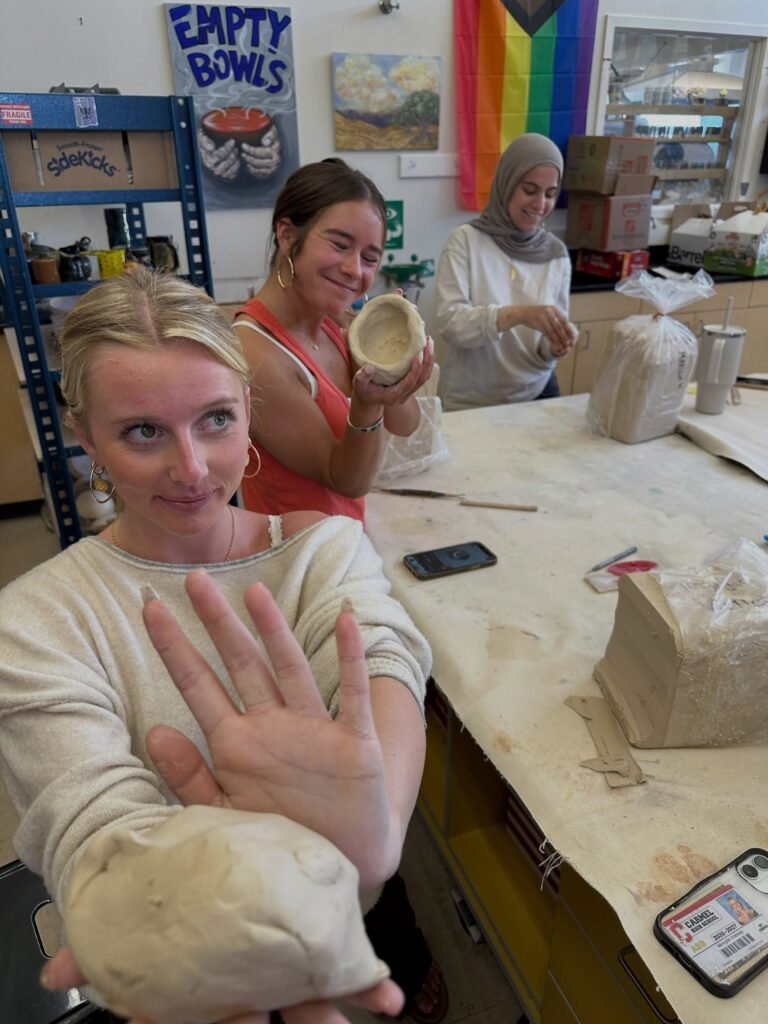
Wheel Throwing vs Hand Building: Why Hand Building Feels Easier
Hand building uses just your hands and a few simple tools. There’s no wheel to learn, and there’s no centering to master. You also don’t have to manage motor speed while you’re also trying to shape clay. You can slow down at any point too. Step back and reconsider your next move without a spinning wheel forcing quick decisions.
Three real techniques make up most hand building work: pinching, coiling, and slab building. Each one teaches genuinely useful skills you’ll still use later, even if you eventually move to the wheel. Many experienced potters actually recommend starting here first. It builds real confidence with clay before adding the wheel’s extra complexity.
Why Wheel Throwing Has a Real Learning Curve
Centering is the single hardest skill most beginners face on a wheel. It demands steady, even pressure while the clay spins fast beneath your hands. It’s simply a physical skill your body hasn’t practiced before. Most potters need real repetition before centering starts to click.
Once you push past that early learning curve, though, wheel throwing genuinely rewards you. A skilled potter can create several pieces in the time hand building takes for just one. This speed advantage grows even larger too. It especially helps anyone making multiples of the same functional shape, like a full set of matching mugs.
What Each Technique Actually Produces Best
Wheel throwing excels at round, symmetrical forms. Cylinders, bowls, and vases come together naturally. The spinning motion does real work for you, keeping walls even without constant manual correction.
Hand building opens up shapes a wheel simply can’t make. Larger, more sculptural, and irregular forms are genuinely easier by hand, since nothing forces the piece into a circular shape. If your goal is texture, carving, or an organic, asymmetrical look, hand building gives you far more creative freedom.
A Real Time Comparison
Hand building a single piece can take anywhere from a few hours to several weeks. The exact time depends on complexity and how long you let it dry between stages. Wheel throwing moves faster once you’ve built real skill, especially for simple, repeated forms.
For a true beginner, though, this time comparison flips. Early wheel attempts often take longer than hand building the same basic shape. You’re still learning the fundamentals alongside making the actual piece.
The Real Cost Difference
Hand building has a genuinely low barrier to entry. You need clay, a few basic tools, and not much else. Wheel throwing requires an actual wheel, which is a real upfront cost before you’ve even started learning.
This cost gap matters most for someone still deciding whether pottery is a long-term hobby. Starting with hand building lets you build real skill and confidence with almost no investment. You can move to a wheel once you’re genuinely committed.
Best Starter Wheel Once You’re Ready: Shimpo Aspire
A dependable wheel sized right for a beginner making the jump from hand building. So you’re not paying for capacity you won’t use for years.
What Tools You Actually Need for Each
Hand building needs surprisingly little to start. A few basic tools, like a rib, a wire cutter, and a needle tool, cover most beginner techniques. You don’t even strictly need tools at all for simple pinch pots.
Wheel throwing needs more real equipment from day one. Beyond the wheel itself, you’ll want a sponge and a rib. A wire tool for cutting pieces free helps too. So does a bat, if you plan to remove wet work from the wheel head. None of this is expensive individually, but it adds up alongside the wheel’s own cost.
You Don’t Have to Choose Just One
Many experienced potters even combine both techniques on a single piece. A wheel-thrown mug can gain a genuinely unique handle built entirely by hand instead. Or a hand-built slab platter can incorporate thrown elements too, for a mix of precision and creative freedom.
Learning both techniques, even at a basic level, gives you real flexibility too. You get to choose the right method for whatever you’re actually trying to make. That beats forcing every idea into one single process.
Real Community and Learning Resources
Local pottery classes usually teach both techniques side by side, letting you try each before committing to equipment. Many community studios offer a single introductory class covering both hand building and a first attempt at the wheel. This is genuinely the fastest way to find out which one clicks for you.
Online resources also help, though wheel throwing specifically benefits from in-person feedback. Subtle hand position and pressure are hard to judge from a video alone. A class still matters more for wheel work than it does for hand building.
So Which Should You Actually Start With?
Choose hand building first if you want an easier entry point. It also fits well if you enjoy texture and sculptural work. The same goes if you feel nervous about “being bad” at a brand new skill right away. Choose wheel throwing first instead if the classic image of pottery is specifically what excites you. It’s also the right pick if you’re drawn to functional, symmetrical pieces like cups and bowls.
Either path teaches real, transferable skills too. Both hand-built and wheel-thrown pieces go through the exact same firing process once they’re ready. Skutt’s own kiln safety guidelines cover that shared process in detail. Your equipment investment down the road serves either technique equally well.
Ready to Try Wheel Throwing?
Browse our complete pottery wheel collection when you’re ready to take the next step beyond hand building.
