A basic home pottery studio still costs $500 to $1,000 for a simple wheel and hand tools. A more complete setup, with a real wheel and your own kiln, runs $1,500 to $4,000. Community studio membership is the cheapest way to try pottery first, often just $40 to $80 a month. The real cost decision isn’t the clay. It’s whether you rent kiln access through a studio or invest in your own equipment.
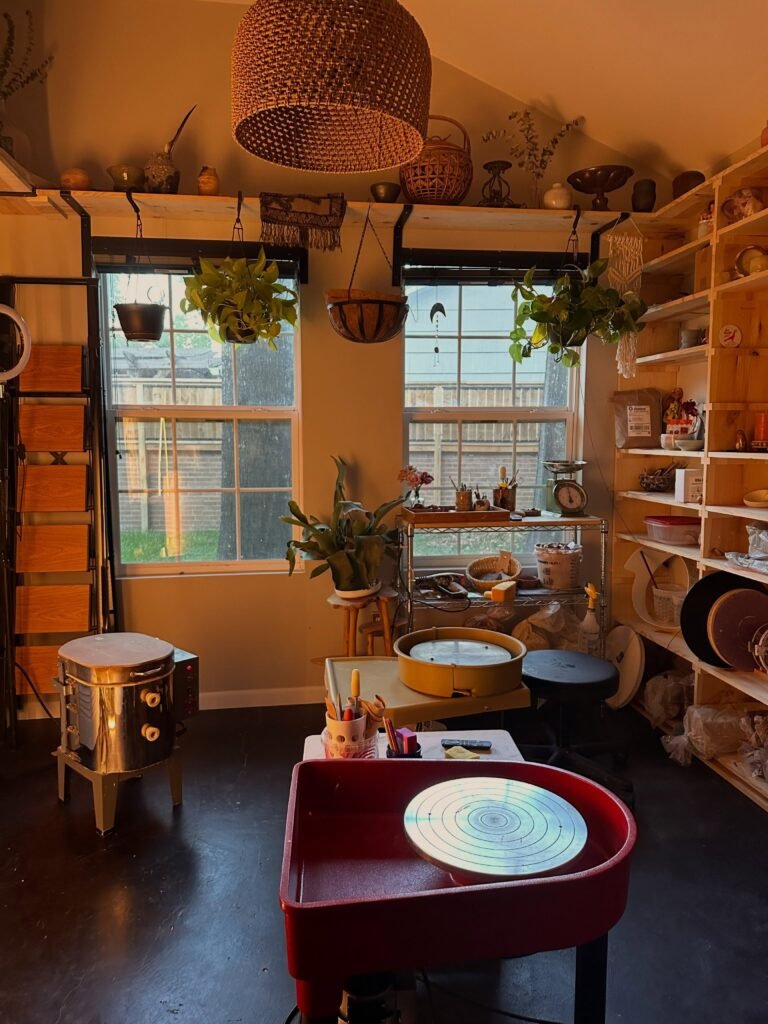
Three Real Starting Points
Community studio membership is the lowest-cost entry point. Most cities have a studio offering open access for $40 to $80 a month. That typically covers wheel time, kiln firings, and sometimes a small clay allowance.
A basic home setup with your own wheel runs $500 to $1,000. This covers a wheel and hand tools, but not a kiln. You’ll still pay a local studio a per-piece fee to fire your work.
A full home studio, wheel and kiln both, runs $1,500 to $4,000 for quality equipment. This is the biggest single jump in cost, and also the point where you stop depending on anyone else’s schedule.
Why Firing Is the Cost Beginners Forget
Every piece needs at least one firing. Glazed work also needs a second firing. Skip this step, though, and you don’t have finished pottery, just dried clay.
Paying a studio to fire your work costs $5 to $25 per piece, depending on size. This works well if you’re only making a handful of items a month. Buying your own kiln costs more upfront. A small tabletop model runs $300 to $1,000. A mid-size studio kiln runs $1,500 to $3,000.
The Real Cost Most Guides Skip: Electrical Work
Tabletop kilns usually plug into a standard household outlet. A larger kiln needs a dedicated 240V circuit instead, and most homes don’t already have one in the right spot. Budget $500 to $2,500 for an electrician to run that circuit, based on real installation cases documented elsewhere. Skutt’s own official kiln safety guidelines cover the full electrical and clearance requirements in detail.
This cost catches a lot of first-time buyers off guard. Factor it in before you fall in love with a specific kiln size, not after.
Space Requirements Nobody Budgets For
A wheel needs roughly three feet by three feet of floor space, plus room to move around it. A kiln needs real clearance too. Most manufacturers require at least 18 inches of open air on every side. That adds up fast in a small room.
Ventilation matters just as much as floor space. A kiln releases fumes during firing. A poorly ventilated garage or spare room can become a real problem over time. Budget $200 to $600 for a basic vent system if your space doesn’t already have good airflow.
What a Realistic Home Pottery Studio Setup Looks Like
Combine a mid-range wheel, a small studio kiln, basic clay and glaze, and simple hand tools. That mix runs $2,000 to $4,000 for a genuinely complete home setup. That number sits above the bare-minimum wheel-only path, but well below what a commercial teaching studio actually costs to open.
Ongoing Costs Nobody Mentions Upfront
Clay itself is cheap per pound, but it adds up with regular use. Budget $20 to $40 for a 25-pound bag. Expect to go through several bags a month once you’re throwing regularly. Glazes run anywhere from $10 to $30 per pint, and a real studio needs several colors on hand.
Electricity for firing is a real, recurring cost too. A single cone 6 glaze firing on a home kiln typically runs $8 to $16 in electricity. The exact cost depends on kiln size and your local rate. That adds up fast if you’re firing weekly.
A Sample First-Year Budget
| Category | Low End | High End |
|---|---|---|
| Wheel | $429 | $1,980 |
| Kiln | $1,300 | $3,200 |
| Electrical install (240V kiln) | $500 | $2,500 |
| Ventilation system | $200 | $600 |
| Hand tools and kiln furniture | $150 | $400 |
| Clay and glaze (first few months) | $150 | $400 |
| Total | $2,729 | $9,080 |
This range covers what a genuine home pottery studio actually costs across a wide spread. A lean, budget-conscious setup sits at one end. A fully outfitted studio with a larger kiln and proper electrical work sits at the other. Most first-time home studios land somewhere in the middle. Expect closer to $3,500 to $5,000 once every real cost is accounted for.
Where to Actually Save Money Early On
Buy fewer hand tools than you think you need. A basic starter kit covers most beginner techniques, and specialty tools can wait until you know your actual style.
Consider a refurbished wheel or kiln instead of new. A properly tested, refurbished unit can cut your biggest single cost by 30% or more without giving up real reliability.
Best Starter Wheel: Shimpo Aspire
A dependable wheel sized right for a genuine home studio. You’re not paying for capacity a beginner won’t use for years.
Best Starter Kiln: Skutt KM-714
Compact enough for a garage or spare room. Yet it still has enough real capacity for genuine studio work as your skills grow.
Renting Kiln Access Before You Commit
Many community studios and colleges fire pieces made elsewhere for a flat per-piece or per-cubic-foot fee. This lets you build real skill on a wheel at home first. You can then delay the kiln purchase until you’re certain pottery is a long-term hobby.
Buying New vs Buying Used Equipment
A used wheel or kiln from another potter can cut costs significantly. Real inspection still matters more than the listed price. Check the motor, look for worn parts, and ask about firing history before buying anything secondhand without a warranty.
Our refurbished equipment goes through real testing before it’s ever listed. That removes most of the risk while still delivering genuine savings over new.
How Long Before Your Studio Pays for Itself
Selling finished pieces can offset real cost over time, but don’t count on it covering your initial investment fast. A mug that costs $2 to $3 in clay and firing might sell for $25 to $40. Building a customer base still takes real time.
Most home potters treat the craft as a hobby first. Any sales become a bonus, not the actual goal. Setting that expectation early avoids real disappointment if the studio doesn’t pay for itself in the first year.
Start Your Home Pottery Studio the Right Way
Getting your home pottery studio right from the start saves real money later. Skipping electrical planning or ventilation now often costs more later. Fixing it after the fact always costs more than planning ahead.
Ready to Build Your Real Budget?
Browse our complete pottery wheel collection first. Then check our kiln collection too, to price out your own home studio setup.
