Pottery kiln ventilation is one of the most important things to plan before installing an electric kiln at home. A kiln can reach extremely high temperatures, and firing can release fumes and vapors from clay, glazes, kiln wash and other materials.
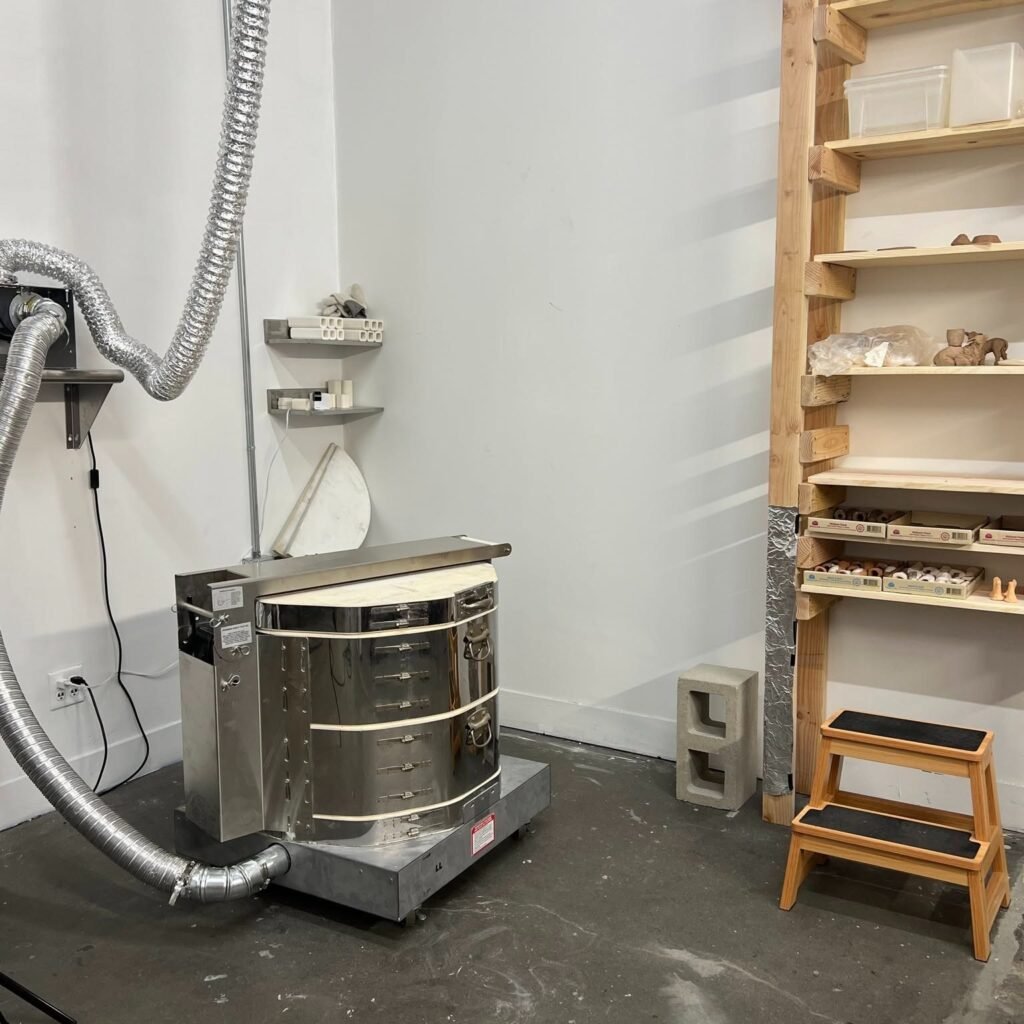
Fortunately, good ventilation doesn’t have to make a home pottery studio complicated.
The key is understanding what a kiln vent does, what general room ventilation can and cannot accomplish, and how to plan the installation before your kiln arrives.
Why Does a Pottery Kiln Need Ventilation?
During firing, materials inside the kiln undergo chemical changes.
Clay releases water and other compounds as it heats.
Glazes can release vapors.
Organic material can burn away.
Some ceramic materials can also produce fumes that you don’t want accumulating inside an occupied room.
Therefore, the goal of pottery kiln ventilation is to control those emissions and prevent them from simply remaining in the studio air.
Opening a window can improve general airflow.
However, it doesn’t necessarily capture emissions directly at the kiln.
That’s where a dedicated kiln ventilation system can be useful.
What Does a Kiln Vent Actually Do?
A kiln vent is designed to remove air and fumes from around or inside the kiln and discharge them through an appropriate exhaust route.
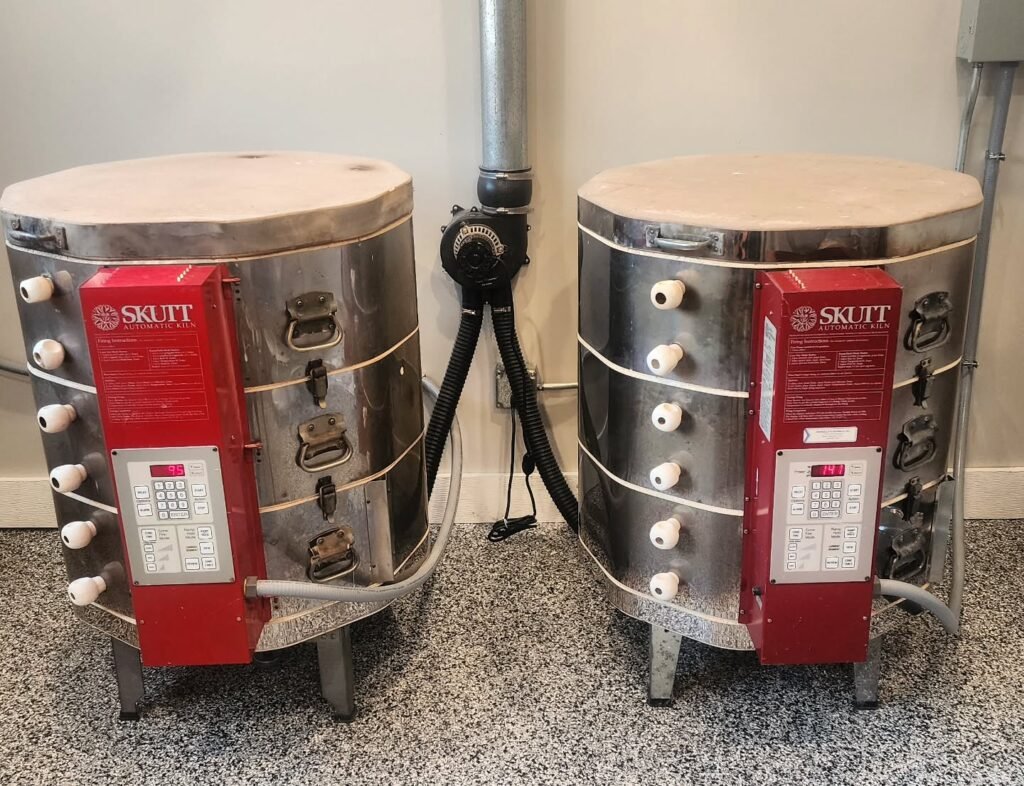
Depending on the system, the vent may draw air from beneath the kiln or from the kiln chamber itself.
The exact design varies by manufacturer.
Some systems create a controlled flow of air through the kiln.
Others primarily remove fumes from beneath the firing chamber.
In either case, the objective is similar:
Capture kiln emissions and move them away from the breathing zone.
That makes a dedicated vent different from simply placing a fan somewhere in the room.
Is a Kiln Vent the Same as a Room Exhaust Fan?
No.
A room exhaust fan moves air out of the room.
A kiln vent is designed specifically around the kiln and its emissions.
That distinction matters.
For example, a ceiling fan may circulate air throughout your studio without actually removing fumes from their source.
Likewise, a window fan may exchange room air but still leave emissions circulating near the kiln before they escape.
A properly designed kiln ventilation system addresses the source more directly.
However, general room ventilation still has an important role.
Ideally, your studio should have both appropriate kiln exhaust and adequate fresh-air replacement.
Do You Need a Kiln Vent at Home?
For many home studios, dedicated kiln ventilation is a sensible addition.
However, the exact requirements depend on the kiln, building, installation and materials being fired.
A kiln installed in a detached, purpose-built studio presents a different situation from one operating in a basement or spare room attached to a home.
The location matters.
The ventilation route matters.
The materials you fire matter.
Local building requirements can matter as well.
Therefore, don’t treat kiln ventilation as a one-size-fits-all purchase.
Can You Fire a Kiln With a Window Open?
A window can provide useful general ventilation.
Nevertheless, it shouldn’t automatically be treated as a substitute for a dedicated kiln vent.
Air movement in a room can be unpredictable.
A breeze may move fumes toward another part of the house instead of outside.
Furthermore, opening a window doesn’t guarantee that air is being captured where emissions are produced.
For occasional hobby firing, some potters rely heavily on room ventilation.
Even so, a purpose-built vent offers a more controlled approach.
If your kiln will operate regularly in an occupied home, plan ventilation deliberately rather than relying on an open window.
What About Kiln Fumes?
Kiln fumes depend partly on what you’re firing.
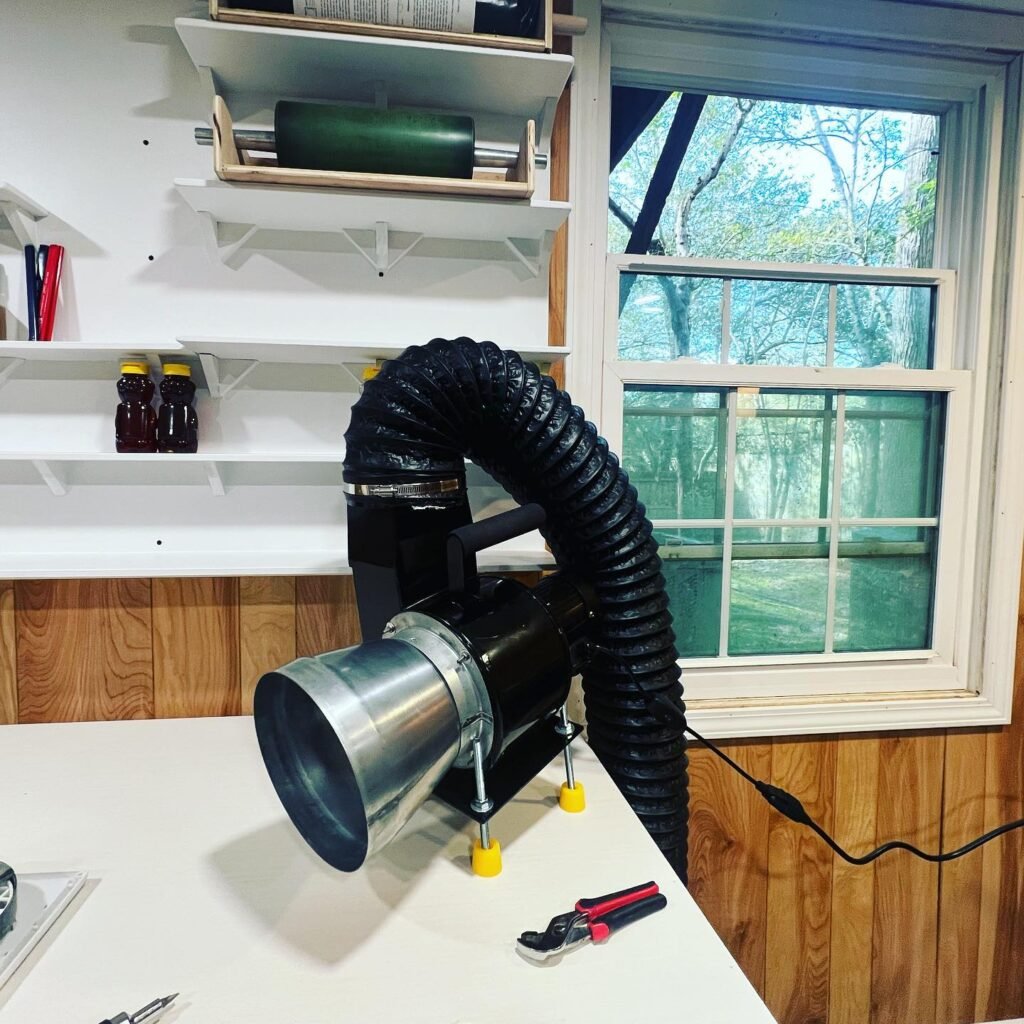
Clay bodies contain different materials.
Glazes contain different ingredients.
Some ceramic processes can release compounds that require careful handling.
Consequently, you should know the materials you’re using and follow their safety information.
The kiln itself isn’t the only source of potential exposure.
Glaze mixing, sanding, spraying and handling dry ceramic materials can also introduce hazards.
That means ventilation should be part of a broader studio-safety plan.
Where Should You Install a Kiln?
Location is one of the biggest decisions you’ll make.
A kiln should be placed according to the manufacturer’s clearance requirements and local electrical and building requirements.
The surrounding area also needs to tolerate the heat produced during firing.
For a home studio, common locations may include garages, workshops, dedicated studios and other appropriately prepared spaces.
A basement or interior room requires additional planning because fumes and heat have fewer easy escape routes.
Therefore, choose the location before buying the kiln.
That decision can affect the electrical installation, ventilation system, clearance and overall cost.
How Does Fresh Air Fit Into Kiln Ventilation?
Exhausting air from a room creates a simple problem:
Where does the replacement air come from?
If your ventilation system removes air faster than the room can replace it, the system may not work as intended.
A well-planned studio therefore considers both exhaust and makeup air.
For example, replacing exhausted air through an appropriate opening can help maintain airflow.
However, the exact setup depends on the room and ventilation system.
For a permanent installation, consider having the system evaluated by an appropriately qualified professional.
Does Kiln Size Affect Ventilation?
It can.
A larger kiln contains more ceramic material and has a larger firing chamber.
It may also require a different ventilation arrangement depending on the manufacturer’s design.
Therefore, don’t buy a vent solely based on the physical size of the kiln.
Match the ventilation equipment to the specific kiln and manufacturer’s requirements.
This is particularly important if you’re replacing a smaller kiln with a substantially larger model.
What Should You Look for in a Kiln Vent?
Before buying a kiln vent, consider several factors.
Compatibility
First, confirm that the system is compatible with your kiln model.
Don’t assume that a generic ventilation system will work correctly simply because the kiln dimensions appear similar.
Exhaust route
Next, determine where the exhaust will go.
Ideally, the system should discharge to an appropriate exterior location rather than simply moving contaminated air into another enclosed space.
Installation
Consider how the vent will connect to the kiln and how the ductwork will reach the exterior.
A difficult installation can become expensive if you don’t plan it before placing the kiln.
Noise
Some ventilation systems produce noticeable fan noise.
That may not matter in a detached studio.
However, it can matter considerably when the kiln is near living spaces.
Replacement parts
Finally, check whether filters, fans or other components are readily available.
A ventilation system is easier to maintain when replacement components are obtainable.
Common Kiln Ventilation Mistakes
Several mistakes appear repeatedly in home studios.
Relying only on a window
A window improves air exchange but may not capture kiln emissions effectively.
Installing a fan without considering airflow
More airflow isn’t automatically better.
The system needs to create useful airflow through the appropriate path.
Venting into an enclosed area
Exhausting kiln fumes into an attic, garage or another enclosed space simply moves the problem.
The exhaust route needs careful planning.
Ignoring makeup air
A powerful exhaust system needs replacement air.
Otherwise, airflow can become inefficient.
Planning ventilation after installation
This is perhaps the easiest mistake to avoid.
Plan the vent before installing the kiln.
That way, you can account for ductwork, electrical access, clearances and exterior exhaust requirements together.
Can You Use a Pottery Kiln in a Garage?
A garage can be a practical location for a home kiln.
However, a garage isn’t automatically suitable.
You still need to consider manufacturer clearances, electrical service, ventilation, combustible materials, temperature and local requirements.
Furthermore, garages are often attached directly to homes.
That makes exhaust routing particularly important.
Don’t assume that simply opening the garage door provides adequate ventilation.
Plan the kiln as a permanent high-temperature appliance.
Pottery Kiln Ventilation and Electrical Planning
Ventilation is only one part of a kiln installation.
Electric kilns can require substantial electrical service.
The kiln’s voltage, amperage and phase requirements need to match the available electrical supply.
Therefore, plan your electrical installation and ventilation together.
If you’re buying a kiln for a home studio, determine the electrical requirements before placing the order.
That can prevent an unpleasant surprise when the kiln arrives.
When Should You Call a Professional?
Some parts of kiln installation are reasonable for an experienced potter to plan.
However, electrical work, permanent duct installations and building modifications may require qualified professionals.
Local requirements also vary.
Therefore, check the rules that apply to your property before installing a permanent system.
If you’re uncertain about electrical capacity or exhaust routing, professional advice is usually cheaper than fixing an unsafe installation later.
Frequently Asked Questions
Do electric pottery kilns need ventilation?
Electric kilns can release fumes and vapors during firing, so appropriate ventilation is important, particularly in enclosed home studios. The exact system depends on the kiln and installation.
Is opening a window enough for kiln ventilation?
A window can improve general room ventilation, but it doesn’t necessarily capture emissions at the kiln. A dedicated kiln vent provides more controlled exhaust.
Can I use a regular exhaust fan for a pottery kiln?
A regular room exhaust fan is not automatically equivalent to a kiln ventilation system. Kiln-specific ventilation is designed around the location and nature of kiln emissions.
Where should a pottery kiln vent exhaust?
The exhaust should be routed to an appropriate exterior location rather than another enclosed area. Follow the ventilation manufacturer’s instructions and applicable local requirements.
Does a kiln vent remove all pottery fumes?
No ventilation system should be treated as permission to ignore material safety. Proper clay and glaze handling, studio practices and ventilation all work together to reduce exposure.
Should I install ventilation before my kiln arrives?
Yes. Planning ventilation before installation makes it easier to coordinate the kiln location, electrical service, ductwork, clearances and exhaust route.
Final Thoughts
A pottery kiln is one of the biggest investments in a home ceramics studio.
However, the kiln itself is only part of the installation.
You also need to think about heat, electricity, clearance and air quality.
Good pottery kiln ventilation addresses one of those problems at its source.
Instead of simply circulating studio air, a dedicated vent can capture emissions around the kiln and direct them away from the occupied space.
Most importantly, plan before you buy.
Choose the kiln location first.
Check the manufacturer’s requirements.
Plan the exhaust route.
Consider replacement air.
Then coordinate the electrical and ventilation installation.
That preparation makes the entire studio easier to operate and gives you a much better foundation for safe, consistent firing.
The best kiln installation isn’t simply one where the kiln fits. It’s one where the entire system makes sense.
