A used slab roller can save a pottery studio serious money, especially when you want professional equipment without paying full new-equipment prices. However, buying used also means taking a closer look at the machine’s condition before handing over your money.
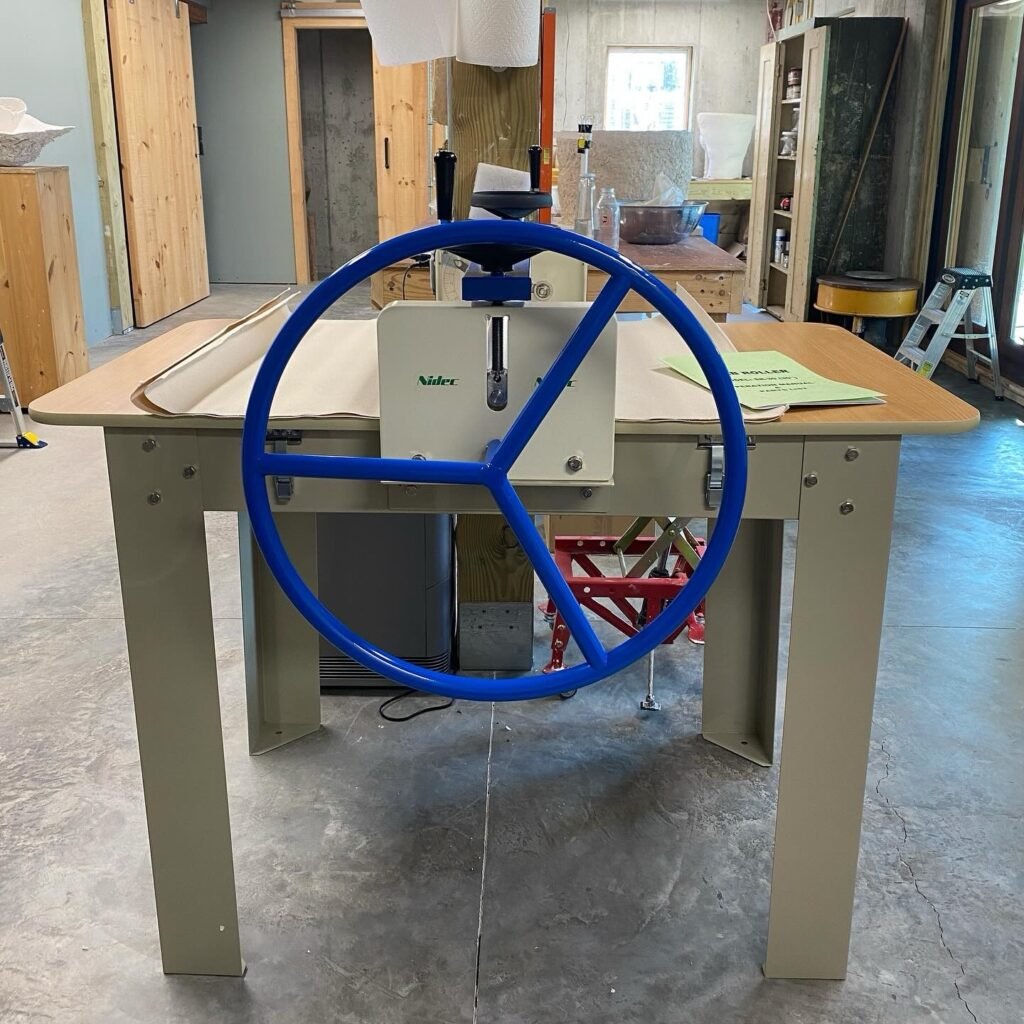
A slab roller can look perfectly fine in photographs while hiding worn rollers, damaged adjustment mechanisms, rust, or missing parts.
Before buying a used slab roller, inspect the machine carefully and calculate the real cost of getting it into your studio. These seven checks can help you make a smarter purchase.
1. Inspect the Used Slab Roller for Rust
Start with the frame, rollers, hardware, and adjustment mechanism.
A little surface rust does not automatically make a used slab roller a bad purchase. Older pottery equipment often shows cosmetic wear after years in a working studio.
Deep corrosion is a different story.
Look closely around the rollers, shafts, bearings, gears, adjustment points, and frame joints. Heavy rust in these areas can affect how smoothly the machine operates and may point to poor storage conditions.
Check underneath the machine too. Moisture and clay debris can collect in places that are easy to miss during a quick inspection.
Cosmetic wear may simply give you room to negotiate the price.
Structural corrosion should make you much more cautious.
2. Test the Rollers
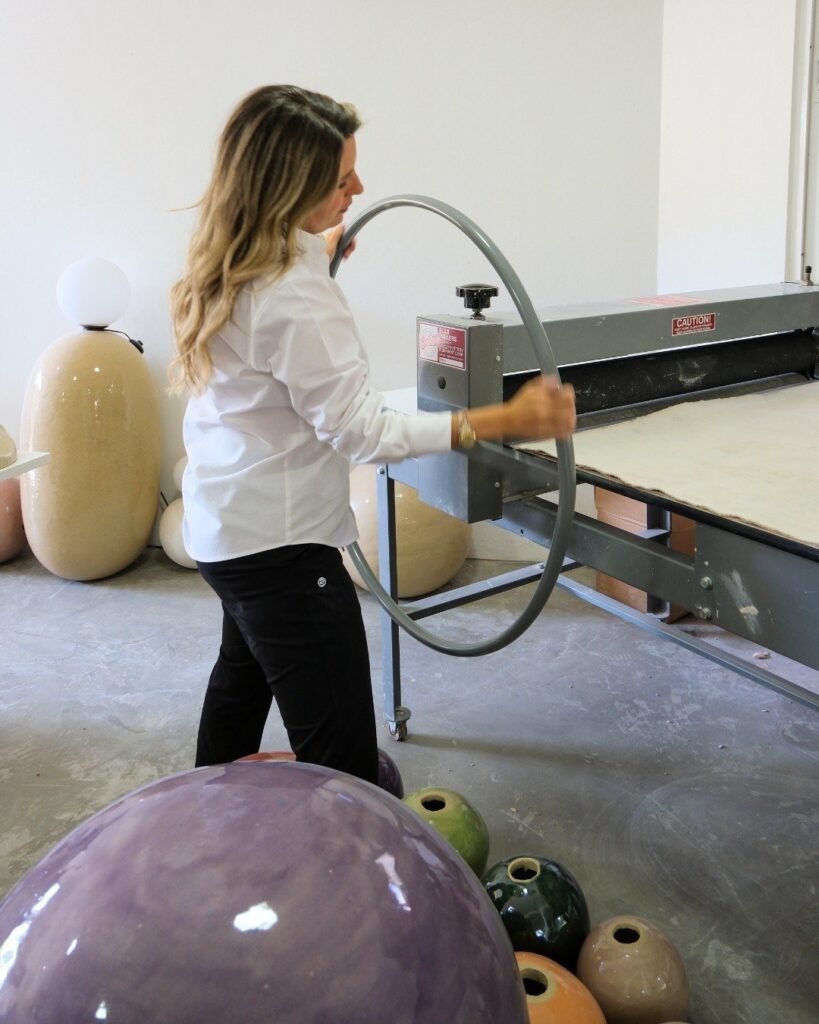
The rollers should move smoothly and consistently.
Turn the mechanism slowly and watch the rollers as they travel. Look for sticking, jumping, grinding, excessive resistance, or unusual movement.
If the machine allows movement in both directions, test both.
A slab roller that struggles when empty may have worn bearings, gears, shafts, or other mechanical components.
You should also check whether the rollers remain properly aligned.
Uneven roller movement can create slabs with inconsistent thickness, which defeats one of the main reasons for buying a slab roller in the first place.
Ceramic Arts Network has also discussed the importance of considering roller width, drive mechanisms, and intended workload when selecting a slab roller.
3. Check the Thickness Adjustment
One of the biggest advantages of a slab roller is the ability to create repeatable slab thickness.
That makes the adjustment system extremely important.
Move the adjustment mechanism through its full range.
Check whether both sides move evenly.
Look for damaged threads, worn adjustment points, missing gauge pins, loose components, or other problems that could prevent accurate thickness control.
If you regularly make tiles, plates, architectural pieces, or sets of matching work, inconsistent thickness can become a major problem.
Ask the seller to demonstrate several thickness settings if possible.
Do not assume the adjustment mechanism works simply because the machine turns.
4. Examine the Canvas
The canvas may look like a minor detail, but it directly affects how you work with the machine.
Inspect it for:
- Tears
- Fraying
- Heavy clay buildup
- Brittle areas
- Separation around the edges
- Excessive wear
A damaged canvas does not automatically mean you should reject the machine.
Compared with a damaged roller, frame, or adjustment mechanism, canvas replacement is usually a much easier problem to solve.
Still, include the cost in your calculations.
If two used slab rollers cost roughly the same, the machine with a clean, well-maintained canvas may offer better overall value.
5. Look for Bent or Damaged Rollers
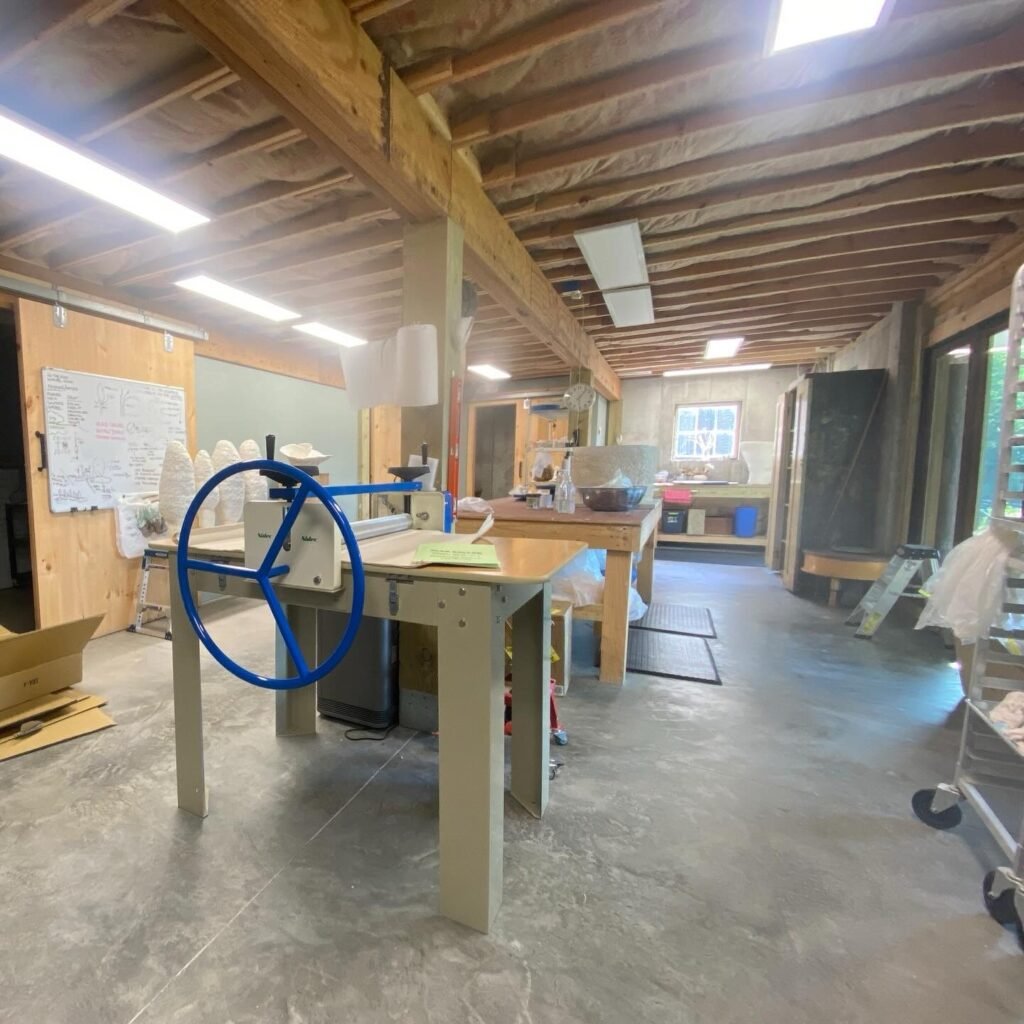
The rollers need to remain straight and properly aligned.
Inspect their surfaces carefully for dents, deep scratches, corrosion, or obvious deformation.
Then rotate them slowly.
Watch the gap between the roller and the working surface.
If that gap changes noticeably as the roller turns, investigate the cause.
A damaged roller can produce uneven slabs even when everything else appears to work correctly.
Ask the seller whether the machine has ever been dropped or damaged during transportation.
Heavy ceramic equipment can suffer damage when people move it without the right equipment.
This is particularly important when buying an older machine that has changed studios several times.
6. Check Parts Availability
Brand and model matter when buying used pottery equipment.
Before purchasing, identify the exact slab roller.
Then check whether replacement parts remain available.
Look for:
- Rollers
- Bearings
- Gears
- Canvas
- Handles
- Adjustment components
- Hardware
- Other manufacturer-specific parts
A very cheap machine can become expensive if you cannot find the component you need after something breaks.
Established pottery equipment brands may give you more confidence because replacement parts and technical information are often easier to find.
That does not mean every older machine from a major manufacturer is automatically a good purchase.
Condition still matters.
7. Calculate the Real Cost of the Used Slab Roller
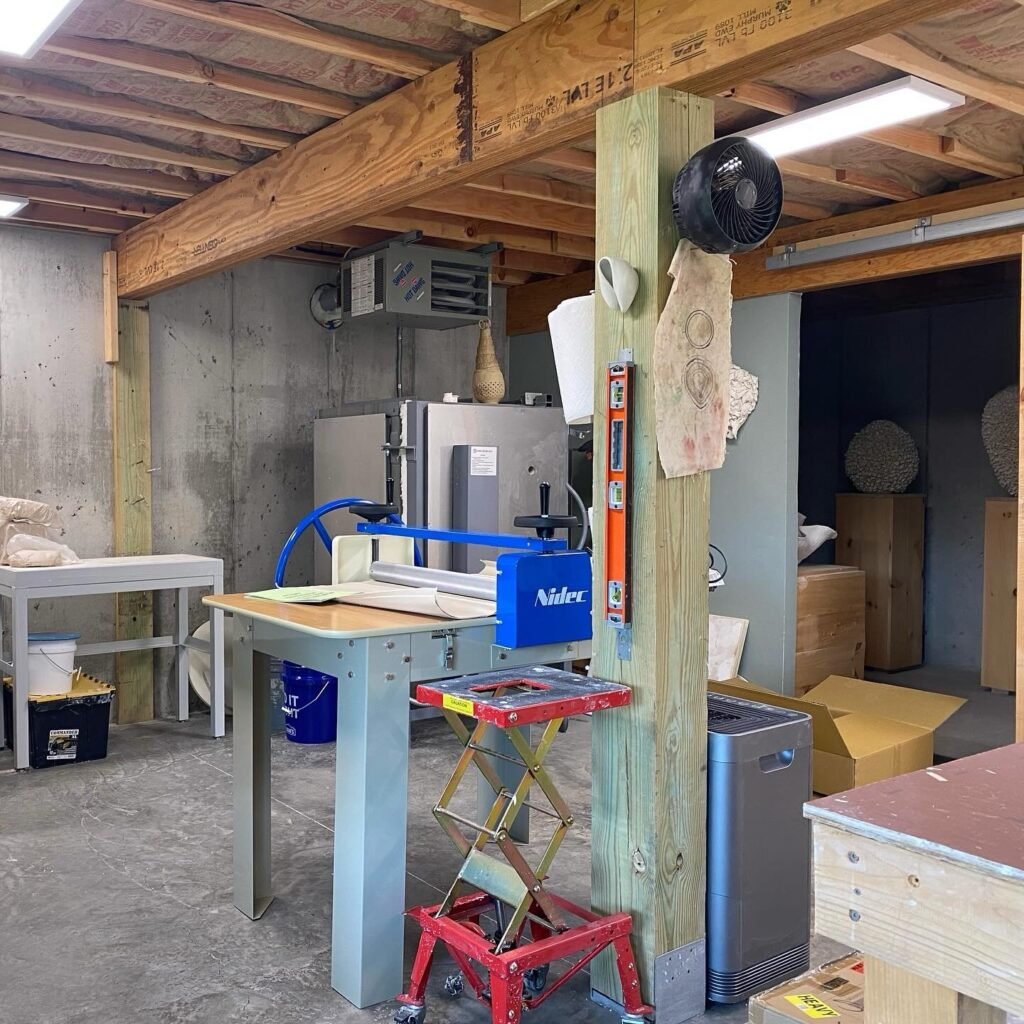
The sticker price is only the beginning.
Suppose you find a used slab roller for $700.
That sounds attractive compared with buying new.
Then you discover that the machine needs new canvas, replacement bearings, freight shipping, and several hours of cleaning.
Your $700 purchase may suddenly cost well over $1,000.
Heavy pottery equipment creates another issue: transportation.
A slab roller can be awkward and expensive to move because of its size and weight.
Before buying, calculate:
Purchase price
- shipping or freight
- replacement parts
- repairs
- electrical or mechanical work if needed
- setup
= actual cost
Then compare that number with a new or refurbished slab roller.
That is the comparison that actually tells you whether you found a bargain.
Used Slab Roller vs New
Buying used makes sense when the condition is good and the price creates meaningful savings.
The discount should compensate you for the additional uncertainty.
For example, a well-maintained slab roller that costs substantially less than a new equivalent can be an excellent purchase.
A heavily worn machine that costs only slightly less than new equipment is much harder to justify.
Don’t focus only on the percentage discount.
Focus on what you are getting for the final amount you spend.
Is a Used Slab Roller Good for a Home Studio?
A used slab roller can be an excellent addition to a home pottery studio.
It becomes particularly useful if you regularly make handbuilt work such as:
- Plates
- Tiles
- Trays
- Boxes
- Architectural ceramics
- Sculptural pieces
- Large flat forms
Measure your studio before buying.
Remember that the machine needs working space around it. You need room to load clay, move the roller, handle finished slabs, and store your canvas and other supplies.
A machine that technically fits in your studio may still be impractical if you cannot work around it comfortably.
For a broader look at slab roller features and options, see The Kiln Depot’s guide:
Used Slab Roller vs Refurbished Equipment
Used and refurbished are not necessarily the same thing.
A used slab roller simply means someone owned it before you.
That tells you very little about its current condition.
A refurbished slab roller should have undergone additional inspection, cleaning, servicing, testing, or replacement of worn components. However, refurbishment standards vary between sellers.
Ask exactly what was done.
Was the roller tested?
Were bearings inspected?
Was the adjustment system checked?
Was the canvas replaced?
Were worn components changed?
Was the machine tested under normal operating conditions?
Does the seller provide any warranty or return protection?
Those answers are more important than the word “refurbished.”
A mechanically experienced buyer may prefer a cheaper used machine that needs minor work.
Another buyer may gladly pay more for refurbished equipment because reducing uncertainty matters more than getting the absolute lowest purchase price.
When Should You Walk Away?
Some problems should make you extremely cautious.
Consider walking away if you find:
- Severe structural rust
- Bent rollers
- Major gear damage
- A thickness adjustment that does not work
- Missing critical components
- Unavailable replacement parts
- Severe corrosion around moving parts
- Evidence of major impact damage
- A seller who refuses a basic inspection
- A price that is too close to a new or refurbished alternative
You do not have to turn somebody else’s neglected equipment into your next studio repair project.
There will be another slab roller.
How to Buy a Used Slab Roller Online
Buying locally gives you the advantage of inspecting the machine in person.
Online purchases require more caution.
Ask the seller for detailed photographs of the rollers, frame, adjustment mechanism, canvas, hardware, and model plate.
Better yet, request a video.
Ask them to demonstrate the machine moving through several thickness settings.
Listen for unusual sounds.
Watch the rollers.
Look for hesitation or uneven movement.
Ask direct questions about previous repairs.
If the seller cannot provide basic evidence that the machine works, treat the purchase as a higher-risk transaction and price it accordingly.
Who Should Consider a Used Slab Roller?
A used slab roller makes the most sense for potters who regularly work with slabs and want to expand their studio without spending heavily on new equipment.
It can be particularly useful for:
- Home pottery studios
- Production potters
- Ceramic teachers
- Schools
- Community studios
- Art centers
- Pottery businesses
- Artists producing large handbuilt work
If you only make a few small slabs occasionally, a rolling pin and thickness guides may still meet your needs.
Once you regularly produce large or repeatable slabs, a dedicated machine becomes much easier to justify.
Final Thoughts
A used slab roller can be an excellent investment when you buy based on condition rather than appearance.
Inspect the frame.
Test the rollers.
Check the thickness adjustment.
Examine the canvas.
Look for damaged or bent components.
Verify replacement parts.
Then calculate the complete cost, including transportation and repairs.
A cheap slab roller is not automatically a good deal.
A well-maintained used machine at the right price can be.
If the used option carries too much uncertainty, compare it with refurbished pottery equipment before making your decision.
The goal is not to find the cheapest slab roller.
The goal is to find a reliable slab roller that gives your studio the capability you need while keeping your total investment under control.
