A used pottery kiln can save you thousands of dollars when you choose carefully. For potters building a home studio, upgrading their firing capacity, or starting a ceramics business, buying used can put professional equipment within reach without paying full retail.
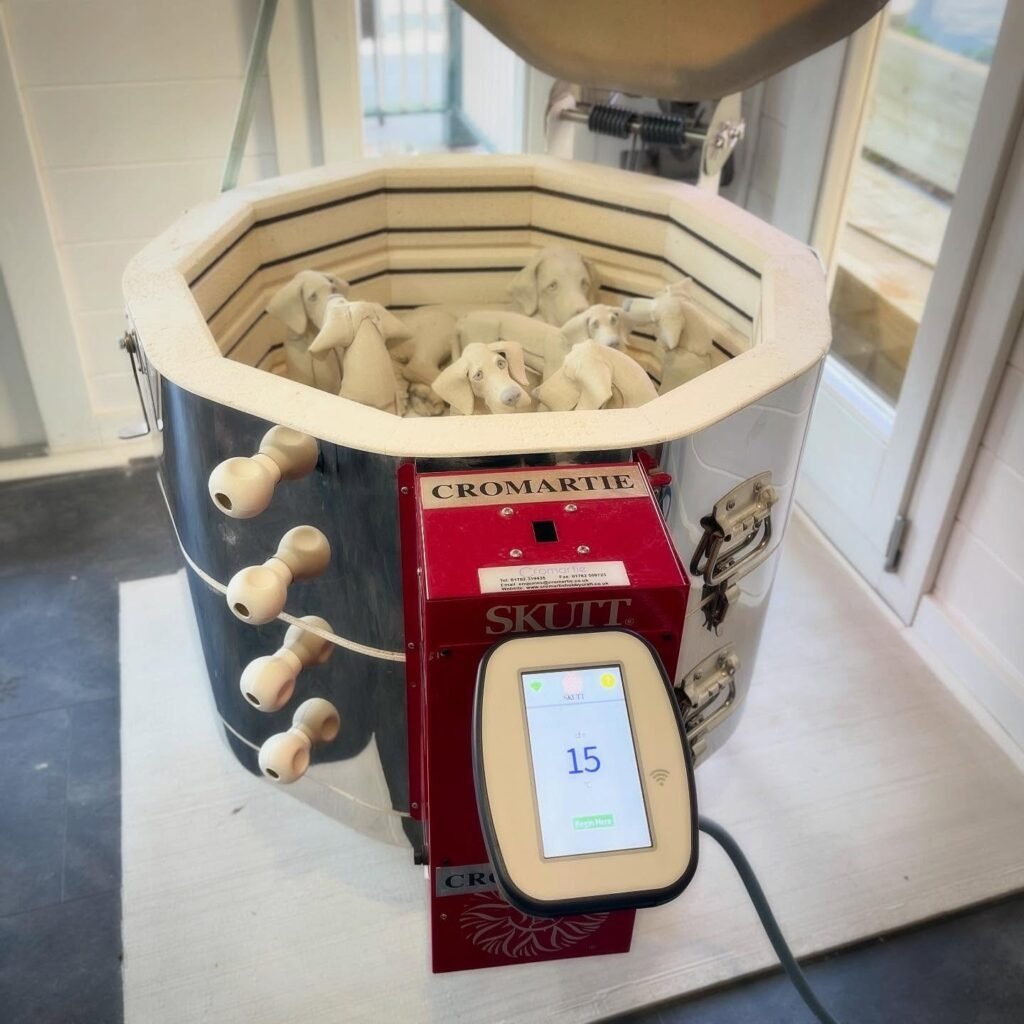
The catch is simple: not every used kiln is a good deal.
Kilns experience extreme heat, electrical wear, element deterioration, and brick damage. A kiln that looks great in a photograph may still need expensive repairs.
The smartest buyers look beyond the asking price.
Why Buy a Used Pottery Kiln?
A pottery kiln can be one of the largest equipment purchases in a ceramic studio.
Buying used gives you another way to get the capacity you need while keeping more money available for pottery wheels, clay, shelving, tools, and other studio equipment.
A well-maintained kiln can continue serving a studio for many years.
Used equipment can make particular sense when you find a respected model in good condition with a documented maintenance history.
1. Used Skutt KM-818
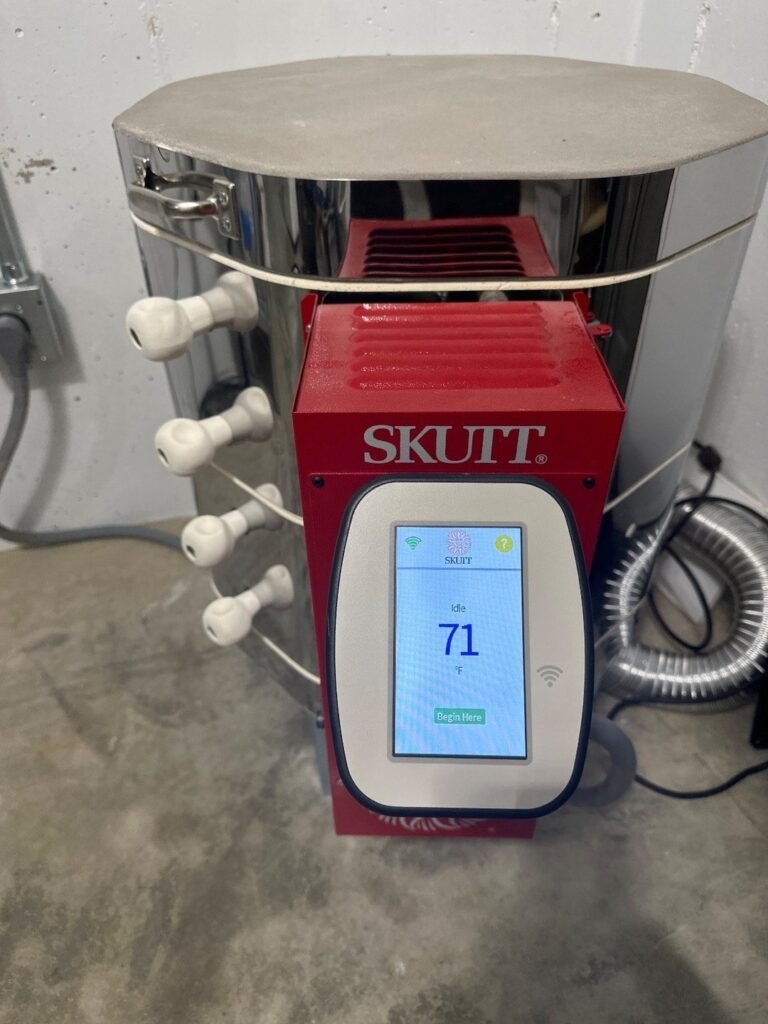
The Skutt KM-818 is a practical choice for smaller studios and potters who don’t need a large firing chamber.
Its relatively compact size makes it easier to fit into a home studio while still providing serious firing capability.
When inspecting a used KM-818, check the elements, firebrick, controller, lid, wiring, and kiln furniture.
Ask how frequently the previous owner fired it and which cones they normally used.
A clean exterior tells you very little about the kiln’s actual condition.
2. Used Skutt KM-1027
The Skutt KM-1027 is one of the most recognizable pottery kilns on the used market.
Its larger chamber makes it attractive to potters producing regular batches of mugs, bowls, plates, vases, and other functional work.
The additional capacity can also make production more efficient because you can fire more pieces in each cycle.
Before buying a used KM-1027, find out the age and condition of the elements.
Check the controller.
Inspect the firebrick.
Verify the electrical requirements.
Then compare the used price with a comparable new or refurbished kiln.
3. Used Skutt KMT-1027
The KMT-1027 deserves attention if you want a larger electric pottery kiln with modern control features.
The controller becomes especially important when buying this model used.
Make sure the display works correctly.
Check the buttons and programming functions.
Look for error messages.
Inspect the thermocouple.
Ask whether the controller has ever been replaced.
If possible, watch the kiln operate during a firing.
A working display doesn’t guarantee that every component of the kiln works properly.
4. Used Paragon Pottery Kiln
Paragon offers another strong option for buyers searching for used pottery kilns.
The company produces many kiln sizes, so the exact model matters more than the brand name alone.
A smaller Paragon can work well for a home studio.
A larger model can support higher-volume production.
Before buying, record the exact model number and check its firing temperature, chamber size, voltage, amperage, and controller.
Then compare those specifications with your studio requirements.
5. Used Cone Art Kiln
Cone Art kilns also deserve consideration when you’re shopping for used pottery equipment.
As with Skutt and Paragon, you’ll find different sizes and configurations.
Don’t assume that a larger kiln automatically provides better value.
A smaller kiln in excellent condition can easily beat a larger machine that needs new elements, electrical work, and brick repairs.
Inspect the kiln first.
Then calculate the complete cost.
6. Used Electric Pottery Kiln
Electric kilns remain popular because they offer predictable firing and straightforward operation for many pottery studios.
That makes used electric kilns attractive to buyers who want to reduce their initial investment.
Electrical requirements deserve serious attention.
Check the voltage.
Check the amperage.
Check the phase.
Confirm the circuit requirements.
Then make sure your studio can safely support the kiln.
Never buy a used pottery kiln before confirming that you can install it properly.
7. Used Large Pottery Kiln
A large used pottery kiln can offer excellent value for a production studio.
The bigger chamber allows you to fire more work per cycle.
That can reduce the number of firings required each week.
However, large kilns also create additional installation challenges.
Measure the kiln.
Measure your doorways.
Check the floor.
Confirm the electrical supply.
Plan ventilation.
Work out transportation before you pay.
A great kiln isn’t a great deal if you can’t safely get it into your studio.
8. Used Pottery Kiln for a Home Studio
Home potters should consider more than firing capacity.
Space, electrical requirements, ventilation, and frequency of use all matter.
If you only fire a few times each month, a smaller used pottery kiln may provide better value than the biggest model you can afford.
A compact kiln also leaves more room for your pottery wheel, work tables, clay storage, and shelving.
Choose capacity based on the work you actually produce.
9. Refurbished Pottery Kiln
A refurbished pottery kiln can provide a useful middle ground between buying new and purchasing a completely untested used machine.
The important thing is to find out exactly what refurbishment means.
Ask whether the seller inspected the elements.
Ask whether they tested the controller.
Ask whether they repaired damaged brick.
Ask whether they ran a firing.
Ask whether they replaced worn components.
A machine isn’t automatically valuable simply because someone calls it refurbished.
The work performed matters.
You can browse pottery equipment and kiln options here:
What to Check Before Buying a Used Pottery Kiln
The kiln’s condition matters more than its age.
Start with the firebrick.
Look for severe cracks, missing sections, and deterioration around the element grooves.
Next, inspect the elements.
Heavily worn elements can increase your maintenance costs quickly.
Then check the controller, thermocouple, lid, hinges, wiring, and electrical components.
If you don’t understand kiln electrical systems, have a qualified professional inspect the machine.
Check the Kiln Elements
Elements eventually wear out.
That doesn’t automatically make an older kiln a bad purchase.
You need to know how much useful life remains.
Ask the seller:
When were the elements last replaced?
How often was the kiln fired?
What cone did the kiln normally reach?
Have any elements failed?
Were the elements replaced individually or as a complete set?
The answers will help you estimate future maintenance costs.
Inspect the Firebrick
Firebrick provides another important clue about a kiln’s condition.
Minor cracks don’t necessarily make a kiln unusable.
Severe deterioration, missing brick, or significant damage deserves much more attention.
Inspect the floor.
Check the walls.
Look at the lid.
Examine the areas surrounding the elements.
A kiln with extensive brick damage may require more work than the asking price suggests.
Test the Controller
Modern electric kilns depend heavily on their controllers.
Turn the controller on.
Check the display.
Test the buttons.
Look for error codes.
Ask whether the controller has been replaced.
If possible, watch the kiln operate during an actual firing.
A successful test gives you much more confidence than photographs alone.
Check the Electrical Requirements
This is one of the easiest mistakes for used-kiln buyers to make.
A kiln may require a dedicated circuit and specific voltage and amperage.
Some larger models may also require electrical upgrades before installation.
Find the data plate on the kiln.
Record the electrical specifications.
Then have an electrician confirm that your studio can support the machine safely.
Do this before purchasing.
Used Pottery Kiln Price vs New
The asking price doesn’t tell you the real cost.
Suppose you find a used kiln for $1,200.
It sounds cheap.
Then you discover that it needs $600 in elements, $500 in electrical work, and $300 in transportation.
Your actual investment has already reached $2,600.
That may no longer represent a bargain.
Calculate:
Purchase price + transportation + repairs + installation = actual cost.
Then compare that number with a comparable new or refurbished pottery kiln.
Where to Find Used Pottery Kilns
Used pottery kilns appear through private sellers, ceramic studios, schools, estate sales, studio closures, and specialist equipment dealers.
Private sales can provide excellent prices.
Specialist sellers may provide more information about condition and maintenance.
Regardless of where you buy, ask for:
The exact model number
Photos of the interior
Photos of the elements
Electrical specifications
Firing history
Controller information
Kiln furniture details
A demonstration or test firing
If the seller refuses to provide basic information, consider that a warning sign.
Used Kilns vs Refurbished Kilns
Used and refurbished don’t mean the same thing.
A used kiln simply had a previous owner.
A refurbished kiln should have received some combination of inspection, cleaning, testing, maintenance, or replacement parts.
The quality of refurbishment varies between sellers.
Ask exactly what they did.
A properly refurbished kiln can justify paying more than an untested private-sale kiln.
But don’t pay extra for the word “refurbished.”
Pay for documented work and better condition.
When Should You Walk Away?
Sometimes the best deal is the kiln you decide not to buy.
Walk away if the seller refuses to demonstrate the kiln.
Be cautious if the model number is missing.
Think carefully if the controller doesn’t function.
Be careful with severe brick damage.
Reconsider when the elements are heavily worn and the seller still wants near-new pricing.
Also walk away if the kiln’s electrical requirements don’t fit your studio.
There will always be another used pottery kiln.
Shop Pottery Kilns Based on Your Production Goals
Your kiln should match the work you actually make.
Small batches may only require a compact kiln.
Regular production may justify a KM-1027-sized chamber.
Large production work may require a much larger kiln.
Compare available kiln options here:
If you’re building a complete studio, your kiln is only one part of the setup.
A reliable pottery wheel helps you produce work.
A pugmill helps you reclaim and prepare clay.
A slab roller makes handbuilding faster.
The right combination can improve your entire studio workflow.
Final Thoughts
Used pottery kilns can offer tremendous value when you buy based on condition rather than appearance.
Skutt, Paragon, and Cone Art models are all worth considering.
The exact model matters.
The elements matter.
The firebrick matters.
The controller matters.
The electrical requirements matter.
Most importantly, the total cost matters.
Before buying a used pottery kiln, inspect the machine carefully, test it whenever possible, research the model, and calculate every additional expense.
If the kiln passes those checks and the final price gives you meaningful savings compared with a new or refurbished alternative, you may have found one of the smartest ways to expand your pottery studio without overspending.

Pingback: Kiln Lid Repair: Cracks, Damage, Seals and Replacement Guide