If you’ve been paying attention to the pottery community lately, you’ve probably noticed that ceramics are moving in several different directions at once.
Some potters are going deeper into traditional techniques.
Others are pushing ceramics toward sculpture, digital fabrication, and experimental forms.
Functional pottery remains important, but the definition of “functional” is becoming much broader.
And perhaps most importantly, the current ceramics conversation is becoming more interested in how a piece is made, not just what the finished piece looks like.
Rather than guessing what is trending, let’s look at what current ceramics publications, artist interviews, and marketplace data are actually showing.
Handbuilding Is Getting More Attention
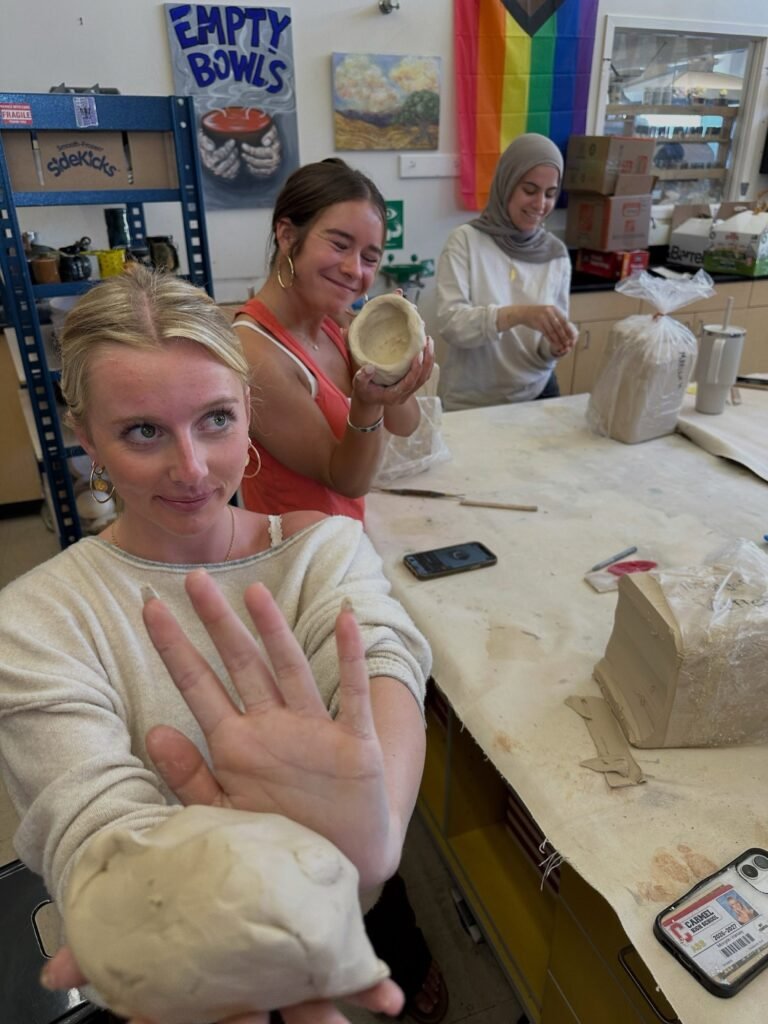
Handbuilding isn’t new, but it is receiving significant attention in the current ceramics community.
Ceramic Arts Network’s 2026 editorial calendar specifically describes handbuilding as a “growing area of interest” and highlights slab rollers, extruders, molds, templates, and hand tools as important parts of the practice.
That matters because handbuilding creates demand for a very different set of pottery equipment than wheel throwing.
A potter working primarily with slabs may need a pottery slab roller.
Someone producing larger forms may want an extruder.
A studio producing repeated shapes may invest in molds and templates.
For equipment sellers, this is a category worth watching closely.
If you’re building a handbuilding-focused studio, you can browse pottery equipment here:
Surface Decoration Is Still One of the Hottest Areas
Glazing and surface decoration remain major areas of interest.
Ceramic Arts Network’s 2026 editorial calendar calls surface decoration one of its hottest topics, covering commercial glazes, innovative processes, and unusual ceramic surfaces.
That interest makes sense.
Surface decoration gives potters enormous room to develop a recognizable style without completely changing the underlying form.
Carving, sgraffito, layering, slips, underglazes, texture, and experimental glaze combinations can all transform a relatively simple vessel.
The current direction isn’t simply “find the prettiest glaze.”
It’s about creating surfaces that make the work recognizable.
Bold Ceramics Are Getting Serious Attention

One of the clearest recent signals comes from Ceramics Monthly’s September 2026 “Bold Choices” feature.
The editorial team selected 23 ceramic works from more than 530 contest entries, specifically looking at bold approaches to material, color, surface, form, gesture, and scale.
That’s a useful snapshot of where contemporary ceramic practice is pushing.
The takeaway isn’t that every potter needs to make enormous sculptures or brightly colored vessels.
The more important point is that experimentation is being rewarded.
Potters are taking more risks with scale.
They’re pushing surface treatment.
They’re altering familiar forms.
They’re treating excess and restraint as deliberate artistic choices.
For artists trying to stand out in a crowded market, that is worth paying attention to.
Functional Pottery Isn’t Going Away
At the same time, the ceramics world isn’t abandoning useful objects.
Ceramic Arts Network’s 2026 editorial calendar continues to devote substantial attention to functional objects and wheel throwing.
The publication specifically highlights everyday objects such as trays, candle holders, lighting fixtures, match strikers, and napkin holders.
That points to an interesting shift.
Functional ceramics don’t have to mean another plain mug.
Potters are increasingly treating everyday objects as opportunities for design.
A candle holder can become sculpture.
A tray can become a statement piece.
A vase can move between functional object and artwork.
That creates opportunities for potters who want products that are both useful and visually distinctive.
3D Printing Is Entering More Pottery Studios
One of the more interesting developments in 2026 is the growing overlap between digital fabrication and traditional ceramics.
In a recent Ceramics Monthly interview, Arizona artist Ali Schorman discussed using 3D printing to create prototypes for slip-casting molds.
The advantage is practical.
A digital model can be adjusted, scaled, and refined before the final mold gets constructed.
That doesn’t mean the potter is replacing traditional ceramic processes with a printer.
Instead, digital tools can become another stage in the ceramic workflow.
Design digitally.
Prototype digitally.
Create the mold.
Cast the clay.
Finish the piece by hand.
This hybrid approach is one of the more interesting areas to watch as ceramic studios become more comfortable with technology.
Ceramic Artists Are Mixing Craft and Fine Art
Contemporary ceramics is also becoming harder to place into a single category.
In a 2026 Ceramics Monthly interview, emerging artist Brady Fanning described contemporary ceramics as occupying a space between craft and fine art, with artists using clay to explore identity, memory, narrative, power, politics, and the body.
That helps explain why ceramic work today can look so different from traditional studio pottery.
A vessel might still function as a vessel.
But it can also operate as sculpture, storytelling, installation, or social commentary.
For potters, this opens up more creative territory.
You don’t have to choose between making functional pottery and making art.
There is plenty of room between the two.
Traditional Techniques Are Being Reinterpreted
Another trend worth watching is the continued interest in older ceramic processes.
The current ceramics conversation includes techniques such as soda firing, salt firing, raku, sgraffito, burnishing, carving, and other established processes.
What’s changing is how artists use them.
Instead of simply reproducing historical pottery, contemporary artists are combining traditional techniques with modern forms and ideas.
Ceramics Monthly recently examined the differences between salt and soda firing, including their historical development and effects on contemporary studio practice.
Traditional methods are therefore not disappearing.
They’re being reinterpreted.
Social Media Is Still Changing How Pottery Gets Sold
There is another trend that matters if you sell pottery rather than simply make it.
The studio process itself has become marketing content.
Throwing videos.
Glazing experiments.
Kiln openings.
Failed firings.
Before-and-after transformations.
Large batches coming out of a kiln.
These moments give potential customers something to follow.
The growth of ceramic businesses such as East Fork also demonstrates how social media helped connect handmade pottery with new audiences. East Fork’s story shows how a regional pottery company expanded its audience while maintaining a strong connection to traditional craft.
That matters for smaller potters too.
You don’t necessarily need a huge advertising budget.
Showing people how your work is made can become part of the product’s story.
Etsy Data Shows Continued Interest in Handmade Ceramics
Marketplace data provides another useful signal.
Etsy’s seller trend reporting has repeatedly identified ceramics within broader handmade home and decor trends.
Its Fall 2025 trend report specifically highlighted handmade pottery within a nostalgic, kitchen-focused aesthetic and also identified colorful ceramics as an opportunity within a more playful, maximalist style.
Earlier Etsy data also showed a 31% year-over-year increase in searches containing “ceramic mug” in its Fall 2023 trend report.
That older figure shouldn’t be presented as current 2026 search volume.
But it does provide evidence that ceramic drinkware has demonstrated strong consumer interest on the marketplace.
The broader lesson is more useful than any single percentage.
Ceramics continues to benefit from consumer interest in handmade, personal, and visually distinctive home objects.
What This Means for Pottery Equipment
These trends have direct implications for studio equipment.
More handbuilding means more potential demand for slab rollers and extruders.
More experimentation means potters need reliable kilns.
More functional production means efficient pottery wheels become increasingly valuable.
More clay processing means pugmills can become worthwhile for busy studios.
More digital experimentation creates demand for new tools and studio workflows.
This is why equipment selection should follow the way a potter actually works.
A wheel-focused studio has different needs from a sculpture studio.
A production pottery business has different requirements from a weekend hobbyist.
The equipment should support the workflow rather than dictate it.
Browse pottery equipment here:
You can also explore pottery wheels here:
So What Is Actually Trending?
If we strip away social media hype, several genuine trends stand out.
Handbuilding is receiving increased attention.
Surface decoration remains a major area of experimentation.
Artists are pushing color, scale, texture, and form.
Functional pottery remains commercially important but is becoming more design-driven.
Digital fabrication is entering more ceramic workflows.
Traditional techniques continue to be reinterpreted.
And the line between functional pottery, craft, and fine art continues to blur.
None of this means every potter should chase the same aesthetic.
In fact, doing that would probably make your work less distinctive.
The Bigger Trend Is Experimentation
The strongest signal from the current ceramics community may be experimentation itself.
Ceramic Arts Network’s 2026 coverage repeatedly points toward artists combining techniques, materials, tools, technology, and ideas in new ways.
That is probably a better strategy than trying to predict the next “look.”
Learn the traditional process.
Understand your materials.
Invest in equipment that expands what you can make.
Then experiment.
The potters who stand out may not be the ones who follow the trend most closely.
They may be the ones who understand the trend well enough to move beyond it.
Final Thoughts
Pottery in 2026 isn’t moving toward one single aesthetic.
It’s becoming more diverse.
Handbuilding is growing.
Surface experimentation remains strong.
Functional objects continue to evolve.
Traditional techniques are being reinterpreted.
Digital tools are entering ceramic workflows.
And contemporary artists are increasingly treating clay as a medium for both objects and ideas.
For potters, that creates a lot of opportunity.
You don’t need to chase every trend.
Instead, watch where the community is moving, understand what customers are responding to, and choose the equipment and techniques that help you develop your own work.
The future of pottery doesn’t look like one trend.
It looks like more possibilities.
“
