When a pottery kiln stops during a firing and displays an unfamiliar message, the first instinct is often to assume the controller has failed.
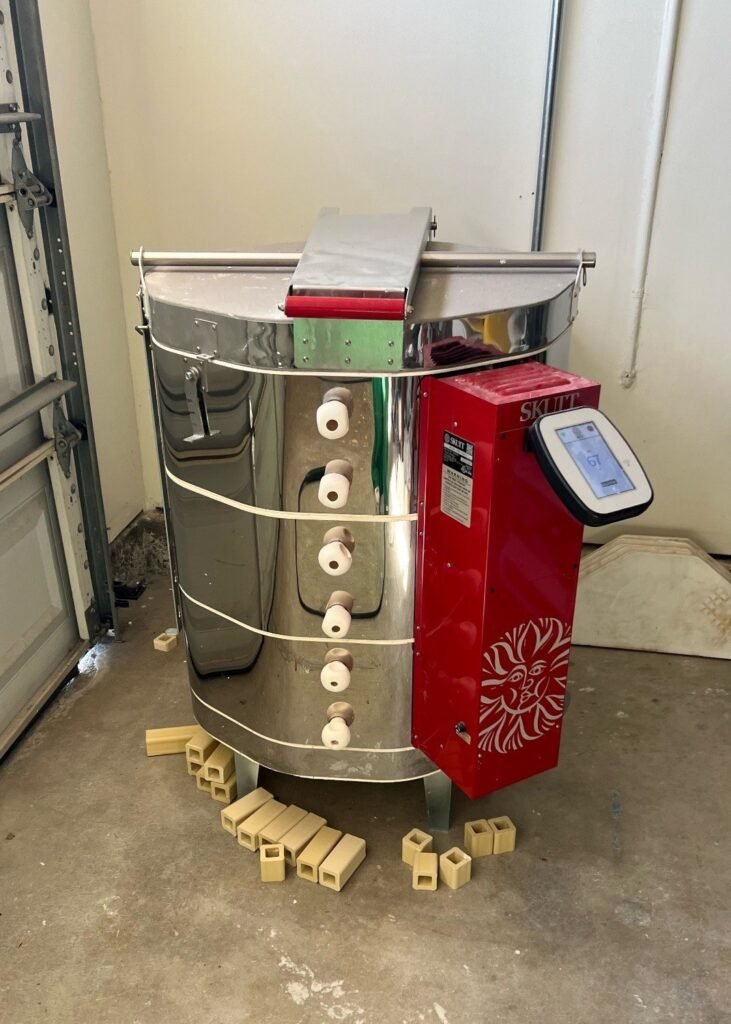
That is not necessarily what happened.
Kiln error codes are diagnostic warnings. They tell you that the controller detected something outside the expected firing conditions. Depending on the controller and the specific code, the underlying problem may involve heating elements, relays, thermocouples, electrical supply, programming, temperature behavior, or the controller itself.
The important distinction is that the code is usually a starting point for diagnosis, not a diagnosis by itself.
For example, Skutt identifies Error 1 as a condition where the kiln is not increasing in temperature quickly enough. Skutt specifically notes that the cause can involve the kiln’s heating system rather than the controller itself. L&L gives similar guidance for its controllers, pointing users toward elements, relays, voltage, and thermocouple readings when an E-1 condition occurs.
That is why replacing the controller immediately can be an expensive mistake.
This guide explains how to interpret common kiln error codes, what they can indicate, what you can safely check, and when the problem requires professional service.
What Are Kiln Error Codes?
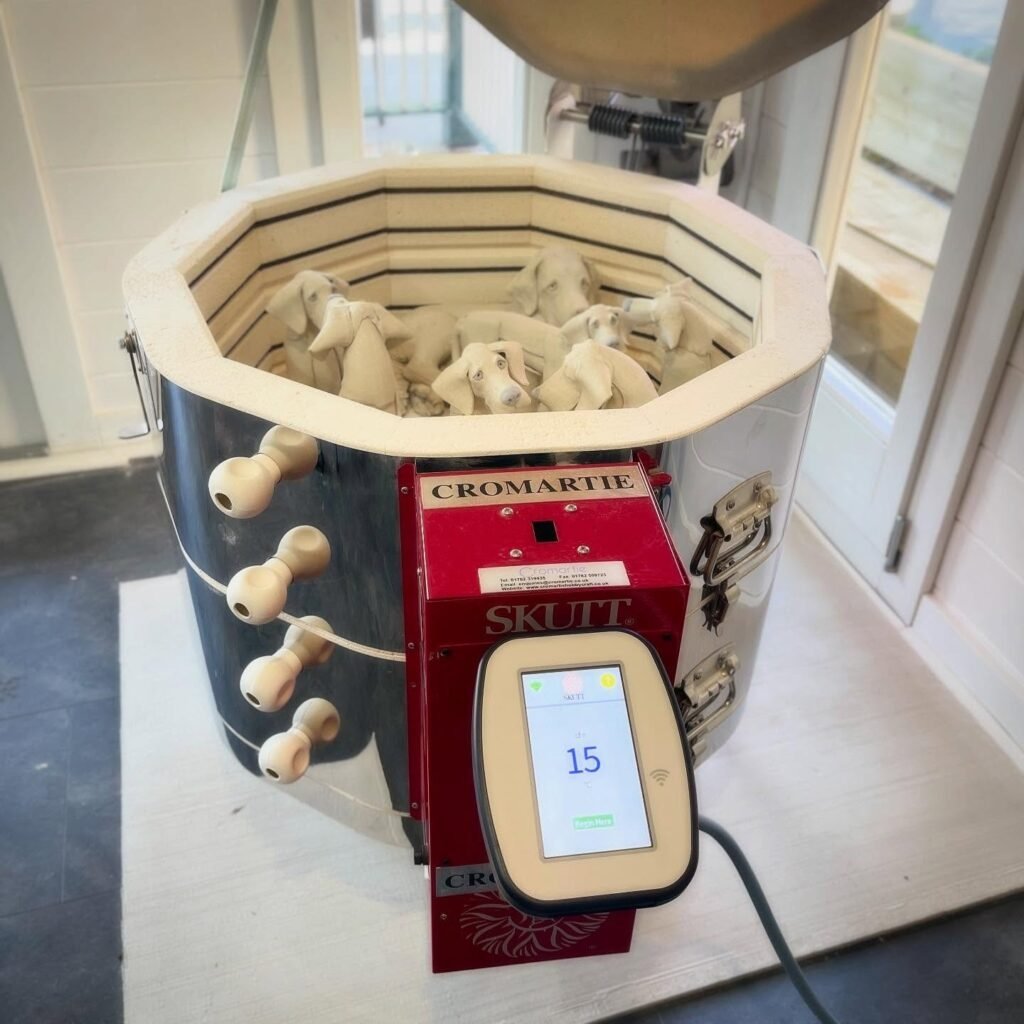
Kiln error codes are messages generated by an electronic kiln controller when the firing does not behave within a defined range.
The controller continuously receives information from the kiln’s thermocouple and uses that information to control the heating elements according to the programmed firing schedule.
If the kiln behaves unexpectedly, the controller may display an error.
The exact codes depend on the controller.
A Skutt KilnMaster controller does not necessarily use exactly the same terminology as an L&L DynaTrol or Genesis controller. Older controllers can also use different displays and abbreviations from newer models.
Therefore, never assume that a code means exactly the same thing across different brands.
The manufacturer’s manual for the specific controller should always be the first reference.
Skutt maintains a current troubleshooting resource covering its controller error messages:
L&L also publishes a detailed list of DynaTrol and Genesis error codes:
These resources are more useful than trying to interpret a display based on a generic internet list.
Why Kiln Error Codes Matter
A kiln controller does not know that your pottery looks wrong.
It knows that something about the firing does not match the expected conditions.
That distinction is important.
A controller may detect that:
- The kiln is heating too slowly
- The temperature has exceeded a programmed hold point
- The temperature is falling when it should be rising
- A thermocouple signal has failed
- The controller has lost power
- A relay may be stuck
- The programmed firing profile is invalid
- A temperature reading is inconsistent with the expected firing profile
The code therefore provides a clue about what the kiln was doing when the problem occurred.
The most useful information is usually the code plus the circumstances surrounding it.
Write down:
- The exact error message
- The temperature displayed
- The firing program being used
- The approximate firing time when the error appeared
- Whether the kiln was heating, holding, or cooling
- Whether the problem has happened before
- Whether anything recently changed
That information can dramatically narrow the troubleshooting process.
Kiln Error Codes Are Not Universal
One of the biggest mistakes in kiln troubleshooting is treating every controller as though it uses the same diagnostic system.
It does not.
For example, Skutt’s documentation describes Error 1 as a condition where the kiln temperature is rising too slowly during a firing. L&L’s documentation similarly describes E-1 as a slow heating condition, but the exact controller logic and recommended diagnostic process depend on the control system.
Other controllers may display different codes for similar problems.
That means a search for “E-1 kiln error” is not enough.
You need to know:
- The kiln manufacturer
- The kiln model
- The controller model
- The exact code
- The circumstances in which it appeared
This becomes particularly important with used kilns.
An older kiln may have been fitted with a replacement controller at some point during its life. The controller you are troubleshooting may therefore not be the controller originally supplied with the kiln.
If you are buying a used kiln, identify the controller before assuming you know how its error system works.
Common Kiln Error Codes and What They Can Indicate
The following examples are based on current manufacturer documentation. They should be treated as troubleshooting starting points rather than universal definitions.
E-1 or Error 1: Kiln Heating Too Slowly
This is one of the most useful and common diagnostic conditions.
Skutt describes Error 1 as a situation where the kiln cannot increase in temperature at the required rate. Its documentation gives a threshold of approximately 12°F per hour under the conditions used by its controller.
L&L similarly describes E-1 as a heating problem.
The important part is what this does not necessarily mean.
It does not automatically mean the controller is defective.
Possible causes include:
- Aging heating elements
- A failed element circuit
- Relay problems
- Low or dropping voltage
- Incorrect thermocouple readings
- Improper thermocouple placement
- Excessive heat loss
- An unusual firing load
- Other electrical problems
This is why kiln error codes should be investigated systematically.
Start with the simplest explanations.
Has the kiln gradually become slower over several firings?
If so, worn elements deserve attention.
The Kiln Depot’s guide to kiln elements covers slow firing and failure to reach temperature in greater detail.
If the kiln suddenly develops the problem after previously firing normally, an electrical or component failure may deserve more attention.
Error 2: Temperature Above Hold
Some controllers use Error 2 to indicate that the kiln temperature has risen significantly above the programmed hold temperature.
Skutt documentation describes this type of condition as approximately 50°F above the hold temperature.
L&L documentation similarly identifies E-2 as a condition where the kiln is substantially above its hold temperature.
Possible causes can include relay problems.
A relay that remains energized when it should switch off can allow heating elements to continue receiving power.
That is an important distinction because the controller may be detecting a heating-control problem rather than creating the problem itself.
Rapid cooling procedures can also affect how some controllers interpret temperature behavior. Manufacturer instructions should therefore be followed rather than experimenting with lid opening or rapid cooling during an active firing.
If you suspect a relay problem, see the Kiln Depot’s kiln relay troubleshooting guide.
Error 3: Temperature Below Hold
Some controllers use Error 3 for the opposite situation.
The kiln is in a hold segment but cannot maintain the required temperature.
L&L identifies E-3 as a condition where the kiln temperature is significantly below the hold temperature and lists relay failure as one possible cause.
Again, the code itself does not prove that the relay is defective.
The kiln could have another heating problem.
A useful diagnostic question is whether the kiln can maintain temperature normally during other portions of the firing.
If the kiln repeatedly loses temperature during a hold, investigate the heating circuits and control components rather than simply increasing the target temperature.
Error 4: Temperature Too High During Ramp Down
Some controllers monitor temperature during cooling or ramp-down segments.
L&L identifies E-4 as a condition where the kiln remains significantly above the previous hold temperature during a ramp-down segment.
This can have causes similar to an over-temperature condition during a hold.
A stuck relay or control problem may be involved.
The exact interpretation depends on the controller and firing program.
If the code appears repeatedly during ramp-down, document the program and firing conditions before changing anything.
Error 5: Temperature Too Low During Ramp Down
L&L controllers can also generate an error when the kiln falls below the expected temperature during a ramp-down segment.
The manufacturer identifies relay failure as one possible cause.
This illustrates why simply searching for a code and replacing a part is risky.
The same component can contribute to different symptoms, while the same error can have multiple possible causes.
Diagnosis should therefore follow the manufacturer’s troubleshooting procedure.
Thermocouple Errors
Thermocouples are among the most important components in an electronically controlled kiln.
The controller cannot regulate temperature properly without an appropriate temperature signal.
A thermocouple problem can involve:
- The thermocouple itself
- Thermocouple wires
- Connections
- Polarity
- Placement
- Physical deterioration
- Compatibility with the controller
Some L&L controllers display specific errors when a thermocouple circuit fails or is connected incorrectly.
A “FAIL” display, for example, can indicate an open thermocouple circuit rather than automatically proving that the thermocouple itself is physically broken.
The wiring and connections matter too.
That is why you should not automatically order a thermocouple simply because a controller reports a temperature-related problem.
The Kiln Depot’s kiln thermocouple replacement guide explains the common failure signs and replacement considerations.
For manufacturer-specific information, follow your kiln and controller documentation.
Error Codes Caused by Relays
Relays control power to the kiln’s heating elements.
When the controller determines that additional heat is required, the relay system allows the heating circuit to operate.
When the controller determines that heating should stop, the relay should switch accordingly.
A relay that fails open can prevent a heating circuit from operating.
A relay that becomes stuck closed can allow a heating circuit to remain energized when it should not.
That can produce very different firing symptoms.
Some kiln error codes are specifically associated with temperatures exceeding expected values, and manufacturer troubleshooting documentation identifies stuck relays as one possible cause.
If you repeatedly see an over-temperature-related error, do not assume the controller is the problem.
The relay and the rest of the heating circuit may need inspection.
Never open or service an energized kiln control box.
Disconnect power according to the manufacturer’s service procedure before performing any internal inspection, and use qualified electrical help when you are not trained to work safely on kiln electrical systems.
Error Codes and Heating Elements
Heating elements naturally change with use.
They oxidize and gradually become less efficient.
A kiln that previously reached temperature easily may begin taking longer to heat.
Eventually, a weak element or failed circuit can prevent the kiln from maintaining the required heating rate.
This is one reason a slow-heating error should not automatically be blamed on the controller.
If the kiln has gradually become slower, compare recent firing times with older firing records.
Look for:
- Longer ramp times
- Failure to reach the programmed temperature
- One section heating differently from another
- Visible element damage
- Repeated heating-related errors
The Kiln Depot’s guide to kiln element failure covers these symptoms in more detail.
For older kilns, element condition should also be part of the buying inspection.
Low Voltage Can Trigger Heating Problems
A kiln requires an appropriate electrical supply.
If the voltage delivered to the kiln is too low or drops under load, the heating elements cannot produce the expected amount of power.
That can lead to slow heating and related error messages.
L&L specifically identifies low or dropping voltage as one possible cause of an E-1 heating error.
This is especially important when troubleshooting a kiln that was recently moved.
A kiln can operate perfectly in one installation and behave differently after being connected to an unsuitable circuit.
Do not assume that because a receptacle physically accepts the plug, the electrical installation is correct.
Verify the kiln’s required voltage, phase, amperage, circuit, plug configuration, and installation requirements.
Electrical work should be performed by a qualified electrician where required.
What To Do When a Kiln Displays an Error
When kiln error codes appear, resist the urge to immediately clear the message and restart the firing.
First document what happened.
1. Record the exact code
Take a photograph of the controller display if possible.
A single character can matter.
E-1, E-2, E-3, E-A, E-D, FAIL, and other messages can point toward very different troubleshooting paths.
2. Record the temperature
Write down the temperature shown when the error occurred.
Temperature helps establish whether the kiln was:
- Heating too slowly
- Overheating
- Losing temperature
- Holding incorrectly
- Experiencing a sensor problem
3. Record the firing program
Note the firing schedule, target temperature, ramp rate, hold time, and any recent changes.
A controller error can sometimes be connected to the program itself.
4. Check the manufacturer’s documentation
Do not rely solely on a generic error-code chart.
Use the manual for the exact controller.
For Skutt equipment, the company’s error-code troubleshooting resource is the appropriate starting point.
For L&L equipment, use the manufacturer’s DynaTrol error-code documentation or the appropriate Genesis documentation.
5. Look for obvious external problems
Without opening the electrical control box, inspect what can safely be inspected.
Look for:
- A damaged power cord
- Obvious kiln damage
- Damaged thermocouple protection
- Unusual smells
- Visible element damage
- Loose external connections
- Signs of overheating
If something looks unsafe, stop.
6. Consider the firing history
Ask whether the problem is new or recurring.
A kiln that has slowly become slower over months suggests a different troubleshooting path from a kiln that suddenly displays an error during its first firing after installation.
7. Use witness cones when appropriate
Electronic controllers are extremely useful, but pyrometric cones provide another way to evaluate heatwork.
The Edward Orton Jr. Ceramic Foundation explains that pyrometric cones respond to the combined effect of time and temperature.
Its current cone guidance is available here:
Witness cones can be especially useful when diagnosing inconsistent firing results.
They can help establish whether the kiln is actually delivering the expected heatwork rather than simply showing the expected number on the display.
Should You Reset the Kiln After an Error?
Sometimes clearing an error and restarting may be appropriate.
But that depends on what caused the error.
A temporary power interruption is different from a stuck relay.
A one-time programming mistake is different from a kiln that repeatedly cannot reach temperature.
If the same error returns after restarting, do not treat the reset as a repair.
Repeated kiln error codes are evidence that the underlying condition still exists.
Document the code and follow the manufacturer’s troubleshooting procedure.
If the error suggests an electrical, relay, controller, or thermocouple fault that you cannot safely diagnose, stop using the kiln until it has been properly evaluated.
When an Error Code Means You Should Stop Firing
Some situations should not be treated as minor controller annoyances.
Stop and investigate if you notice:
- Repeated unexplained errors
- An apparent runaway temperature
- A kiln that continues heating when it should stop
- Burning electrical smells
- Melted or damaged wiring
- Repeated breaker trips
- Visible electrical damage
- A severely damaged thermocouple
- A controller that behaves erratically
- A kiln that cannot be safely controlled
A controller error is doing its job when it alerts you to abnormal behavior.
Disabling safety features simply because they interrupt a firing can create a much bigger problem.
Skutt’s troubleshooting resources specifically describe error codes as part of the system used to identify abnormal kiln performance.
Do Not Turn Off Error Codes Just to Finish a Firing
Some controllers allow error-code functions to be configured.
That does not mean you should disable them whenever they become inconvenient.
There are legitimate circumstances in which advanced firing techniques may interact with error detection. Manufacturer documentation explains those situations for specific controllers.
But a potter should not disable a protection feature simply because the kiln repeatedly generates an error.
If the same error appears during normal firing, investigate why.
The goal is not to make the controller stop complaining.
The goal is to understand why the kiln is behaving outside the expected conditions.
Kiln Error Codes on Used Kilns
If you are buying a used kiln, controller diagnostics become particularly valuable.
Ask the seller:
- What controller is installed?
- Has the controller ever been replaced?
- Are there known error messages?
- How long does a typical firing take?
- Has the kiln recently been test fired?
- Have the elements been replaced?
- Have the relays been replaced?
- Has the thermocouple been replaced?
- Has the kiln ever tripped a breaker?
- Is there a record of previous repairs?
A seller who can provide maintenance history gives you more useful information than one who simply says the kiln “works.”
When possible, evaluate the kiln under actual firing conditions.
The Kiln Depot’s used pottery kiln inspection guide covers additional checks to make before purchasing older equipment.
Remember that an error code on a used kiln does not automatically make the kiln worthless.
The question is what caused it and what it would cost to correct.
A controller displaying E-1 because of aging elements is a very different situation from a controller with a failed display, damaged wiring, multiple failed relays, and a kiln structure that also requires major repairs.
Kiln Error Codes and Refurbished Kilns
Refurbished equipment deserves a similar level of scrutiny.
Do not assume that the word “refurbished” tells you everything about the kiln’s condition.
Ask what was actually done.
Were the elements inspected?
Were relays replaced?
Was the controller tested?
Was the thermocouple checked?
Was the kiln test fired?
Were electrical connections inspected?
Was the firing performance documented?
The more specific the answers, the easier it is to understand what you are buying.
A refurbished kiln should be evaluated based on the work actually performed rather than the label alone.
Controller Problems vs. Kiln Problems
One of the most important lessons when interpreting kiln error codes is that the controller is often reporting a problem elsewhere in the system.
Think of the controller as the kiln’s monitoring and control center.
It receives information.
It makes decisions according to the programmed firing.
It switches heating circuits.
It monitors temperature behavior.
But it cannot physically repair a weak heating element, restore a damaged thermocouple, or correct inadequate electrical supply.
That means a controller-generated error can originate from another component.
For example:
Slow heating
Possible areas to investigate include elements, relays, voltage, thermocouple readings, loading, and heat loss.
Unexpected overheating
Possible areas include relay behavior, control output, thermocouple readings, or programming.
Thermocouple failure
Possible areas include the sensor, wires, connections, polarity, and controller input.
Power-loss message
Possible areas include the electrical supply, breaker, connections, or controller power circuit.
This systems approach is much more useful than replacing parts based on the code alone.
How to Keep Error Problems From Becoming Expensive Repairs
Good maintenance reduces troubleshooting surprises.
Keep a firing log.
Record:
- Date
- Firing type
- Cone
- Program
- Start and finish time
- Peak temperature
- Error messages
- Unusual observations
- Witness-cone results
- Repairs or component replacements
Over time, this creates a baseline.
If a firing that normally takes seven hours suddenly takes nine, you have evidence that something changed.
If the same error appears every third firing, you have a pattern to investigate.
If witness cones begin bending differently even though the controller reports the same target temperature, you have another warning that the firing system needs attention.
This is far more useful than trying to remember what happened three months ago.
Frequently Asked Questions About Kiln Error Codes
What does an E-1 kiln error mean?
On controllers that use E-1 for slow heating, the message generally indicates that the kiln is not increasing in temperature at the required rate.
Possible causes include aging elements, relay problems, low voltage, or incorrect thermocouple readings.
Check the exact controller manual before diagnosing the problem.
Can a bad thermocouple cause kiln error codes?
Yes.
A failed, incorrectly connected, incorrectly positioned, or otherwise problematic thermocouple can cause temperature-related errors.
However, not every temperature error means the thermocouple is bad.
Can bad elements cause a kiln error?
Yes.
Weak or failed heating elements can prevent a kiln from increasing in temperature at the expected rate.
This is particularly relevant when a kiln has gradually become slower over time.
Can a relay cause kiln error codes?
Yes.
A failed relay can prevent a heating circuit from operating correctly.
A stuck relay can also allow heating to continue when the controller expects it to stop.
Are kiln error codes the same on every kiln?
No.
The exact codes depend on the manufacturer, controller, firmware, and sometimes the age of the controller.
Always use documentation for the specific control system.
Should I keep firing after an error?
Do not automatically continue.
Determine what caused the error first, particularly if it involves overheating, electrical problems, a stuck relay, repeated failures, or loss of temperature control.
Can a power problem cause a kiln error?
Yes.
Low or dropping voltage can contribute to slow heating and other abnormal kiln behavior.
The electrical installation should match the kiln manufacturer’s requirements.
Do witness cones replace the kiln controller?
No.
Witness cones and electronic controllers provide different information.
The controller manages the firing process, while pyrometric cones provide information about heatwork experienced by the ware.
Using both can provide a more complete picture of firing performance.
The Bottom Line
Kiln error codes are warnings, not automatic diagnoses.
The code tells you that the kiln’s behavior did not match what the controller expected.
Your job is to determine why.
Start with the exact controller documentation.
Record the code and temperature.
Review the firing program.
Consider the kiln’s recent performance.
Check the obvious external issues.
Then investigate the relevant components, including heating elements, relays, thermocouples, and electrical supply.
Do not replace an expensive controller simply because the controller displayed an error.
And do not repeatedly clear the same warning and continue firing without understanding it.
For potters maintaining older equipment, this matters even more. A used kiln can still be valuable equipment, but its electrical components and control system need to be evaluated as part of the whole machine.
If you are troubleshooting a kiln now, the most useful next step is not guessing which part to replace.
Identify the exact controller, document the exact error, and follow the manufacturer’s diagnostic procedure.
That approach turns kiln error codes from frustrating messages on a screen into useful information about what your kiln is actually doing.
If you are buying or maintaining pottery equipment, the same principle applies throughout the kiln: diagnose the system before replacing the part.
