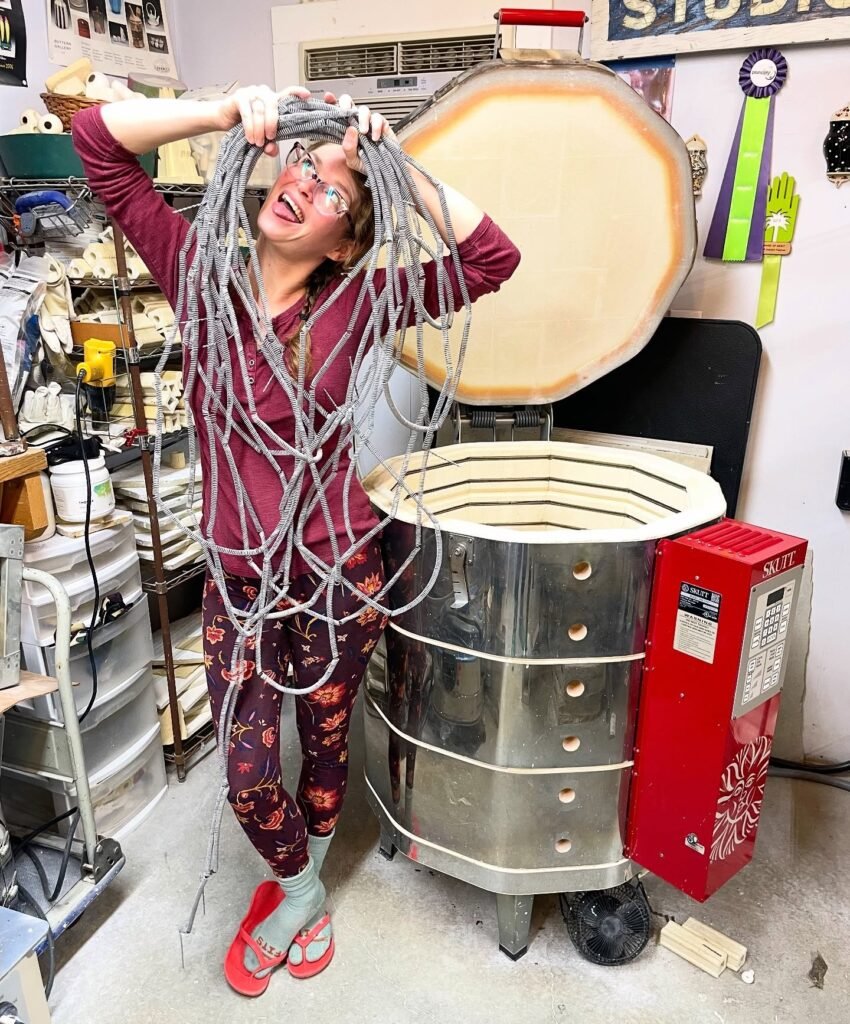
A kiln thermocouple is one of the smallest components inside an electric pottery kiln, yet it has a major effect on your firing results. The sensor measures the temperature inside the kiln and sends that information to the controller. The controller then uses the reading to manage the firing program.
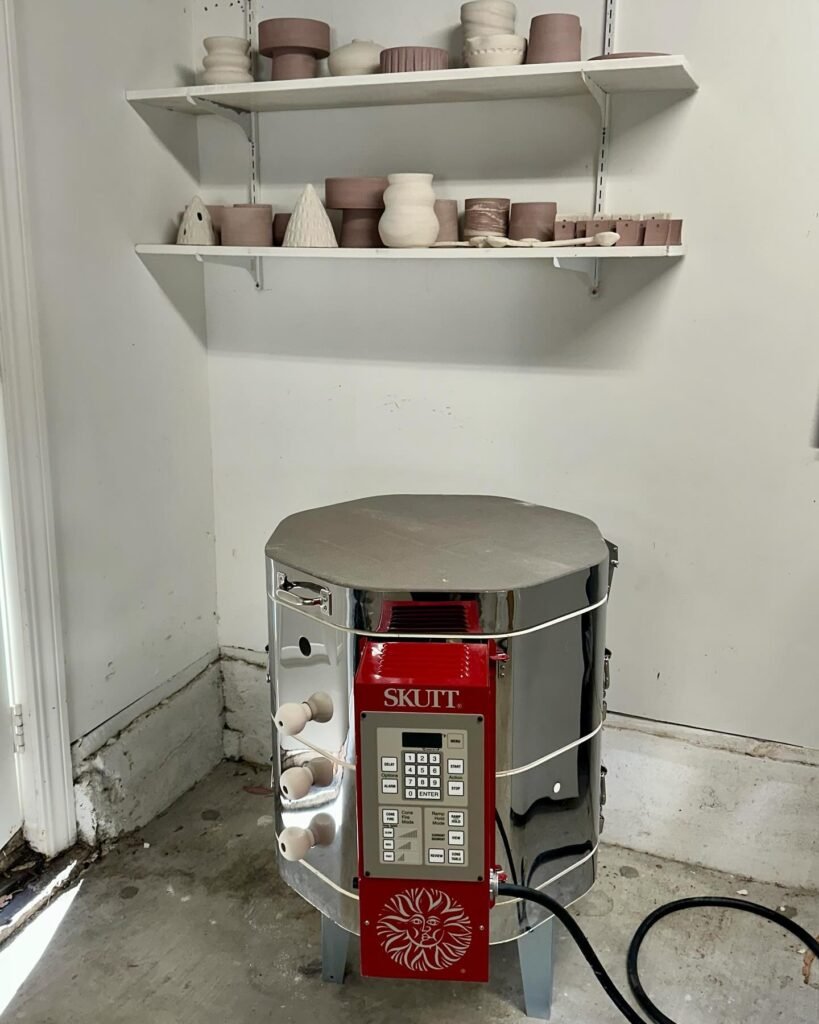
When the sensor becomes damaged or inaccurate, your kiln may still appear to work normally. However, the pottery may tell a different story. Witness cones can bend differently, glazes may mature unexpectedly, or the kiln may behave differently from previous firings.
Fortunately, understanding your kiln thermocouple makes these problems easier to investigate.
What Is a Kiln Thermocouple?
A kiln thermocouple is a temperature sensor designed to withstand extremely high temperatures. It produces an electrical signal that corresponds to the temperature around the sensor.
Your kiln controller uses that signal to determine how hot the firing chamber has become.
The process happens continuously during a firing. As the temperature rises, the thermocouple sends changing information to the controller. The controller then adjusts the heating elements according to the programmed firing schedule.
In simple terms, the thermocouple tells your kiln what temperature it is experiencing.
That makes it a critical part of the temperature-control system.
Why Does a Kiln Thermocouple Wear Out?
Thermocouples work in a harsh environment.
Every firing exposes the sensor to intense heat. Afterward, the kiln cools down. This heating and cooling cycle happens again and again throughout the life of the kiln.
High-temperature firing can accelerate wear. Frequent firings can also shorten the useful life of a sensor.
Physical damage creates another problem. A thermocouple can be hit while you are loading shelves or moving pottery inside the kiln.
Over time, oxidation and general deterioration can also affect the sensor.
For that reason, thermocouples should be treated as wear components rather than permanent parts.
Signs Your Kiln Thermocouple May Be Failing
A failing thermocouple does not always announce itself with an obvious error message.
Sometimes the first warning comes from your pottery.
Pay attention when your firing results suddenly change without an obvious change to the clay, glaze, or firing schedule.
A few warning signs deserve closer attention.
- Your firing results change unexpectedly
Suppose you use the same clay, glaze, firing program, and kiln settings you normally use. Suddenly, your pottery comes out noticeably different.
The thermocouple could be one possible cause.
However, do not assume it is automatically responsible. Heating elements, electrical components, kiln loading, voltage, and other factors can also affect firing results.
Look for a pattern rather than reacting to one unusual firing.
- Witness cones behave differently
Witness cones provide useful information about heatwork inside the kiln.
If your controller says the firing reached the expected temperature but your cones consistently show a different result, investigate the situation.
The thermocouple may be reading inaccurately.
However, cone placement and firing rate also influence cone behavior. Therefore, use the cones as evidence rather than treating them as proof that the sensor has failed.
- The thermocouple looks badly worn
Inspect the sensor whenever the kiln is completely cool.
Look for severe oxidation, physical damage, cracking, or unusual deterioration.
A heavily worn sensor deserves attention even if the kiln has not yet produced an obvious error.
Do not touch the thermocouple while the kiln is hot.
Allow the equipment to cool completely before inspection.
- Your controller displays an error
Modern kiln controllers can detect certain thermocouple problems.
Depending on the controller, you may see an error message when the sensor produces an abnormal signal or when the circuit becomes open.
An error code does not always mean the thermocouple itself has failed.
The wiring, connections, controller, or other electrical components may also be involved.
Check the manual for your specific kiln before ordering a replacement.
- The kiln behaves differently during firing
A change in firing behavior can have several causes.
Perhaps the kiln reaches temperature differently than before. Maybe the firing stops unexpectedly. You might also notice that temperature readings appear unusual.
These symptoms deserve investigation.
The heating elements may be worn. The controller could have an issue. The thermocouple might also need attention.
Start with diagnosis instead of immediately replacing expensive parts.
Type K vs. Type S Thermocouples
The type of thermocouple matters when you need a replacement.
Type K thermocouples are commonly used in electric kilns. They provide a practical combination of temperature range, responsiveness, durability, and cost.
Type S thermocouples use platinum-based materials and are designed for demanding high-temperature applications.
That does not mean Type S is automatically better for every pottery kiln.
Your kiln manufacturer specifies the appropriate sensor for the equipment.
Skutt, for example, provides both Type K and Type S thermocouple options for its kiln systems.
Official manufacturer information should always take priority when you are choosing a replacement.
Do not purchase a sensor simply because it looks similar to the one currently installed.
How to Choose the Right Kiln Thermocouple
Start with your kiln model.
Write down the manufacturer and exact model number. Then identify the controller used by the kiln.
Next, check the existing thermocouple if you can do so safely.
Look for a part number or information about the sensor type.
You should also consider the maximum firing temperature of your kiln.
Those details help you identify the correct replacement.
Different kiln models can use different thermocouples, mounting arrangements, and wiring systems.
Therefore, searching for a generic “kiln thermocouple” may not be enough.
The safest approach is to use the manufacturer’s parts information.
Can You Replace a Thermocouple Yourself?
Some thermocouple replacements are relatively straightforward.
Even so, a pottery kiln is a high-temperature electrical appliance. Its components should not be treated like ordinary household parts.
Disconnect the kiln from electrical power before performing maintenance.
Follow the manufacturer’s instructions for your specific model.
If you are unfamiliar with electrical wiring, do not experiment inside the control box.
A qualified kiln technician can diagnose the problem and install the correct component when necessary.
Safety should take priority over saving a small service fee.
Why Thermocouple Position Matters
Installing the correct sensor is only part of the job.
Its position also matters.
The thermocouple needs to sit at the correct depth and location for the kiln design. If it is positioned incorrectly, the temperature reading may not accurately represent the firing chamber.
That can affect how the controller manages the firing.
Never assume that pushing a thermocouple farther into the kiln will improve accuracy.
Follow the manufacturer’s installation instructions instead.
This is especially important when replacing a sensor on an unfamiliar kiln.
Protect the Thermocouple While Loading
Physical damage is preventable in many studios.
Take care when loading and unloading shelves.
Avoid hitting the sensor with kiln furniture.
Large pottery pieces can also create problems if they are positioned too close to the thermocouple.
Move shelves carefully.
Handle kiln posts with control.
Check the area around the sensor before starting a firing.
These simple habits can prevent unnecessary damage.
A replacement thermocouple is not expensive compared with the cost of a ruined firing or damaged kiln component, but there is still no reason to shorten its life through careless loading.
Can a Bad Thermocouple Cause Overfiring?
A faulty temperature sensor can contribute to inaccurate temperature control.
The controller depends on the thermocouple’s signal. If that signal is inaccurate, the controller may receive incorrect information about the actual kiln temperature.
However, overfiring has several possible causes.
A controller problem, relay issue, programming mistake, or electrical fault could produce similar symptoms.
For that reason, do not diagnose an overfiring kiln by replacing the thermocouple alone.
Look at the complete control system.
Witness cones can also provide valuable evidence about the heatwork experienced by your pottery.
Kiln Thermocouple vs. Heating Elements
These two components perform completely different jobs.
The thermocouple measures temperature.
The heating elements create heat.
That distinction is important when troubleshooting.
A kiln that heats very slowly may have worn elements. A kiln with strange temperature readings may have a sensor or controller problem.
Sometimes the symptoms overlap.
For example, a kiln with aging elements may struggle to reach temperature while the thermocouple continues working correctly.
If you suspect an element problem, see our guide to kiln elements and the signs they need replacing.
A broader kiln troubleshooting guide can also help you work through other possible causes.
How Often Should You Replace a Kiln Thermocouple?
There is no universal replacement schedule.
A potter who fires once every few weeks places very different demands on a sensor than a production studio firing several times every week.
Firing temperature also matters.
Higher-temperature firing can increase thermocouple wear.
Instead of replacing a healthy sensor simply because it has reached a certain age, inspect it regularly and monitor your firing results.
Keep a maintenance record if you fire frequently.
Write down major component replacements and unusual firing behavior.
That information can make future troubleshooting much easier.
When Should You Stop Using the Kiln?
Some problems deserve immediate attention.
If the thermocouple is visibly broken, severely damaged, or producing obviously unreliable readings, do not continue firing as though everything is normal.
Electrical problems deserve the same caution.
Turn the kiln off when necessary and allow it to cool completely.
Then consult the manufacturer’s documentation or a qualified kiln technician.
A kiln operates at temperatures that can seriously damage equipment and cause injury.
Saving one firing is not worth taking unnecessary risks.
How to Extend Thermocouple Life
Careful loading is one simple way to protect the sensor.
Avoid hitting it with shelves or pottery.
Keep the kiln interior reasonably clean.
Follow the recommended firing range for your kiln.
Do not make unnecessary adjustments to the sensor.
Regular inspection can also help you spot deterioration before it becomes a major problem.
Good kiln maintenance is usually cheaper than emergency repairs.
It also helps protect the pottery inside the kiln.
Common Kiln Thermocouple Mistakes
Replacing the wrong sensor
Not every thermocouple fits every kiln. Confirm your exact model before ordering.
Ignoring physical damage
A badly damaged sensor should not be treated as normal wear.
Assuming every temperature problem is the thermocouple
Elements, controllers, relays, wiring, and voltage can all affect firing.
Working on a hot kiln
Always allow the kiln to cool completely before inspecting or servicing internal components.
Ignoring manufacturer instructions
Installation details can vary between kiln models.
Using the wrong firing range
The thermocouple must be suitable for the temperatures your kiln reaches.
Frequently Asked Questions
How long does a kiln thermocouple last?
There is no fixed lifespan. Firing temperature, frequency, sensor type, and physical damage all affect service life.
Can a thermocouple cause an underfired kiln?
It can contribute to inaccurate temperature control if the sensor is producing incorrect readings. However, other components can also cause underfiring.
Should I replace my thermocouple and heating elements together?
Not necessarily. They perform different functions and should be replaced when their condition requires it.
Can I use any thermocouple in my pottery kiln?
No. Use the type and configuration specified for your kiln and controller.
How do I know if my thermocouple is Type K or Type S?
Check the kiln documentation, part number, or manufacturer’s specifications. Do not rely on appearance alone.
Should I use witness cones if I have a digital controller?
Yes. Witness cones provide useful information about heatwork and can help you identify differences between the programmed firing and what your pottery actually experienced.
Final Thoughts
A kiln thermocouple may be small, but it plays a critical role in your firing system.
The sensor tells your controller what is happening inside the kiln. If that information becomes unreliable, your firing results can change.
Watch your pottery.
Pay attention to witness cones.
Inspect the thermocouple when the kiln is completely cool.
Most importantly, diagnose the problem before buying replacement parts.
A strange firing result does not automatically mean the thermocouple has failed. At the same time, an old or visibly damaged sensor should not be ignored.
Good kiln maintenance comes down to knowing what each component does, watching for changes, and using the correct replacement when the evidence points to a problem.
That approach protects both your equipment and the pottery you spend so much time making.