Kiln elements rarely fail without warning. In many cases, your electric pottery kiln gives you clues first: firings take longer, temperatures become less consistent, or the elements develop visible damage.
Knowing those signs matters because worn elements can affect firing results long before they stop working completely.
Kiln elements are heating coils made from resistance wire. As they heat and cool repeatedly, they gradually oxidize and become less efficient. The exact lifespan varies with firing temperature, frequency and kiln use. The Kiln Depot’s existing maintenance guide notes that element life can range from roughly 1 to 5 years in many situations, although individual kilns can last considerably longer under favorable conditions. (The Kiln Depot)
So, how do you know when replacement is actually necessary?
1. Your Kiln Takes Much Longer to Reach Temperature
One of the clearest warning signs is a noticeable change in firing time.
Suppose your kiln normally reaches its target temperature within a predictable timeframe. Then, gradually, the same program starts taking significantly longer.
That change deserves attention.
A slow firing does not automatically prove that the elements are failing. Load size, firing speed, ambient conditions, voltage and controller settings can also affect firing time.
However, if everything else remains consistent and your kiln becomes noticeably slower, worn elements should be on your troubleshooting list.
For example, an older kiln that once completed a typical program efficiently may eventually struggle to maintain the same rate of temperature increase.
Therefore, keep records of your firing times.
A firing log gives you something to compare against rather than relying on memory.
2. The Kiln Struggles to Reach Its Target Temperature
Another major warning sign is a kiln that cannot reach the programmed temperature.
Imagine you regularly fire stoneware to Cone 6.
Your kiln previously reached temperature without difficulty.
Now, however, it stalls below the target even though the controller continues running.
That can indicate an element problem.
Nevertheless, don’t immediately order replacement elements.
A kiln that struggles to reach temperature can have other problems, including incorrect voltage, electrical issues, a faulty thermocouple, controller problems or excessive heat loss.
Consequently, the right approach is diagnosis rather than guessing.
If the kiln repeatedly fails to reach temperature under otherwise normal conditions, have the system inspected before replacing parts.
3. The Elements Look Damaged
Sometimes the problem is visible.
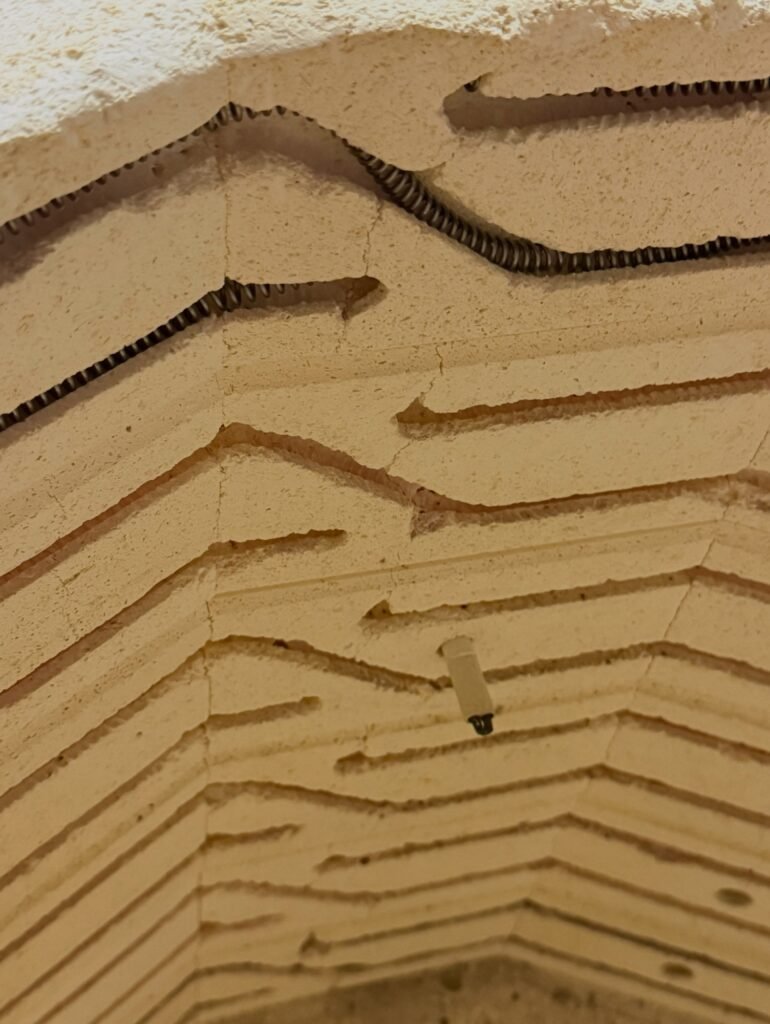
Healthy elements normally maintain a relatively consistent coil shape.
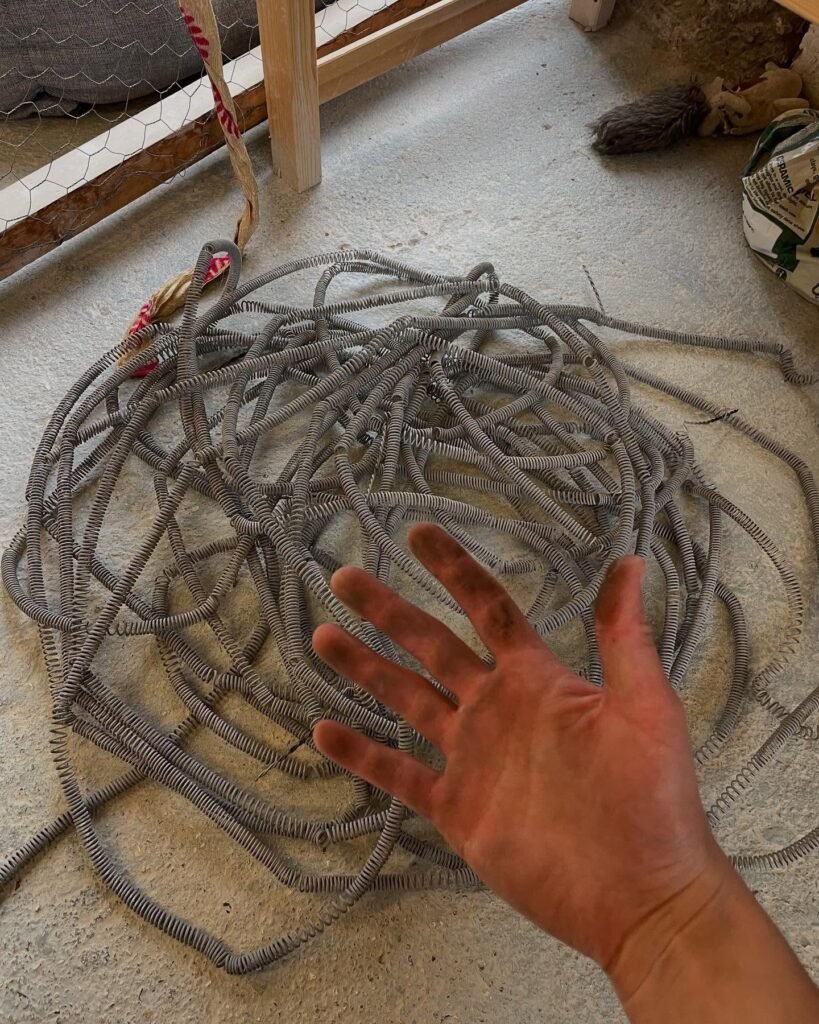
Over time, however, elements can become brittle, distorted or visibly damaged.
You may notice:
- Broken sections
- Severe sagging
- Distorted coils
- Unusual thinning
- Heavy oxidation
- Areas that appear significantly different from the rest
Visible damage does not always mean that the kiln is immediately unsafe to operate, but it is a strong reason to stop and investigate.
In particular, a broken element cannot provide continuous heating through that section.
Don’t touch or manipulate heating elements while the kiln is hot.
Allow the kiln to cool completely and follow the manufacturer’s maintenance instructions before inspecting the interior.
4. Firing Results Become Inconsistent
Potters sometimes notice the finished pottery before they notice the kiln problem.
Perhaps one firing looks normal while another seems noticeably different.
Maybe glaze results become inconsistent.
Maybe the top, middle and bottom shelves no longer seem to behave the same way.
Uneven firing can have several causes.
Load placement matters.
Shelves matter.
Thermocouple condition matters.
Firing schedules matter.
However, aging elements can contribute to temperature differences inside the kiln.
If your firing results have changed, look at the entire firing system rather than blaming the glaze immediately.
A useful troubleshooting process starts with the simplest variables and works toward the more complicated ones.
5. Your Kiln Takes Longer Even With Similar Loads
Firing time becomes particularly useful when you compare similar loads.
For instance, if you regularly fire a similar number of mugs, bowls or small vessels, you have a useful baseline.
Suppose the kiln previously reached the same target temperature in approximately the same period.
Now the same type of load consistently takes substantially longer.
That pattern is more meaningful than a single slow firing.
Your kiln’s heating performance depends partly on how much material you’re asking it to heat. Therefore, comparing similar loads produces better information.
The Kiln Depot’s recent guide explains that complete firing cycles commonly take many hours and that actual firing time varies with the kiln, load and program. (The Kiln Depot)
In other words, don’t panic because one firing took longer.
Look for a trend.
6. Your Elements Are Near the End of Their Expected Service Life
Eventually, age becomes relevant.
Elements don’t have one universal replacement interval.
A potter who fires occasionally may get dramatically more life from a set of elements than someone running a production studio several times every week.
Likewise, higher-temperature firing can accelerate wear.
The Kiln Depot’s existing element guide notes that firing frequency and temperature are major factors affecting element lifespan. (The Kiln Depot)
Therefore, keep track of your firings.
If your kiln has accumulated substantial use and you’re beginning to notice slower heating or other warning signs, preventive inspection makes sense.
That doesn’t necessarily mean replacing perfectly functional elements immediately.
Instead, it means you’re approaching the point where maintenance deserves closer attention.
7. One Section of the Kiln Behaves Differently
Electric kilns rely on multiple heating elements distributed around the chamber.
If one section develops a problem, the temperature distribution can change.
You may notice that one area of the kiln consistently fires differently from another.
Again, this doesn’t automatically mean the element is responsible.
Thermocouple position, kiln loading and airflow can all influence results.
Still, persistent localized differences deserve investigation.
A pyrometric cone test can provide useful information about how the kiln is actually firing at different levels.
That can help distinguish a genuine firing problem from a perception based on one unusual load.
What Causes Kiln Elements to Wear Out?
The basic problem is oxidation.
Heating elements operate at extremely high temperatures. Repeated heating and cooling gradually changes the resistance wire and its surface.
Higher temperatures generally accelerate the process.
Frequent firings accelerate total wear as well.
Therefore, two identical kilns can have very different element lifespans.
A hobby potter firing once every few weeks may experience a completely different maintenance schedule from a studio producing work every day.
This is why manufacturer recommendations should be treated as guidance rather than a guaranteed expiration date.
Can You Replace Kiln Elements Yourself?
Sometimes.
However, whether you should depends on the kiln, your experience and the manufacturer’s procedures.
Element replacement involves working around electrical components and high-temperature equipment.
A mistake can damage the kiln or create an electrical hazard.
If you’re unfamiliar with kiln wiring or electrical work, professional service is the safer choice.
Before ordering anything, identify the exact kiln model and confirm the correct element specifications.
Do not assume that an element from a similar-looking kiln will fit.
Should You Replace One Element or All of Them?
That depends on the condition of the kiln.
If one element has failed while the remaining elements are relatively new, replacing the failed component may make sense.
However, if the entire set has significant age and wear, replacing only one element may leave you with uneven performance between old and new components.
The correct decision depends on the kiln, element condition and manufacturer’s recommendations.
Therefore, don’t make the decision based solely on the price of one replacement part.
Think about the expected service life of the entire set.
How Can You Make Kiln Elements Last Longer?
You can’t stop elements from aging.
You can, however, avoid unnecessary stress.
First, fire according to the manufacturer’s recommended schedules.
Next, avoid unnecessary overfiring.
Keep kiln shelves and ware positioned correctly.
Also, avoid loading pieces so close to the elements that they can interfere with safe operation.
Most importantly, maintain the kiln instead of waiting for a complete failure.
Regular inspection can help you identify problems before they ruin an important firing.
When Should You Stop Using the Kiln?
If an element is visibly broken, severely damaged or showing a condition that could create an electrical or fire hazard, don’t simply continue firing and hope for the best.
Likewise, repeated electrical faults or unexplained kiln behavior deserve professional attention.
A kiln is a high-temperature electrical appliance.
Therefore, troubleshooting should never override basic safety.
The Kiln Depot’s pottery studio safety guide covers ventilation, electrical considerations and other important home-studio safety practices. (The Kiln Depot)
Frequently Asked Questions
How often should kiln elements be replaced?
There is no universal schedule. Element lifespan depends on firing temperature, frequency and kiln use. Some elements may last a few years, while heavily used kilns can require replacement sooner. (The Kiln Depot)
How do I know if my kiln elements are bad?
Common warning signs include significantly slower firing, difficulty reaching temperature, visible element damage and persistent firing inconsistencies.
Can bad kiln elements cause uneven firing?
They can contribute to uneven firing, although loading, thermocouples, firing schedules and other factors can also cause temperature differences.
Do kiln elements wear out faster at Cone 10?
Higher firing temperatures generally place greater demands on heating elements. However, actual lifespan depends on the complete firing schedule and frequency of use.
Can I inspect kiln elements myself?
You can visually inspect a completely cool kiln if the manufacturer’s instructions permit it. However, electrical repairs and element replacement should be handled by someone qualified when appropriate.
Final Thoughts
Kiln elements are easy to ignore because they work quietly inside the kiln.
However, they are doing the actual heating that turns your greenware into finished ceramic work.
When they begin to wear, your kiln may tell you long before an element completely fails.
Watch your firing times.
Pay attention to temperature performance.
Inspect for visible damage.
Keep firing records.
Then, when something changes, investigate the cause instead of automatically blaming the elements.
A slower kiln does not always need new elements. Likewise, a kiln that reaches temperature does not necessarily have perfectly healthy elements.
The goal is simple:
Know how your kiln normally behaves so you can recognize when it doesn’t.
That knowledge can save firing time, protect your work and help you maintain your kiln before a small problem becomes an expensive one.

Pingback: Kiln Thermocouple: When to Replace It - The Kiln Depot kiln - Kilns - potterywheel - skutt - brentwheel - furniture -
Pingback: Buying a Used Pottery Kiln? What to Check